
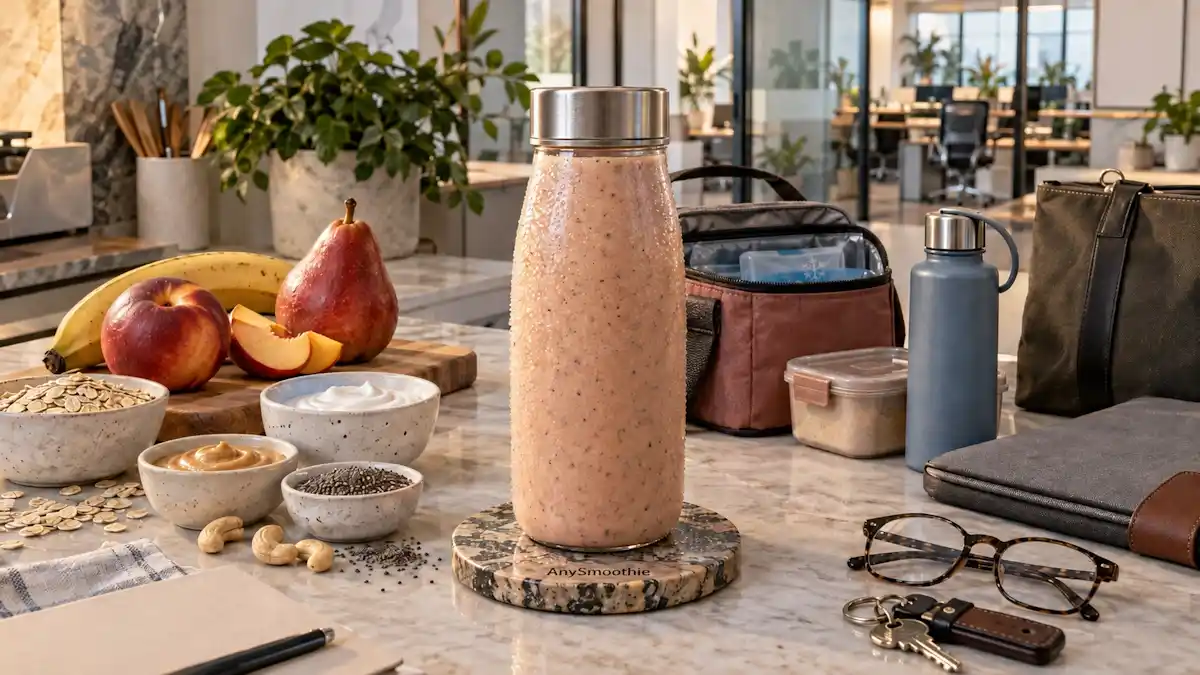
Rushed mornings often mean skipped breakfasts, drive-through coffee, or a snack grabbed at your desk. Smoothies for busy office workers offer a practical middle ground because you can blend them ahead, carry them easily, and adjust them to your schedule.
The most useful options combine produce, protein, fiber, and a satisfying fat source. These three recipes, plus a simple prep system, make the workweek easier to manage.
Why Smoothies Work Well for Busy Office Workers
A smoothie takes only a few minutes to blend, and a measured recipe makes portions easier to repeat. It also gives you room to combine ingredients that are harder to fit into a hurried breakfast, such as frozen fruit, leafy greens, yogurt, oats, and nut butter.
Carbohydrates contribute energy, while protein supplies amino acids used throughout the body. Fiber can add substance to a smoothie, while ingredients such as nut or seed butter contribute fat, texture, and flavor.
A balanced smoothie built from whole-food ingredients can be more substantial than one based mostly on fruit juice, syrups, or sweetened powders. For storage guidance on individual ingredients and prepared foods, the USDA-supported Keep food safe is a useful reference.
For mornings when a smoothie needs to stand in for a more substantial breakfast or meal, the filling meal replacement smoothies guide offers a broader approach to portions and ingredient balance.
Build a Balanced Office-Friendly Smoothie
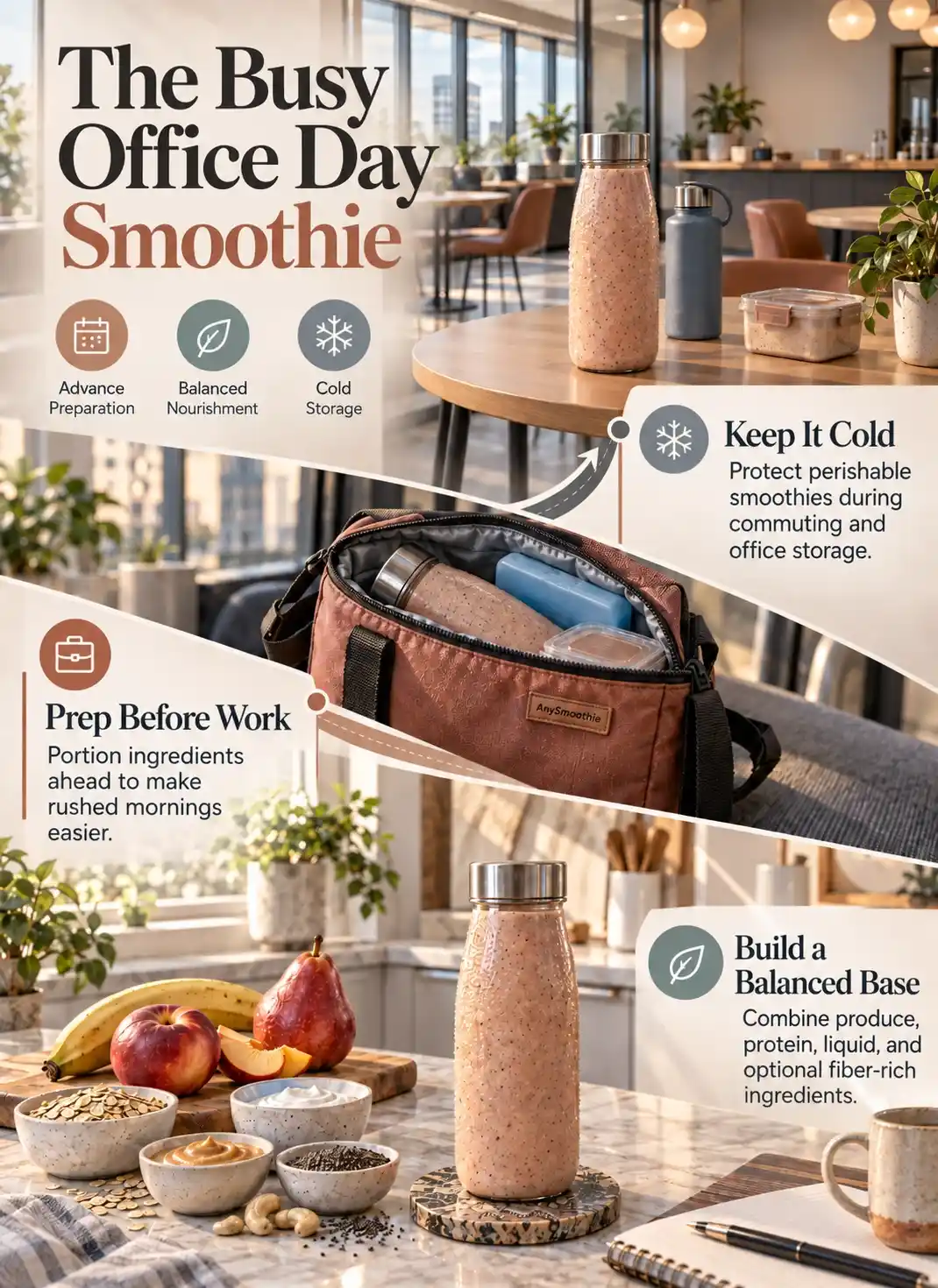
Start with about one cup of liquid, then add fruit or vegetables, a protein source, a fiber-rich ingredient, and an optional modest fat source. This formula works for most smoothies for busy office workers without requiring complicated meal planning.
Use milk, fortified soy milk, or water as the base. Add frozen berries, spinach, banana, or pineapple. Greek yogurt, soy yogurt, silken tofu, or protein powder can supply protein. Oats and chia seeds contribute fiber, while peanut butter or another seed butter adds richness.
For a thicker drink, use frozen fruit and less liquid. For a thinner drink, add liquid a few tablespoons at a time. Cinnamon, vanilla, cocoa powder, or lime juice can add flavor without piling on sweeteners.
3 Smoothies for Busy Office Workers
Each recipe makes one portable serving. The nutrition estimates below use the specific ingredients listed rather than interchangeable alternatives.
Berry Oat Breakfast Smoothie
Ingredients
- 1 cup frozen mixed berries
- 1 small banana
- 3/4 cup plain nonfat Greek yogurt
- 1/4 cup rolled oats
- 1 cup low-fat milk
Steps
Add the milk first, followed by the Greek yogurt, banana, berries, and oats.
Blend until completely smooth. If you prefer a silkier texture, blend the oats with the milk first before adding the other ingredients.
It takes about five minutes to prepare.
Estimated Nutrition per Serving
- Calories: ~435 kcal
- Protein: ~29 g
- Carbohydrates: ~75 g
- Fat: ~7 g
- Fiber: ~10 g
- Sugars: ~39 g
Estimate uses plain nonfat Greek yogurt, low-fat dairy milk, one small banana, and unsweetened frozen berries.
If I knew breakfast would have to carry me through several meetings before the next proper meal, I’d choose this one rather than simply making one of the lighter recipes much larger.
Green Citrus Desk Smoothie
Ingredients
- 1 packed cup baby spinach
- 1/2 cup frozen pineapple
- 1/2 medium banana
- 3/4 cup plain nonfat Greek yogurt
- Juice from 1/2 lime
- 1/2 cup cold water
Steps
Add the water and spinach first and blend briefly.
Add the pineapple, banana, Greek yogurt, and lime juice, then blend again until completely smooth.
This takes about five minutes and makes a fresher, lighter option for a midmorning break or smaller lunch.
Estimated Nutrition per Serving
- Calories: ~205 kcal
- Protein: ~18 g
- Carbohydrates: ~35 g
- Fat: ~1 g
- Fiber: ~4 g
- Sugars: ~24 g
Estimate uses plain nonfat Greek yogurt and water rather than coconut water.
For a desk day when I wanted something lighter but still more substantial than fruit alone, I’d keep the yogurt rather than replacing it with additional pineapple or juice.
Chocolate Peanut Butter Workday Smoothie
Ingredients
- 1 medium frozen banana
- 1 tablespoon unsweetened cocoa powder
- 1 cup low-fat milk
- 1 tablespoon natural peanut butter
- 3/4 cup plain nonfat Greek yogurt
Steps
Add the milk first, followed by the Greek yogurt, banana, peanut butter, and cocoa powder.
Blend until creamy and completely smooth. Add a small amount of cold water if the smoothie is thicker than you want for your bottle.
Cocoa and peanut butter give this smoothie a familiar flavor, while milk, yogurt, and peanut butter make it a more substantial option.
Estimated Nutrition per Serving
- Calories: ~415 kcal
- Protein: ~31 g
- Carbohydrates: ~48 g
- Fat: ~14 g
- Fiber: ~7 g
- Sugars: ~27 g
Estimate uses low-fat dairy milk, plain nonfat Greek yogurt, and natural peanut butter.
For more ways to build protein from ordinary smoothie ingredients without automatically adding powder, naturally high-protein smoothies offers additional options.
| Smoothie | Key Ingredients | Approximate Protein | Prep Time | Best Fit for the Workday |
|---|---|---|---|---|
| Berry Oat | Berries, oats, Greek yogurt | ~29 g | 5 minutes | Breakfast |
| Green Citrus | Spinach, pineapple, yogurt | ~18 g | 5 minutes | Midmorning or light lunch |
| Chocolate Peanut Butter | Banana, cocoa, peanut butter | ~31 g | 5 minutes | More substantial break |
Nutrition varies by brand and exact ingredient size.
How to Prep, Store, and Drink Smoothies at Work
Wash produce under running water before preparing it, then portion freezer-friendly fruit into recipe-size bags. You can also measure oats, chia seeds, or cocoa powder into small containers ahead of time. Those small steps reduce morning decisions and keep the blender process quick.
For a more detailed make-ahead system, smoothie storage and micronutrient stability covers freezer packs and advance preparation.
You can blend the night before, although flavor and texture may change during storage. If you prepare a smoothie ahead, use a clean sealed container and refrigerate it promptly.
Smoothies containing milk, yogurt, tofu, or other perishable ingredients should stay cold during the commute and at work. USDA guidance recommends an insulated lunch bag with at least two cold sources for packed perishable foods when refrigeration is not immediately available. USDA’s packed-lunch safety guidance provides practical cold-storage recommendations.
Make the Office Routine Easier
Choose a wide-mouth, leakproof bottle that fits your commute bag. A reusable straw can make thicker recipes easier to drink, especially when oats or frozen fruit are involved.
If your workplace allows it, keep a few shelf-stable backup foods at your desk so forgetting a prepared smoothie doesn’t automatically mean skipping breakfast or lunch.
Avoid These Smoothie Mistakes on Busy Mornings
- Fruit juice can make a smoothie sweeter and thinner. Use water, milk, or unsweetened soy milk when those better suit the recipe.
- Extra honey, syrups, and sweetened powders can add sweetness quickly. Try cinnamon, vanilla, or unsweetened cocoa first.
- A smoothie built mostly from fruit and liquid may be less substantial than one that also contains a protein source.
- Oversized portions can be inconvenient to finish at a desk. Choose a serving that matches your appetite and schedule.
- Too much ice can create a watery texture. Frozen fruit can provide thickness without requiring as much ice.
- Ignoring cleanup creates a messy commute. Rinse the blender promptly and pack your bottle securely.
Key Takeaways
- Build each smoothie around produce, protein, liquid, and optional fiber- and fat-containing ingredients.
- Freeze ingredients in single-serving bags for faster mornings.
- Keep perishable smoothies cold until you are ready to drink them.
- Repeat recipes you enjoy, then adjust flavors, portions, and thickness over time.
Conclusion: A Repeatable Workday Breakfast
The best smoothies for busy office workers are balanced, portable, and easy to make again tomorrow. Start with produce, protein, fiber, and a liquid that suits your taste.
Choose one recipe, portion the ingredients before your next workday, and pack it securely while keeping perishable ingredients cold. Adjust amounts to fit your dietary needs, appetite, and schedule.
🛡️ Safety Notes & Dietary Interactions
- Office Cold Storage: Yogurt, milk, tofu, and prepared smoothies need reliable refrigeration. Use an insulated commute bag with an ice pack, then transfer the bottle to a refrigerator if you will not drink it soon after arriving.
- Desk-Side Portioning: Oats, Greek yogurt, peanut butter, and larger fruit portions can turn a smoothie into a substantial meal. Match the bottle size to whether it is breakfast, a snack, or lunch rather than drinking extra simply because it is convenient.
- Shared-Office Allergens: Dairy, soy, peanuts, and seed butters may matter in communal kitchens and refrigerators. Label bottles clearly, follow workplace allergy policies, and clean blender parts, counters, and utensils carefully when preparing drinks around others.
- Sedentary Workdays: A balanced smoothie can support nutrition, but it does not offset prolonged sitting. Use regular movement breaks, water, and normal meals alongside the drink rather than treating a desk-friendly breakfast as a substitute for activity.
FAQs
Which smoothie is best for a full breakfast before work?
The Berry Oat Breakfast Smoothie is the most meal-like option because it combines berries, banana, oats, Greek yogurt, and milk. That gives it carbohydrate, protein, and fiber in one bottle. If you usually become hungry before lunch, this is the strongest starting point of the three recipes.
Which smoothie is easiest to drink at a desk?
The Green Citrus Desk Smoothie is the lightest option because it uses fruit, spinach, yogurt or tofu, and water or coconut water without oats or nut butter. Keep the texture relatively thin and use a secure bottle or tumbler to reduce spills around keyboards, documents, and other office equipment.
Can I blend my smoothie the night before work?
Yes. Refrigerate it promptly in a clean, sealed container and shake or stir before drinking. Oats and other fiber-rich ingredients may thicken overnight, while fruit and greens can separate or change color. Add a little milk or water in the morning if the texture becomes too dense.
How long can I keep a smoothie in the office refrigerator?
For best quality, a homemade smoothie is generally most practical when consumed the same day or within about 24 hours. Keep it continuously refrigerated and discard it if temperature control has been unreliable. Separation is normal, but an off smell, unusual fermentation, or extended time at room temperature is not.
What should I keep at work in case I forget my smoothie?
Shelf-stable soy milk, plain oats, whole-grain crackers, roasted chickpeas, or another familiar snack can provide a useful backup. The goal is not to recreate the exact smoothie at your desk, but to avoid relying on vending-machine sweets or skipping food entirely when your prepared breakfast stays at home.

Medical Disclaimer: AnySmoothie content is for educational purposes only and is not a substitute for professional medical advice. Consult a healthcare provider for personalized guidance. See our full Disclaimer & Terms of Use. AI Transparency: AnySmoothie may use AI to support content development. All content undergoes human editorial review for accuracy, clarity, and editorial quality. See our full AI Transparency.