
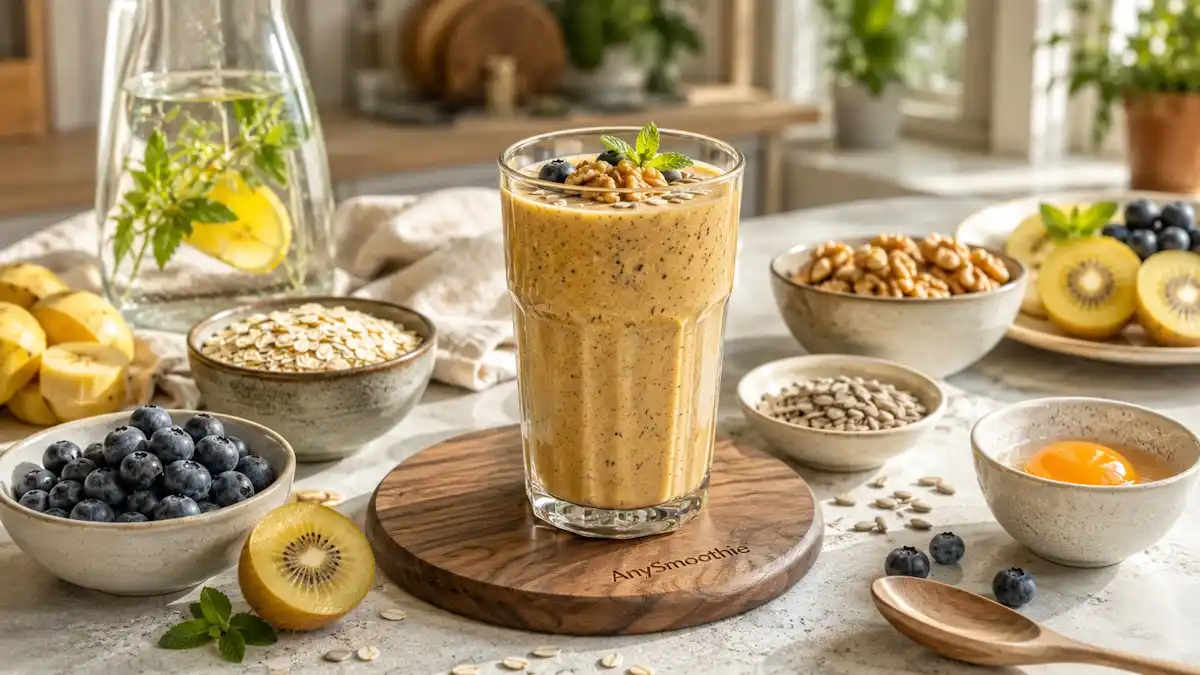
Uridine gets attention because cells use it as part of membrane-building chemistry. In smoothie form, it usually shows up inside a bigger plan, one that pairs uridine-supportive ingredients with choline, healthy fats, and a few cofactors.
That matters because phospholipids are the raw material for cell membranes. The brain depends on them for signal flow, and the liver uses them to package and move fats. A good smoothie won’t force that process, but it can support the normal pathways that keep it moving.
The real goal is a drink that helps the body do what it already knows how to do, without turning into a sugar bomb.
What uridine does in phospholipid synthesis
Uridine matters because cells turn it into UTP, then CTP. CTP helps drive the CDP-choline pathway, which is one of the main routes for making phosphatidylcholine. That phospholipid is a major part of membrane structure, so steady supply matters for healthy turnover. Human research has looked at uridine’s link to brain membrane synthesis, including uridine and brain membrane synthesis.
Why phospholipids matter for healthy cell membranes
Phospholipids act like the flexible skin of a cell. They help membranes stay fluid, protect the cell, and move nutrients and signals across the boundary. When membrane lipids stay available, cells can communicate and adapt more easily.
Where uridine fits in the lipid-building process
Uridine is one input in the body’s normal membrane-making system. On its own, it does not do the whole job. Together with choline and methylation support, it may help keep the pathway supplied with what it needs. Another route uses methyl groups from nutrients like folate, B12, and betaine, so the pathway is wider than uridine alone.

Why smoothies are a practical delivery format
Smoothies make it easy to mix fat, protein, and choline-rich foods in one glass. That matters because lipid-building pathways work best when the drink is more than fruit and ice.
The best ingredients to pair with uridine in a smoothie
Balance matters more than a single ingredient. The best blends include choline, fat, and a little texture so the drink feels like food.
A phospholipid-focused smoothie works best when it carries choline, fat, and enough protein to keep the blend steady.
| Ingredient | Main nutrient | Why it helps | Taste | Best pairing |
|---|---|---|---|---|
| Sunflower lecithin | Phospholipids | Easy smoothie-friendly choline support | Mild, nutty | Berry or cocoa |
| Soy lecithin | Phosphatidylcholine support | Adds a direct membrane-building angle | Neutral to light beany | Banana, vanilla |
| Avocado | Monounsaturated fat | Gives creaminess and slow-digesting fat | Buttery | Blueberry, greens |
| Chia or flax | Fiber and omega-3s | Helps texture and adds fat | Light, earthy | Tropical or berry |
| Greek yogurt | Protein and some choline | Makes the smoothie more filling | Tangy, creamy | Cocoa or berry |
Choline-rich add-ins matter because phosphatidylcholine is one of the main membrane lipids. If you avoid eggs, lecithin is the easiest smoothie option. If you do use egg yolk, pasteurized liquid yolk can add choline, but it is less convenient than lecithin. Research on brain phosphatidylcholine also points to choline, uridine, and omega-3 fats as a useful mix; see brain phosphatidylcholine precursors.
Healthy fats matter too. Avocado, nut butter, coconut milk, chia, and flax all improve texture and help the smoothie feel like a real meal. That matters for satiety and for a more balanced nutrient profile.
Folate, B12, betaine, magnesium, and omega-3s are worth a look as support nutrients. They don’t need to crowd the blender, but they do fit the larger picture.
3 Uridine smoothie recipes for phospholipid synthesis
Common mistakes that can weaken the benefit of a uridine smoothie
A sweet smoothie can drift into dessert territory fast. Too much juice, honey, or frozen fruit can push the drink toward quick sugar without much staying power. Too little fat does the same thing, because the blend loses its creamy base.
Skipping choline is another common miss. Uridine may help the pathway, but membrane building still needs the rest of the team. Portion size matters too. A huge smoothie can feel heavy, while a tiny one may not carry enough fat, protein, or lecithin to matter.
Why balance matters more than sweetness
Sweetness is fine, but it should not hide a thin nutrient profile. A better smoothie feels smooth, filling, and calm after you drink it.
When to keep the recipe simple
If your stomach is sensitive, keep the blend short. Start with one fruit, one fat source, one choline source, and one protein. Then adjust the texture and flavor.
Conclusion
Uridine smoothies for phospholipid synthesis work best when they stay practical. The strongest blends pair uridine-supportive ingredients with choline, healthy fats, and a few helpful cofactors.
That mix gives you a drink that fits real life and supports normal membrane-building pathways. Keep the recipe steady, keep the sugar modest, and let consistency do the work. Brain and liver tissues both depend on that kind of routine.
🛡️ Safety Notes & Dietary Interactions
- Uridine Supplements Are Not Appropriate For Everyone: If you use a uridine supplement alongside smoothies, follow product directions carefully. Individuals who are pregnant, breastfeeding, taking prescription medications, or managing medical conditions should consult a qualified healthcare professional before use.
- Balance Matters More Than One Ingredient: Uridine works within broader phospholipid and membrane-building pathways that also involve nutrients such as choline, healthy fats, folate, vitamin B12, and omega-3 fatty acids. A balanced diet remains the foundation.
- Watch Sugar Content In Smoothies: Large amounts of fruit juice, sweetened yogurt, honey, or syrups can quickly turn a nutrient-focused smoothie into a high-sugar beverage. Keeping sugar moderate helps maintain a steadier nutritional profile.
- Check Lecithin And Soy Sensitivities: Many phospholipid-support smoothies use sunflower or soy lecithin. Individuals with soy allergies or sensitivities should read labels carefully and choose appropriate alternatives when needed.
FAQ
What is uridine and why is it discussed with phospholipid synthesis?
Uridine is a naturally occurring nucleoside that participates in cellular pathways involved in membrane production. It is often discussed alongside phospholipid synthesis because it contributes to biochemical processes that help generate important membrane components such as phosphatidylcholine.
Which foods pair best with uridine-focused smoothies?
Ingredients that provide choline, healthy fats, and protein tend to pair well. Common examples include sunflower lecithin, soy lecithin, avocado, chia seeds, flaxseed, Greek yogurt, soy milk, and modest amounts of nuts or nut butter.
Why is choline important in a phospholipid smoothie?
Choline serves as a key building block for phosphatidylcholine, one of the most abundant phospholipids in cell membranes. Pairing choline-rich ingredients with uridine-supportive nutrition creates a more complete membrane-support strategy than focusing on either nutrient alone.
Can I make a uridine smoothie without lecithin?
Yes. While lecithin is a convenient source of phospholipids and choline, you can also use ingredients such as soy foods, Greek yogurt, eggs (when appropriate), seeds, and other nutrient-dense foods. Lecithin simply offers one of the easiest smoothie-friendly options.
When is the best time to drink a uridine-support smoothie?
Many people prefer these smoothies at breakfast or as part of a midday meal because they often contain protein, healthy fats, and fiber. The best timing is usually the time that fits consistently into your routine and allows the smoothie to replace less balanced options.

Medical Disclaimer: AnySmoothie content is for educational purposes only and is not a substitute for professional medical advice. Consult a healthcare provider for personalized guidance. See our full Disclaimer & Terms of Use. AI Transparency: AnySmoothie may use AI to support content development. All content undergoes human editorial review for accuracy, clarity, and editorial quality. See our full AI Transparency.