
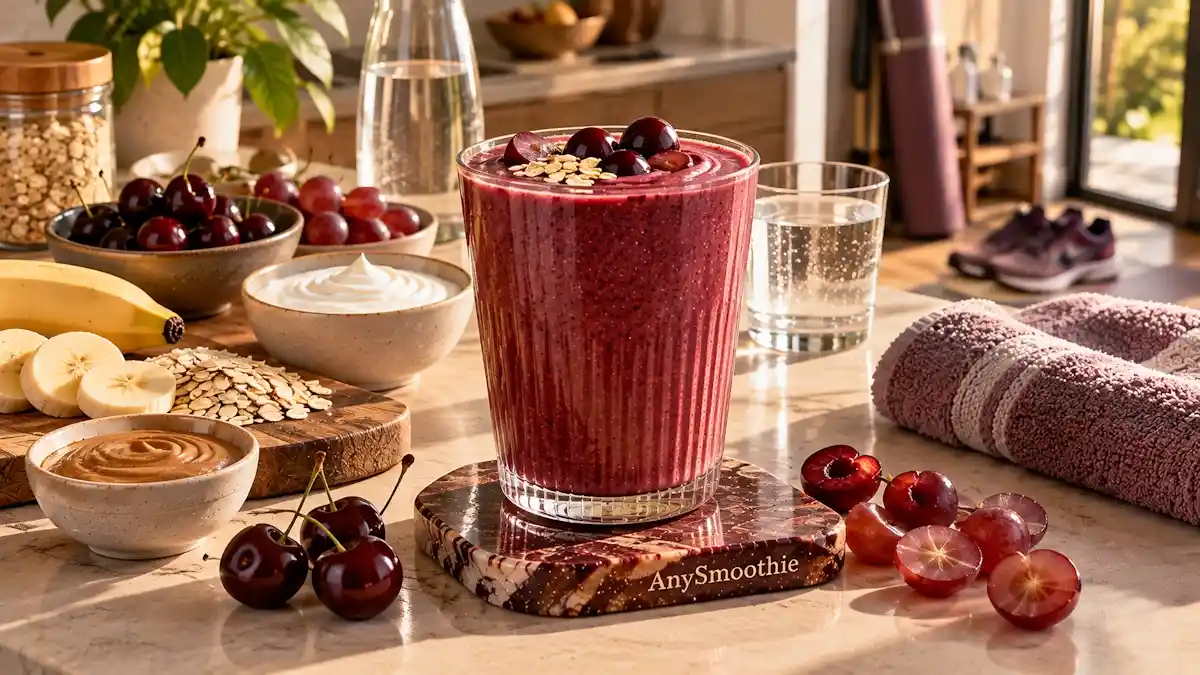
That familiar burn after a hard workout can make a recovery drink sound appealing. Smoothies for lactate metabolism can supply useful nutrients, but they don’t flush lactate out of your muscles.
Your body makes lactate during exercise and reuses it as fuel, rather than treating it as waste. A balanced smoothie supplies fluid, carbohydrates, and protein that support normal energy use and muscle recovery.
Understanding what lactate does makes it easier to choose a drink that meets your needs without expecting more than food can deliver.
How Lactate Metabolism Supports Exercise and Recovery
Working muscles break down glucose to release usable energy. This process produces pyruvate, some of which becomes lactate. That conversion recycles a molecule called NAD+, which allows glucose breakdown to continue.
Lactate production is a normal part of metabolism, and it happens even when oxygen is available. During harder exercise, production can outpace the body’s use of lactate, so its concentration in blood rises.
However, lactate doesn’t stay trapped in the muscles that produce it. It travels through the blood, and other muscles and tissues can use it for energy. The heart also uses lactate as fuel. Physiologist George Brooks describes these exchanges in his review, Lactate as a fulcrum of metabolism.
Blood lactate rises and falls mainly with exercise intensity, circulation, and the rate at which tissues produce and use it. A particular fruit, vegetable, or supplement doesn’t control this process.
Meanwhile, delayed-onset muscle soreness is a separate response to exercise, especially unfamiliar or demanding muscle loading. Soreness that appears the next day isn’t evidence of leftover lactate. Drinking a smoothie may help you meet recovery nutrition needs, but it doesn’t promise to prevent that soreness. For a separate look at that topic, see our guide to post-workout DOMS.
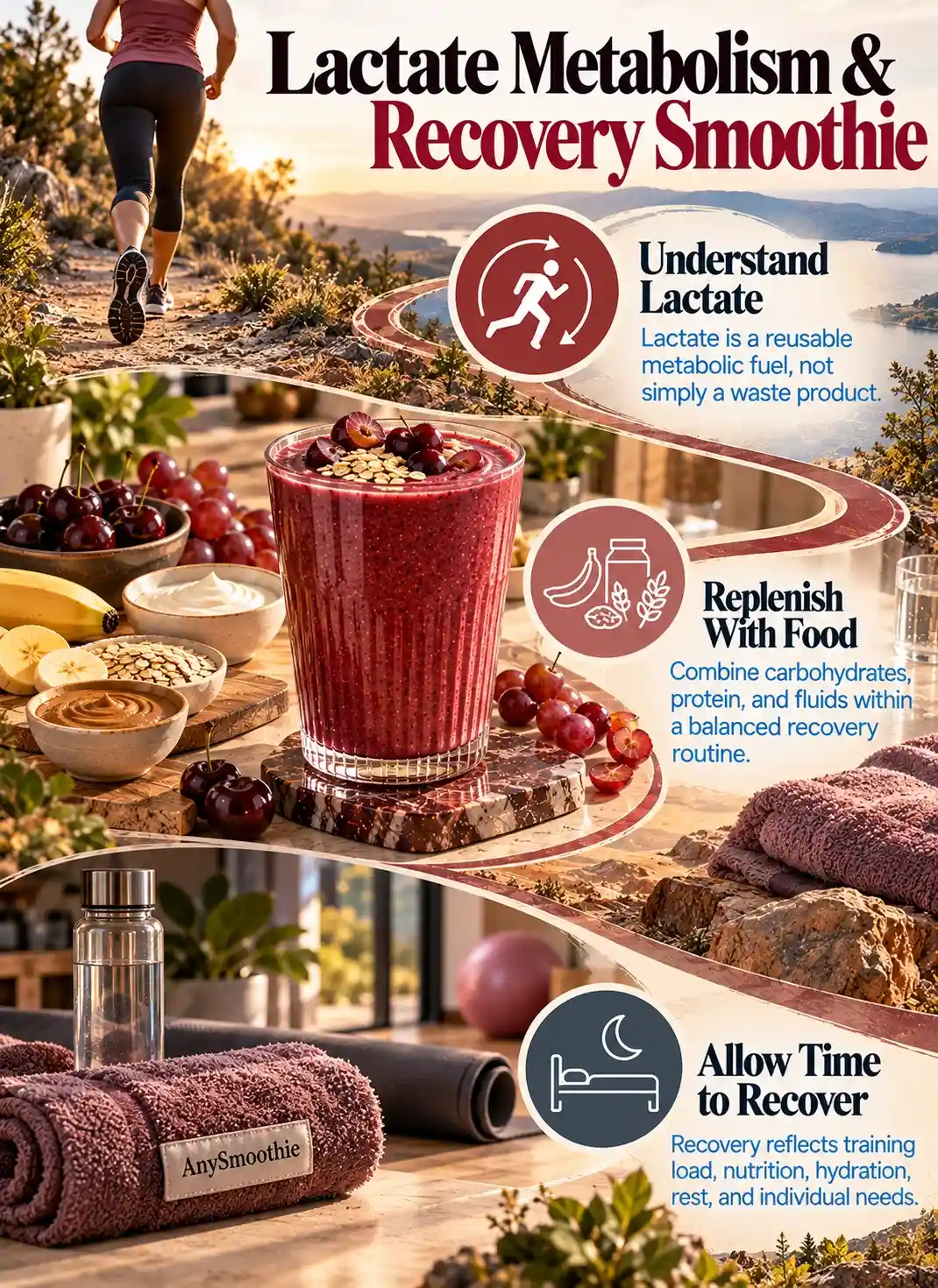
3 Smoothies for Lactate Metabolism and Exercise Recovery
Each recipe makes one large smoothie. Their carbohydrate-and-protein combinations support the recovery priorities described in a review of post-exercise recovery nutrition, without promising faster lactate removal.
Berry-Banana Yogurt Smoothie
Ingredients
- 1 cup frozen mixed berries
- 1 small banana
- 3/4 cup plain nonfat Greek yogurt
- 1/2 cup 2% milk
Steps
Blend the frozen berries, banana, Greek yogurt, and milk until smooth. Add water as needed for a thinner texture.
The fruit supplies carbohydrates, while Greek yogurt adds protein. For a dairy-free version, use protein-rich soy yogurt and fortified soy milk. Other plant-based alternatives work for texture, but their protein content varies. Frozen berries make ice optional.
Estimated Nutrition per Serving
- Calories: ~320 kcal
- Protein: ~23 g
- Carbohydrates: ~52 g
- Fat: ~3 g
- Fiber: ~10 g
- Sugars: ~34 g
If you prefer something cold and familiar after training, frozen berries make this blend easy to prepare. Adjust the serving to fit your appetite and next meal rather than treating it as a mandatory recovery drink.
Tart Cherry Oat Recovery Smoothie
Ingredients
- 1/2 cup 100% tart cherry juice, with no added sugar
- 1/2 cup water
- 1/4 cup rolled oats
- 3/4 cup plain nonfat Greek yogurt
- 1/2 medium banana
Steps
Blend the tart cherry juice, water, oats, Greek yogurt, and banana until the oats are finely broken down.
Protein-rich soy yogurt is a dairy-free swap. Juice, oats, and banana provide carbohydrates; yogurt supplies protein. This is a convenient recovery snack, not a treatment for soreness or a proven way to change lactate levels.
Estimated Nutrition per Serving
- Calories: ~300 kcal
- Protein: ~21 g
- Carbohydrates: ~51 g
- Fat: ~2 g
- Fiber: ~4 g
- Sugars: ~29 g
Mango Spinach Protein Smoothie
Ingredients
- 1 cup frozen mango
- 1 cup baby spinach
- 3/4 cup 2% milk
- 3/4 cup plain nonfat Greek yogurt
Steps
Blend the frozen mango, spinach, milk, and Greek yogurt until smooth. Add a little water if needed.
Spinach adds a mild leafy flavor and micronutrients, including folate. Meanwhile, mango supplies carbohydrates, and the milk and yogurt provide protein. The drink’s recovery value comes mainly from meeting fluid and nutrient needs, rather than any special action of spinach. For a dairy-free version, use protein-rich soy milk and soy yogurt, keeping in mind that the nutritional values will differ.
Estimated Nutrition per Serving
- Calories: ~300 kcal
- Protein: ~25 g
- Carbohydrates: ~41 g
- Fat: ~4 g
- Fiber: ~3 g
- Sugars: ~38 g
Compare the recipes by their ingredients and practical fit:
| Smoothie | Key ingredients | Main carbohydrate source | Protein source | Best fit |
|---|---|---|---|---|
| Berry-banana | Berries, banana, yogurt, milk | Fruit | Greek yogurt and milk | Simple post-workout snack |
| Tart cherry oat | Cherry juice, oats, yogurt, banana | Juice, oats, banana | Greek or protein-rich soy yogurt | More substantial snack |
| Mango spinach | Mango, spinach, milk, yogurt | Mango | Milk and yogurt | Fruit-and-greens option |
Choose by taste and appetite; none has a proven advantage for clearing lactate.
Conclusion: When to Drink a Recovery Smoothie and What to Pair It With
Have a smoothie after exercise when it’s convenient, especially if your next meal is several hours away. You don’t need to race the blender after every workout. For most recreational sessions, your eating pattern across the day matters more than a narrow timing window.
However, recovery needs increase after longer or harder workouts. Timing also matters more when another demanding session is coming soon. Carbohydrates help replenish glycogen, the stored carbohydrate your muscles use during exercise. Protein provides amino acids that support muscle repair and
🛡️ Safety Notes & Dietary Interactions
- Recovery expectations: Smoothies provide carbohydrates, protein, and fluid, but they do not flush lactate from muscles or guarantee faster lactate clearance. Treat them as nutrition rather than a metabolic intervention.
- Tart cherry portion: Tart cherry juice supplies concentrated carbohydrate and natural sugars. Keep the listed portion in context with your overall intake, particularly if you are limiting added or concentrated sweet drinks.
- Dairy tolerance: Greek yogurt and milk provide substantial protein in these recipes but may cause digestive symptoms for people sensitive to dairy. Suitable soy alternatives can work, although their nutritional values differ.
- Training demands: Recovery needs vary with workout duration and intensity. A smoothie may be useful after demanding sessions, but water, regular meals, and adequate carbohydrate and protein intake remain important.
FAQs
Does a smoothie help clear lactate faster after exercise?
The article does not establish that any smoothie accelerates lactate clearance. Lactate is continuously produced, transported, and reused as fuel by tissues including the heart and other muscles. The recipes instead provide carbohydrates, protein, and fluid that can support ordinary recovery nutrition without directly controlling lactate metabolism.
Is muscle soreness caused by leftover lactate?
No. The article distinguishes delayed-onset muscle soreness from lactate produced during exercise. Lactate concentrations rise and fall according to production and use, while DOMS is a separate response associated particularly with unfamiliar or demanding muscle loading. Feeling sore the next day therefore should not be interpreted as evidence that lactate remains trapped in your muscles.
Which smoothie provides the most protein?
The mango spinach protein smoothie provides the highest estimated protein content at approximately 25 grams per serving. The berry-banana yogurt smoothie provides about 23 grams, while the tart cherry oat version provides about 21 grams. These figures depend on the specific ingredients and portions, particularly when replacing dairy products with plant-based alternatives.
When is the best time to drink one after training?
You can have a smoothie after exercise when convenient, particularly if your next meal is several hours away. The article emphasizes that recreational exercisers generally don’t need to rush into a narrow recovery window. Timing becomes more relevant when workouts are longer, harder, or followed relatively soon by another demanding session.
Can I use these smoothies after every workout?
You can include them when they fit your overall eating pattern, but they aren’t mandatory after every session. For shorter recreational workouts, ordinary meals may provide sufficient recovery nutrition. After longer or harder training, a smoothie can conveniently provide carbohydrates and protein, while your overall daily intake remains more important than relying on one specific recipe.

Medical Disclaimer: AnySmoothie content is for educational purposes only and is not a substitute for professional medical advice. Consult a healthcare provider for personalized guidance. See our full Disclaimer & Terms of Use. AI Transparency: AnySmoothie may use AI to support content development. All content undergoes human editorial review for accuracy, clarity, and editorial quality. See our full AI Transparency.