
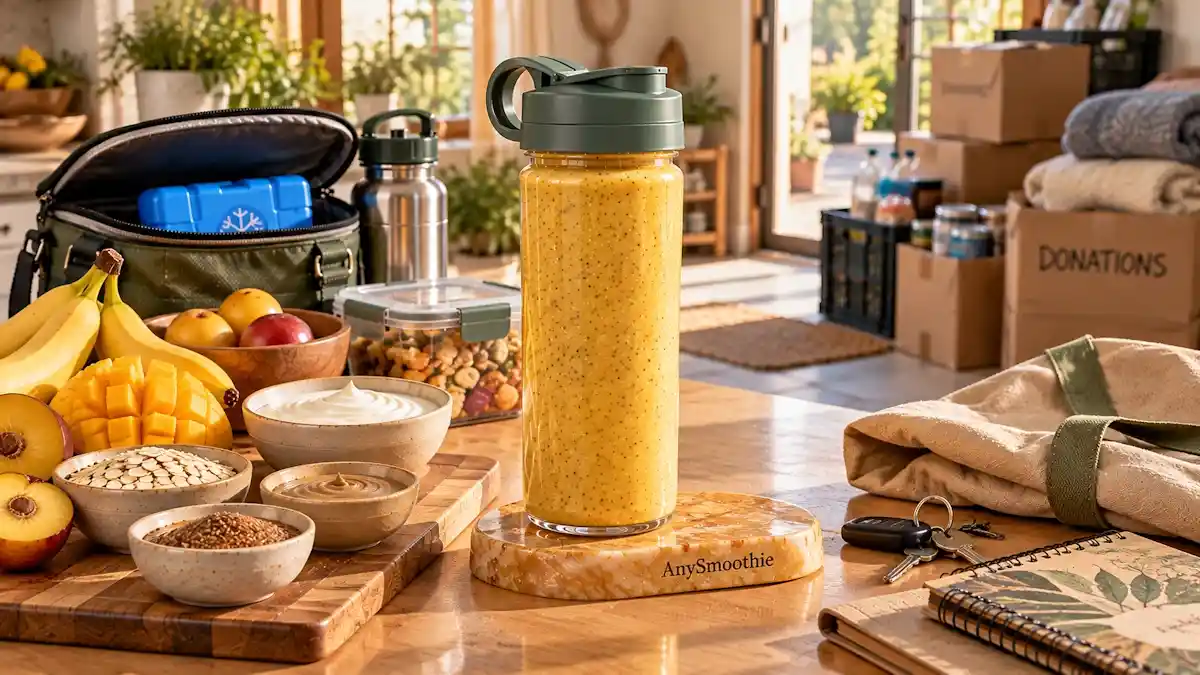
An early start, active tasks, and limited breaks can make breakfast easy to rush. Smoothies before a day of volunteering can be a convenient breakfast, or part of one, but they don’t guarantee energy all day.
A useful blend combines carbohydrates with protein and a little fat or fiber. Start with familiar ingredients, then choose among three simple recipes and plan when to drink it and what to pack alongside it.
How Smoothies Help Maintain Energy During Volunteer Work
Fruit and oats provide carbohydrates that support your body’s normal energy pathways. During digestion, enzymes break down digestible carbohydrates into simple sugars, including glucose. Cells can then use glucose to produce ATP, the molecule that powers normal cellular work, including muscle activity.
The World Health Organization’s healthy diet guidance recommends getting carbohydrates primarily from whole grains, vegetables, fruits, and pulses. A smoothie can include several of these foods.
Build a balanced blend with familiar ingredients
Start with banana, berries, or oats. Then add yogurt, soy yogurt, milk, or fortified soy milk for protein. Protein content varies, especially among plant-based yogurts, so choose an option that contributes a meaningful amount. For more combinations using plant-based protein sources, see seed and grain plant based protein smoothies.
Harvard T.H. Chan School of Public Health’s analysis of the 2025–2030 Dietary Guidelines for Americans discusses recommendations on added sugars, highly processed foods, protein intake, and saturated fat.
A spoonful of nut butter or seeds adds fat and makes the blend more substantial. Meanwhile, whole fruit and oats contribute fiber. Choose ingredients you already tolerate, and account for food allergies and personal preferences before blending.
Match breakfast to the work ahead
Sorting donations indoors and carrying supplies outdoors place different demands on your morning. Your appetite, portion size, and access to breaks also matter.
If you’re doing demanding physical work, pair your smoothie with toast, eggs, or a sandwich. Digestion supplies nutrients that support physiological systems, but a single drink can’t meet everyone’s needs. Plan additional food for a long shift rather than relying on one breakfast to last indefinitely. For ideas on making a smoothie more substantial with protein, fiber, and fats, see our filling meal replacement smoothies guide.
3 Smoothies Before a Full Day of Volunteering
Each recipe makes one serving. Use this comparison to choose a blend and a useful breakfast pairing.
| Smoothie | Key ingredients | Protein source | Approximate prep time | Useful pairing or best-fit situation |
|---|---|---|---|---|
| Berry-oat | Berries, banana, oats | Yogurt and milk | 5 minutes | Toast for a larger breakfast |
| Peanut butter banana | Banana, peanut butter, optional oats | Milk or soy milk, peanut butter | 5 minutes | A familiar, heartier option |
| Mango-green | Mango, spinach | Yogurt or tofu, milk | 5 minutes | A sandwich before physical work |
Berry-oat smoothie for a filling start
Ingredients
- 1 cup frozen berries
- 1/2 medium banana
- 1/4 cup rolled oats
- 1/2 cup plain nonfat Greek yogurt
- 1/2 cup 2% milk
Steps
Blend the frozen berries, banana, oats, yogurt, and milk until smooth. Add liquid as needed.
Oats and fruit supply carbohydrates and fiber, while yogurt adds protein. Because this blend thickens as it sits, add another splash of milk for easier drinking. Suitable soy alternatives work, too.
Estimated Nutrition per Serving
- Calories: ~325 kcal
- Protein: ~20 g
- Carbohydrates: ~53 g
- Fat: ~4 g
- Fiber: ~10 g
- Sugars: ~27 g
Peanut butter banana smoothie for a heartier breakfast
Ingredients
- 1 medium banana
- 1 tablespoon peanut butter
- 1 cup 2% milk
Steps
Blend the banana, peanut butter, and milk until smooth. Add liquid as needed.
Peanut butter supplies fat and some protein; milk adds more protein. For a thicker drink, include 1/4 cup rolled oats. If you avoid peanuts, substitute sunflower seed butter, provided it’s suitable for your allergies. Blend until no oat pieces remain.
Estimated Nutrition per Serving
- Calories: ~320 kcal
- Protein: ~13 g
- Carbohydrates: ~43 g
- Fat: ~13 g
- Fiber: ~4 g
- Sugars: ~28 g
Mango-green smoothie with a protein boost
Ingredients
- 1 cup frozen mango
- 1/2 cup loosely packed spinach
- 1/2 cup plain nonfat Greek yogurt
- 1/2 cup 2% milk
Steps
Blend the mango, spinach, yogurt, and milk until smooth. Add milk as needed.
Mango keeps the flavor fruit-forward, while yogurt contributes protein. Blending spinach into fruit is a convenient way to include vegetables, not a special health treatment. For a dairy-free version, use suitable alternatives such as protein-rich soy yogurt and fortified soy milk.
Estimated Nutrition per Serving
- Calories: ~235 kcal
- Protein: ~16 g
- Carbohydrates: ~35 g
- Fat: ~3 g
- Fiber: ~3 g
- Sugars: ~33 g
If your volunteering involves carrying supplies or spending hours on your feet, the mango-green smoothie can be paired with a sandwich for a more substantial breakfast. That leaves you less dependent on finding a convenient meal break later.
When to Drink Your Smoothie and What to Pack Along
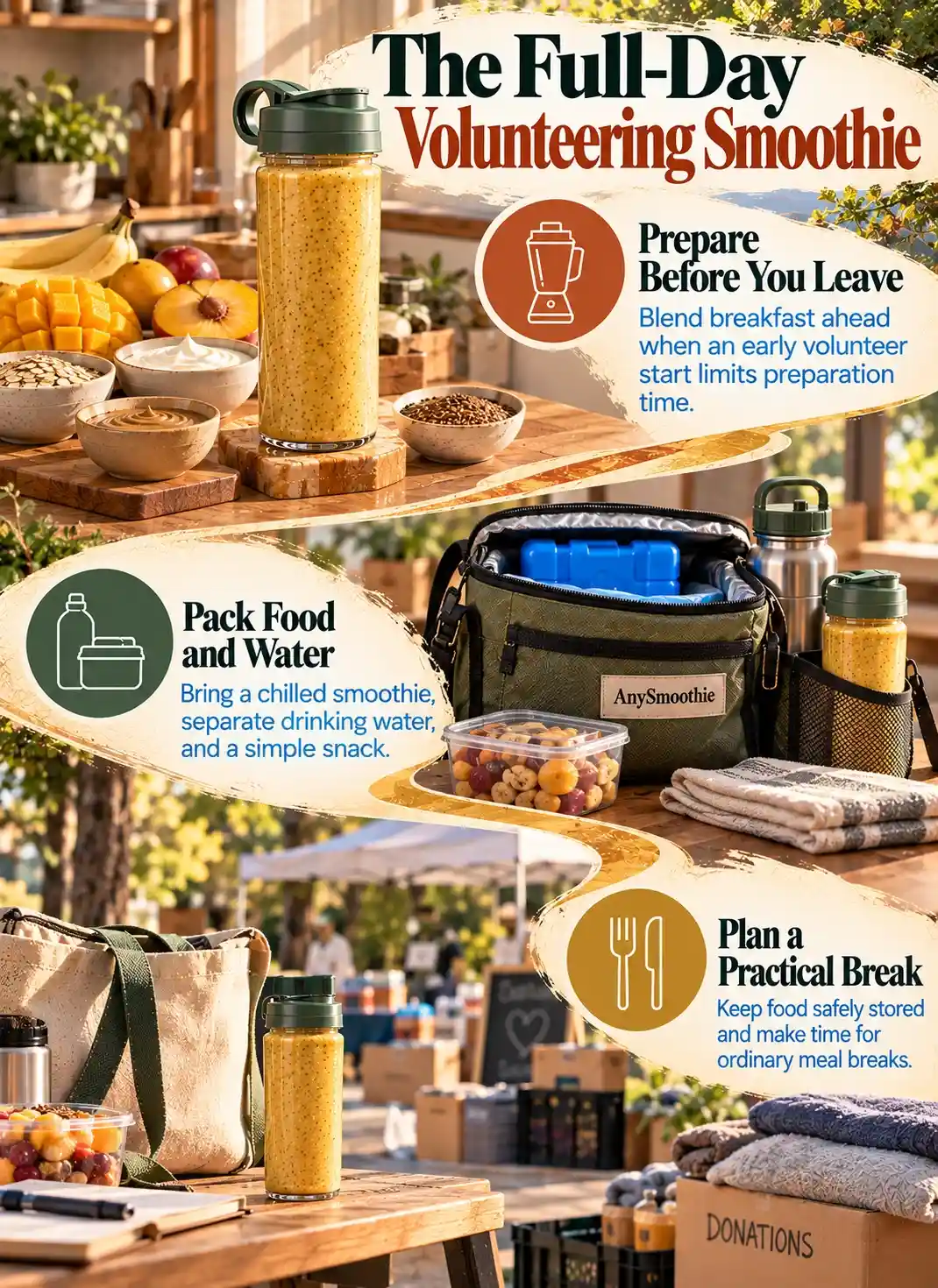
Timing and transport deserve as much attention as the ingredients, especially when you don’t know when your next break will happen.
Choose a comfortable breakfast time
Drink your smoothie with breakfast or shortly before leaving, depending on your appetite and what feels comfortable. There’s no single timing window that suits every volunteer or task.
If a large drink feels uncomfortable before lifting, bending, or walking, have a smaller portion with other food. Try your chosen recipe on a less demanding day first. That gives you a chance to adjust its thickness and portion size without testing unfamiliar ingredients during a long shift.
Also, consider how you’ll drink it. A wide-mouth bottle is easier to use for a thick oat blend than a narrow opening. Leave enough room to shake the bottle before drinking.
Keep it cold and bring backup food
Pack water and extra food, even when your smoothie feels substantial. A sandwich, trail mix that fits your allergies, or fruit can help cover an uncertain meal break. Smoothies don’t replace water or additional meals when you need them.
For transport, pour the chilled smoothie into an insulated bottle and place it in an insulated bag with ice packs. USDA’s packed-lunch safety guidance recommends keeping cold food at 40°F or below.
Refrigerate it when you arrive if a refrigerator is available. Otherwise, keep it cold in the packed bag and out of direct sunlight. An insulated bottle alone doesn’t guarantee safe storage throughout a full shift.
Conclusion: A Breakfast That Fits Your Volunteer Day
A useful smoothie starts with a flexible formula: fruit or oats, a protein source, and an optional modest amount of fat. Its place in breakfast depends on your appetite and the work ahead.
Choose one of these three blends and adjust it with ingredients you already tolerate. Then pack water and extra food, so an early start doesn’t leave you depending on one drink for the entire day.
🛡️ Safety Notes & Dietary Interactions
- Physical workload: Carrying supplies, lifting, bending, and prolonged standing can make a large smoothie uncomfortable. Test your portion beforehand and pair it with additional food when the shift is demanding.
- Cold-chain safety: Milk, yogurt, and prepared fruit smoothies are perishable. Keep the bottle at 40°F or below using an insulated bag and ice packs, and refrigerate it when possible.
- Allergen awareness: The recipes include dairy, peanuts, oats, soy alternatives, and sunflower seed butter. Check labels and cross-contact warnings carefully when adapting ingredients for allergies or dietary restrictions.
- Backup nutrition: A smoothie can contribute carbohydrates, protein, fat, fiber, and fluid, but it cannot cover every need during a full volunteer shift. Carry water and additional food for delayed breaks.
FAQs
Which smoothie is best before a physically active volunteer shift?
The berry-oat smoothie provides the most protein and fiber of the three recipes, with approximately 20 grams of protein and 10 grams of fiber. Its carbohydrate content also makes it substantial. For demanding work such as carrying supplies, the article recommends pairing a smoothie with additional food rather than relying on the drink alone.
Should I drink my smoothie before leaving or at the volunteer site?
Either can work, depending on your appetite, schedule, and access to refrigeration. Drinking it before leaving may simplify an early start, while taking it along can provide flexibility when breaks are uncertain. If transporting it, keep the smoothie cold in an insulated bag with ice packs rather than leaving it unrefrigerated.
What can I use instead of peanut butter?
Sunflower seed butter is suggested as an alternative when peanuts aren’t suitable, provided sunflower seeds fit your dietary needs. You can also adjust the recipe without a nut or seed butter. Always check package labels for allergens and cross-contact warnings, especially when preparing food for a shared volunteer kitchen or group setting.
Can I make the smoothie the night before volunteering?
Yes. Prepare it with clean ingredients and equipment, then refrigerate the finished smoothie promptly. Keep it cold during transport with an insulated bottle, insulated bag, and ice packs. Oat-containing blends may become thicker overnight, so add a little suitable liquid and shake before drinking if the consistency has changed.
Is one smoothie enough to last through a full volunteering shift?
Not necessarily. The article presents smoothies as a convenient breakfast or part of breakfast, not as a complete solution for an entire shift. If volunteering involves several hours of physical work or uncertain meal breaks, pack water and additional foods such as a sandwich, fruit, or suitable trail mix.

Medical Disclaimer: AnySmoothie content is for educational purposes only and is not a substitute for professional medical advice. Consult a healthcare provider for personalized guidance. See our full Disclaimer & Terms of Use. AI Transparency: AnySmoothie may use AI to support content development. All content undergoes human editorial review for accuracy, clarity, and editorial quality. See our full AI Transparency.