
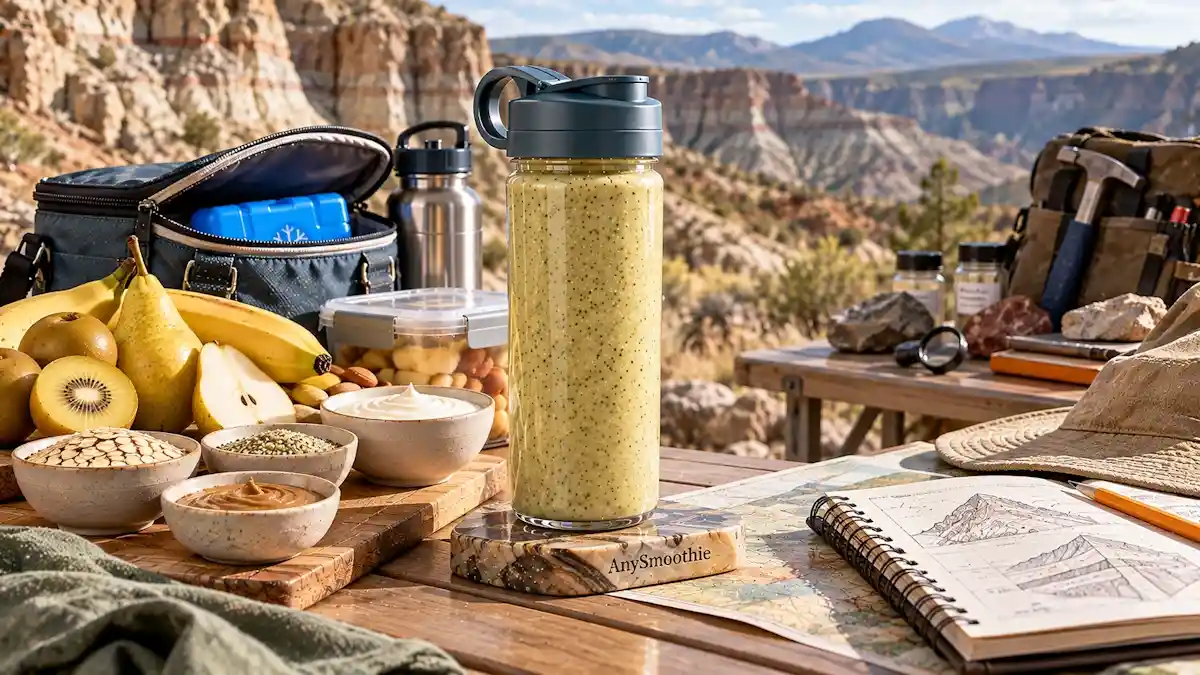
Long field days can leave you choosing between another dry snack and a lunch that’s awkward to unpack. Portable smoothies for field geologists offer a quick-to-prepare option, provided you plan for safe chilling and a bottle that won’t leak beside your notebook.
A useful blend combines fruit with a protein source and enough substance to fit your appetite. These three recipes use ordinary groceries, pack into single-serving bottles, and work alongside other field food. Start with the ingredients and storage choices that matter before you leave the kitchen.
How to Make Portable Smoothies Work in the Field
Portable smoothies work best when their ingredients balance energy, protein, and drinkability for convenient field use.
Choose ingredients for steady, practical fuel
Fruit supplies carbohydrates, which digestion breaks down into simple sugars, including glucose. Your cells use these nutrients to produce ATP, the molecule that powers normal cellular work.
Meanwhile, milk, yogurt, and soy milk contribute protein. Digestion releases amino acids that support normal tissue maintenance and other physiological systems. Because plant-based drinks vary, choose soy milk when you want a protein-containing substitute for dairy.
Oats, nut butter, and seeds add energy and make the blend more substantial. Their fats provide fatty acids that cells can also use for energy. Start with modest amounts, because an overly thick smoothie becomes difficult to drink during a short stop.
Pack smoothies to stay cold and easy to drink
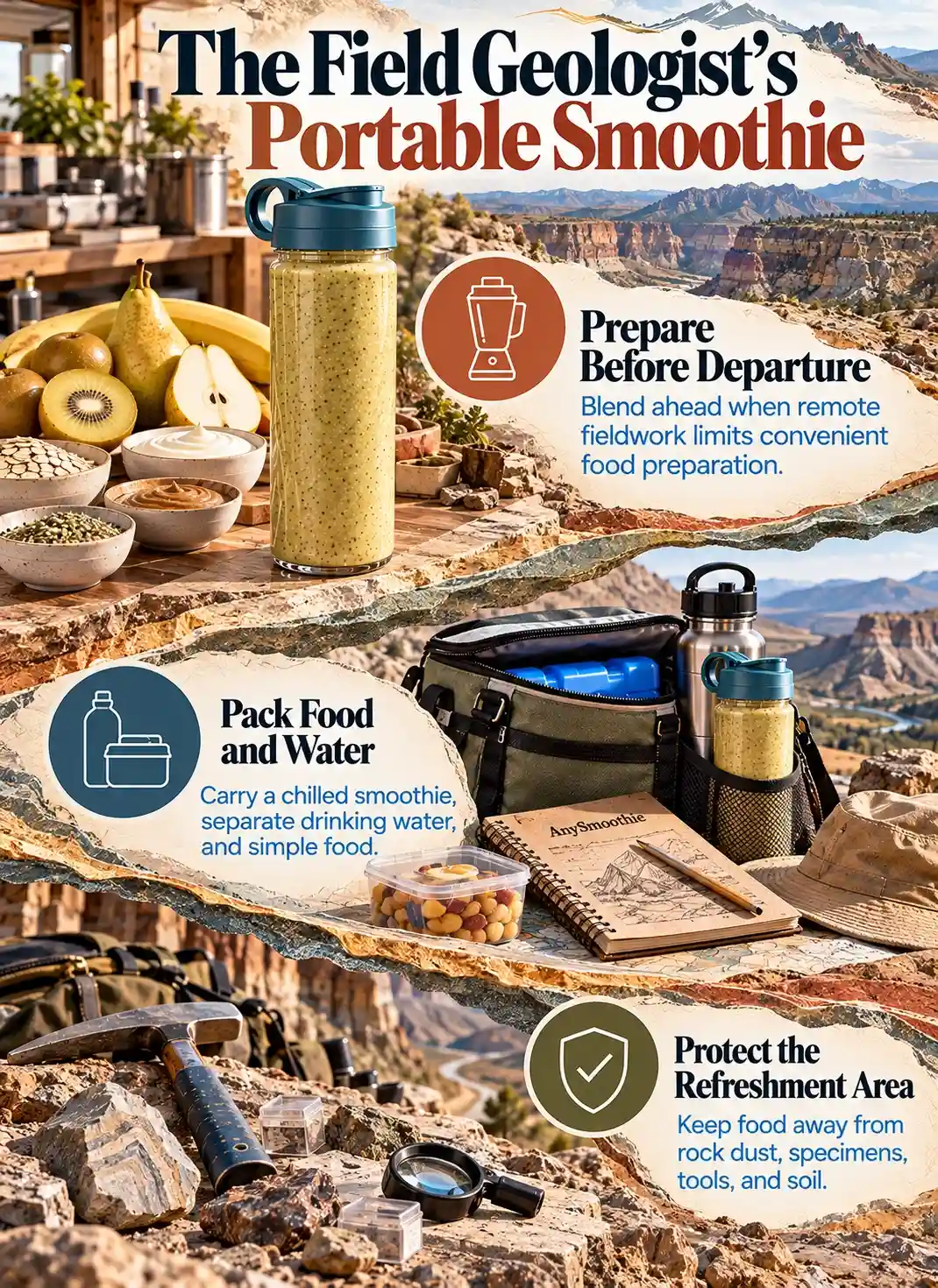
Use a food-safe, leak-resistant bottle with a secure cap. A wide mouth makes filling easier and gives you better access for cleaning sticky oats or seed residue. Leave some headspace, then tighten the lid before packing.
Pre-chill your ingredients and refrigerate the finished smoothie promptly. Carry it in an insulated cooler or lunch bag. USDA’s packed-lunch safety guidance recommends at least two cold sources with perishable food in an insulated bag.
Keep perishable dairy and prepared plant-based smoothies at 40°F or below. Discard them after more than two hours without refrigeration, or one hour when temperatures exceed 90°F. Follow applicable local food-safety requirements.
A chilled bottle at departure doesn’t guarantee a safe drink at lunchtime; cold storage has to last through the journey.
Keep the cooler shaded, and open it only when needed.
3 Portable Smoothies for Field Geologists
Each recipe makes one serving. Choose a bottle with room for the blend and some headspace.
| Smoothie | Key ingredients | Protein source | Texture | Best field-day use |
|---|---|---|---|---|
| Banana oat | Banana, oats, peanut butter | Milk, peanut butter | Thick | Filling morning start |
| Berry yogurt | Berries, yogurt | Yogurt | Creamy, tangy | Cool lunch break |
| Mango spinach | Mango, spinach | Soy milk | Smooth | Plant-based snack |
Choose by appetite and carrying conditions; all three need cold storage.
Banana, oat, and peanut butter for a filling start
Ingredients
- 1 medium banana
- 1/4 cup rolled oats
- 1 tablespoon peanut butter
- 3/4 cup 2% milk
Steps
Blend the banana, oats, peanut butter, and milk until smooth. Add milk as needed.
Carbohydrates and fats supply energy, while oats and peanut butter add body and help the serving feel filling. Substitute soy milk for dairy or sunflower seed butter for peanut butter.
Estimated Nutrition per Serving
- Calories: ~370 kcal
- Protein: ~14 g
- Carbohydrates: ~53 g
- Fat: ~14 g
- Fiber: ~6 g
- Sugars: ~25 g
Berry and yogurt for a cool, tangy break
Ingredients
- 1 cup frozen mixed berries
- 1/2 cup plain nonfat Greek yogurt
- 1 tablespoon rolled oats
- 1/2 cup water
Steps
Blend the berries, yogurt, oats, and water until smooth. Add a little water if needed.
Yogurt contributes protein, while berries supply carbohydrates and tart flavor. For a dairy-free version, use plain soy yogurt. Let the finished blend stand briefly, then stir before bottling because oats thicken as they absorb liquid.
Estimated Nutrition per Serving
- Calories: ~170 kcal
- Protein: ~12 g
- Carbohydrates: ~28 g
- Fat: ~2 g
- Fiber: ~7 g
- Sugars: ~14 g
Mango, spinach, and soy for a plant-based option
Ingredients
- 1 cup frozen mango
- 1/2 cup loosely packed spinach
- 3/4 cup unsweetened soy milk
- 1 teaspoon ground flaxseed
Steps
Blend the mango, spinach, soy milk, and ground flaxseed until smooth. Add liquid gradually so the smoothie stays easy to pour.
Mango gives this blend sweetness, while the small spinach portion keeps the flavor approachable. Soy milk supplies protein. Substitute peaches for mango if preferred.
Estimated Nutrition per Serving
- Calories: ~175 kcal
- Protein: ~8 g
- Carbohydrates: ~27 g
- Fat: ~5 g
- Fiber: ~4 g
- Sugars: ~23 g
For uneven field schedules, the mango-spinach option is easy to pour, while the thicker banana-oat blend may be more satisfying during a longer break. Whatever you choose, keep the drink chilled and step away from equipment before opening your bottle.
Adjust Your Smoothie for the Route, Weather, and Workday
Match your serving to the day’s walking distance and available breaks. Cooler access matters as much as the recipe when you’re away from your vehicle.
Make small changes for heat, cold, and long hikes
Frozen fruit lowers the blend’s starting temperature, but it doesn’t replace ice packs. In hot weather, keep your smoothie inside the cooler until you’re ready to drink it. During cold weather, protect the bottle from freezing solid.
For longer gaps between breaks, oats or nut butter can make a serving more substantial. However, a thicker blend isn’t automatically a longer-lasting source of energy. Portion size and the full ingredient mix matter.
When carrying weight is a concern, make a smaller serving and drink it at an early break. Blending reduces food into smaller particles; digestion then releases nutrients that support normal energy pathways.
Keep water and other food in the plan
A smoothie contributes fluid, but carry separate drinking water for the route. You may finish your smoothie well before the day’s work ends, particularly when mapping requires repeated climbs or extended time in the sun.
Pair it with foods that suit your appetite and carrying space. Whole fruit, crackers, and nuts offer options that don’t require blending or the same chilled storage.
For more recipes focused on hydration during travel, see hydration smoothies for frequent travelers.
A smoothie can include several food groups, but one bottle doesn’t need to cover everything you eat that day. Bring enough other food to accommodate delays.
Conclusion: A Reliable Smoothie Starts Before Departure
A simple recipe, a secure bottle, and dependable cold storage make smoothies a practical addition to your field kit. Test your chosen blend at home first so you know its thickness and whether the portion suits your appetite.
Then pack it with water and other snacks as needed. The most useful field smoothie is one you enjoy drinking, can carry without leaks, and can keep safely cold until your break.
🛡️ Safety Notes & Dietary Interactions
- Cold-chain safety: Milk, yogurt, soy milk, and prepared fruit are perishable. Keep smoothies at 40°F or below using an insulated cooler with cold sources, particularly during hot fieldwork.
- Heat exposure: Extended geological fieldwork can involve sun, climbing, and long periods away from refrigeration. Keep the cooler shaded and open it only when necessary to limit warming.
- Allergen awareness: The recipes include dairy, peanut butter, soy, oats, and flaxseed. Check labels and cross-contact warnings carefully, especially when substituting sunflower seed butter or plant-based products.
- Field hydration: Smoothies contribute fluid but do not replace drinking water during demanding routes. Carry sufficient water separately, and bring additional foods when fieldwork extends beyond the smoothie serving.
FAQs
Which smoothie is best for a demanding field morning?
The banana, oat, and peanut butter smoothie is the most substantial recipe, providing approximately 370 calories, 14 grams of protein, and 6 grams of fiber. Its thicker texture can make it more filling, making it a practical choice when there is a longer gap before your next field break.
How can I keep a smoothie cold during fieldwork?
Pre-chill the ingredients and finished smoothie, then place it in an insulated cooler or lunch bag with cold sources. Keep the cooler shaded and minimize opening it. The article recommends maintaining perishable dairy and prepared plant-based smoothies at 40°F or below throughout the journey rather than relying on a chilled bottle alone.
What should I choose if I need a plant-based smoothie?
The mango, spinach, and soy smoothie is the article’s plant-based option. Unsweetened soy milk supplies protein and the recipe includes a small amount of ground flaxseed. Peaches can replace mango if preferred. If using another plant beverage, check its nutrition label because protein content can differ substantially between products.
Can frozen fruit keep my smoothie safe without ice packs?
No. Frozen fruit can lower the smoothie’s starting temperature, but the article specifically notes that it does not replace cold packs. Perishable ingredients still need dependable cold storage at 40°F or below. This is particularly important during hot fieldwork, when a cooler can warm quickly if opened frequently or left in direct sun.
Is one smoothie enough for an entire fieldwork day?
Not necessarily. The article presents smoothies as one practical food option rather than complete daily nutrition. Long mapping days, repeated climbs, and extended time outdoors can require additional food and fluids. Carry water separately and consider whole fruit, crackers, nuts, or other suitable foods to cover longer gaps and unexpected delays.

Medical Disclaimer: AnySmoothie content is for educational purposes only and is not a substitute for professional medical advice. Consult a healthcare provider for personalized guidance. See our full Disclaimer & Terms of Use. AI Transparency: AnySmoothie may use AI to support content development. All content undergoes human editorial review for accuracy, clarity, and editorial quality. See our full AI Transparency.