
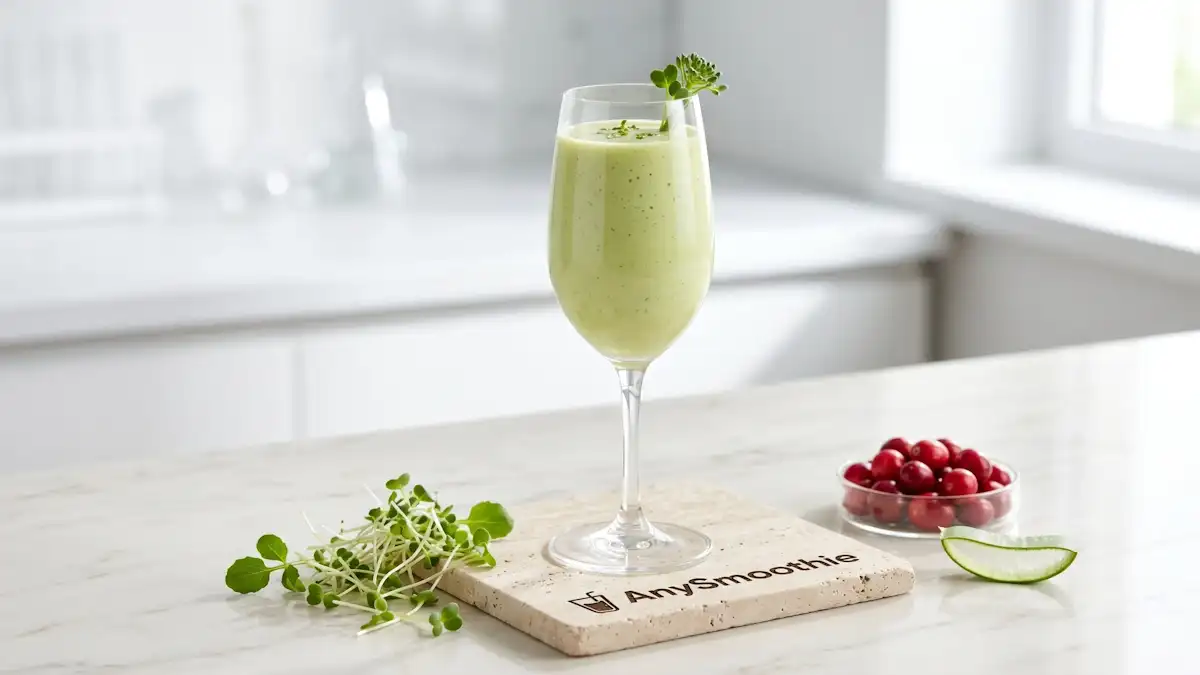
Your stomach is not a neutral mixing bowl. It is a tight, acidic filter that shapes how food breaks down and which microbes can survive. That is why smoothies for gastric microbial balance work best when they are built with purpose, not piled high with random health foods.
A good blend can be easy to digest, easy to customize, and useful for combining fiber, polyphenols, and soothing compounds in one serving. A gut-friendly smoothie framework helps keep the formula simple, so the stomach gets support instead of overload.
The Gastric Outpost: Why Stomach Flora Matters for Digestion
The stomach is harsh by design. Acid, motility, and the mucus layer all shape the local ecosystem. That means balance is less about flooding the body with bacteria and more about keeping the stomach environment stable.
When acid output and movement are steady, food breaks down more predictably. Nutrients also move into the next stage of digestion with less drag. In that setting, plant compounds can help support the lining and keep the gastric terrain less friendly to opportunistic microbes.
Acid-Resistant Microbes and the Stomach’s Resident Ecosystem
Some microbes tolerate the stomach better than others. pH, mucus, and meal timing all influence which ones get through.
The stomach acts like a gatekeeper. It filters, slows, and sorts. That is one reason smaller, well-timed meals often feel better than constant grazing.
A stable stomach environment matters more than adding more microbes to the mix.
What Throws the System Off, from Stress Eating to Ultra-Processed Foods
Low fiber intake can leave digestion sluggish. Frequent snacking can keep the stomach busy without giving it real downtime. Highly refined foods, alcohol, and rushed meals can also make the system less comfortable.
Smooth textures do not fix poor ingredients. A sweet, thin blend made from juice and powders is still a poor choice if the base is weak. Real food quality still matters.
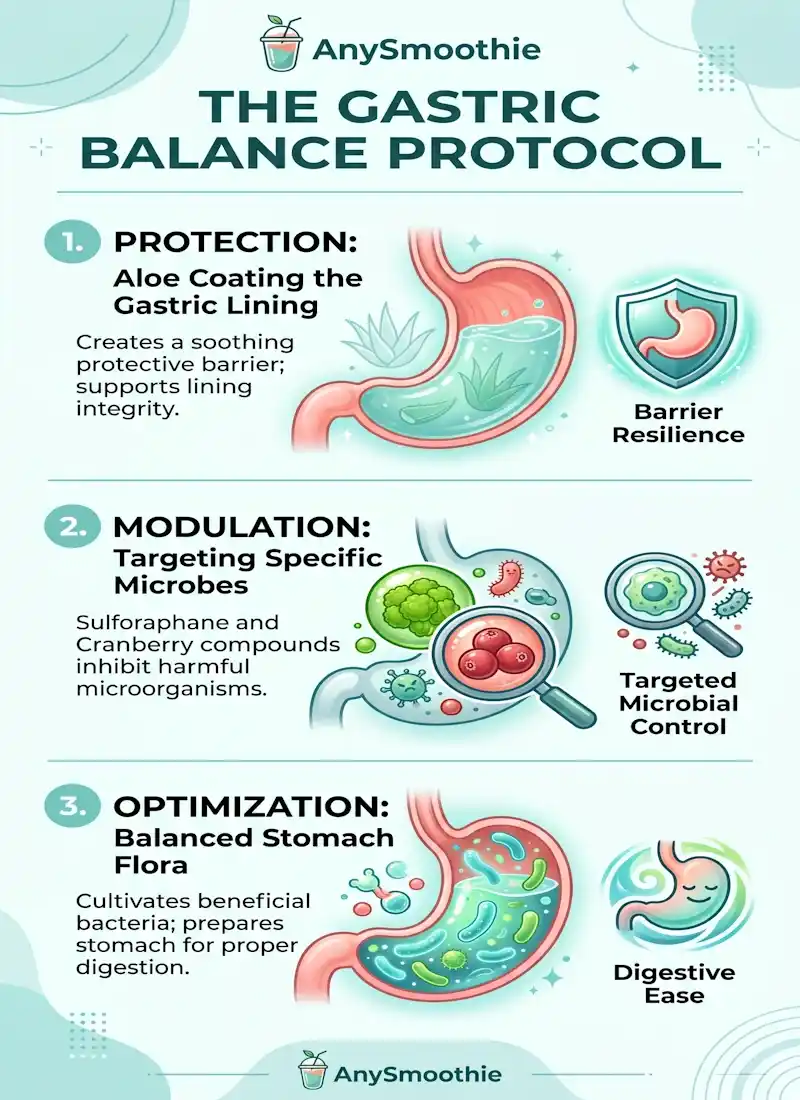
Selective Modulation: Ingredients That Hinder Opportunistic Bacteria
The best smoothies for gastric microbial balance use compounds that support the lining, favor healthy motility, and help create a less inviting setting for unwanted microbes. That means choosing ingredients with a clear job.
| Gastric Modulator | Physiological Target | Impact on pH Balance | Best Smoothie Pairing | Synergistic Nutrient |
|---|---|---|---|---|
| Sulforaphane (Broccoli Sprouts) | Gastric antioxidant defense, supports the Nrf2 pathway | Helps support a steadier mucosal environment | Cucumber, lemon, green apple | Vitamin C |
| Cranberry Proanthocyanidins | Bacterial adhesion control | Fits best in a tart, moderate-acid blend | Pear, mint, lime | Soluble fiber |
| Gingerol (Ginger) | Gastric motility and digestive flow | Does not push acidity hard, supports comfort | Pear, kefir, lime | Polyphenols |
Sulforaphane gets the most attention for a reason. A review in PubMed on sulforaphane and gastric mucosa describes how broccoli sprout compounds support antioxidant enzymes through Nrf2 signaling. That matters because the gastric lining faces constant oxidative stress.
Sulforaphane from Broccoli Sprouts, the Nrf2 Support Ingredient
Broccoli sprouts work well in smoothies because they blend fast and pair well with bright flavors. Keep the serving small and the texture light.
Sulforaphane supports the gastric antioxidant defense system through the Nrf2 pathway. In plain terms, it helps the body maintain its own protective response.
Cucumber, lemon, and green apple make the flavor easier to drink. A little vitamin C also helps round out the profile. Use enough to notice the sprouts, but not so much that the blend turns bitter.
Cranberry Proanthocyanidins and Gingerol, a Smart One-Two Combo
Cranberry proanthocyanidins are known for helping limit bacterial adhesion. That makes cranberry useful when you want a tart, clean-tasting blend with a microbial angle. Research on cranberry and H. pylori anti-adhesion effects supports that idea, even though the data is not a promise of treatment.
Gingerol brings a different benefit. It supports gastric motility and digestive flow. A recent PubMed review on ginger and gut microbiota also links ginger compounds with shifts in beneficial bacteria and gut metabolites.
Cranberry and ginger fit together well. Add pear for softness, mint for freshness, or lime for a sharper finish. Kefir can work too, if you tolerate dairy well.
3 ‘Gastric-Flow’ Balance Smoothie Recipes
These are not big, heavy blends. They are meant to support normal digestion without crowding the stomach.
The ‘Epithelial-Guard’ Aloe, Broccoli Sprout, and Ginger Blend
Ingredients
- 3/4 cup unsweetened coconut water
- 1/4 cup food-grade, decolorized aloe vera juice
- 1/4 cup broccoli sprouts
- 1/2-inch piece fresh ginger
- 1 small green apple, cored and chopped
- 1/2 cup ice, optional
Aloe can soften the mouthfeel. Broccoli sprouts bring sulforaphane support. Ginger helps keep things moving. The result is fresh, light, and easy to sip.
Estimated Nutrition per Serving
- Calories: ~120 kcal
- Protein: ~2 g
- Carbohydrates: ~29 g
- Fat: ~1 g
- Fiber: ~5 g
- Sugars: ~21 g
A Cranberry-Cucumber Smoothie for Microbial Balance and Hydration
Ingredients
- 1/2 cup unsweetened cranberry juice
- 1 cup cucumber, chopped
- 1/2 medium pear, cored and chopped
- 1 tablespoon chia seeds
- 1/2 cup cold water
- 5–6 fresh mint leaves, optional
- Ice, as needed
This one works because it balances tartness with hydration. The fiber helps give the stomach a slower, smoother ride. That can matter when comfort and regularity are both goals.
Estimated Nutrition per Serving
- Calories: ~155 kcal
- Protein: ~3 g
- Carbohydrates: ~31 g
- Fat: ~4 g
- Fiber: ~9 g
- Sugars: ~14 g
I’d blend the cucumber and cranberry juice first, then add the pear and chia. It helps the cucumber disappear into the base and gives the finished drink a smoother consistency.
A Gentle Evening Smoothie for Motility and Recovery
Ingredients
- 1/2 medium pear, chopped and frozen
- 1/4-inch piece fresh ginger
- 1 tablespoon almond butter
- 3/4 cup plain unsweetened kefir
- 1/4 cup cold water, as needed
Keep it small.
This blend is calmer and less dense. The small fat load can improve satiety without weighing the stomach down. It is a good choice when you want digestive support late in the day.
Estimated Nutrition per Serving
- Calories: ~220 kcal
- Protein: ~10 g
- Carbohydrates: ~27 g
- Fat: ~10 g
- Fiber: ~5 g
- Sugars: ~18 g
How to Build a Smoother Smoothie for the Stomach
Start with a smaller portion, then adjust. A 10 to 12 ounce smoothie is often enough. Bigger is not always better, especially when the goal is comfort.
Timing matters too. Many people handle smoothies better between meals or when appetite is low. Sip slowly. Pay attention to texture. Moderate fiber is usually easier than a thick, seed-heavy blend.
Common Mistakes That Work Against Gastric Balance
Too much fruit sugar can make a blend feel sloppy. Harsh add-ins, like aggressive spice loads, can irritate sensitive stomachs. Excess dairy can also be a problem for some people.
Powder-only smoothies are another weak point. They often miss the food matrix that helps with nutrient partitioning and metabolic efficiency. Real ingredients do more for the stomach than a long supplement list.
Conclusion
Smoothies can support gastric microbial balance when they are built with the right ingredients and the right portion size. Sulforaphane brings antioxidant support through the Nrf2 pathway, cranberry helps with bacterial adhesion control, and ginger supports normal flow. Start with one simple blend, keep it small, and watch how your stomach responds. The best formula is the one that feels steady, not heavy.
⚠️ SAFETY NOTES: Gastric Microbial Balance
ACUTE GASTRITIS & SPICES: If you have active gastric ulcers or acute gastritis, ginger and lemon juice can be highly irritating. Avoid these ingredients during flare-ups and consult your gastroenterologist before introducing pro-kinetic agents.
ALOE VERA PURITY: Only use inner leaf aloe vera gel specifically labeled for internal use. Whole-leaf aloe contains aloin, a potent latex with laxative effects that can cause severe cramping and electrolyte imbalances if consumed regularly.
GOITROGENS IN SPROUTS: While broccoli sprouts are highly beneficial for the stomach, they contain goitrogens that can interfere with iodine uptake. If you have hypothyroidism, consume sprouts in moderation and ensure your iodine levels are adequate.
CRANBERRY & KIDNEY STONES: Cranberry juice and extracts are high in oxalates. If you have a history of calcium-oxalate kidney stones, limit your intake and ensure you are consuming enough calcium to bind oxalates in the digestive tract.
FIBER OVERLOAD: Adding too much fiber (like chia or large amounts of apple) to a gastric-focused smoothie can lead to delayed gastric emptying (gastroparesis-like symptoms) in sensitive individuals, causing bloating and early satiety. Keep portions small and fiber moderate.
FAQ
How does Sulforaphane support the gastric antioxidant response via Nrf2?
Sulforaphane, a potent isothiocyanate derived from broccoli sprouts, acts as an inducer of the Nrf2 (Nuclear factor erythroid 2-related factor 2) transcription factor. Biochemically, Nrf2 activation triggers the Antioxidant Response Element (ARE), which upregulates the production of endogenous protective enzymes like heme oxygenase-1. Supporting this physiological system optimizes the natural pathways of mucosal defense, helping the gastric lining maintain structural integrity against oxidative stress and environmental triggers.
Why are Cranberry Proanthocyanidins effective for microbial modulation?
Cranberry proanthocyanidins (PACs), specifically A-type linkages, possess a unique biochemical structure that interferes with the adhesion mechanisms of certain opportunistic bacteria. By inhibiting the capacity of microbes to attach to the gastric epithelial lining, these compounds support the physiological systems of microbial balance. This selective modulation optimizes natural pathways of clearance, ensuring that the stomach’s resident ecosystem remains stable and less hospitable to unwanted colonizers.
How does Gingerol influence gastric motility and digestive flux?
Gingerol, the bioactive constituent of ginger, interacts with serotonergic and cholinergic receptors in the gastrointestinal tract. This biochemical signaling supports the physiological systems of gastric emptying and antral contractions. By optimizing natural pathways of motility, gingerol ensures that food and metabolites move efficiently through the “gastric outpost,” preventing stasis and maintaining the biochemical mechanics of a healthy digestive flow.
What is the role of the “Gastric Mucus Layer” in microbial gatekeeping?
The gastric mucus layer acts as a physical and biochemical barrier that protects the epithelium from acid and enzymatic degradation. Supporting the production of this protective mucin through nutrient-dense smoothie inputs optimizes the physiological systems of the gut barrier. This structural integrity is essential for the stomach’s role as a gatekeeper, as it shapes the local environment to favor commensal species while filtering out acid-sensitive opportunistic microbes.
In what way does Vitamin C synergy enhance the Nrf2-mediated defense?
Vitamin C acts as a critical electron donor that supports the physiological systems of redox balance within the gastric environment. When paired with Nrf2 activators like sulforaphane, Vitamin C helps recycle oxidized antioxidants back into their functional states. This biochemical synergy optimizes natural pathways of tissue repair and cellular defense, ensuring that the gastric terrain remains resilient during the “Phase I” breakdown of dietary proteins and fats.

Medical Disclaimer: AnySmoothie content is for educational purposes only and is not a substitute for professional medical advice. Consult a healthcare provider for personalized guidance. See our full Disclaimer & Terms of Use. AI Transparency: AnySmoothie may use AI to support content development. All content undergoes human editorial review for accuracy, clarity, and editorial quality. See our full AI Transparency.