
A smoothie can be a quick breakfast, but it can also miss the mark if it ignores mineral balance. Iodine matters because the thyroid uses it to make the hormones that keep metabolism on track.
Iodine-rich smoothies for thyroid function work best when they stay practical. The goal is simple, steady nutrition, not a giant iodine dose in a glass. That means choosing the right ingredients, keeping seaweed small, and building blends that still taste good enough to repeat.
How iodine supports thyroid function in the body
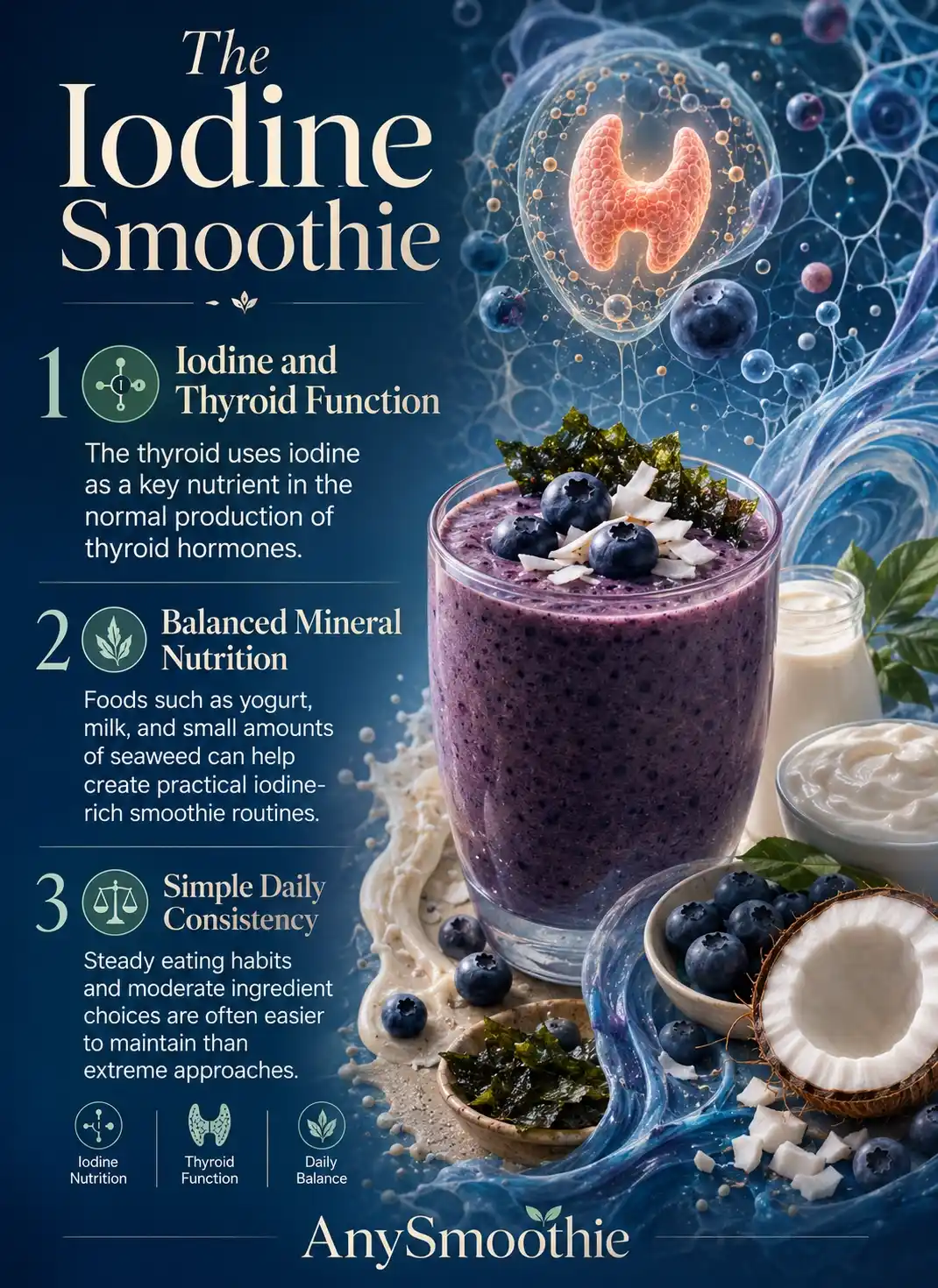
The thyroid needs iodine as a raw material. Without it, the gland cannot make normal amounts of T4 and T3, the two main thyroid hormones. Those hormones help guide energy use, temperature control, and many day-to-day body processes.
A clear review of this pathway appears in a ScienceDirect chapter on iodine and thyroid hormone synthesis. The core idea is simple, though. Iodine is not a bonus nutrient here. It is part of the hormone-building process itself.
What the thyroid uses iodine for
Inside the thyroid, iodine gets attached to tyrosine, an amino acid used to build thyroid hormones. That process helps form T4 and T3. When iodine intake is too low, normal hormone production can get disrupted.
This does not mean more iodine is better. The thyroid works best with a steady supply, not a flood. That is why food-based choices often make more sense than guessing with supplements.
Why food sources matter more than random supplements
Food brings context. A smoothie can combine iodine with protein, fiber, and antioxidants in one meal. That matters because the body handles nutrients more smoothly when they come with other foods.
For a plain-language summary of iodine’s role in thyroid health, Oregon State University’s iodine guide is helpful. It also shows why eating patterns matter more than chasing one nutrient in isolation.
The best ingredients for iodine-rich smoothies for thyroid function
The best blends use a few iodine-rich foods plus ingredients that improve taste and texture. The table below gives a quick side-by-side view.
| Ingredient | Iodine level | Best smoothie use | Flavor profile | Thyroid-friendly notes |
|---|---|---|---|---|
| Greek yogurt | Moderate | Creamy base | Tangy, rich | Adds protein and blends well with fruit |
| Milk | Moderate | Thin or creamy base | Mild, clean | Easy way to add iodine without strong flavor |
| Fortified plant milk | Varies | Dairy-free base | Mild, depends on brand | Check the label for iodine fortification |
| Nori | Low to moderate | Tiny strip blended in | Light sea taste | Easier to control than kelp |
| Kelp | Very high | Tiny pinch only | Briny, sharp | Use sparingly because iodine can spike fast |
Seaweed, yogurt, and milk give you the most useful starting points. Seaweed can be excellent, but it deserves respect. A little can change a recipe. A lot can overwhelm it.
For a useful nutrient breakdown, the Linus Pauling Institute’s iodine page is a solid reference. It helps explain why the source matters as much as the mineral itself.
Fruits, greens, and boosters that round out the blend
Fruits and extras do not add much iodine, but they shape the smoothie into something you will actually drink. Berries bring tartness and color. Banana adds body. Pineapple gives a bright edge. Spinach softens into the background.
Chia and flax add thickness. Ginger brings warmth. Citrus keeps the flavor fresh. These ingredients help the smoothie feel like food, not a supplement in disguise.
A balanced blend works like a well-tuned recipe. One ingredient handles the mineral side, while the others make the drink satisfying.
Ingredients to be careful with if you want a thyroid-friendly smoothie
Raw cruciferous greens can be a lot in large amounts, especially if you use them every day. Kale, raw broccoli, and similar greens are fine in normal food portions, but huge raw servings are a different story.
Variety matters more than fear. Cooked greens are often easier to use, and rotating ingredients keeps any one food from taking over your routine.
3 Iodine rich smoothies for thyroid function
How to make these smoothies safe and sensible for everyday use
Iodine helps, but too much can be a problem for some people. Seaweed is the biggest place where intake can swing fast, because iodine levels vary a lot by type and brand. A small amount is enough.
The thyroid tends to like consistency. If you use seaweed in a smoothie, keep the portion small and avoid stacking multiple iodine-heavy foods in the same drink every day. A calm routine is easier to live with than a high-low pattern.
Seaweed is a tool, not a daily measuring stick. Small portions are easier to control.
People with known thyroid conditions, pregnancy, breastfeeding, or a history of iodine sensitivity should get personal guidance before making big diet changes. The PMC review on iodine and thyroid hormone biosynthesis is a useful reminder that both too little and too much iodine can matter.
Conclusion
Iodine-rich smoothies for thyroid function can fit into real life when they stay balanced. Choose food sources like yogurt, milk, or small amounts of seaweed, then add fruit, greens, and seeds for texture and taste.
Keep the seaweed small. Rotate ingredients. Build smoothies you would happily make again tomorrow. That is the kind of routine that lasts.

Medical Disclaimer: AnySmoothie content is for educational purposes only and is not a substitute for professional medical advice. Consult a healthcare provider for personalized guidance. See our full Disclaimer & Terms of Use. AI Transparency: AnySmoothie may use AI to support content development. All content undergoes human editorial review for accuracy, clarity, and editorial quality. See our full AI Transparency.