
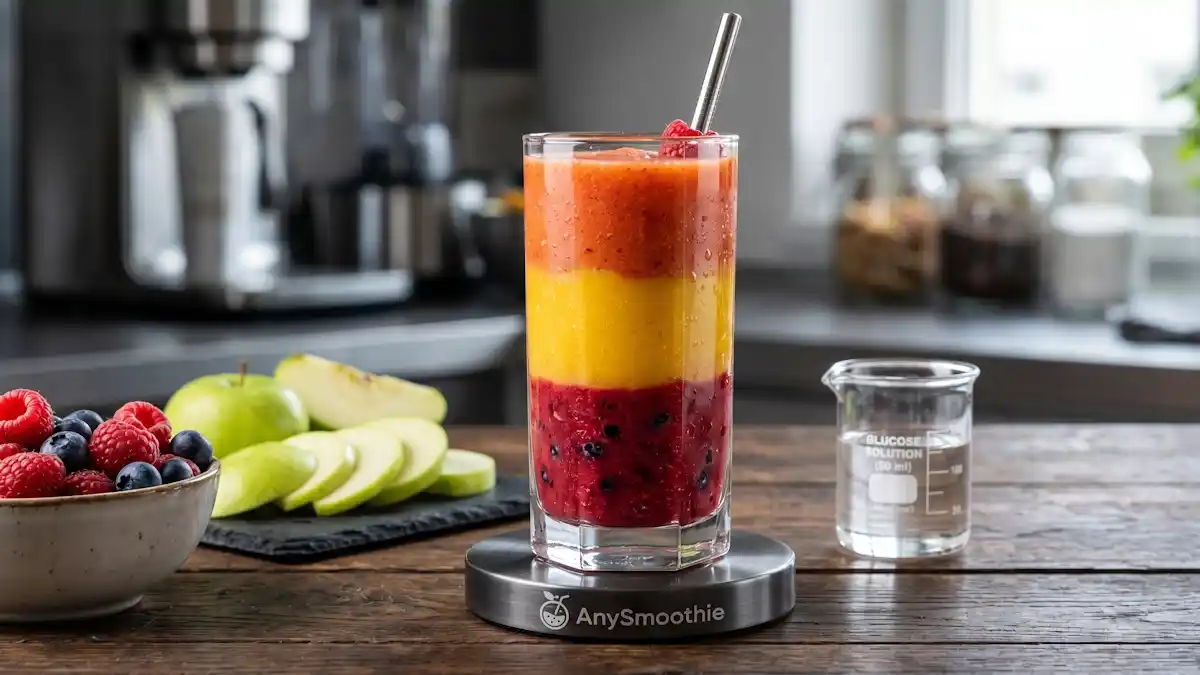
Fructose kinetics is the pace at which fructose leaves the smoothie, crosses the gut wall, and reaches the liver. That pace matters because a fast, oversized dose can feel rough in the gut and put more pressure on the liver’s first-pass workload.
With the right fruit mix, fiber, and sugar balance, a smoothie can behave more like a controlled feed than a sugar rush. These fruit smoothie protocols for fructose kinetics focus on absorption speed, gut comfort, and metabolic efficiency, without asking you to give up fruit.
Fructose Logistics: From the Intestinal Lumen to the Hepatic Portal
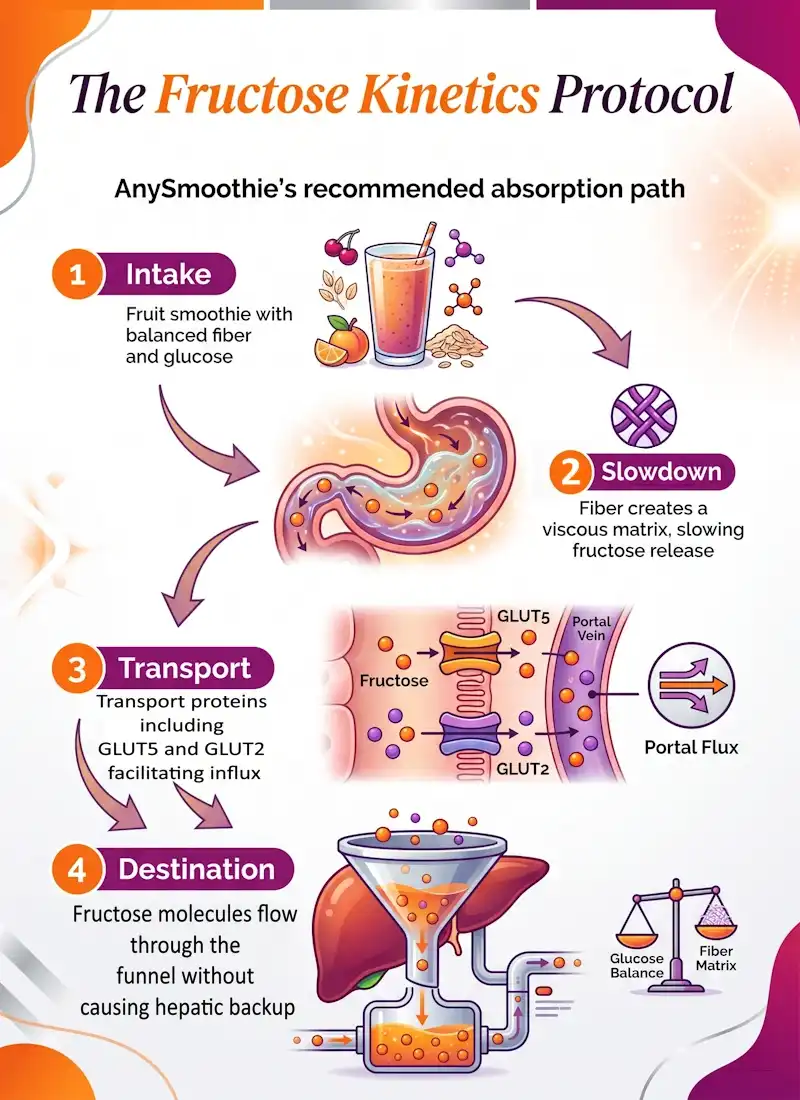
After a smoothie hits the stomach, it moves into the small intestine. There, fructose has to cross the intestinal lining before it reaches the hepatic portal vein and the liver. That first step is the main bottleneck.
A review of intestinal fructose absorption explains that the small intestine can process a meaningful share of the load before much of it reaches the liver. When the dose is modest, the system keeps up better. When the dose is large, transport slows and the load gets less tidy.
GLUT5 vs. GLUT2: The Main Transport Bottlenecks
GLUT5 is the main entry gate for fructose on the gut cell surface. GLUT2 helps move sugar out of the cell and can join the process when the load rises. In plain terms, transport capacity matters as much as total sugar.
That is why two smoothies with the same grams of fruit sugar can feel different. One may go down cleanly. The other may sit heavy, cause bloating, or trigger gas. A review on intestinal fructose absorption and modulation makes the same point, the mix changes the way fructose moves.
Why the 1:1 Glucose to Fructose Ratio Matters
A 1:1 glucose-to-fructose ratio can improve overall absorption kinetics because glucose helps recruit the pathways that keep fructose moving. That does not mean every smoothie needs lab-grade precision. It does mean that fruit-heavy blends built on only one sugar type are easier to overload.
In practice, balance is the goal. Pair higher-fructose fruit with fruit that tilts the blend toward glucose, and keep the total dose reasonable. That gives the gut a cleaner job and gives the liver a more predictable first pass.
The Glucose-Fructose Synergy: Balancing Monosaccharide Flux
The best smoothie design is about flow control. Soluble fiber slows release, while fruit choice changes the sugar mix and the speed of uptake. Polyphenol-rich fruit can also shape how the gut handles the load.
The point is not to chase the lowest sugar number. It is to make the sugar you do drink arrive in a form your gut can process smoothly.
Pectin and Soluble Fiber: Slowing Gastric Emptying for Kinetic Stability
Pectin adds viscosity. That makes the smoothie thicker and slows the rate at which it leaves the stomach. As a result, fructose reaches the small intestine in a steadier stream.
Apple, pear, and citrus are useful here because they bring natural pectin. Chia can do the same job on the texture side. A slower release often means less intestinal overload and a smoother energy curve.
Anthocyanin-Rich Fruit Choices and Their Modulating Effects
Berries, cherries, and other deeply colored fruits bring anthocyanins and related polyphenols. These compounds may support a steadier intestinal response and help shape carbohydrate handling in a favorable direction.
That does not make them magic. It does make them smart smoothie inputs. A berry base can soften the sugar profile of a drink while adding flavor that does not need much help from sweeteners.
A review of intestinal fructose handling is useful context when you build these blends, because the transporters and the sugar mix work together, not in isolation. The goal is a cleaner path through the gut, not a bigger sugar hit.
A Quick Comparison of the Main Fructose Modulators
| Ingredient | Physiological Mechanism | Impact on Hepatic Flux | Best Smoothie Pairing | Target System |
|---|---|---|---|---|
| Soluble Fiber (Pectin) | Increases viscosity and slows gastric emptying | Slower, steadier fructose delivery to the portal vein | Apple, pear, citrus, chia | Stomach and small intestine |
| Glucose (co-transporter trigger) | Supports glucose-linked transport and paired fructose uptake | Helps keep fructose in first-pass handling when the ratio is balanced | Banana, grapes, post-workout fruit blends | Small intestine and liver |
| Anthocyanins (Polyphenols) | May temper intestinal carbohydrate handling and support enzyme balance | Smoother downstream load, less abrupt flux | Blueberries, blackberries, cherries | Intestine and liver |
The takeaway is simple. A 1:1 glucose-to-fructose ratio often gives the cleanest absorption profile, while pectin slows the feed rate and berries add a useful polyphenol layer.
The smoothest smoothie is often the one that slows its own pace before your gut has to.
3 ‘Kinetic-Safe’ Fruit-Based Smoothie Recipes
Supporting Urate and ATP Homeostasis
Once fructose reaches the liver, the energy cost matters. Fructokinase uses ATP quickly, so a huge bolus asks the liver to do more work at once. That is one reason portion size matters even when the fruit itself looks healthy.
A review of fructose transport and metabolism notes that small doses can be handled well in the intestine, while higher loads are more likely to push past that first-pass filter. That fits the practical rule here, keep the smoothie load within the system’s ability to clear it.
Mitochondrial Priming: Supporting the Energetic Demand of Fructokinase
Mitochondrial priming means the body has ready energy and a lower stress load. A smoothie after a walk, workout, or meal is often easier to handle than the same blend on a hard fast.
The idea is simple. When energy demand and energy supply line up, fructose handling tends to feel smoother. That does not require supplements or gimmicks. It requires timing, portion control, and a fruit mix that fits your day.
Simple Habits That Lower the Chance of Overloading the System
Keep smoothie portions moderate. Use whole fruit instead of juice. Add pectin-rich fruit or chia when the blend feels too fast. Drink it at a normal pace, not in one rushed gulp.
If a blend feels bloating or heavy, reduce the total fruit first. Then adjust the fruit mix and fiber before changing everything else. That makes troubleshooting easy and keeps the protocol useful.
Conclusion
The core idea behind fruit smoothie protocols for fructose kinetics is control. A balanced glucose-to-fructose mix, enough soluble fiber, and smarter fruit selection can make a smoothie easier on digestion and more predictable for the liver.
You do not need to avoid fruit. You need a blend that fits your gut, your activity level, and the work your body has to do next. Start with one moderate recipe, watch how it feels, and keep the structure that gives you the cleanest response.
🛡️ Safety Notes & Contraindications: Fructose Kinetic Smoothies
Fructose Malabsorption / IBS: Individuals with diagnosed fructose malabsorption or SIBO may experience severe gas and bloating even with “kinetic-safe” blends. Focus on low-FODMAP fruits like strawberries and limit serving sizes to 150-200ml.
Hereditary Fructose Intolerance (HFI): This protocol is NOT suitable for individuals with HFI, a serious genetic condition. Strict medical dietary avoidance of all fructose sources is required.
Hyperuricemia and Gout: Rapid fructose metabolism can transiently raise uric acid levels. If you have a history of gout, keep portions small and ensure high hydration to support renal clearance of urate.
Non-Alcoholic Fatty Liver Disease (NAFLD): While fiber-rich smoothies are better than juice, those with NAFLD should prioritize whole fruit consumption over blended forms to maximize the “mastication signal” and further slow absorption.
Portion Control: “Natural” sugar is still sugar. Even a kinetically optimized smoothie should fit within your daily macronutrient requirements to avoid unintended caloric surplus.
FAQ
How does the “1:1 Glucose-to-Fructose Ratio” optimize intestinal absorption kinetics?
Intestinal fructose absorption is primarily mediated by the GLUT5 transporter, which can become a bottleneck when the load is high. Biochemically, the presence of glucose recruits the GLUT2 transporter to the apical membrane, which assists in moving fructose across the gut wall more efficiently. Supporting this physiological system by pairing high-fructose fruits (like apples) with glucose-balanced fruits (like bananas) facilitates the biochemical mechanics of “paired transport,” reducing the risk of intestinal overload and bloating.
Why is “Pectin” considered a critical regulator of gastric emptying?
Pectin is a soluble fiber that increases the viscosity of the smoothie bolus. Biochemically, this higher viscosity slows the rate at which the stomach empties its contents into the small intestine. Supporting this physiological system through pectin-rich additions (like citrus or apple with the peel) optimizes the natural pathways of “controlled release,” ensuring that fructose arrives at the intestinal transporters in a steady stream rather than an abrupt surge.
What is the role of “Anthocyanins” in modulating the downstream metabolic load?
Anthocyanins are polyphenols found in berries and cherries that can influence carbohydrate handling. Biochemically, these compounds may temper the intestinal response and support a smoother flux toward the liver. Supporting this physiological system through berry-based smoothie templates provides a useful “polyphenol layer” that facilitates the biochemical mechanics of carbohydrate handling without the need for concentrated sweeteners.
How does “Fructokinase Activity” influence hepatic ATP homeostasis?
Once fructose reaches the liver, it is rapidly phosphorylated by the enzyme fructokinase. Biochemically, this process consumes adenosine triphosphate (ATP) quickly; an oversized bolus of fructose can lead to a temporary depletion of hepatic ATP and a subsequent rise in urate. Supporting this physiological system through portion control and kinetic-safe formulations facilitates the biochemical mechanics of “energetic homeostasis,” allowing the liver to process the load without metabolic strain.
Why is “Intestinal Pre-Processing” the key to reducing hepatic first-pass workload?
The small intestine has the capacity to metabolize a meaningful portion of fructose before it ever reaches the liver. Biochemically, this “pre-processing” is most efficient when the dose is modest and the transit is steady. Supporting this physiological system through low-load morning blends or post-workout formulations optimizes the natural pathways of “luminal clearance,” ensuring the liver’s first-pass workload remains within its physiological capacity.

Medical Disclaimer: AnySmoothie content is for educational purposes only and is not a substitute for professional medical advice. Consult a healthcare provider for personalized guidance. See our full Disclaimer & Terms of Use. AI Transparency: AnySmoothie may use AI to support content development. All content undergoes human editorial review for accuracy, clarity, and editorial quality. See our full AI Transparency.