
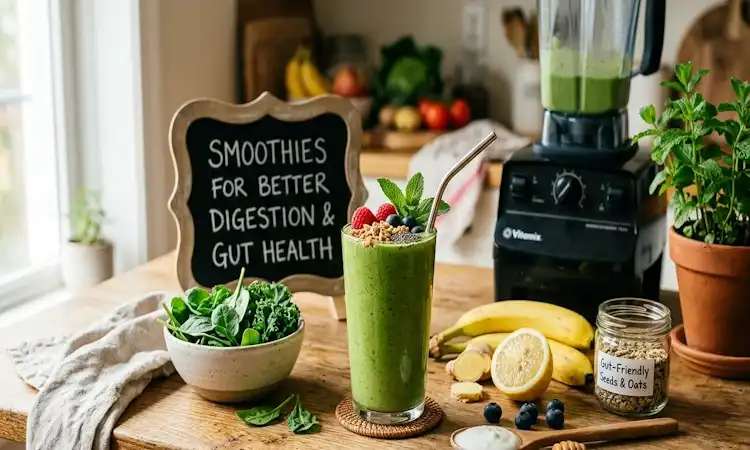
Feel heavy after meals, bloated by late afternoon, or stuck in an on-and-off cycle of sluggish digestion? You’re not alone. Many people want food that feels good going down and even better a few hours later.
That’s where Smoothies for Better Digestion can help. The right blend gives you fluids, gentle fiber, and simple ingredients that are often easier to tolerate than a huge raw salad or a rich breakfast. In this guide, you’ll learn what makes a smoothie gut-friendly, which ingredients tend to work best, what can make bloating worse, and a few easy ideas for different digestive needs.
What makes smoothies for better digestion actually work
A smoothie isn’t magic. Still, it can be a smart way to eat more foods that support regular digestion. Blending fruit, oats, seeds, yogurt, or kefir into one drink makes those ingredients easy to fit into a busy day.
That matters because many people don’t get enough fiber or fluids. A balanced smoothie can help with both, especially when you keep it simple. Some people also find blended foods gentler when their stomach feels touchy.
Fiber, fluids, and gentle foods all play a role
Fiber helps move waste through the digestive tract, while fluids help keep things moving. Put those together, and a smoothie can become one of the easiest high fiber drinks in your routine.
Not all fiber feels the same, though. Soluble fiber, found in foods like oats, chia seeds, bananas, and apples, absorbs water and forms a softer gel-like texture. Because of that, it may feel easier on the stomach than a very rough mix of raw kale, bran, and heaps of seeds.
Texture matters, too. A smoothie made with banana, oats, and water often feels more calming than one packed with icy fruit, protein powder, nut butter, and sweeteners. When digestion is off, gentle usually wins.
Why probiotics and prebiotics matter for gut health
Probiotics are live bacteria found in foods like yogurt and kefir. Prebiotics are the fibers that feed helpful gut bacteria. Bananas, oats, and flax all bring some prebiotic value, so they pair well with cultured dairy.
Think of it like tending a garden. Probiotics add seeds, and prebiotics help them grow. You don’t need both in every smoothie, but together they can support a healthy gut when your body tolerates them well.
Plain yogurt and kefir are common choices for probiotic smoothies. Go for unsweetened versions when possible, since added sugar can make a good idea feel less good later.
The best smoothie ingredients for a calmer, happier gut
The best digestive health smoothies aren’t the fanciest ones. They use a few ingredients that work well together, taste good, and don’t overload your stomach. When in doubt, start with fruit, one liquid, and one or two extras.
Fruits that are easy on digestion, like banana, papaya, and berries
Banana is a classic for a reason. It blends into a smooth texture, adds mild sweetness, and works well in both dairy and dairy-free drinks. It also contains prebiotic fiber, which is one reason it shows up so often in gut-focused blends.
Papaya is another strong pick. Many papaya smoothie recipes use it because it’s soft, hydrating, and easy to pair with ginger or yogurt.
Berries also deserve a spot. Blueberries, strawberries, and raspberries bring fiber and plant compounds, but they don’t usually make a smoothie too heavy. For many people, frozen berries work well because they add body without needing ice.
For a sensitive stomach, ripe fruit usually works better than underripe fruit.
Smart add-ins, from chia and flax to ginger and mint
Small add-ins can change how a smoothie feels. Chia and flax add fiber, which can help support regularity. Ground flax often blends more smoothly, while chia thickens the drink as it sits.
Ginger is a favorite when your stomach feels off. A small piece can add warmth and may help with nausea or that too-full feeling after a meal. Mint can feel soothing, too, though some people with reflux find it irritating. That’s why it helps to test small amounts first.
Keep these extras modest. One teaspoon to one tablespoon is often enough for seeds. A thin slice or two of fresh ginger usually does the job. More isn’t always better, especially in gut healing smoothies.
Base liquids that support digestion without extra heaviness
Your liquid base sets the tone. A lighter base can feel better when you’re bloated, while a cultured base works well when you want a probiotic boost.
Here’s a quick way to compare common options:
| Base liquid | Best for | What to know |
|---|---|---|
| Water | Light, simple smoothies | Great when you feel full or bloated |
| Coconut water | Hydration and a mild tropical taste | Slightly sweet, so keep fruit moderate |
| Kefir | Probiotic smoothies | Tangy, thinner than yogurt, often easy to blend |
| Plain yogurt | Creamy texture and protein | Choose unsweetened, watch for lactose issues |
| Unsweetened almond milk | Dairy-free everyday use | Light and mild, but lower in protein |
The main takeaway is simple: match the base to how you feel. Water or almond milk keeps things lighter, while kefir or yogurt creates a more filling smoothie.
Common smoothie mistakes that can make bloating worse
A smoothie can support digestion, but it can also turn into a sugar bomb or a heavy meal in disguise. Most problems come from doing too much at once.
Too much fruit, sweeteners, or dairy can backfire
Fruit is healthy, but a smoothie with four servings of fruit, fruit juice, honey, and sweetened yogurt can hit hard. That much sugar may leave some people feeling gassy, tired, or hungry again too soon.
Dairy can also be tricky. Some people handle yogurt or kefir well, while others don’t feel great with large amounts. If lactose bothers you, try lactose-free yogurt, kefir in a smaller amount, or a dairy-free base instead.
Watch rich extras, too. Nut butters, heavy creamers, and large scoops of protein powder can make a drink feel more like dessert than support. For bloating relief drinks, lighter usually works better.
Huge portions and too many ingredients can overwhelm the stomach
Big smoothies look healthy, but volume matters. Drinking 24 ounces quickly can leave you feeling stretched and uncomfortable, even when the ingredients are wholesome.
Keep your first version simple. Pick one fruit, one base, and one or two add-ins. Then see how your body responds. If it feels good, build from there.
A good starter formula is easy to remember:
- Fruit: banana, berries, or papaya
- Base: water, kefir, yogurt, or almond milk
- Add-in: oats, chia, flax, ginger, or spinach
That kind of mix is easier to troubleshoot. If something doesn’t agree with you, you’ll know what likely caused it.
Start with fewer ingredients than you think you need. Your gut usually prefers calm over chaos.
Easy smoothie ideas for different digestive needs
You don’t need a long recipe card to make digestive health smoothies work. Think in patterns, not rules. These three blends cover common goals and give you room to adjust.
Conclusion: A simple habit that can make a real difference
If your stomach often feels touchy, the best smoothie may be the least exciting one. Choose gentle fruit, keep the sugar in check, and use only a few ingredients at a time. Over time, those small choices can help you learn what your body likes.
The best Smoothies for Better Digestion don’t need fancy powders or long ingredient lists. They just need balance, patience, and a little trial and error. Start simple, pay attention, and let your daily routine do the heavy lifting.
🛡️ Safety Notes & Contraindications: Digestive smoothies
Lactose Intolerance: even if yogurt and kefir are generally better tolerated, individuals with severe lactose intolerance should opt for dairy-free cultured alternatives (coconut or soy kefir) to avoid immediate bloating and distress.
Fiber Overload (The “Brick” Effect): adding too much fiber (chia, flax, oats) without increasing water intake can lead to constipation rather than relief. Ensure you drink an extra 250ml of water throughout the day for every high-fiber smoothie consumed.
FODMAP Awareness: if you have a diagnosis of IBS, certain “healthy” ingredients like apples, honey, or large amounts of mango can cause severe fermentation gas; stick to low-FODMAP options like bananas, strawberries, and kiwis.
Temperature Shock: drinking an ice-cold smoothie on an empty stomach can cause “gastric shock” or cramping in sensitive individuals; let the smoothie sit for 5 minutes or use chilled (not frozen) ingredients for a gentler experience.
Acid Reflux (GERD): if you suffer from heartburn, avoid adding peppermint or large amounts of acidic citrus to your smoothies, as they can relax the lower esophageal sphincter and worsen symptoms.
FAQ
How does the “Mechanical Micronization” of blending assist with digestion?
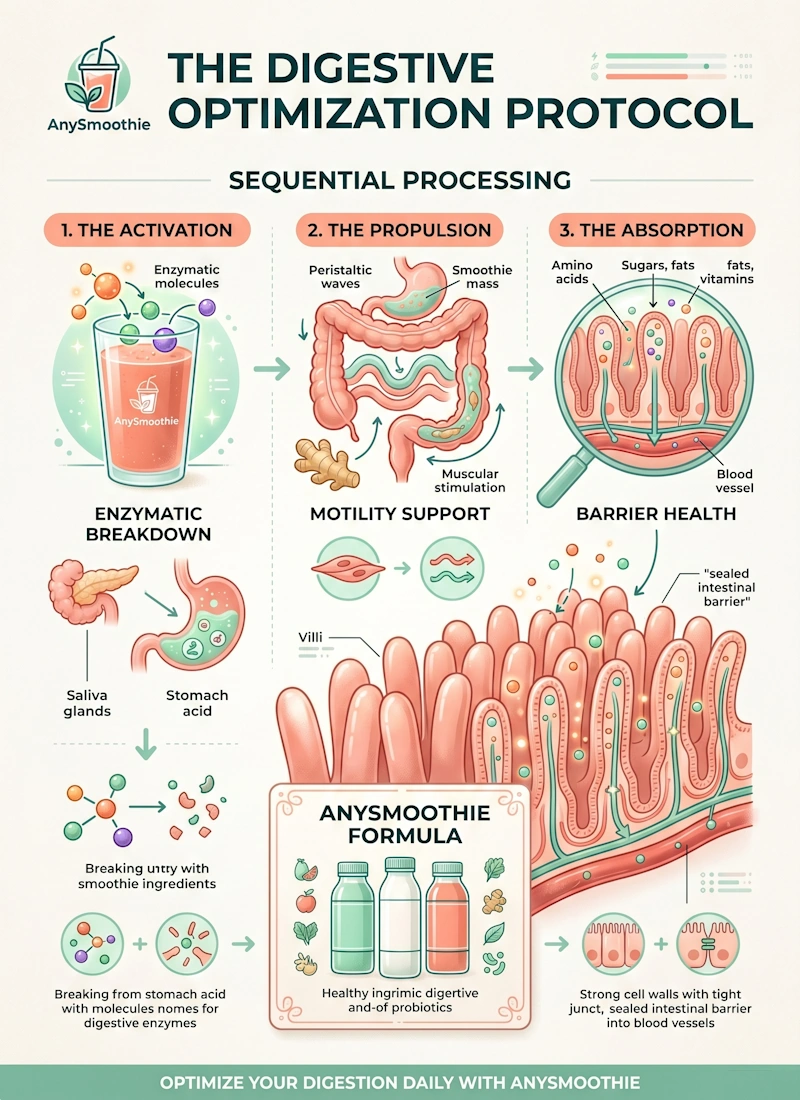
Blending acts as a form of mechanical pre-digestion by reducing the particle size of fiber and plant cell walls. Biochemically, this process of micronization increases the surface area available for digestive enzymes (like amylase and protease) to act upon. Supporting this physiological system through smooth blending optimizes the natural pathways of nutrient absorption, reducing the energy demand on the stomach and making high-fiber substrates more tolerable for a sensitive gut.
Why is “Soluble Fiber” more effective for managing a sensitive stomach?
Soluble fiber (found in oats, chia, and bananas) absorbs water to form a viscous, mucilaginous gel. Biochemically, this gel acts as a “buffer” that slows gastric emptying and provides a smooth glide through the intestinal tract. Supporting this physiological system optimizes the natural pathways of transit, ensuring the biochemical mechanics of digestion avoid the mechanical irritation often caused by large amounts of rough, insoluble fiber.
What is the role of “Prebiotic Architecture” in supporting the gut-microbiome axis?
Prebiotics, such as the resistant starch in bananas and the beta-glucans in oats, are non-digestible fibers that reach the colon intact. Biochemically, these fibers are fermented by beneficial bacteria into short-chain fatty acids (SCFAs), such as butyrate, which provide fuel for the cells lining the colon. Supporting this physiological system through targeted smoothies facilitates the biochemical mechanics of microbial diversity, fostering a resilient gut environment.
How does the “Osmotic Gradient” affect bloating and fluid handling?
The gut moves water based on the concentration of solutes (sugars and salts) in the lumen. Biochemically, a smoothie that is too high in simple sugars or concentrated juice can create an osmotic pull that draws excess water into the intestine, leading to bloating and discomfort. Supporting the physiological system through low-sugar, fiber-rich blends optimizes the natural pathways of fluid handling, ensuring the biochemical mechanics of the gut maintain a steady osmotic balance.
How do “Botanical Carminatives” like ginger and mint support gastric motility?
Botanical add-ins like ginger contain bioactive compounds (gingerols) that interact with serotonin receptors in the gut wall. Biochemically, these compounds help modulate gastric emptying and reduce the intra-abdominal pressure associated with bloating. Supporting this physiological system through carminative add-ins optimizes the natural pathways of motility, facilitating the biochemical mechanics of “mechanical glide” and comfort after a meal.

Medical Disclaimer: AnySmoothie content is for educational purposes only and is not a substitute for professional medical advice. Consult a healthcare provider for personalized guidance. See our full Disclaimer & Terms of Use. AI Transparency: AnySmoothie may use AI to support content development. All content undergoes human editorial review for accuracy, clarity, and editorial quality. See our full AI Transparency.