
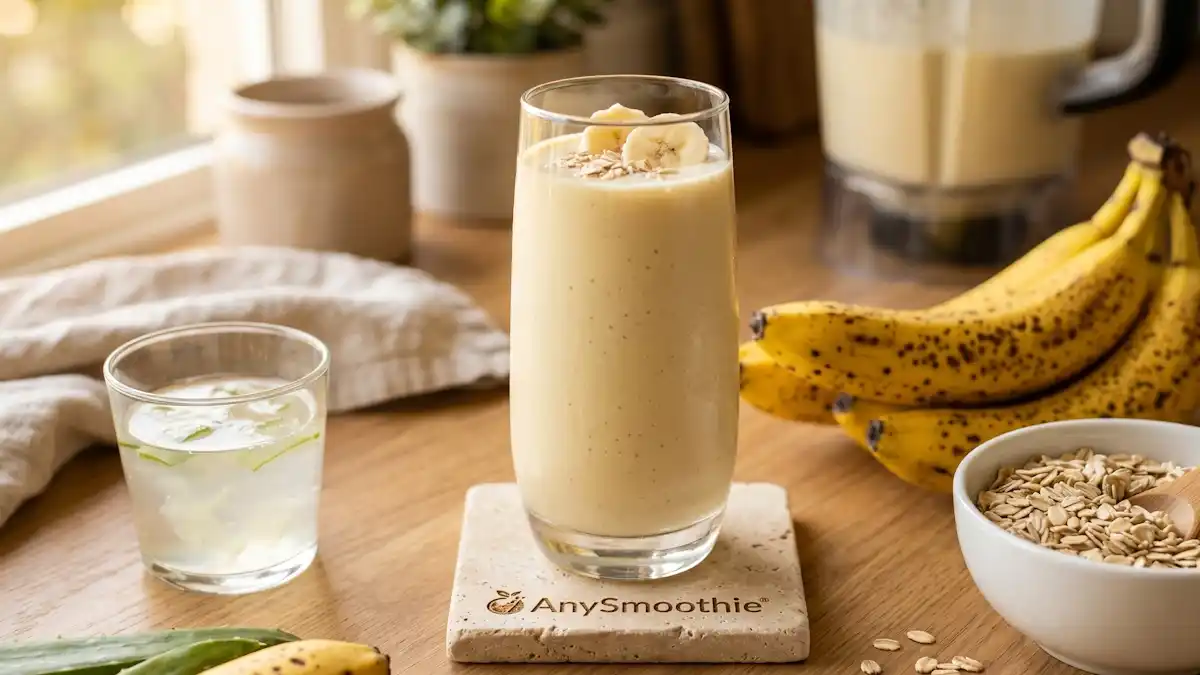
Bananas are often seen as a gentle fruit for acid reflux, but the full smoothie matters just as much as the banana itself. The best banana smoothie ingredients for GERD are usually the ones that keep the drink simple, low-acid, and easy on your stomach. A banana can be soothing, yet the wrong milk, sweetener, or add-in can still turn a good idea into a trigger.
That’s why ingredient choice matters more than “healthy” labels. GERD triggers vary from person to person, so even foods that seem mild can bother some people. In other words, there’s no one perfect smoothie that works for everyone.
This guide focuses on GERD-friendly banana smoothie ingredients, heartburn-safe add-ins, and easy swaps that keep things calm and practical. You’ll find low-acid, acid reflux-friendly options that are simple to mix and easier to adjust to your own tolerance. It’s not about miracle cures, just smarter choices that can help you build a smoothie that feels better to drink.
What makes a banana smoothie GERD-friendly in the first place?
A banana smoothie works best for reflux when the whole drink stays calm, simple, and low-acid. The banana matters, but so do the liquid, add-ins, and texture. If the smoothie is packed with acidic fruit, heavy fats, or lots of sugar, it can stop being gentle fast.
That is why the best banana smoothie ingredients for GERD usually have a few things in common. They tend to be mild in taste, easy to digest, and less likely to stir up symptoms. Think of it like building a soft landing for your stomach, not a mixed bag of “healthy” ingredients.
Why bananas are often a good base for acid reflux-friendly smoothies
Bananas are often a smart starting point because they are mild, creamy, and naturally sweet. That matters when you’re trying to make a smoothie that feels soothing instead of sharp or heavy. A ripe banana gives body and flavor without needing citrus, pineapple, or a lot of added sweetener.
Texture helps too. Because bananas blend so smoothly, they can make a drink feel rich even when the ingredient list stays simple. In many GERD-friendly banana smoothie ingredients lists, banana does the work that flavored yogurt, juice, or sugary syrups might do in other recipes.
Some people also find bananas easier to tolerate than more acidic fruits. Sources like Medical News Today on smoothies for GERD and Your Health Magazine on bananas and acid reflux both point to bananas as a common reflux-friendly option, though personal tolerance still matters.
A banana smoothie becomes more reflux-friendly when the banana replaces harsher ingredients, not when it gets buried under them.
Ripeness can make a difference as well. A yellow or lightly speckled banana is often sweet enough for a smoothie without tasting sugary. Still, a very overripe banana may feel too sweet or sit differently for some people. If that sounds familiar, test a less-ripe banana and see how your stomach responds.
The ingredient traits that usually work best for sensitive digestion
When you’re choosing low-acid banana smoothie ingredients, focus less on trends and more on how the ingredients behave in your body. The safest picks usually share a handful of simple traits.
Here are the ones that tend to help most:
- Low acidity: Mild ingredients are less likely to irritate reflux. Bananas, oats, and some non-citrus fruits usually fit better than orange juice or pineapple.
- Gentle fiber: Fiber can help, but the type matters. Softer sources, such as banana or blended oats, often feel easier than rough, seed-heavy add-ins.
- Lower fat: High-fat ingredients can slow digestion for some people. That doesn’t mean all fat is bad, but heavy portions of nut butter, cream, or full-fat dairy can be harder to handle.
- Mild flavor: Strong flavors often come with stronger reactions. A plain, mellow smoothie is often better than one loaded with chocolate, mint, or spicy extras.
- Easy blending: A smoother drink may feel easier to tolerate than one with chunks, skins, or lots of gritty mix-ins.
Simple recipes also make troubleshooting easier. If your smoothie has five basic ingredients, it’s much easier to spot a trigger than if it has twelve. That’s one reason many heartburn-safe banana smoothie ingredients are pretty plain, and that is not a bad thing.
For practical examples, Simple Green Smoothies’ acid reflux smoothie shows how a short ingredient list can stay gentle without being boring. In short, the best smoothie for sensitive digestion is usually the one that does less, not more.
Best banana smoothie ingredients for GERD, from the base to the add-ins
When you’re building a reflux-friendly smoothie, the banana is only the start. The best banana smoothie ingredients for GERD work together, so the drink stays mild, filling, and easy to adjust. A good smoothie should feel calm from the first sip, not like a mystery mix that fights back later.
Think of it as a soft stack of choices. Start with a gentle base, add mild produce, then keep extras light. That simple order makes it easier to spot what works for you and what doesn’t.
Gentle liquid bases that are less likely to trigger heartburn
The liquid base sets the tone for the whole smoothie. If it feels too rich or too heavy, even a mild banana may not save it. For many people, unsweetened oat milk is a safe place to start because it blends smoothly and has a soft, neutral taste.
Unsweetened almond milk can also work well if you tolerate it. It’s light, easy to find, and doesn’t add much flavor. Still, nut milks aren’t perfect for everyone, so it’s smart to test them in small servings first.
If dairy usually sits well with you, lactose-free milk is another realistic option. Some readers do fine with it, while others notice that any dairy can make symptoms worse. That difference matters because dairy tolerance with GERD can vary a lot from person to person.
For the lightest option, plain water works better than many people expect. It won’t make the smoothie creamy on its own, but banana already adds body. If your stomach has been touchy lately, a water-based smoothie can feel much easier to handle.
A few base choices tend to work best:
- Unsweetened oat milk: Mild, creamy, and often easy to blend with banana.
- Unsweetened almond milk: Light and neutral, if tolerated.
- Lactose-free milk: Useful for people who want dairy without as much stomach trouble.
- Water: The simplest choice, especially when you want a lighter smoothie.
High-fat dairy is worth watching. Whole milk, heavy cream, and rich ice cream can make a smoothie feel thicker, but for some people they also make reflux more likely. That’s why many GERD-friendly banana smoothie ingredients are simple, low-fat picks rather than rich ones.
For a practical example of a mild base, this acid reflux smoothie recipe keeps the liquid portion simple and easy to build on.
Soft fruits and mild produce that pair well with banana
Once the base is set, the easiest next step is adding another soft, low-acid fruit. Melon is one of the gentlest choices because it tastes mild and blends easily. Pear also pairs well with banana, especially when it’s ripe and soft.
Apples can be trickier when raw because they may taste sharp or feel harder to digest. However, cooked then chilled apple often works better in a smoothie. That small change can make the fruit feel less harsh while still adding flavor.
You can also use avocado in a small amount. It makes a smoothie silky and less icy, which some people like. The key is portion size, because too much fat, even from a healthy source, may not feel great with reflux.
For greens, baby spinach is usually one of the mildest places to start if you tolerate it. A small handful blends in well without turning the smoothie bitter. That’s very different from stronger greens, which can quickly push the flavor too far.
These choices often work better than fruits like pineapple, orange, or some berries because they are generally less acidic and less sharp in flavor. If your stomach already feels irritated, tart fruit can hit like sandpaper instead of a cushion. Sources on less acidic fruits and vegetables often place melons, pears, avocados, and spinach among the milder options.
One thing to keep in mind, too much fiber at once can backfire. A smoothie packed with banana, pear, greens, chia, and oats may look healthy, but it can feel like too much traffic in one lane. With low-acid banana smoothie ingredients, gentler and smaller combinations usually work better.
Protein and texture boosters that keep the smoothie filling
A banana smoothie is nicer when it holds you for a while. That’s where a small amount of protein or soluble fiber can help. It gives the drink more staying power without turning it into something heavy.
If you tolerate dairy, plain yogurt can add protein and a creamier texture. Lactose-free yogurt is another option for people who want that same effect with less risk of stomach upset. Plain is usually the better pick, since flavored yogurts often bring extra sugar and more ingredients than you need.
For a non-dairy option, silken tofu is one of the most useful add-ins. It blends smoothly, has a mild taste, and doesn’t overwhelm the banana. If you want the smoothie to feel more balanced without using protein powder, this is a smart choice.
Oats are another solid add-in because they thicken the smoothie and add gentle, soluble fiber. A small spoonful or two can go a long way. Chia seeds can also help with texture, but keep the amount modest if you’re sensitive. Too much can make the smoothie too thick or too fibrous.
A simple rule helps here: add enough to support the smoothie, not enough to turn it into a brick.
A filling smoothie for GERD should feel steady, not heavy.
Heavy protein powders, rich nut butters, and very high-fat add-ins may not work as well for many people with reflux. They can make the drink harder to digest, even when the rest of the ingredients seem safe. If you want more ideas for gentle morning protein, these GERD-friendly breakfast ideas show the same general pattern, mild foods and moderate portions.
Mild extras that add flavor without making the smoothie harsh
Flavor matters, but this is the place where small amounts count most. With heartburn-safe banana smoothie ingredients, less is often better. A little boost can help, while too much can tip the whole drink in the wrong direction.
Cinnamon works for some people in a light sprinkle. It can warm up the flavor without making the smoothie taste sharp. Still, spices are personal, so start small and see how your stomach responds.
Vanilla extract is another easy extra because it adds sweetness to the taste without much actual sugar. Just a few drops can make a plain banana smoothie feel less bland. If the smoothie still needs a touch more sweetness, a small amount of honey may help, but keep it light.
Ginger needs more caution. Some people find it soothing, while others notice that it stirs up symptoms. If you want to try it, use a tiny amount first instead of treating it like a cure-all.
The best add-ins should whisper, not shout. That’s often the difference between a smoothie that feels soothing and one that tastes good going down but doesn’t sit well later.
Ingredients that often make banana smoothies worse for GERD
A banana can be a calm base, but it doesn’t cancel out harsher add-ins. In fact, some of the most common smoothie ingredients can turn a mild drink into a reflux trigger fast. If you’re choosing banana smoothie ingredients for GERD, the goal is not just what to add, but also what to leave out.
Often, the trouble comes from ingredients that are too acidic, too rich, or simply too much all at once. A smoothie should feel easy on your stomach, not like a piled-up mix of “healthy” foods that fights back later.
Acidic fruits and juices that can turn a gentle smoothie into a trigger
Acid is one of the quickest ways to make a banana smoothie less GERD-friendly. Even if banana is the main fruit, a splash of orange juice, pineapple juice, or tart apple juice can still push the drink in the wrong direction. The same goes for lemon, lime, and grapefruit, which are sharp enough to bother some people in very small amounts.
Berry blends can be tricky too. While not everyone reacts the same way, many berry-heavy smoothies taste more tart than soothing, especially when they include strawberries, raspberries, or mixed berry concentrates. In a sensitive stomach, that tart edge can matter.
According to Harvard Health’s GERD foods to avoid guide, citrus and other acidic foods are common reflux triggers. So if you want low-acid banana smoothie ingredients, skip the juice bar mindset. Banana plus a mild liquid usually works better than banana plus a bright, fruity kick.
Even a small splash of acidic juice can change the whole smoothie.
Rich, fatty, or sugary add-ins that may increase reflux
Some smoothies cause problems because they feel more like dessert than a light meal. Ice cream, full-fat yogurt, whipped toppings, and big scoops of nut butter can make a smoothie heavy. Then it may sit in your stomach longer, which can raise the chance of reflux.
Sweet add-ins can cause trouble too. Chocolate, cocoa, and sugary syrups may taste great, but they can make the drink harder to tolerate. A very sweet smoothie often goes down easily, then feels like a brick later. That delayed discomfort catches people off guard.
Portion size matters here. A small spoonful of peanut or almond butter may be fine for some people, but several tablespoons can be too much. If you’re trying to build heartburn-safe banana smoothie ingredients, lighter usually wins. Think simple, not loaded.
Surprising ingredients that seem healthy but do not work for everyone
Some ingredients look smart on paper but don’t sit well in real life. Protein powders with lots of additives, gums, sweeteners, or flavorings can upset digestion or make a smoothie feel too dense. If you use one, a plain product with a short ingredient list is usually the safer bet.
Other common troublemakers include mint, coffee, matcha, and strong spices. These can make a smoothie feel fresh or energizing, but for some people they also stir up symptoms. Large amounts of chia, flax, or other seeds can do the same, especially if the smoothie becomes thick, gritty, or fiber-heavy.
Sources like Gastroenterology Consultants’ acid reflux diet overview and The Surgical Clinic’s GERD food guide both support the idea that common reflux triggers go beyond obvious junk foods. That’s why GERD-friendly banana smoothie ingredients should be tested slowly. Add one new ingredient at a time, keep the rest of the smoothie simple, and give your stomach a fair chance to tell you yes or no.
How to build a banana smoothie for GERD that is soothing and balanced
A good reflux-friendly smoothie should feel easy, not overloaded. When you keep the formula simple, it’s much easier to choose banana smoothie ingredients for GERD that are mild, filling, and easier to test.
The goal is balance. You want enough body to make the smoothie satisfying, but not so much thickness, fat, or fiber that it turns heavy. Think of it like building a soft cushion, one gentle layer at a time.
A simple mix-and-match formula for a low-acid smoothie
The easiest way to build a soothing smoothie is to follow a short formula and stop there. That keeps the drink mild and makes it easier to notice what works for you.
A simple pattern looks like this:
- 1 banana for the base
- 1 cup gentle liquid such as water, unsweetened oat milk, unsweetened almond milk, or lactose-free milk
- 1 mild produce add-in such as ripe pear, melon, a few spoonfuls of cooked apple, or a small handful of baby spinach
- 1 small protein or fiber booster such as plain yogurt, silken tofu, or 1 to 2 tablespoons of oats
- Optional mild flavor add-in such as a little vanilla or a light sprinkle of cinnamon
That formula works because each part has a job. The banana gives creaminess, the liquid loosens the blend, the produce adds variety, and the booster helps the smoothie feel more balanced.
Here is what that can look like in real life:
- Creamy and plain: Banana + oat milk + oats + vanilla
- Soft and fruity: Banana + water + ripe pear + plain yogurt
- Green but gentle: Banana + almond milk + baby spinach + silken tofu
If you need inspiration, a simple recipe like this acid reflux smoothie example shows the same idea, a short list of mild ingredients that blend well together.
The main rule is simple, pick one from each group, not three. Too many “healthy” add-ins can make a smoothie feel crowded fast.
Portion size, thickness, and temperature tips that may help reduce reflux
Even with good ingredients, the way a smoothie is served can change how it feels. For many people, a smaller smoothie sits better than a giant one. A modest serving often feels lighter and less likely to push back up later.
Thickness matters too. A smoothie that is almost spoonable can feel heavy, especially if it includes oats, seeds, yogurt, and frozen fruit all at once. If yours blends into pudding, add a little more liquid. You want it smooth enough to sip without effort.
Temperature can also make a difference. Some people don’t love very cold drinks when reflux is already acting up. Instead of using lots of ice, try room-temp ingredients or let frozen items soften a bit before blending.
A few practical habits can help:
- Keep the serving moderate: Start small, then see how you feel.
- Blend it thinner: Add enough liquid so it drinks easily.
- Go easy on ice: Cool is fine, but icy cold may not feel great.
- Sip slowly: Drinking fast can make even gentle smoothies feel rough.
Medical News Today’s guide to smoothies for GERD also notes that ingredients and overall tolerance matter, which is why texture and portion are worth paying attention to, not just the recipe itself.
A soothing smoothie should feel light enough to drink slowly, not like a meal you have to push through.
How to test ingredients safely when you have acid reflux
When you’re trying new GERD-friendly banana smoothie ingredients, the best approach is slow and boring. That may not sound exciting, but it works. If you change five things at once, you won’t know what helped or what caused trouble.
Start with a basic smoothie you already tolerate well. Then add one new ingredient at a time. Keep the rest of the recipe the same for a few tries before making another change.
It also helps to keep a quick food and symptom log. You don’t need anything fancy. Write down:
- what you used
- how much you drank
- what time you had it
- when symptoms showed up, if they did
- how strong the symptoms felt
This matters because reflux does not always show up at the same speed. Sometimes a smoothie feels off right away. Other times, symptoms show up later, after the drink has had time to settle. Both patterns count.
If you want a simple template, Stanford Health Care offers a food and GI symptoms record that can help you track meals and timing. The big win is pattern spotting. Once you see repeat reactions, you can adjust your smoothie with more confidence.
In short, build from a calm base, test slowly, and let your own results lead the way. That’s usually how heartburn-safe banana smoothie ingredients become your go-to mix, not by guessing, but by paying attention.
Easy banana smoothie combinations to try if you have GERD
Once you know which banana smoothie ingredients for GERD tend to feel gentler, the next step is putting them together in simple ways. That matters because a calm smoothie is usually less about one magic ingredient and more about a short, mild combo that works well as a whole.
These ideas keep things easy. Each one starts with banana, then adds just enough to change the texture or flavor without turning the smoothie into a stomach test.
The simplest soothing banana smoothie
If you want a low-fuss place to start, this is it: banana, unsweetened oat milk, oats, and a little vanilla. It tastes soft and familiar, almost like a drinkable bowl of oatmeal, which is exactly the point. Nothing here is sharp, icy, or overly rich.
Banana gives the smoothie a creamy base and natural sweetness. Unsweetened oat milk keeps the texture smooth without adding much fat, while oats can make the drink feel a little more steady and filling. Then vanilla adds flavor without needing citrus or chocolate.
If you’re new to greens, start with a few leaves, not a packed handful. That small step can make a big difference. Some people do well with mild greens in modest amounts, and others don’t, so treat this one as a test, not a rule. For a similar idea, this banana and spinach smoothie shows how a gentle green blend can stay simple.
Conclusion
The best banana smoothie ingredients for GERD are usually the simplest ones, a ripe banana, a gentle liquid, and one or two mild add-ins that your stomach handles well. In most cases, low-acid, easy-to-digest choices work better than rich, icy, or fruit-heavy blends, which is why many GERD-friendly banana smoothie ingredients look plain on purpose.
Start with a basic smoothie for reflux, keep the portion moderate, and add new ingredients slowly. That step-by-step approach makes it easier to spot which heartburn-safe banana smoothie ingredients feel good for you, and which ones don’t.
Most importantly, personal tolerance matters more than any perfect recipe. So if you’re building a smoothie with healthy banana smoothie ingredients for GERD, keep it simple, pay attention to how you feel, and let comfort guide the final mix. A calm smoothie doesn’t need a long ingredient list to do its job.
🛡️ Safety Notes & Contraindications: Banana smoothies for GERD
Individual Trigger Variability: while bananas are safe for most, a small percentage of GERD sufferers report that very sweet or overripe bananas can trigger symptoms; monitor your personal response.
Aerophagy (Swallowing Air): blending at high speeds can incorporate air into the smoothie. Drinking a “foamy” smoothie can cause belching, which directly triggers acid reflux episodes. Let the smoothie sit for 2 minutes before drinking.
The Mint/Cacao Paradox: even if a “banana-mint” or “banana-cacao” smoothie sounds healthy, both mint and chocolate are potent relaxants of the Lower Esophageal Sphincter (LES) and should be strictly avoided.
Cold-Induced Spasms: extremely cold or icy smoothies can trigger esophageal spasms in some people with GERD; use room-temperature liquids or let the smoothie sit to reach a “cool” rather than “frozen” temperature.
Volume Pressure: consuming a large volume (more than 300-400ml) at once increases intragastric pressure; sip slowly and consider splitting the smoothie into two smaller servings.
FAQ
Why is a “Ripe Banana” considered a cytoprotective base for GERD?
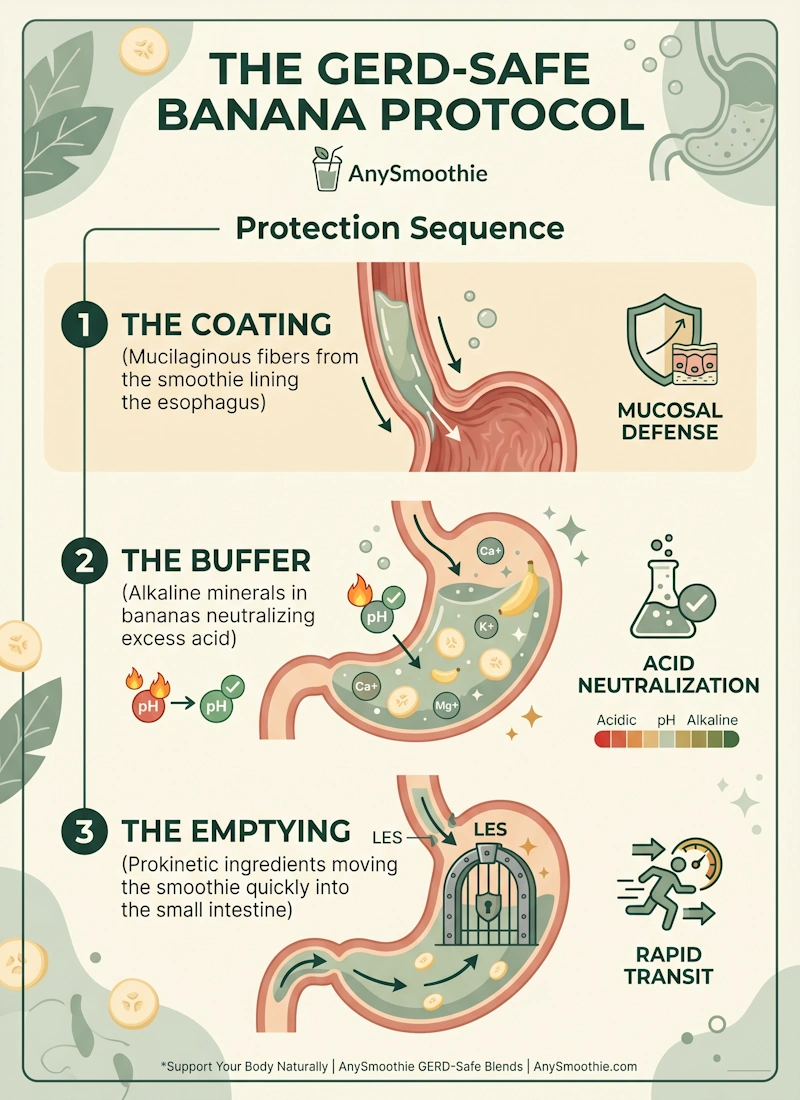
A ripe banana has a high pH (low acidity) and a soft, pectin-rich texture. Biochemically, the pectin acts as a soluble fiber that forms a soothing gel-like coating. Supporting this physiological system through low-acid fruit bases helps maintain the natural integrity of the mucosal barrier, ensuring the biochemical mechanics of digestion proceed without irritating the sensitive esophageal lining.
How does “Lipid Concentration” affect Lower Esophageal Sphincter (LES) tone?
High concentrations of fats, even from healthy sources like large amounts of nut butter or full-fat dairy, can trigger the release of the hormone cholecystokinin. Biochemically, this can relax the Lower Esophageal Sphincter (LES) and delay gastric emptying. Supporting this physiological system by choosing low-fat bases—like oat milk or water—optimizes the natural pathways of LES closure, facilitating the biochemical mechanics that keep stomach contents from refluxing.
Why is “Viscosity Engineering” important for gastric emptying?
A smoothie that is too thick or “spoon-thick” requires significant mechanical work for the stomach to process. Biochemically, high-viscosity meals can increase intra-abdominal pressure and slow down the rate at which food moves into the small intestine. Supporting this physiological system through thinner, “sip-friendly” textures optimizes the natural pathways of gastric transit, ensuring biochemical signaling for emptying remains efficient and pressure stays low.
What is the role of “Soluble Fiber” from oats in esophageal comfort?
Soluble fiber, such as the beta-glucan found in oats, absorbs water to create a soft, non-abrasive texture. Biochemically, this gel helps buffer stomach acid and provides a “mechanical glide” during swallowing. Supporting this physiological system through the integration of soft fibers facilitates the biochemical mechanics of “acid buffering,” providing a steadier luminal environment for those with sensitive digestion.
How does “Thermal and Osmotic Balance” influence reflux triggers?
Extreme temperatures (very icy) or high osmotic loads (heavy sugar) can stimulate the vagus nerve and alter gastric motility. Biochemically, room-temperature or slightly cool smoothies are less likely to cause sudden spasms or LES relaxation. Supporting this physiological system by avoiding excessive ice and simple syrups optimizes the natural pathways of “sensory modulation,” ensuring the biochemical mechanics of the swallow remain calm and predictable.

Medical Disclaimer: AnySmoothie content is for educational purposes only and is not a substitute for professional medical advice. Consult a healthcare provider for personalized guidance. See our full Disclaimer & Terms of Use. AI Transparency: AnySmoothie may use AI to support content development. All content undergoes human editorial review for accuracy, clarity, and editorial quality. See our full AI Transparency.