
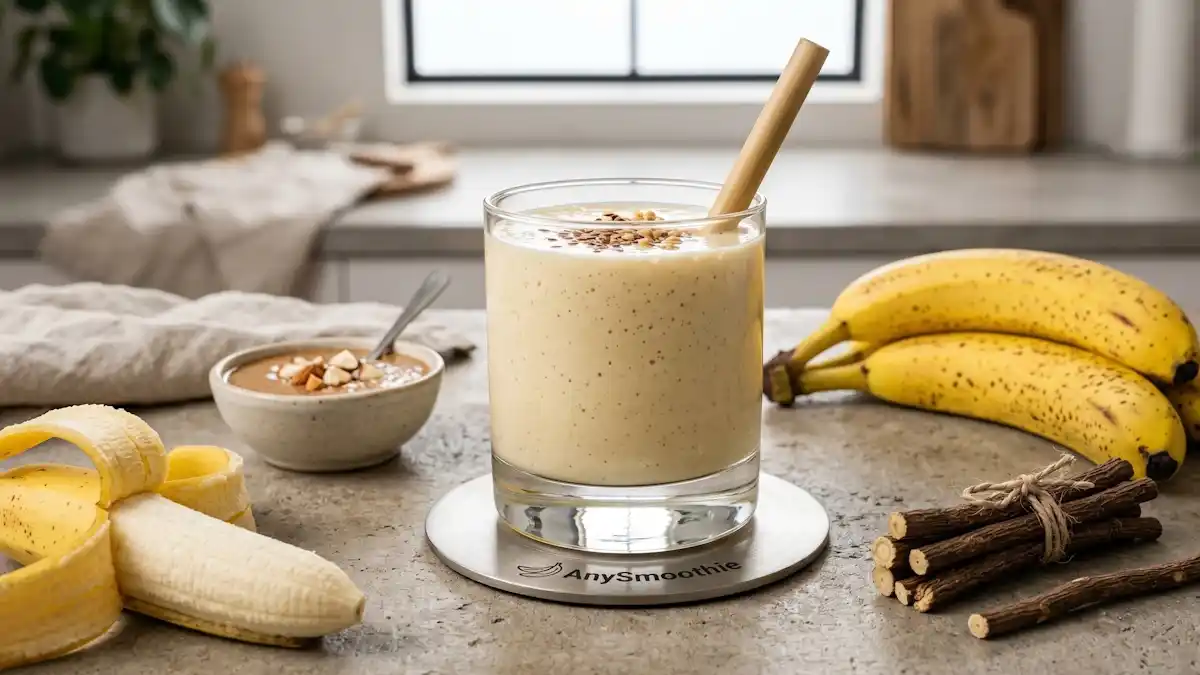
Your lower esophageal sphincter is a small valve, but it handles a big job. It keeps stomach contents moving one way, and it feels the strain when meals are heavy or acidic.
A banana smoothie can be a practical, low-acid option for a calmer post-meal setup, if the rest of the blend stays light. Banana smoothie protocols for lower esophageal sphincter integrity are really about reducing pressure, not promising a fix. This guide shows how the valve works, which ingredients help, and what to leave out.
The LES Gatekeeper: How Pressure, Tone, and Meal Size Affect Reflux Risk
The lower esophageal sphincter is the gate between the esophagus and the stomach. It should stay toned most of the time, then relax when you swallow. A recent review of reflux physiology explains that transient relaxations of this barrier are a common route for reflux.
Meal size matters because the stomach is a pressure chamber. When you overfill it, that pressure rises. Body position matters too, since lying flat can make it easier for stomach contents to move upward. Texture matters as well. Soft, easy-to-blend foods often feel lighter than dense, greasy, or acidic meals. The goal is simple, support normal function with less load on the valve.
Cholinergic Signaling and the Nervous System’s Role in Esophageal Tone
The LES does not work alone. Nerve signals help keep its tone steady, and acetylcholine plays a key role in that communication. When eating is calm and portions are modest, the esophagus and stomach coordinate better.
That matters for banana smoothie protocols for lower esophageal sphincter integrity. Smaller portions, slower eating, and steady digestion support the rhythm the body already uses. In plain terms, less rush means less pressure, and less pressure gives the valve an easier shift.
Why a Banana Smoothie Can Be Easier on the Valve Than Heavier Breakfasts
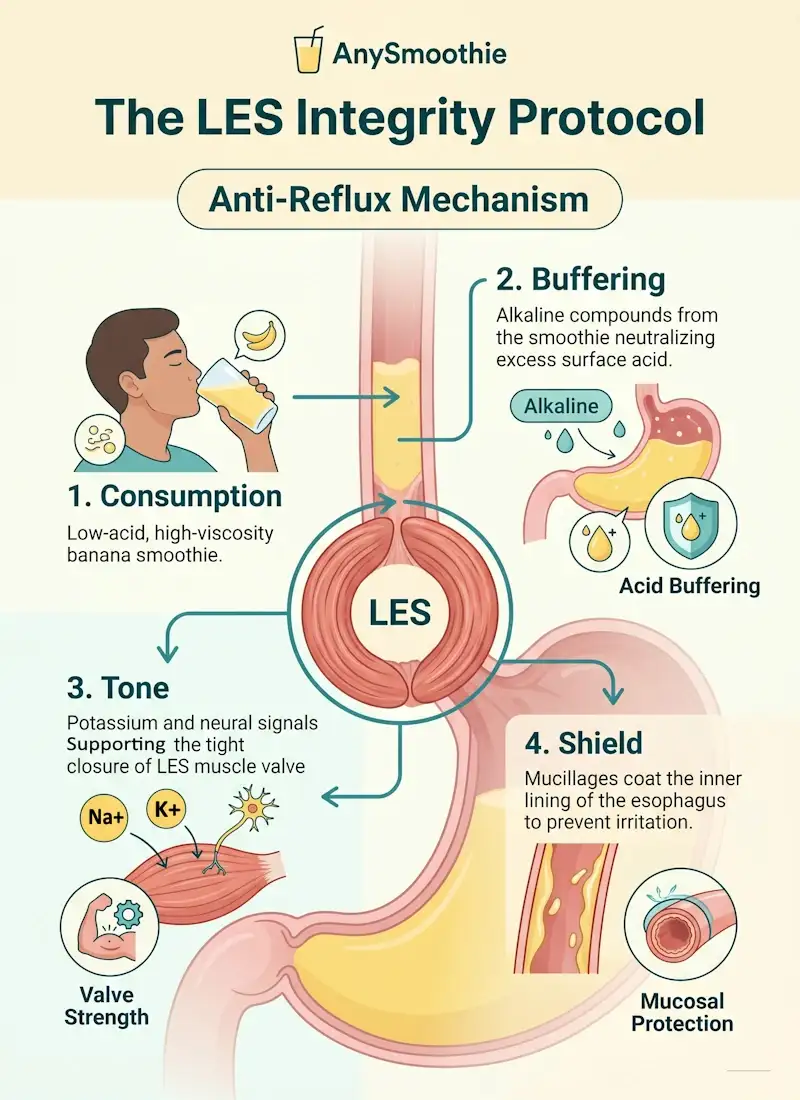
A banana smoothie is softer than toast piled high with fat or a breakfast plate loaded with acid and spice. Bananas are naturally non-acidic, which makes them a good base for people who want a gentler start.
For a basic physiology primer, the NIH overview of lower esophageal sphincter function is useful. It shows why pressure and tone matter so much. A banana smoothie can help by lowering mechanical load, as long as the serving stays reasonable.
Banana vs DGL vs Melatonin: Which Support Tool Fits Best?
A quick side-by-side view helps.
| Modulator | Physiological Mechanism | Viscosity Contribution | Best Smoothie Pairing | Timing |
|---|---|---|---|---|
| Banana | Non-acidic base with soft texture, pectin, and potassium support | Moderate, adds body | Almond milk, water, or mild oat milk | Breakfast or between meals |
| DGL | Supports mucosal lining and mucus secretion | Low | Works best as an add-on, not the base | Before meals or as directed |
| Melatonin | Signaling molecule tied to night rhythms and LES pressure pathways | None | Not a smoothie staple | Evening, usually separate |
Banana is the best food-first base here because it is soft, non-acidic, and easy to blend. DGL and melatonin play different roles, so they are not direct substitutes for a banana-based smoothie.
Mucosal Shielding: Why Banana Ingredients Matter More Than Sugar Alone
Bananas bring more than sweetness. Their soft texture, pectin, and mild carb profile help the smoothie feel smoother and less sharp. That can matter when you want a breakfast that sits quietly, not one that hits the stomach like a rush of acid and sugar.
Leucocyanidin is one of the plant compounds in bananas that gets attention in gentle-food discussions. Pectin is the fiber that adds body. Together, they help the drink hold together without making it heavy. The point is not chemistry for its own sake. The point is a smoother blend that may be easier to tolerate.
Leucocyanidin, Pectin, and the Smooth Texture Advantage
Pectin gives banana smoothies their thicker feel. That texture can slow the pace of drinking and make the serving more satisfying. It also spreads the fruit’s carbs through a more even sip.
Leucocyanidin gets mentioned because bananas contain compounds that support a gentler food profile. In practical use, the bigger win is texture. A smoother drink often feels easier on the upper GI tract than a thin, acidic blend.
Alkaline Buffering and Why Low-Acid Blends Are the Safer Starting Point
Low-acid blends usually make more sense than citrus-heavy ones. Orange juice, pineapple, and strong coffee add-ins can push a smoothie toward common trigger territory. Banana gives you a mild base first, then you can build from there.
Keep the blend simple and not overly sweet. If you make it taste like dessert, you may also make it feel like a larger gastric load. Individual triggers vary, so the cleanest starting point is usually the safest.
3 LES-Safe Smoothie Builds You Can Try at Home
These are simple, not fancy. The aim is a calm texture, modest volume, and a blend that does not crowd the stomach.
How to Build a Banana Smoothie That Supports Post-Meal Comfort
The details matter more than the label on the blender. A good smoothie for LES support keeps volume, acidity, and sweetness in check so the stomach does not feel stuffed. That helps nutrient partitioning stay clean and keeps the digestive workload lighter.
A banana smoothie can fit well into a routine that values metabolic efficiency. It gives the body easy fuel without asking the stomach to process a huge load. Pressure changes still matter, though, and the classic Gut paper on LES incompetence shows how often reflux ties back to sphincter relaxation and neural inhibition.
Volume Management: Why Smaller Servings Often Work Better
A healthy smoothie can still be too much if the serving is oversized. Start smaller than you think you need, then see how you feel.
Sip it slowly. Also, stop before full. That simple guardrail often matters more than the ingredient list.
Best Timing for a Banana Smoothie in an LES-Friendly Routine
Earlier in the day usually works better than late at night. A smoothie between meals can also feel easier than one right after a large plate of food.
Lying down soon after drinking is a bad match for reflux-friendly habits. Give your stomach time to settle, then let gravity do some of the work.
Conclusion
A banana smoothie can be a smart starting point for a more LES-friendly breakfast or snack. The best versions stay low-acid, use gentle ingredients, and keep the portion moderate.
Skip the usual trigger add-ins, such as citrus, heavy sweeteners, and oversized servings. Then watch how your body responds, because the right blend is the one that leaves you comfortable, not crowded.
🛡️ Safety Notes & Contraindications: LES Integrity Smoothies
Volume Overload: Anche lo smoothie più “sicuro” può causare reflusso se il volume supera i 250-300ml. La distensione gastrica è il trigger numero uno per il rilassamento del LES. Bevi lentamente.
Trigger Individuali: Nonostante la banana sia generalmente sicura, alcuni individui possono reagire alla sua dolcezza o al contenuto di potassio. Monitora la tua risposta personale.
Aerofagia (Ingestione di Aria): CRITICAL: Evita di frullare lo smoothie alla massima velocità per troppo tempo, poiché incorpora bolle d’aria. L’eruttazione d’aria forza l’apertura del LES, trascinando con sé vapori acidi. Frulla a velocità moderata.
Posizionamento Post-Prandiale: Non sdraiarsi mai per almeno 60-90 minuti dopo aver consumato lo smoothie. Sfrutta la gravità per mantenere il contenuto gastrico lontano dalla giunzione esofagea.
Temperature Estreme: Smoothie eccessivamente ghiacciati possono causare spasmi esofagei o inibire temporaneamente il tono del LES. Consuma il blend a temperatura ambiente o leggermente fresco.
FAQ
How does “Intragastric Pressure” influence the mechanical integrity of the LES?
The stomach operates as a pressure chamber; when volume exceeds capacity, the resulting pressure can physically force the LES to relax or open. Biochemically, this mechanical distension triggers transient relaxations of the sphincter. Supporting this physiological system through modest, low-volume banana smoothies (10–12 oz) optimizes the natural pathways of “pressure management,” ensuring the biochemical mechanics of the valve remain secure.
Why is “Cholinergic Signaling” essential for maintaining LES tone?
The tone of the lower esophageal sphincter is regulated by the autonomic nervous system, with acetylcholine serving as a primary neurotransmitter for maintaining closure. Biochemically, a calm, non-rushed eating environment supports the parasympathetic “rest and digest” state necessary for this signaling. Supporting this physiological system through easily digestible, blended bases facilitates the biochemical mechanics of “neural coordination,” helping the valve stay toned when not in use.
What is the role of “Banana Pectin” in supporting mucosal shielding?
Pectin is a soluble fiber that increases the viscosity and stability of the smoothie. Biochemically, this creates a softer mechanical interface and slows the rate of gastric emptying. Supporting this physiological system through pectin-rich banana blends optimizes the natural pathways of “mucosal shielding,” providing a non-acidic coating that minimizes chemical irritation to the esophageal epithelium.
How does “Alkaline Buffering” differentiate banana from other fruit bases?
Many fruits (like citrus or pineapple) are highly acidic and can lower the pH of gastric contents, which may irritate the esophagus if reflux occurs. Biochemically, bananas are a low-acid, alkaline-leaning fruit. Supporting this physiological system through low-acid formulations facilitates the biochemical mechanics of “pH stabilization,” ensuring the stomach environment remains less aggressive toward the esophageal lining.
Why is “Volume Management” the most critical factor for post-meal comfort?
Even the most nutrient-dense smoothie can trigger a reflux event if it overfills the stomach. Biochemically, excessive volume activates gastric stretch receptors that signal the LES to relax. Supporting this physiological system by using smaller, nutrient-dense servings (rather than “milkshake-sized” drinks) optimizes the natural pathways of “gastric clearance,” ensuring the biochemical mechanics of the sphincter are not compromised by mechanical overload.

Medical Disclaimer: AnySmoothie content is for educational purposes only and is not a substitute for professional medical advice. Consult a healthcare provider for personalized guidance. See our full Disclaimer & Terms of Use. AI Transparency: AnySmoothie may use AI to support content development. All content undergoes human editorial review for accuracy, clarity, and editorial quality. See our full AI Transparency.