

Long-haul flights can leave you dry, foggy, puffy, and oddly hungry all at once. Cabin air, broken sleep, missed meals, and too much sitting can stack up fast.
A smoothie for long-haul flight recovery will not fix everything, but it can support hydration, digestion, and steadier energy after you land. The goal is simple, give your body something easy to use, not something that feels like a project.
What your body needs after a long-haul flight
After hours in the air, your body usually wants fluids first, then carbs, protein, and a little mineral support. That mix helps you replace what travel tends to drain, without asking your stomach to handle a heavy meal right away.
Flying dries you out more than most people expect, and the cabin air is part of the reason. A review of dehydration risk during air travel helps explain what many travelers feel when they step off the plane.
A good recovery smoothie can support:
- Fluid replacement, through water-rich ingredients and thin liquid bases
- Electrolyte balance, through coconut water, fruit, and a small pinch of salt
- Energy refill, through fruit and oats that provide easy carbs
- Satiety, through protein and healthy fats
- Digestion, through blended textures and gentle ingredients
Hydration first, then energy
Water matters, but plain water can feel flat after travel. Coconut water brings potassium and a little natural sugar, while fruit adds fluid plus fast-digesting carbs. A tiny pinch of salt can help the blend taste brighter and support sodium replacement.
The best post-flight smoothie feels refreshing, not heavy. If it leaves you sluggish, it’s doing too much.
Why easy digestion matters more than a big meal
Long flights can leave your stomach slow, swollen, or just too tired for a large plate of food. Blended textures usually sit better than a dense meal, especially when you’re still adjusting to a new time zone.
That’s why a simple, gentle build often works best. If your stomach feels touchy, a template like smoothies for better digestion, can help you keep the first blend easy to tolerate.
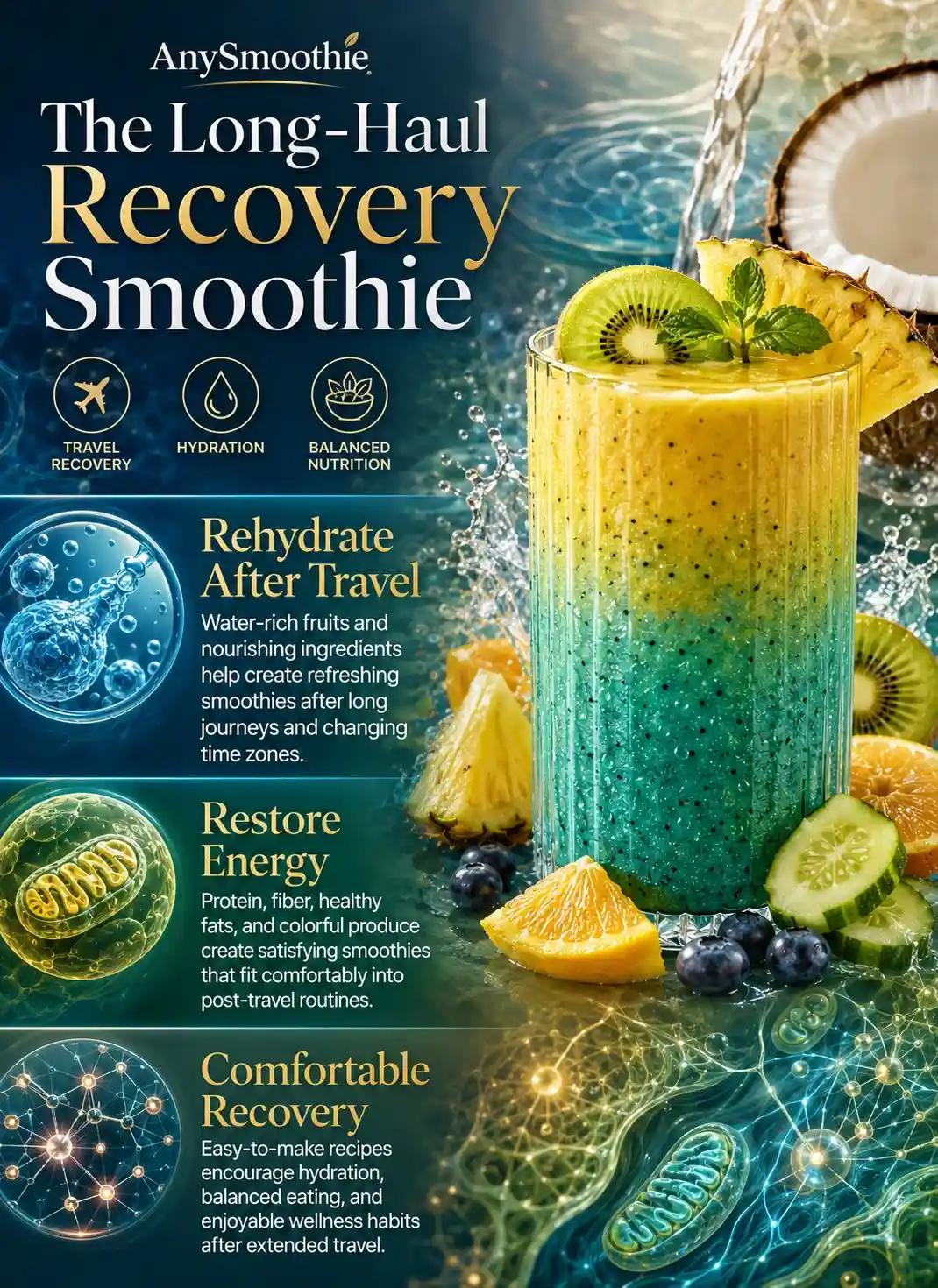
How to build smoothies for long haul flight recovery
A solid formula is easy to remember. Start with 1 to 1.5 cups of liquid, add 1 cup of fruit, include 15 to 25 grams of protein, then finish with 1 tablespoon of seeds, nut butter, or avocado. Optional extras like ginger, mint, turmeric, cucumber, or spinach can round it out.
If the first blend is too heavy, your body has to work harder before it gets what it needs.
The best base ingredients to start with
Water is the lightest option, and it works well when you feel overheated or bloated. Coconut water adds potassium and a little natural sweetness. Kefir brings protein and tang if dairy sits well with you.
Milk or unsweetened plant milk makes sense when you want more body and a smoother texture. Almond milk keeps things light, while dairy milk adds more protein. Pick the base that matches how your stomach feels, not the one with the longest ingredient list.
What to add for steady energy and less crash
Banana, mango, berries, and pineapple all fit well after travel. They blend smoothly, taste familiar, and give your body quick carbs without much effort.
For protein, Greek yogurt, protein powder, and silken tofu are all practical options. Healthy fats like chia seeds, hemp seeds, nut butter, and avocado slow digestion a bit, which helps the smoothie feel more even and less spiky. Carbs refill fuel, protein supports repair, and fats keep the energy curve smoother.
Smart add-ins for travel stress and bloat
Ginger and mint can make a smoothie feel cleaner and easier to sip. Cucumber adds more fluid, spinach adds nutrients without much taste, and lemon brightens the flavor.
Turmeric also works in small amounts if you like the taste. For a greener version, this spinach and banana recovery smoothie shows how a simple blend can still feel complete.
3 Smoothies for long-haul flight recovery
These three options cover the most common post-flight needs, hydration, steady energy, and a calmer stomach.
When to drink it, and how to make the most of it
The best window is usually within an hour or two of landing, or later as a bridge to your next meal. If you’re planning ahead for the trip itself, GoodRx’s flight food guide has useful ideas for keeping your travel day lighter.
If you’re staying in a hotel, you can still keep it simple. Use shelf-stable protein powder, a shaker bottle, a banana, and a small grocery-store carton of milk or coconut water. A carry-on freezer pack helps if you bring ingredients from home.
Here’s a quick comparison of the three blends:
| Smoothie | Goal | Main ingredients | Texture | Best time to drink |
|---|---|---|---|---|
| Hydration reset | Refill fluids | Coconut water, cucumber, pineapple, lime, chia | Light and crisp | Right after landing |
| Steady energy recovery | Prevent the afternoon crash | Banana, berries, yogurt or protein, oats, nut butter | Creamier and fuller | When you need a meal bridge |
| Calm, gut-friendly green | Ease bloating and keep it light | Spinach, avocado, pear or kiwi, ginger, almond milk | Smooth and mellow | When your stomach feels off |
The pattern is simple, lighter blends help when your body wants fluid, while thicker blends help when you need staying power.
What to avoid if you want to feel better fast
- Skip big amounts of added sugar, because they can make the drink feel flatter sooner.
- Keep heavy cream and ice cream out of the mix, since they can feel too rich after a flight.
- Don’t load in every supplement you own, because too many ingredients can make digestion harder.
- Shrink the portion if your stomach feels off, then build up later if you still need more.
Simple usually wins here. After a long flight, the smoothest smoothie is the one your body barely notices.
Conclusion
Long flights can leave you dry, behind on meals, and slower to bounce back. A good smoothie helps fill that gap with fluids, carbs, protein, and ingredients that sit well.
The best approach is also the easiest one to repeat. Choose a light base, add protein, keep the fruit sensible, and stop before the blender gets crowded.
That’s the core of smoothies for long-haul flight recovery, and it works because it stays practical on travel days.
🛡️ Safety Notes & Dietary Interactions
- Rehydrate Gradually: Long-haul flights commonly reduce hydration because of low cabin humidity and extended sitting. Sip fluids throughout the day rather than drinking large amounts at once, and include electrolyte-containing foods or beverages if appropriate for your individual health needs.
- Adjust Ingredients for Medical Conditions: People with diabetes, kidney disease, heart failure, or medically prescribed fluid or electrolyte restrictions should tailor smoothie ingredients such as coconut water, fruit, and added salt with guidance from a qualified healthcare professional.
- Keep Digestion Comfortable: After travel, appetite and digestion may feel different than usual. Starting with a smaller, lighter smoothie and increasing portion size as your appetite returns is often more comfortable than forcing a large meal immediately after landing.
- Support Recovery Beyond Nutrition: A smoothie is only one part of post-flight recovery. Adequate hydration, light movement, stretching, quality sleep, and returning to regular meal timing all help your body recover from travel and adapt more comfortably after long flights.
FAQ
What is the best smoothie to drink after a long-haul flight?
A balanced recovery smoothie containing fluids, moderate carbohydrates, protein, and healthy fats is usually the best choice. Coconut water, berries, banana, Greek yogurt or protein powder, and chia seeds create a combination that supports hydration, steady energy, and satiety without feeling excessively heavy after several hours of travel.
Can smoothies help reduce bloating after flying?
Smoothies may feel easier to tolerate than large meals after a flight, particularly when they emphasize hydration and whole-food ingredients. Water-rich produce, moderate fiber, ginger, cucumber, and balanced protein can fit comfortably into a post-flight meal while avoiding the heaviness that very rich foods sometimes create.
Is coconut water better than plain water after air travel?
Both can be useful. Plain water remains the foundation for hydration, while coconut water naturally provides potassium and small amounts of carbohydrate. Choosing between them depends on your preferences, overall fluid intake, activity level, and any medical conditions that affect electrolyte recommendations or fluid management.
Should I drink a recovery smoothie immediately after landing?
Many people find it helpful within the first hour or two after arrival, especially if normal meals have been delayed. If your stomach feels unsettled, begin with a smaller portion and gradually return to regular eating as your appetite improves rather than forcing a large meal immediately.
What ingredients should I avoid after a long flight?
Very sugary smoothies, large amounts of fruit juice, heavy cream, oversized servings, and excessive supplement combinations may leave you feeling sluggish or make digestion less comfortable. Keeping recipes simple, balanced, and based on whole-food ingredients is usually the easiest approach during post-flight recovery.

Medical Disclaimer: AnySmoothie content is for educational purposes only and is not a substitute for professional medical advice. Consult a healthcare provider for personalized guidance. See our full Disclaimer & Terms of Use. AI Transparency: AnySmoothie may use AI to support content development. All content undergoes human editorial review for accuracy, clarity, and editorial quality. See our full AI Transparency.