
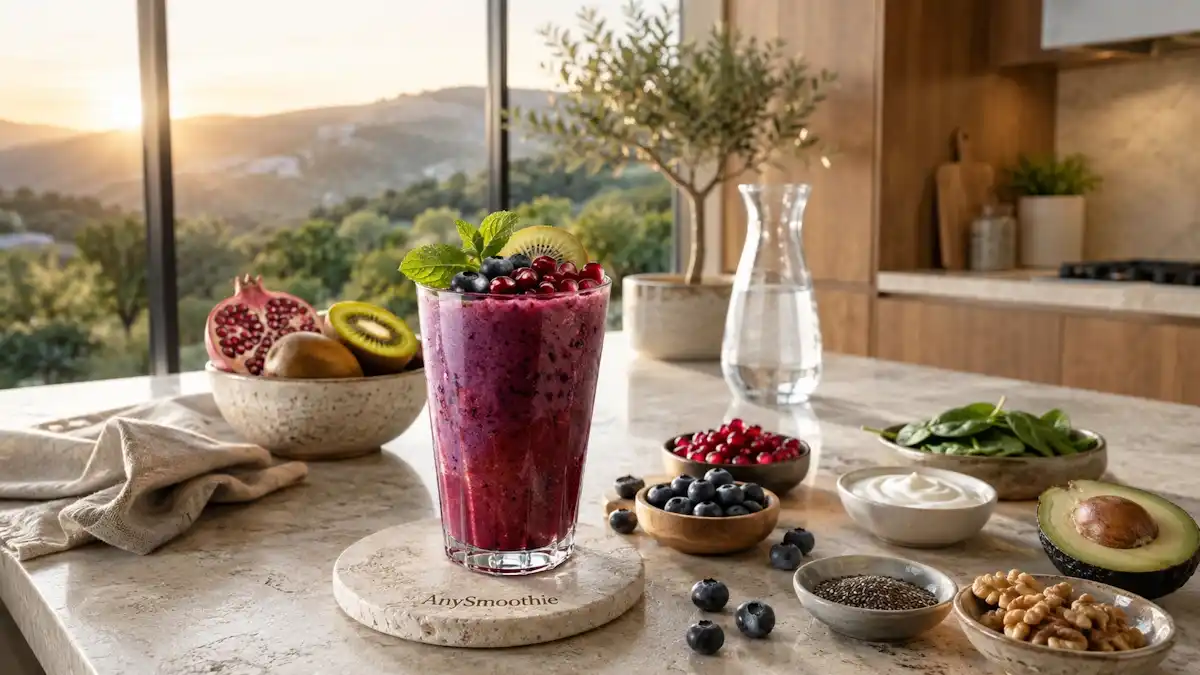
Alpha-ketoglutarate, often called AKG, keeps showing up in healthy-aging conversations because it connects to how cells handle fuel. People want practical habits, not complicated routines, and that is where smoothies fit well.
This post looks at what AKG does in the body, how it may fit into key metabolic pathways, and how to build alpha-ketoglutarate smoothies for healthy longevity without turning them into sugar-heavy drinks. The goal is simple, balanced recipes you can repeat.
What Alpha-Ketoglutarate Does in the Body
AKG is a naturally occurring compound the body makes and uses in the Krebs cycle, the energy-processing loop inside cells. It also sits close to amino acid metabolism, which matters when your body breaks down protein and rebuilds tissue. For a research snapshot, see a recent review on AKG and skeletal muscle health, which pulls together current work on metabolism and muscle-related outcomes.
That matters for longevity-minded eating because long-term health depends on steady support, not one dramatic fix. A smoothie can deliver AKG along with protein, fiber, and fluids in one glass. Food-first support still matters, but a supplement format gives you a more measurable AKG dose.
A simple AKG primer without the science overload
AKG is a compound your cells already know how to use. It helps move carbon and nitrogen through normal metabolic pathways, so it sits at an important intersection of fuel use and nutrient handling.
For people thinking about long-term health, that makes AKG interesting as a support ingredient, not a magic ingredient. It fits best in a routine that already covers sleep, protein, produce, and movement.
Why smoothies can work better than pills for some people
Smoothies make AKG easier to take consistently because they fit into breakfast, recovery, or a snack window. They also let you adjust taste, thickness, and digestion speed. A drink with protein and fiber often feels steadier than a plain capsule on an empty stomach.
If you want a thicker starting point, a Greek yogurt smoothie base shows how a yogurt-forward blend can stay creamy without getting heavy. That kind of base makes it easier to pair AKG with foods you already use.
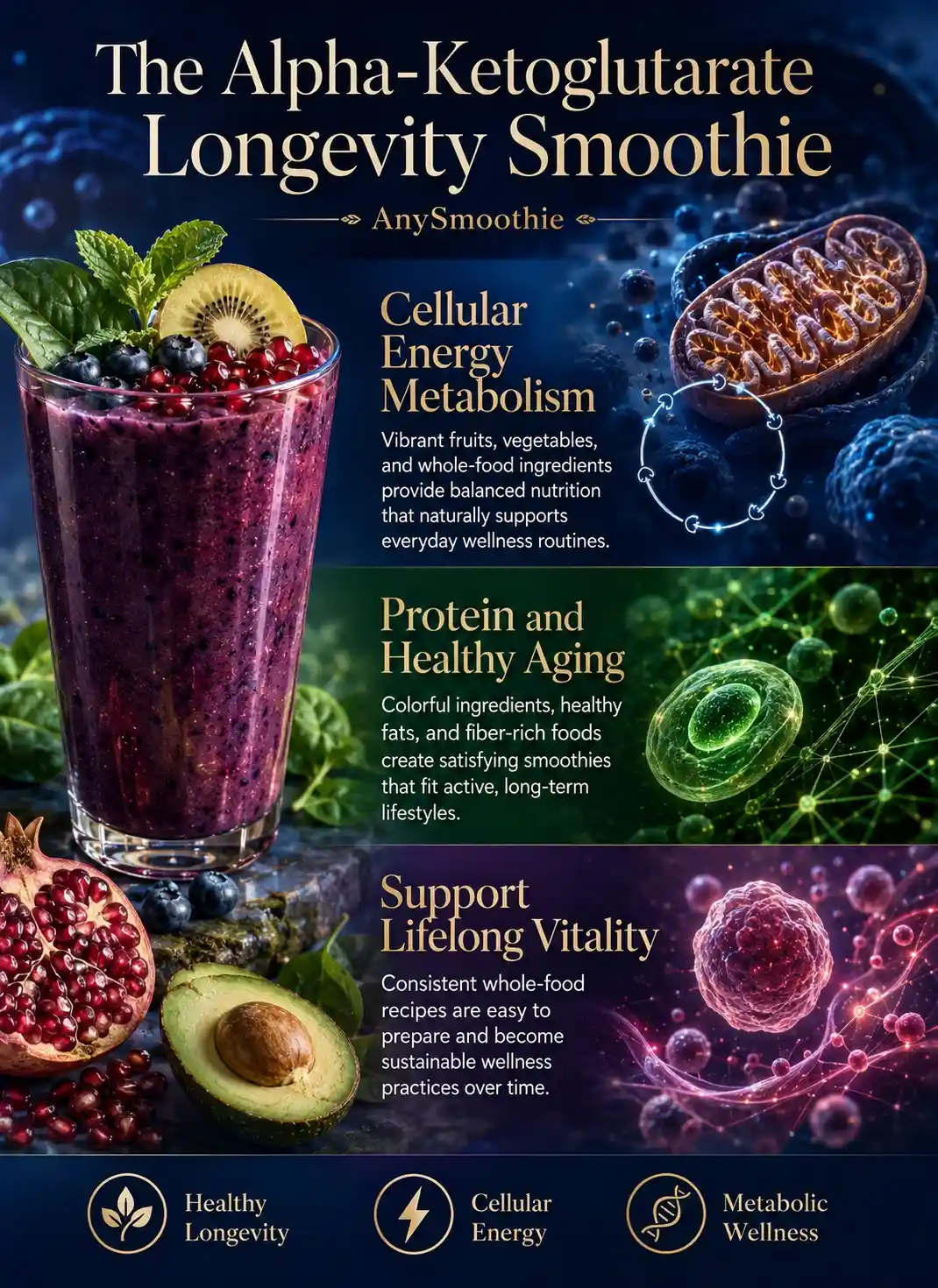
How to build alpha-ketoglutarate smoothies for healthy longevity
A good AKG smoothie starts with balance. The liquid should blend smoothly, the protein should give structure, and the fruit should stay moderate so the drink doesn’t turn into dessert.
The formula matters more than the scoop.
Use a simple framework:
- A liquid base like unsweetened milk, kefir, or water keeps the texture easy to drink.
- An AKG source should follow the label dose, whether it’s powder or another approved form.
- Protein from Greek yogurt, kefir, or unsweetened plant protein helps the smoothie feel complete.
- Fiber and fat from chia, flax, avocado, or nut butter slow the pace of digestion.
- Low-sugar produce like berries, spinach, cucumber, lemon, or ginger keeps flavor bright.
When you build around those pieces, the smoothie works like a meal, not a candy drink. That is the difference between a recipe that feels good once and one you’ll actually use again.
Best ingredients to pair with AKG for steady energy
Berries are one of the easiest pairings because they add color, fiber, and polyphenols without a lot of sugar. Spinach blends in quietly and adds volume, while chia and flax bring texture and more staying power.
Greek yogurt, kefir, or unsweetened plant protein give the glass a stronger backbone. If you prefer a familiar fruit profile, a simple strawberry banana smoothie is a useful template, especially when you want to trim the banana, add greens, and keep the sweetness in check.
Common mistakes that make a longevity smoothie less effective
Too much fruit is the fastest way to throw off the balance. A large banana, juice, and sweet yogurt can crowd out the AKG and make the drink feel more like a treat.
Skipping protein is another common miss. So is adding several supplements at once, because then you can’t tell what you actually like or tolerate. Bigger doesn’t always mean better here.
3 Alpha-Ketoglutarate smoothies for healthy longevity
These three ideas keep the structure steady, but the flavor and timing change.
| Smoothie | Flavor | Best time | Core ingredients | Why it fits |
|---|---|---|---|---|
| Berry greens blend | Tart, creamy | Morning | AKG, berries, spinach, kefir, Greek yogurt | High fiber, easy texture, balanced sweetness |
| Cocoa banana recovery smoothie | Rich, chocolatey | After exercise | AKG, banana, cocoa, protein, nut butter or chia | More filling, better for replenishment |
| Citrus ginger refresher | Bright, light | Afternoon | AKG, orange, cucumber, ginger, kefir or plant protein | Hydrating, crisp, lower in sugar |
How to choose the right AKG product and use it safely
AKG supplements vary a lot. Some use calcium AKG, some use different delivery forms, and some add extra ingredients that don’t help much in a smoothie. Clear labels, third-party testing, and a simple ingredient list matter more than flashy claims.
A clean product should tell you the serving size, the exact amount per dose, and whether it has quality testing from a recognized lab such as NSF or USP. If the label hides the dose inside a proprietary blend, that’s usually a reason to pass.
What to check on the label before you buy
Look for purity, serving size, and any added sweeteners or fillers. The best product is the one you can use consistently without guessing what’s inside every scoop.
When it makes sense to ask a professional first
If you’re pregnant, have kidney concerns, manage a chronic condition, or take medication, talk with a qualified professional before adding any supplement. The same goes for complex supplement stacks, because small interactions can add up.
Conclusion
AKG smoothies work best when they stay food-first and supplement-second. Pair AKG with protein, fiber, and low-sugar ingredients, and the drink becomes easier to repeat day after day.
Choose a product with a clear label and decent testing, then keep expectations realistic. Start with one recipe, keep it simple, and see how it fits your routine.
🛡️ Safety Notes & Dietary Interactions
- Supplement Quality: Choose alpha-ketoglutarate (AKG) products that clearly state the form, serving size, and amount per dose. Third-party quality testing and simple ingredient lists help reduce unnecessary fillers and make it easier to know exactly what you’re taking.
- Follow Label Directions: More is not necessarily better with AKG. Use the serving size recommended by the manufacturer or your healthcare provider, and avoid combining multiple new supplements at once so you can better assess individual tolerance.
- Medical Considerations: If you have kidney disease, liver disease, are pregnant or breastfeeding, or take prescription medications, consult a qualified healthcare professional before using AKG supplements regularly. Personalized guidance is especially important when managing chronic health conditions.
- Food-First Foundation: AKG should complement, not replace, healthy habits. A balanced smoothie with protein, fiber, healthy fats, colorful produce, regular physical activity, quality sleep, and an overall nutrient-rich eating pattern provides the strongest long-term foundation for healthy aging.
FAQ
What is alpha-ketoglutarate (AKG)?
Alpha-ketoglutarate is a naturally occurring compound produced by the body as part of the Krebs cycle, the process cells use to generate energy. It also participates in amino acid metabolism and other normal cellular functions. Supplements provide an additional source, but they are intended to support, not replace, healthy nutrition and lifestyle habits.
Can I get alpha-ketoglutarate from food alone?
Foods contribute nutrients that support the body’s natural production and use of AKG, but they generally do not provide concentrated amounts of alpha-ketoglutarate itself. Most people interested in higher AKG intake use a dietary supplement while continuing to prioritize whole foods, protein, vegetables, fruits, and healthy fats.
When is the best time to drink an AKG smoothie?
Many people prefer an AKG smoothie at breakfast, after exercise, or as a balanced afternoon snack because it fits naturally into existing routines. Consistency is generally more important than precise timing. Pairing AKG with protein, fiber, and healthy fats can also make the smoothie feel more satisfying and easier to incorporate regularly.
What ingredients pair well with alpha-ketoglutarate?
Low-sugar fruits such as berries, leafy greens, Greek yogurt, kefir, chia seeds, flaxseed, avocado, cucumber, ginger, and unsweetened protein powders all complement AKG well. These ingredients provide protein, fiber, healthy fats, vitamins, and minerals while helping the smoothie remain balanced instead of becoming overly sweet.
Can I combine AKG with other longevity supplements?
It is possible, but adding several supplements at the same time makes it difficult to know which ingredient is helping or causing unwanted effects. Introducing one product at a time is usually the most practical approach. If you use prescription medications or manage a chronic medical condition, discuss supplement combinations with your healthcare provider first.

Medical Disclaimer: AnySmoothie content is for educational purposes only and is not a substitute for professional medical advice. Consult a healthcare provider for personalized guidance. See our full Disclaimer & Terms of Use. AI Transparency: AnySmoothie may use AI to support content development. All content undergoes human editorial review for accuracy, clarity, and editorial quality. See our full AI Transparency.