
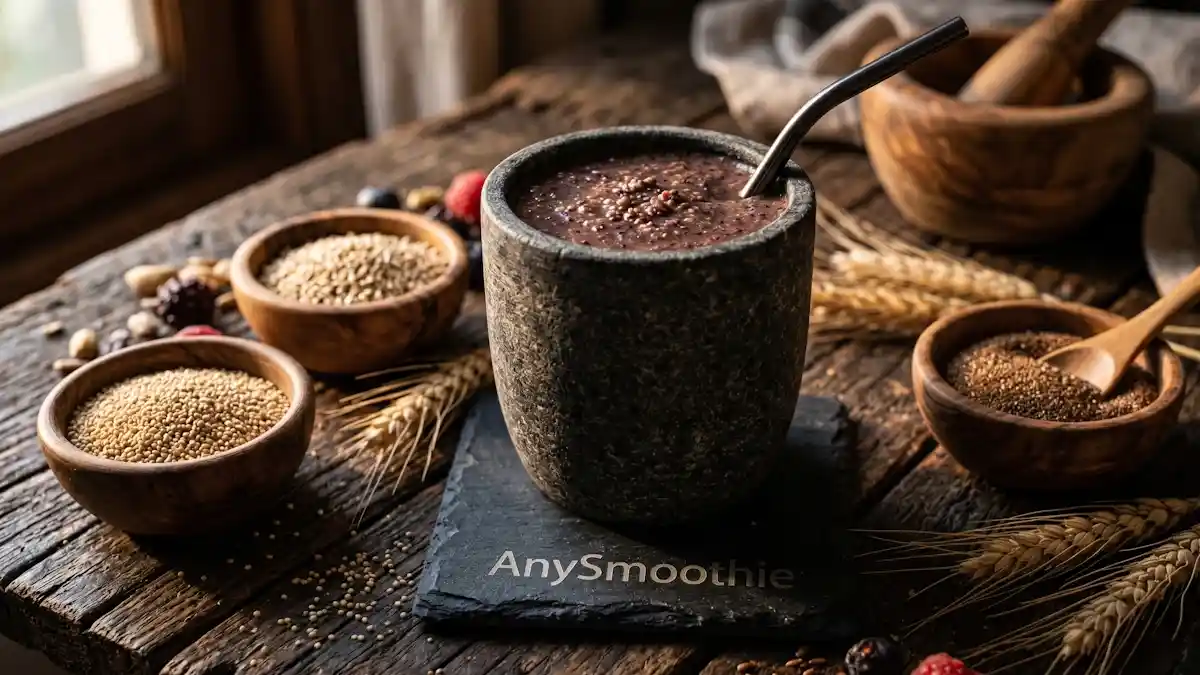
A basic fruit smoothie can taste great, but it often burns fast. An ancient grains and proteins smoothie changes that by adding more structure, more fullness, and a better nutrient mix.
When you combine grain body with quality protein, the blend feels more like a small meal than a sweet drink. That matters if you want steadier energy, better satiety, and a smoother macronutrient profile.
The best versions stay simple. Cooked grains, a clean protein source, and the right liquid can create a thick, balanced smoothie without a chalky finish. The sections below break down the grain choices, the protein pairing logic, and three easy builds you can use at home.
Architectural Nutrition: Why Ancient Grains Beat Modern Hybridized Cereals
Ancient grains bring more than carbs to the glass. They usually keep more of their natural fiber, mineral content, and texture than highly refined cereal blends. That gives the smoothie more body and a slower release of glucose, which helps it feel more stable after you drink it.
For a quick reference on how these grains differ, Healthline’s ancient grains guide gives a useful overview of common options and their nutrient profiles.
What makes ancient grains different from modern hybridized cereals
Modern refined grains are often milled hard and stripped of the parts that carry fiber and minerals. Ancient grains are usually closer to their original form, so they keep more structure and more of the natural compounds that come with it.
That matters in a smoothie because structure changes how the drink behaves. A grain with fiber and intact starches creates a thicker base and a steadier carb source. It also helps the blend feel less like flavored juice.
Mineral bioavailability: magnesium, manganese, and bone matrix support
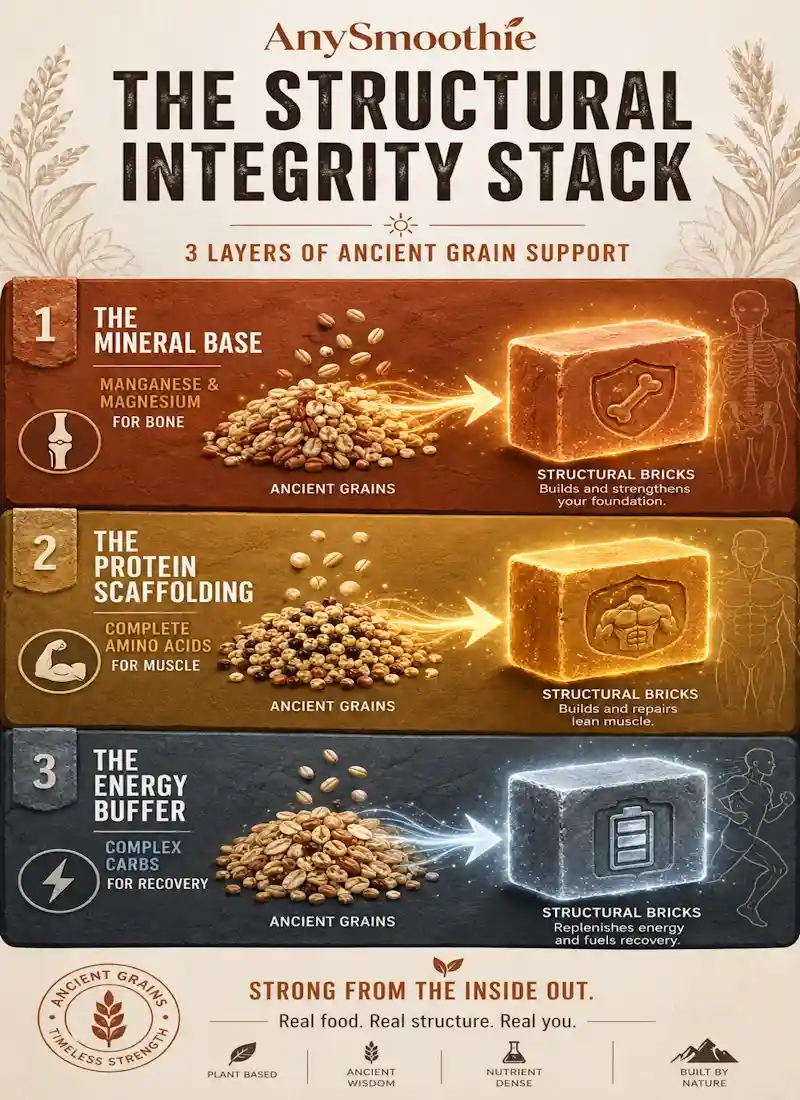
Ancient grains can help widen the mineral profile of a smoothie. Magnesium supports normal energy production, manganese plays a role in connective tissue pathways, and iron helps carry oxygen. Calcium matters too, especially when you want a smoothie that fits a mineral-aware routine.
These nutrients do not work alone. They support the body’s own bone matrix, muscle function, and tissue repair systems. The point is not miracle nutrition. The point is a more complete base.
Ancient grain comparison: amaranth, quinoa, and teff
Each grain brings a different strength. Amaranth is known for its protein density and is also a rare plant source of squalene, a compound linked with cellular integrity. Quinoa blends well and has a balanced amino acid profile. Teff adds minerals and a smooth, mild taste.
| Grain | Protein Quality (Amino Acid Profile) | Mineral Focus | Fiber Type | Best Structural Benefit |
|---|---|---|---|---|
| Amaranth | Strong overall profile, good plant protein density | Magnesium, manganese, iron | Fine, creamy fiber | Muscle repair and connective tissue support |
| Quinoa | Well-balanced essential amino acids | Magnesium, iron, phosphorus | Moderate fiber with a light texture | Full-meal balance and recovery support |
| Teff | Solid protein for a grain, best paired with extra protein | Calcium, iron, manganese | Small-grain fiber with smooth body | Bone support and steady energy |
The takeaway is simple. Use amaranth when you want density, quinoa when you want balance, and teff when you want a creamier mineral-rich base.
The Amino Acid Blueprint: Combining Grains and Proteins for Tissue Repair
Grains bring carbs and some protein, but they rarely finish the job alone. When you add a fuller protein source, you improve the amino acid profile and support a more complete meal pattern.
That matters for fullness too. Protein slows digestion, helps the smoothie hold you longer, and gives the blend better recovery value after training or a long morning.
Lysine and methionine: the catalysts for collagen and muscle cross-linking
Some grains are lower in lysine or methionine, two amino acids the body uses in tissue building. When you pair grains with a stronger protein source, you cover those gaps more easily.
That supports muscle repair, collagen formation, and connective tissue maintenance. In plain terms, the smoothie works harder for you because the parts fit together better.
Best protein partners for taste, texture, and nutrition
A few add-ins work especially well in a smoothie.
- Greek yogurt gives a thick texture and a tangy taste. It also adds a strong protein boost.
- Kefir blends thinner, but it adds a light, drinkable finish.
- Collagen peptides mix easily and keep the texture smooth, especially with teff or quinoa.
- Pea protein works well for a dairy-free option, though it needs enough flavor from fruit or cacao.
- Hemp protein adds minerals and a nutty note, but it can taste earthy.
- Nut butters add fat and make the smoothie more filling, though they can overpower lighter grains.
If you want the easiest balance, start with Greek yogurt or pea protein. Both pair well with ancient grains and keep the final flavor clean.
3 “Ancient-Strength” Structural Smoothie Recipes
These are templates, not strict recipes. Use them as starting points and adjust the thickness, sweetness, and protein level to fit your day.
Optimizing the Matrix: Phytic Acid Reduction and Enzyme Activation
Whole grains contain compounds that can bind minerals, including phytic acid. That does not make them bad foods. It just means prep matters if you want better nutrient access.
Cooking, soaking, sprouting, and fermenting can make grains easier to digest and easier to blend. They also help soften the texture, which matters in a smoothie more than many people expect.
Sprouting and fermentation: unlocking structural nutrients for absorption
Sprouting starts the grain’s own enzyme activity. Fermentation goes one step further and can reduce some of the compounds that block mineral uptake. Both methods can make ancient grains easier on the stomach and more useful in a smoothie.
Using sprouted grain powders is the easiest shortcut. Pre-cooked quinoa, amaranth, or teff also work well if you want speed without extra prep.
Better digestion often starts with prep, not with more ingredients.
Simple texture fixes so your smoothie stays creamy, not gritty
Cooked grains blend best when they go in first with the liquid. That gives the blades a head start and prevents little grain bits from hanging around.
Frozen fruit helps too, especially banana or berries. They chill the mix and cover any grain edge. If the smoothie feels too heavy, add more liquid before adding more protein.
Conclusion
A good smoothie does more than taste sweet. When you combine ancient grains and proteins, you get a drink with better structure, better fullness, and a more balanced nutrient profile.
The best part is how flexible it is. You can keep it light with quinoa, go denser with amaranth and teff, or make it more recovery-focused with collagen, yogurt, or pea protein. Start with one of the three builds, then adjust the texture and flavor until it fits your day and provides the sustained energy you need.
⚠️ Safety Notes for Ancient Grains & Protein Smoothies
Grain Sourcing and Gluten: While quinoa, amaranth, and teff are naturally gluten-free, they are often processed in facilities that handle wheat. If you have Celiac Disease, always look for certified gluten-free labels to avoid systemic inflammation.
Fiber Overload and Digestion: Ancient grains are significantly higher in fiber than refined cereals. If your gut is not accustomed to high fiber, start with small portions (1-2 tablespoons) of cooked grains to avoid temporary gas or abdominal discomfort.
Kidney Health and Phosphorus: Grains like quinoa are rich in phosphorus. Individuals with Chronic Kidney Disease should monitor their intake and consult a dietitian, as phosphorus levels must be carefully managed in advanced stages.
Phytic Acid and Mineral Absorption: Even with cooking, some phytic acid remains. If you are anemic or have a zinc deficiency, consume these smoothies at least 2 hours away from your iron or zinc supplements to ensure maximum bioavailability.
Temperature and Texture: Blending hot cooked grains directly with protein powder can sometimes cause “clumping” or denature certain delicate proteins (like bioactive whey). Allow grains to cool to room temperature or use chilled liquid before blending.
FAQ
How do ancient grains support the physical structure of the body
Unlike modern wheat, ancient grains like amaranth and quinoa contain a superior profile of minerals like manganese and phosphorus, which are essential co-factors for bone mineralization. Furthermore, they provide a more complete set of amino acids, particularly lysine, which is a critical building block for the synthesis of collagen and the maintenance of connective tissue integrity across the skeletal system.
Why is the amino acid profile of ancient grains superior for repair
Most common grains are deficient in lysine, making them an incomplete protein source. Ancient grains are “pseudocereals” that offer a balanced ratio of essential amino acids. When these grains are included in a protein-rich smoothie, they optimize the natural pathways of protein synthesis, ensuring the body has all the necessary components to repair micro-tears in muscle and support the “scaffolding” of the skin and joints.
What is the role of Manganese in a structural smoothie
Manganese is a trace mineral that is often overlooked but vital for the formation of connective tissue and bone. It serves as a co-factor for enzymes like prolidase, which helps provide the amino acid proline for collagen formation. Ancient grains like teff are particularly dense in manganese, making them a biohacker’s secret for supporting joint and tendon resilience through dietary mechanics.
How does sprouting ancient grains improve nutrient bioavailability
Ancient grains contain phytic acid, a natural “anti-nutrient” that can bind to minerals like calcium and magnesium, preventing their absorption. By using sprouted ancient grain powders in your smoothie, you activate the enzyme phytase, which breaks down these bonds. This biochemical shift significantly increases the bioavailability of structural minerals, ensuring they reach the tissues where they are needed most.
Can ancient grains support cellular integrity beyond the skeleton
Yes, specifically amaranth. It contains squalene, a natural lipid that is a key component of our skin’s surface oils and cellular membranes. By integrating amaranth into a structural smoothie, you are supporting the body’s natural antioxidant pathways and providing a “sealant” for cellular integrity, which complements the structural protein support provided by the grains’ amino acid profile.

Medical Disclaimer: AnySmoothie content is for educational purposes only and is not a substitute for professional medical advice. Consult a healthcare provider for personalized guidance. See our full Disclaimer & Terms of Use. AI Transparency: AnySmoothie may use AI to support content development. All content undergoes human editorial review for accuracy, clarity, and editorial quality. See our full AI Transparency.