
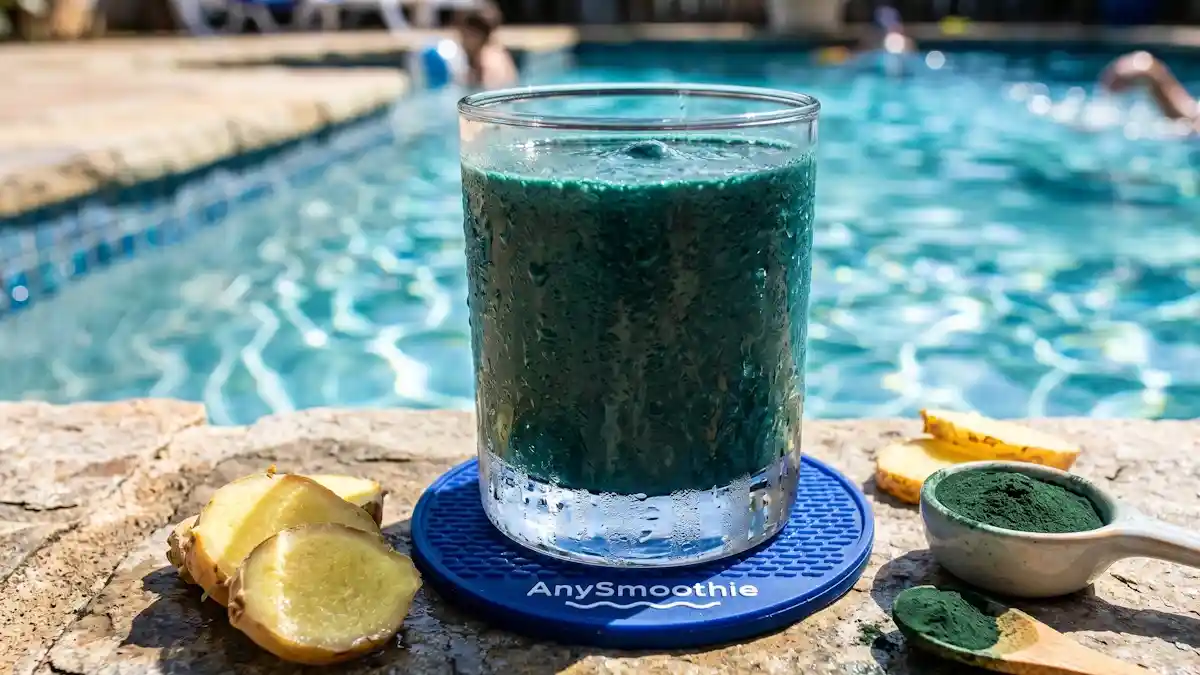
Water changes the rules fast. It pulls heat from your body, shifts breathing patterns, and changes how hard your muscles work, even when the session feels smooth.
That’s why a boost smoothie for aquatic fitness needs more than fruit and ice. It should support heat balance, steady energy, and recovery before or after you get in the pool.
The best formulas are simple. They match cold-water demand, fuel timing, and hydration without sitting heavy. Here’s how to build one that works.
The Aquatic Demand: Balancing Thermogenesis and Oxygen Economy
Aquatic training asks for more than land-based cardio. Water cools the skin faster than air, so your body spends energy on heat control while you swim, kick, or tread.
That matters because you’re not only moving forward. You’re also managing thermogenesis, breathing against resistance, and keeping your muscles supplied with fuel. In colder water, that adds up fast.
A standard smoothie may miss the mark if it’s too fibrous, too bulky, or too slow to absorb. Aquatic fitness needs a blend that supports metabolic efficiency without weighing you down. For a quick look at how cold water can activate brown fat and shift metabolism, see this summary of cold-water swimming research.
Brown Adipose Tissue Activation: How Cold-Water Workouts Drive Lipolysis
Cold water can push the body toward brown adipose tissue activity, which helps generate heat. That process can raise energy use even when the workout feels easier than a hard run.
In practical terms, your body may burn through stored fuel faster to stay warm. So the goal is to support that demand before it becomes a drag on performance. A well-built smoothie can help with that by giving you fast fuel and cleaner nutrient delivery.
The Ingredients That Make a Boost Smoothie Work for Aquatic Fitness
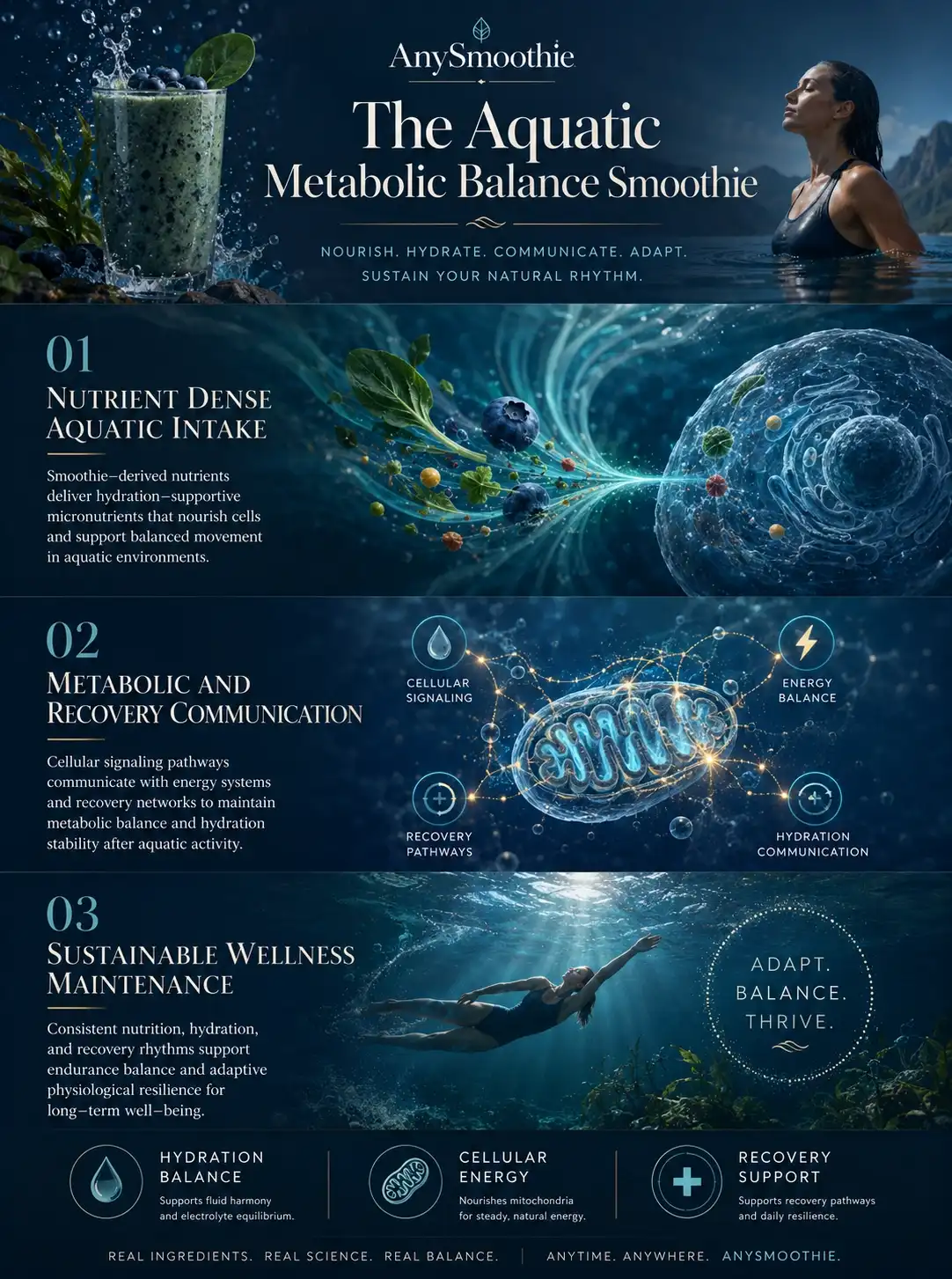
The best ingredients do different jobs. Some provide quick energy, some support oxygen use, and some help the gut stay calm before movement. Together, they improve nutrient partitioning, so more of what you drink gets used where it’s needed.
A smart formula also supports liposomal transport and mitochondrial priming in plain terms. That means nutrients move in a form the body can use, and your cells are ready to turn fuel into work with less waste.
MCT Oil, Spirulina, and Ginger: The Three Core Metabolic Catalysts
These three ingredients fit water training well because they cover fuel, cell support, and comfort.
| Catalyst | Physiological Impact | Energy Source | Impact on Core Temperature Stability | Best Smoothie Pairing |
|---|---|---|---|---|
| MCT Oil (C8) | Fast fuel support, thermogenic support | Lipid | Strong, quick support for cold-water demand | Banana, cocoa, or vanilla |
| Spirulina | Micronutrient support, oxygen-related energy support | Micronutrient-rich algae | Mild, steady support | Pineapple, citrus, or berry |
| Ginger Root | Digestive comfort, healthy inflammatory signaling | Plant compound support | Indirect support through better tolerance | Mango, pear, or coconut |
MCT oil is the fastest of the three. It moves quickly into energy pathways, which is why it fits cold-water training so well. Research on MCTs and swimming has shown improved swim capacity in animal models, which lines up with the idea of MCTs as rapid exercise fuel.
Spirulina adds a different layer. It brings micronutrients that support oxygen-linked energy systems and training output. Human data also point to better oxygen-use markers during exercise, as shown in this spirulina and oxygen uptake study.
Ginger is the quiet helper. It can make the smoothie easier to tolerate before training, which matters when your stomach is close to motion and pressure.
Why CoQ10 and L-Carnitine Help Mitochondria Do More With Less
If you want a more advanced version, add CoQ10 and L-carnitine. Both support the way mitochondria handle fuel.
CoQ10 helps move electrons through the energy chain, which supports ATP production. L-carnitine helps shuttle fatty acids into the mitochondria so they can be used for energy. Together, they fit the idea of mitochondrial priming. A recent report on CoQ10 and exercise recovery gives a useful overview of that direction, and it’s worth a look in this CoQ10 exercise study summary.
Three Aquatic-Power Smoothie Recipes You Can Actually Use
These recipes stay simple on purpose. You want something that fits your session, your stomach, and your timing.
The Marine-Flux Smoothie With Spirulina, MCT, and Ginger
Blend 1 banana, 1 cup unsweetened coconut water, 1 teaspoon MCT oil, 1 teaspoon spirulina, a small piece of ginger, and ice. Add lime juice if you want a sharper taste.
This is the best all-around option for aquatic fitness. It gives fast fuel, micronutrient support, and a cleaner feel in the gut. If the flavor is too bold, add pineapple or a little vanilla.
A Lighter Pre-Swim Version for Fast Energy and Low Stomach Load
Use half a banana, 1 cup water or coconut water, 1 tablespoon honey, a pinch of salt, and a small slice of ginger. Skip the spirulina and keep fat very low.
Drink it 20 to 40 minutes before training. This version sits light, so it works well before intervals, laps, or open-water starts.
A Recovery Version for Refueling After Pool Sessions
Blend 1 banana, 1 cup milk or a protein-rich alt milk, 1 scoop protein, 1 teaspoon MCT oil, and berries. Add a few ice cubes and a pinch of salt.
Use this after longer swims or hard sessions. It shifts the formula toward repair, hydration, and a small carb refill.
Electrolyte Fluidity: Preventing Intracellular Dehydration in the Pool
Water doesn’t cancel sweat loss. You still lose fluid and minerals, especially in long sessions or heated pools. The trick is to keep the smoothie light enough to drink well, but mineral-rich enough to support performance.
Thirst can lag behind sweat loss in the pool, so hydration needs to be planned, not guessed.
Sodium helps hold fluid where it belongs. Potassium supports the fluid shift inside cells, which matters for endurance and smooth muscle work. For swimmer-specific hydration basics, this USMS guide to sports drinks gives a solid overview.
The Sodium-Potassium Pump: Maintaining Muscle Contractility in Water
The sodium-potassium pump keeps muscle cells ready to fire. When those minerals are low, movement can feel flat and less steady.
A small pinch of salt in a pre-swim smoothie can help. So can coconut water or a potassium-rich fruit base. The goal is balance, not a heavy drink that sloshes around.
Conclusion
A smart smoothie for aquatic training does three things well. It supports fast fuel, helps with heat stress, and keeps hydration in check.
That’s the real edge of a metabolic boost smoothie for aquatic fitness. Match MCTs, micronutrients, and electrolytes to the demands of water, and your body has a better chance to stay steady, warm, and ready to work.
Questa guida di AnySmoothie.com per l’aprile 2026 è progettata per chi sfida la resistenza dell’acqua. Il nuoto e il fitness acquatico impongono una richiesta energetica unica: la gestione della termodispersione e la meccanica respiratoria contro la pressione idrostatica. Utilizzare il sistema AnySmoothie per fornire MCT e catalizzatori mitocondriali permette di ottimizzare la metabolic efficiency e sostenere i sistemi fisiologici coinvolti nella produzione di calore e nel trasporto di ossigeno.
⚠️ Safety Notes for Aquatic Fitness Smoothies
MCT and Pre-Swim Gastric Distress: MCT oil is a powerful thermogenic but can cause sudden laxative effects if the dosage is too high. Start with 1/2 teaspoon before a pool session to ensure your gut remains stable while your core temperature changes.
Ginger and Reflux: While ginger aids digestion, consuming a large smoothie immediately before swimming prone (orizontal position) can cause acid reflux in some individuals. Drink your smoothie at least 30-45 minutes before entering the water.
Hydration Lag in the Pool: You may not feel thirsty in the water. Ensure your smoothie includes an electrolyte base (coconut water or a pinch of salt) to prevent exercise-associated hyponatremia or dehydration-induced cramps.
Spirulina Quality: Algae can absorb heavy metals from the water they grow in. Always use spirulina that is third-party tested for purity to avoid introducing toxins into your metabolic pathways.
CoQ10 and Blood Pressure: Coenzyme Q10 can have a mild blood pressure-lowering effect. If you take antihypertensive medications, monitor your levels, as the combination with aquatic exercise (which also affects blood pressure) may lead to dizziness.
FAQ
Why do aquatic workouts require a specific metabolic smoothie
Working out in water presents a unique physiological challenge: the body must maintain core temperature while performing work. This increases the demand for “thermogenic” fuel. A metabolic boost smoothie for aquatic fitness provides medium-chain triglycerides (MCTs) that are rapidly converted into energy, supporting the body’s natural thermogenic pathways and ensuring that your metabolism stays “hot” even in a “cool” aquatic environment.
How does Spirulina support oxygen economy during swimming
Spirulina is exceptionally rich in chlorophyll and iron, which are vital for the synthesis of hemoglobin and the optimization of oxygen transport. For aquatic athletes, improving oxygen economy means you can sustain higher intensities with less fatigue. The biochemical mechanics of spirulina support the physiological systems responsible for red blood cell efficiency, making every breath count during your laps.
What is the role of Ginger in an aquatic fitness blend
Ginger contains gingerols, which support peripheral circulation. When swimming, the body often shunts blood to the core to preserve heat. Ginger supports the natural pathways of vasodilation, ensuring that nutrient-rich blood continues to reach the working muscles in the extremities. This helps maintain muscle contractility and prevents the “heavy limb” feeling often associated with cold-water training.
How do MCTs prevent the “post-swim” energy crash
The post-swim crash is often caused by the massive caloric expenditure required for thermoregulation. MCTs (specifically C8 Caprylic acid) bypass the slow digestive process and provide the mitochondria with an immediate lipid-based fuel source. This prevents the rapid depletion of glycogen stores, supporting steady energy levels and a more efficient recovery once you leave the water.
Why are electrolytes critical if I’m not sweating in the pool
It is a common misconception that you don’t lose fluids in the water. Aquatic exercise induces “cold diuresis” and osmotic shifts that can deplete intracellular electrolytes. Including potassium and sodium in your smoothie ensures that the sodium-potassium pump in your muscle cells functions optimally, preventing cramps and maintaining the neural signaling necessary for coordinated aquatic movement.

Medical Disclaimer: AnySmoothie content is for educational purposes only and is not a substitute for professional medical advice. Consult a healthcare provider for personalized guidance. See our full Disclaimer & Terms of Use. AI Transparency: AnySmoothie may use AI to support content development. All content undergoes human editorial review for accuracy, clarity, and editorial quality. See our full AI Transparency.