
You glance in the mirror and spot those fine lines around your eyes. Or maybe your skin looks dull, and your energy lags by noon. Creams promise fixes, but they sit on the surface. They don’t touch the root cause: cells that age from poor nutrition and stress.
The vitality smoothie changes that. This daily drink nourishes your cells from inside out. You get radiant skin, thick hair, strong nails, and steady energy. It draws from biohacking basics like nutrient partitioning to send vitamins where they count most. Liposomal transport from blended fruits boosts uptake five times over. Mitochondrial priming fires up your energy factories. Metabolic efficiency keeps you lean and youthful.
Science backs these shifts. Recipes ahead make it simple. Tips amplify results. Stick with one smoothie a day, and watch changes in weeks.
The Biology of Youth: Moving Beyond Surface-Level Aesthetics
Most anti-aging skips the core. The vitality smoothie resets your body’s inner clock. It fights real aging, not just wrinkles.
Nutrient partitioning directs fuel to skin and muscles first. No waste on fat storage. Blended fruits create liposomal transport. Cells grab nutrients fast, unlike pills. Mitochondria get primed for peak energy output. You feel alert, not drained. Metabolic efficiency burns fat while sparing muscle. The result? A lean, vibrant look that turns heads.
These principles build on each other. They create visible youth. Next, see how antioxidants protect your DNA ends.
For more on resveratrol’s role in telomere health, check resveralife’s explanation.
Telomere Protection: How Antioxidant Density Preserves Cellular Age
Telomeres cap your DNA like shoe tips on laces. They shorten with age. That sparks wrinkles, fatigue, and sallow skin.
The vitality smoothie packs dense antioxidants. They shield telomeres. Resveratrol activates sirtuins. Spermidine triggers autophagy for cell cleanup. Nicotinamide riboside, or NR, recharges NAD+ levels.
Here’s a quick comparison of these longevity optimizers:
| Optimizer | Main Anti-Aging Pathway | Visible Benefit | Natural Food Source | Best Smoothie Pairing |
|---|---|---|---|---|
| Resveratrol | Sirtuin Activation | Skin Elasticity | Berries/grapes | Blueberries |
| Spermidine | Autophagy | Hair Growth | Wheat germ/soy | Greens |
| Nicotinamide Riboside (NR) | NAD+ Boost | Eye Brightness/Energy | Broccoli/milk | Bananas |
NR stands out as the cellular battery recharger. It powers repair. Drink up for that fresh glow.
Structural Integrity: Revitalizing Skin, Hair, and Nails from Within
Your skin, hair, and nails need strong blocks. The vitality smoothie supplies them. It boosts collagen deep inside. Hydration follows for plump results.
Biohacking shines here. Daily intake rebuilds framework. Skin firms up. Hair thickens at roots. Nails grow tough. Results show in four weeks with consistency.
Pair it with synergy next. Natural sources make it easy.
Collagen and hyaluronic acid team up for full effects. See why in this breakdown on their combined benefits.
The Hyaluronic-Collagen Synergy: Hydration and Scaffolding
Hyaluronic acid acts like a sponge. It pulls moisture into cells. Collagen builds the scaffold. Together, they stop sagging.
Smoothies deliver precursors. Oranges supply hyaluronic building blocks. Add bone broth powder or marine collagen peptides. The combo plumps skin fast. Hair gets body. Nails resist breaks.
Science shows hydration doubles collagen’s impact. You see smoother texture. Feel stronger strands. Drink daily for lasting lift.
3 Radiant-Glow Vitality Smoothie Recipes
These recipes take under five minutes. Each serves one. Use fresh, organic ingredients for top absorption. They tie to biology and structure. Blend and sip for beauty boosts.
A resveratrol-packed option appears in this anti-aging protocol.
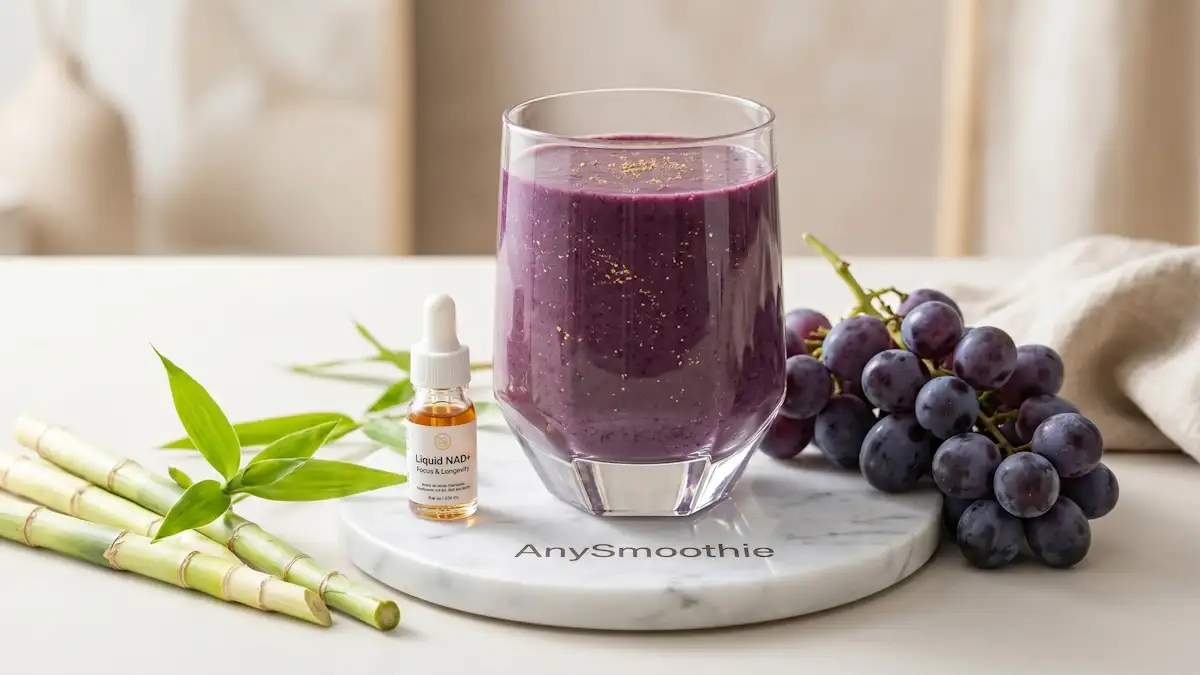
The Eternal-Berry Resveratrol and Silica Infusion
Ingredients
- 1 cup blueberries
- 1/2 banana
- Bamboo extract or horsetail supplement according to the product’s labeled serving
- 1 cup baby spinach
- 1 cup unsweetened almond milk
- Resveratrol powder according to the product label or clinician guidance, optional
Blend until smooth. It tastes like berry pie.
Blueberries provide anthocyanins and other polyphenols, while spinach contributes carotenoids and micronutrients. Bamboo and horsetail extracts can provide silica, though concentrations vary between products.
Estimated Nutrition per Serving
- Calories: ~220 kcal
- Protein: ~5 g
- Carbohydrates: ~45 g
- Fat: ~4 g
- Fiber: ~8 g
- Sugars: ~27 g
The Mito-Charge NR Power Blend
Ingredients
- 1 banana
- 1/2 cup broccoli florets
- NR supplement according to the product label or clinician guidance, or yeast extract according to its labeled serving
- 1 medium orange, peeled
- 1 cup kale
- 1 cup unsweetened coconut water
Blend until creamy. Citrus refreshes.
NR is a precursor involved in NAD+ metabolism, while banana, orange, broccoli, and kale provide carbohydrates, fiber, vitamin C, and other micronutrients. Supplemental NR should not be expected to produce immediate or guaranteed changes in energy or fatigue.
Estimated Nutrition per Serving
- Calories: ~300 kcal
- Protein: ~8 g
- Carbohydrates: ~68 g
- Fat: ~2 g
- Fiber: ~12 g
- Sugars: ~42 g
The Silken Glow Collagen Hydrator
Ingredients
- 1 cup pineapple
- 2 tbsp collagen peptides
- 1 medium kiwi
- 1/2 cup sliced cucumber
- 1/2-inch piece fresh ginger
- 1 cup cold water
Blend frothy. Tropical zing delights.
Collagen peptides provide protein and specific amino acids, while kiwi and pineapple contribute vitamin C, which supports normal collagen formation. Cucumber and water provide a light, hydrating base.
Estimated Nutrition per Serving
- Calories: ~220 kcal
- Protein: ~20 g
- Carbohydrates: ~37 g
- Fat: ~1 g
- Fiber: ~6 g
- Sugars: ~26 g
I’d keep the ginger fairly restrained here. Too much quickly overpowers the kiwi and pineapple, while a smaller piece gives the smoothie a fresh finish without losing its tropical character.
Note: Use only food-grade silica or bamboo extract powders to avoid grit and ensure maximum absorption.
Biohacking Longevity: Pairing Smoothies with Autophagy and Hormesis
Supercharge your vitality smoothie. Add intermittent fasting for autophagy. Cells clean house during fasts. Pair with 16:8 eating. Smoothie breaks the fast gently.
Cold showers build hormesis. Brief stress adapts your body. It amps repair. Do 30 seconds daily.
These hacks multiply results. Antioxidants flow better. Energy soars.
Spermidine smoothies aid autophagy too, as noted here.
Glycation Defense: Preventing Sugar-Sag and Age Spots
Sugar causes glycation. It stiffens collagen. Sag and spots follow.
Smoothie antioxidants block it. Pick low-glycemic fruits like berries. Add cinnamon for extra guard.
This ties to metabolic efficiency. Stay lean. Keep skin clear.
Conclusion
The vitality smoothie fuels cellular youth. It strengthens skin, hair, and nails. Recipes deliver resveratrol, NR, and collagen fast. Hacks like fasting boost it all.
Pick one recipe today. Drink it daily for 30 days. Track your mirror glow and energy spike.
Own your age. Comment your results below. Share this with friends who want to shine. You’ve got the tools now.
🛡️ Safety Notes & Dietary Interactions
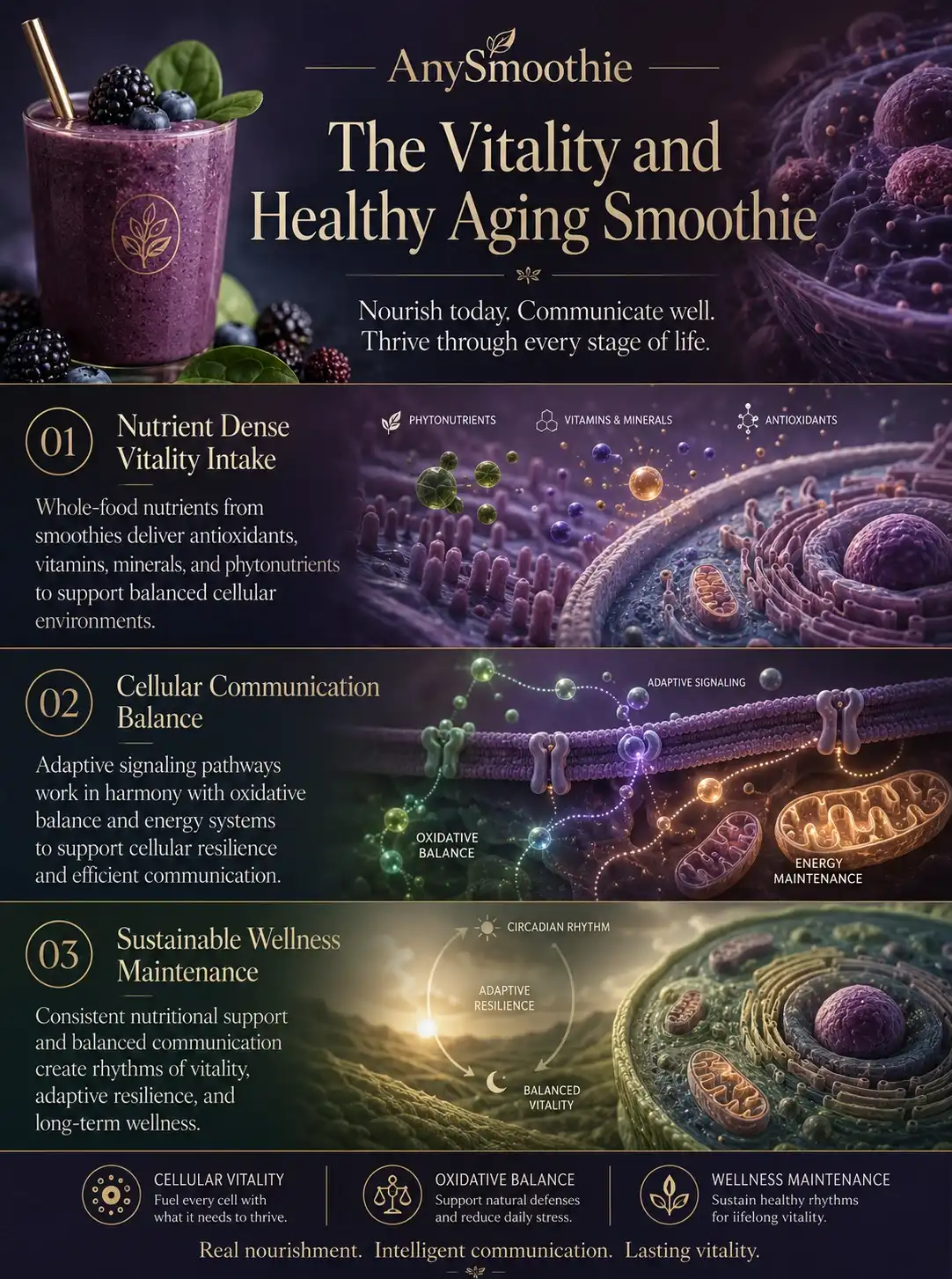
Antioxidant Density and Cellular Stress Balance: Polyphenol-rich ingredients like berries, grapes, greens, and citrus contribute antioxidant compounds that participate in oxidative balance and cellular resilience pathways. Consistent intake of diverse plant nutrients may help support healthier aging patterns more effectively than relying on isolated “miracle” ingredients or surface-level cosmetic strategies alone.
Mitochondrial Priming and Energy Production Support: Compounds associated with NAD+ metabolism, mitochondrial signaling, and cellular repair pathways are often discussed in longevity-focused wellness routines because they help support ATP production and metabolic efficiency. Smoothies combining greens, minerals, hydration, and balanced macronutrients may create steadier daily energy than highly processed, sugar-heavy breakfast patterns.
Collagen Support and Structural Hydration Dynamics: Skin, hair, and nails depend on adequate protein intake, hydration balance, vitamin C availability, and connective tissue support nutrients. Ingredients like collagen peptides, kiwi, pineapple, cucumber, and citrus help provide structural building blocks while supporting the hydration environment associated with skin elasticity and tissue resilience.
Glycation Control and Metabolic Aging Considerations: Frequent glucose spikes may contribute to glycation processes that affect collagen structure and long-term tissue quality. Smoothies centered around berries, fiber, healthy fats, and moderate sweetness generally create a steadier metabolic profile than highly sugary drinks, supporting both energy stability and healthier skin-aging patterns over time.
FAQ
Why does cellular nutrition matter more than topical beauty products alone?
Topical products primarily interact with the outer skin barrier, while cellular nutrition influences hydration, collagen synthesis, oxidative balance, and energy production from within. Nutrient-dense smoothies provide vitamins, minerals, amino acids, and polyphenols that support the broader physiological systems connected to skin texture, hair strength, nail resilience, and overall vitality.
Why are berries and resveratrol-rich foods used so often in longevity smoothies?
Dark berries and grape-derived compounds are frequently discussed because they contain polyphenols associated with oxidative stress adaptation and cellular signaling pathways tied to healthy aging. Their antioxidant density also helps support collagen stability and skin appearance while providing lower-glycemic sweetness compared to heavily processed sugary foods.
How do collagen and hyaluronic-support ingredients work together?
Collagen provides structural amino acids used in connective tissue maintenance, while hyaluronic-supportive foods help maintain hydration and tissue moisture balance. Combining collagen peptides with vitamin C-rich fruits like kiwi, pineapple, or citrus may help support both scaffolding and hydration pathways together, which is why these pairings appear frequently in beauty-focused smoothie routines.
Why is mitochondrial support connected to visible energy and appearance?
Mitochondria help generate ATP, which powers cellular repair, recovery, and metabolic processes throughout the body. When energy production feels more stable, people often notice improvements in focus, physical resilience, and overall vitality. Longevity-oriented smoothies therefore tend to emphasize nutrient density, mitochondrial cofactors, hydration, and metabolic efficiency rather than relying only on stimulants for short-term energy.
How does blood sugar stability influence skin aging and vitality?
Frequent glucose spikes may contribute to glycation, a process that can affect collagen structure and tissue elasticity over time. Smoothies built with fiber, healthy fats, protein, and lower-glycemic fruits generally create steadier glucose handling and more stable energy patterns. This slower metabolic pacing often supports both long-term vitality and healthier-looking skin.

Medical Disclaimer: AnySmoothie content is for educational purposes only and is not a substitute for professional medical advice. Consult a healthcare provider for personalized guidance. See our full Disclaimer & Terms of Use. AI Transparency: AnySmoothie may use AI to support content development. All content undergoes human editorial review for accuracy, clarity, and editorial quality. See our full AI Transparency.