
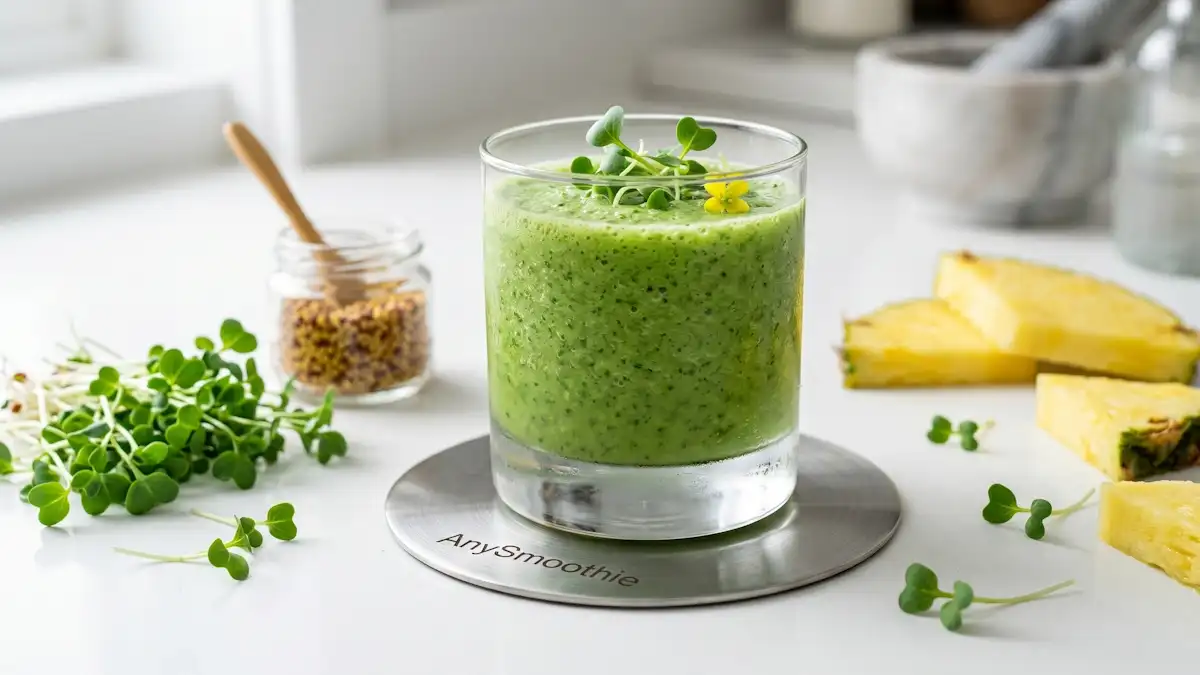
Your body faces toxins daily from air, food, and stress. These build up and strain cells. Phase II detox enzymes step in to bind and flush them out. They protect against damage.
Sulforaphane from cruciferous veggies flips the switch on these enzymes. It works through the Nrf2 pathway, boosting glutathione S-transferase and other defenders. This also tweaks epigenetic signaling for long-term cell health. Broccoli sprouts deliver the most sulforaphane punch.
Sulforaphane smoothies make this easy. You get a tasty boost without cooking. These drinks use fresh sprouts for top potency. This post breaks down the science, best sources, recipes, and tips. You’ll learn to activate Nrf2 at home.
The Nrf2 Master Switch: How Sulforaphane Triggers Phase II Detox
Nrf2 sits as your body’s main detox controller. It stays quiet until sulforaphane wakes it. Then Nrf2 ramps up Phase II enzymes. These enzymes conjugate toxins, making them water-soluble for easy exit.
Glutathione S-transferase leads the pack. It tags pollutants for liver cleanup. Sulforaphane also fights oxidative stress. Think of Nrf2 as factory lights turning on. Workers then scrub every corner clean.
Real benefits show up fast. Liver function improves. Inflammation drops. Cells gain a strong shield. Studies confirm this. People report clearer skin and steady energy.
Epigenetic changes help too. Sulforaphane alters gene activity without changing DNA. This sustains detox over time. You feel it in daily resilience.
Understanding the Myrosinase Reaction: Why Preparation Is Everything
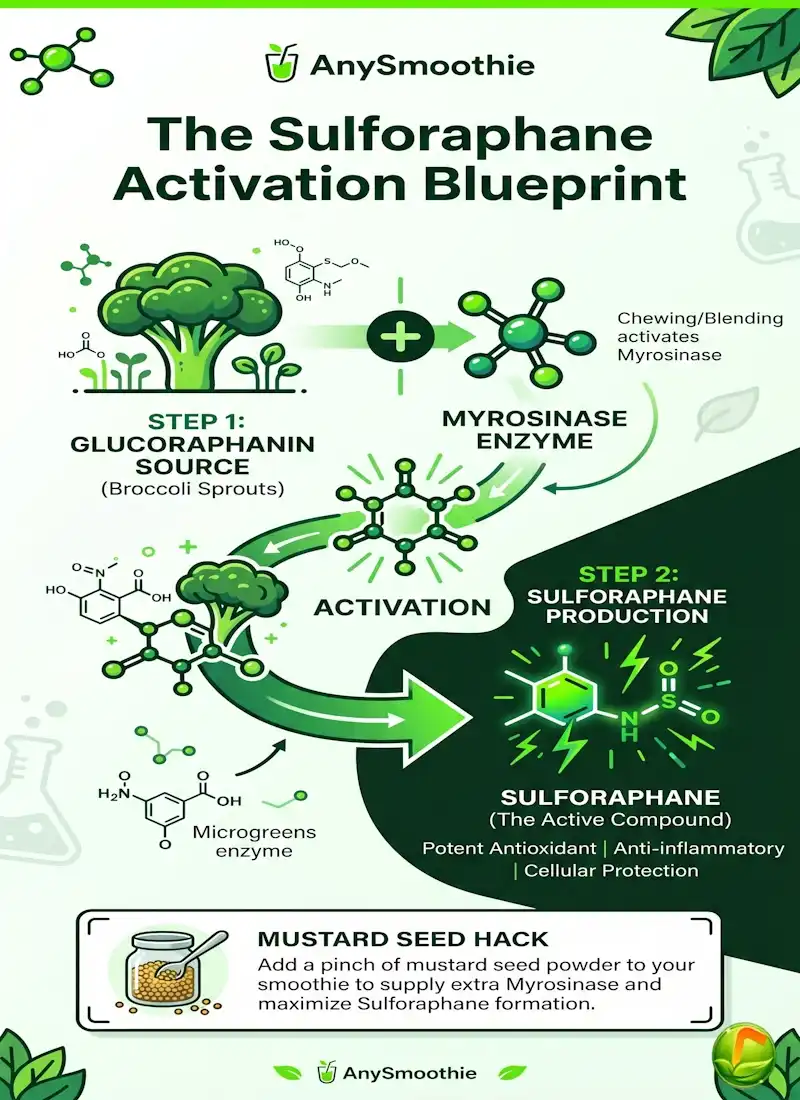
Glucoraphanin hides in broccoli sprouts. It needs myrosinase to become sulforaphane. Chewing or chopping mixes them. This reaction peaks in fresh prep.
Blenders work well for smoothies. They break cells fast. Heat kills myrosinase, so keep it cold. Fresh activation means more sulforaphane hits your system.
Here’s a quick comparison of key sources:
| Source | Sulforaphane Concentration (per gram) | Ease of Blending | Bioavailability | Best Use in Smoothies |
|---|---|---|---|---|
| Broccoli Sprouts | Up to 100x more precursors than mature broccoli | High; tender stems blend smooth | Excellent with proper activation | Primary base for max Nrf2 boost |
| Mature Broccoli | Low precursors (10-50x less) | Medium; fibrous | Good if raw/chopped | Add for bulk, not potency |
| Mustard Seeds | High myrosinase enzyme | High; fine powder | Boosts others’ conversion | Activator hack for yield |
Sprouts win for sulforaphane smoothies. They pack precursors. Mustard seeds amp the reaction.
High-Yield Sources: Broccoli Sprouts vs. Mature Brassicas
Broccoli sprouts top the list. They hold 10-100 times more glucoraphanin per gram than mature broccoli. Kale and cabbage trail behind. This means less volume for big results.
Mature brassicas need bulk to match. Sprouts fit smoothies perfectly. No filler greens required. Their potency fires Nrf2 hard. Phase II enzymes surge.
Grow your own for peak freshness. Seeds sprout in days. Rinse twice daily. Harvest at 3-5 days. Costs drop. Control quality.
Factors influencing sulforaphane content in broccoli sprouts show optimal growth tips. You get reliable yields. Tie this to daily sulforaphane smoothies. They supercharge detox without effort.
The “Mustard Seed Hack”: Doubling Your Sulforaphane Yield
Mustard seeds bring extra myrosinase. Add them to sprouts. Conversion doubles. Science backs it. A study on mustard seed myrosinase proved higher bioavailability.
Use 1/4 teaspoon powder per cup of sprouts. Grind seeds first. Blend into smoothie base. Taste stays neutral. It blends with fruits.
Steps stay simple. Measure sprouts. Add mustard. Blend cold. Drink fresh. Yields jump 50-100%. Perfect for potent sulforaphane smoothies every day.
3 Activation-Focused Sulforaphane Smoothie Recipes
These recipes maximize myrosinase. They use raw sprouts and mustard hacks. Each serves one. Prep takes minutes. Focus on Nrf2 and Phase II kick.
Temperature and Timing for Cellular Shielding
Fresh smoothies deliver peak sulforaphane. Drink within 30 minutes. pH matters. Neutral to acidic works best. Add fats like avocado. They carry compounds in.
Time for morning. Circadian rhythms peak detox then. Track skin glow or energy. Adjust doses. Start with 1 cup sprouts daily.
Habits build results. Consistency activates Nrf2 steady. Cells shield better over weeks.
Clinical trial on sulforaphane and Nrf2 activation supports dosing. Your smoothies mimic this.
Avoiding Heat Degradation: Why Raw and Frozen Matter for Sulforaphane
Heat above 70C kills myrosinase. Sulforaphane drops 90%. Cooked broccoli loses power. Raw rules.
Freeze sprouts whole. Thaw slightly before blending. Retains 90% activity. Frozen fruits chill without heat.
Bioavailability of sulforaphane in raw vs cooked broccoli confirms it. Smoothie tip: Blend cold. No warm liquids.
Conclusion
Sulforaphane smoothies master Phase II detox. Nrf2 flips on with sprouts and mustard hacks. Recipes make it simple and tasty.
You gain clearer skin, steady energy, and longer health span. Glutathione S-transferase works harder. Cells stay protected.
Try one recipe this week. Notice the shift. Share your tweaks below. More biohacks coming soon. Your detox game levels up now.
⚠️ Specific Safety Notes for Sulforaphane & Nrf2:
Thyroid Function (Goitrogens): Raw cruciferous vegetables contain goitrogens, which can interfere with iodine uptake. If you have hypothyroidism or Hashimoto’s, avoid consuming high-dose sprouts every single day. Rotate your greens and consult your endocrinologist.
Digestive Adjustment: Sulforaphane is a potent compound. High doses of raw sprouts can cause gas, bloating, or “stomach heat” in sensitive individuals. Start with 1/4 cup of sprouts and increase gradually over 2 weeks.
Mustard Seed Potency: A little goes a long way. Excessive mustard powder can irritate the stomach lining or cause heartburn. Stick to the 1/4 teaspoon recommendation per serving.
Pesticide Risk: Broccoli seeds for sprouting are a common source of bacterial contamination (like E. coli or Salmonella). Always use “certified organic” seeds meant for human consumption and rinse your sprouts thoroughly before blending.
Drug Metabolism: Induction of Phase II enzymes can speed up the clearance of certain medications (like acetaminophen or certain asthma drugs). If you are on a strict medication protocol, check with your pharmacist.
FAQ
How does Sulforaphane act as a “Signal Transducer” for the Nrf2 pathway?
Sulforaphane is a potent electrophilic inducer that interacts with the Keap1 protein. Biochemically, this interaction releases the Nrf2 transcription factor, allowing it to migrate to the cell nucleus and bind to the Antioxidant Response Element (ARE). Supporting this physiological system through sulforaphane-rich smoothies optimizes the natural pathways of “Phase II enzyme induction,” ensuring that the biochemical mechanics of cellular defense are primed and ready to neutralize reactive metabolites.
Why is the “Mustard Seed Hack” essential for Sulforaphane bioavailability?
The conversion of glucoraphanin (the precursor) into sulforaphane requires the enzyme myrosinase. Biochemically, heat can denature this enzyme in mature or processed vegetables. Supporting this physiological system by adding ground mustard seeds—which are rich in heat-stable myrosinase—optimizes the natural pathways of conversion even in complex blends. This ensures that the biochemical mechanics of sulforaphane yield are maximized, facilitating a stronger Nrf2 signal.
What is the role of Glutathione S-Transferase (GST) in Phase II detoxification?
Glutathione S-Transferase is a primary Phase II enzyme whose production is upregulated by Nrf2 activation. Biochemically, GST catalyzes the conjugation of glutathione to various toxins, making them more water-soluble and easier for the body to eliminate. Supporting this physiological system through consistent sulforaphane intake optimizes the natural pathways of hepatic and cellular clearance. This ensures that the biochemical mechanics of “metabolic scrubbing” stay efficient and proactive.
How does “Epigenetic Signaling” support long-term cellular health?
Sulforaphane has been studied for its ability to influence histone deacetylase (HDAC) activity. Biochemically, this tweaks the epigenetic signaling that controls gene expression related to cell cycle arrest and repair. Supporting this physiological system through targeted smoothies facilitates the natural pathways of “genomic shielding.” This optimization ensures that the biochemical mechanics of the cell favor long-term resilience and structural integrity over inflammatory or stress-driven responses.
Why is “Cold Blending” critical for maintaining Myrosinase activity?
Myrosinase is highly sensitive to temperature and begins to degrade when exposed to heat above 60-70°C. Biochemically, maintaining the enzyme’s structural integrity is necessary for the glucoraphanin-to-sulforaphane reaction to occur. Supporting this physiological system by using frozen fruits and cold liquids in your smoothie optimizes the natural pathways of enzymatic activation. This ensures that the biochemical mechanics of the “sulforaphane shield” are preserved until the moment of consumption.

Medical Disclaimer: AnySmoothie content is for educational purposes only and is not a substitute for professional medical advice. Consult a healthcare provider for personalized guidance. See our full Disclaimer & Terms of Use. AI Transparency: AnySmoothie may use AI to support content development. All content undergoes human editorial review for accuracy, clarity, and editorial quality. See our full AI Transparency.