
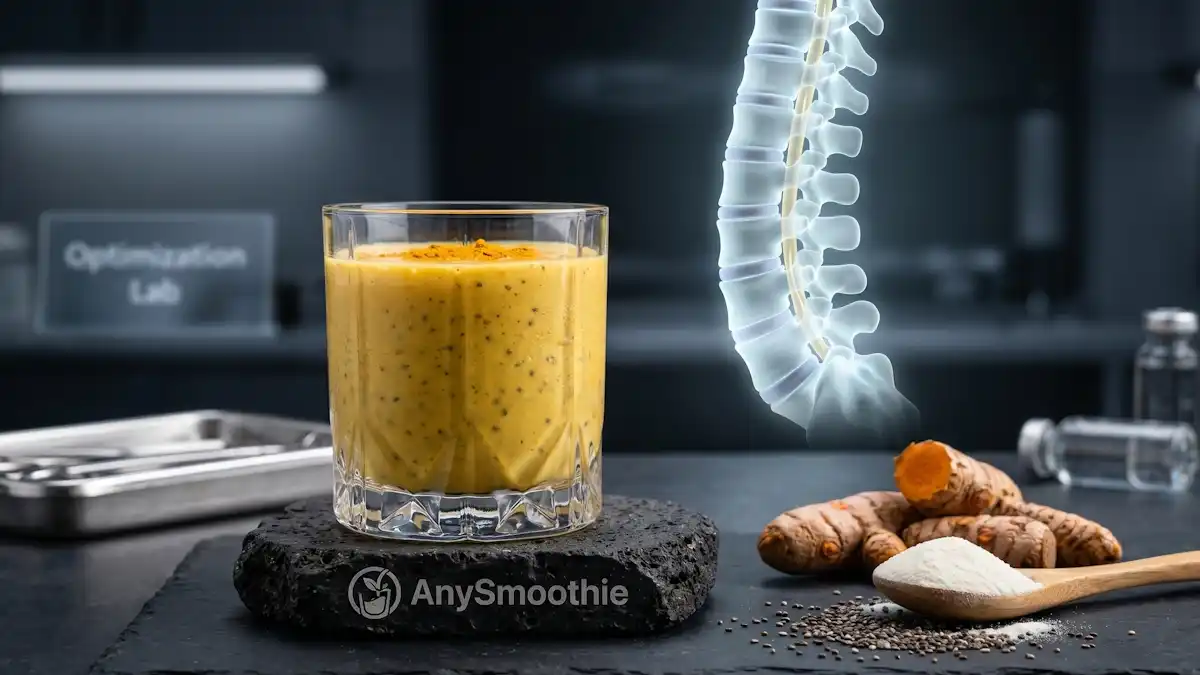
A support smoothie for spinal decompression is built to give your body useful raw materials, not magic. It can help with disc hydration, connective tissue support, and inflammation balance when your spine is under pressure.
That matters because spinal discs, ligaments, and surrounding tissue all depend on water, minerals, amino acids, and steady nutrient intake. A smoothie makes those inputs easy to combine, easy to digest, and easy to repeat.
Why a support smoothie can help when your spine needs decompression
Food does not create space in the spine by force. What it can do is support the systems that keep spinal tissue fed, hydrated, and maintained.
When discs stay better hydrated, they hold load more evenly. When connective tissue gets enough amino acids and co-factors, it can keep up with normal wear. When your intake includes anti-inflammatory foods, you give your body a cleaner environment for repair.
The point is simple: a smoothie can be a practical delivery system. It turns a few useful inputs into one easy habit.
For a broader look at spinal nutrition, the American Chiropractor’s overview of decompression nutrition gives a useful starting point.
How disc hydration affects pressure, comfort, and movement
Spinal discs work like small fluid cushions between the vertebrae. They hold water, spread force, and help your back move without grinding.
When a disc has less water, it loses some of that spring. Pressure shifts faster, movement can feel stiffer, and daily load feels heavier. Better hydration does not fix everything, but it helps the disc do its job.
That is why a hydration-focused smoothie makes sense. It supports the fluid side of spinal mechanics.
What a smoothie can deliver that a regular meal may not
A smoothie can pack water, protein, fats, and micronutrients into one serving. That matters when appetite is low or mornings are rushed.
Blending also helps with digestibility. Some people handle a smoothie better than a dense plate of food, especially before work or after movement.
It also lets you pair ingredients with purpose. Protein can ride with vitamin C, fats can help absorb certain compounds, and fruit can improve taste without much effort.
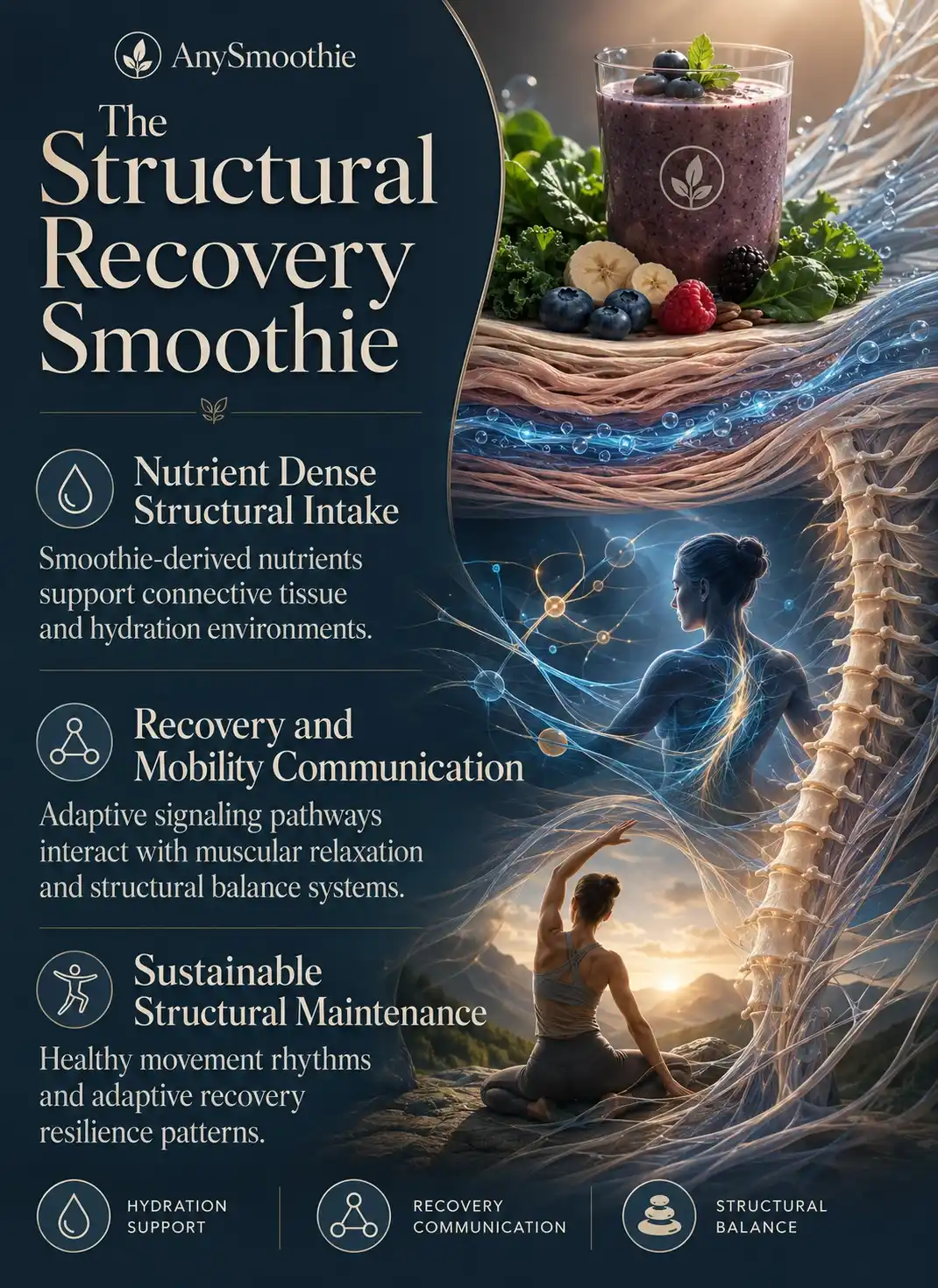
The hydrostatic disc: maintaining intra-vertebral hydration
The disc is not a dry pad. It is a fluid-supported structure with a matrix that depends on water balance.
That matrix uses collagen and water-binding molecules to keep pressure distributed. When you feed that system well, you support the disc environment rather than forcing it to work harder.
Water is part of the structure here, not just a nice extra.
A useful review of hyaluronic acid and disc regeneration explains why hydration support matters so much in disc tissue.
Proteoglycans and GAGs: the molecular sponge of the spine
Proteoglycans and glycosaminoglycans, or GAGs, help trap water inside disc tissue. They act like a molecular sponge.
That water retention helps the disc stay thick and springy under load. It also supports shock absorption during walking, lifting, and twisting.
If the matrix loses water-binding power, the disc loses some of its cushion. So a support smoothie should aim to back that system with the right building blocks.
Three nutrients that fit this hydration-focused approach
Evidence varies, but these nutrients fit a hydration-first plan well. They support the matrix in different ways, which is why they often show up together.
| Nutrient | Structural Role | Target Tissue | Bioavailability Hack | Best Smoothie Pairing |
|---|---|---|---|---|
| Glucosamine Sulfate | Supports matrix building blocks | Nucleus pulposus | Pair with food and vitamin C | Berry-citrus blend |
| Chondroitin Sulfate | Helps water retention and elasticity | Annulus fibrosus, cartilage interfaces | Take with collagen or gelatin | Green fruit smoothie |
| Hyaluronic Acid | Hydration Magnet for spinal discs | Nucleus pulposus, joint fluid | Use with healthy fats or liposomal forms | Avocado-cucumber blend |
If you want one clear hydration-focused ingredient, hyaluronic acid is the standout. If you want a steadier base, pair it with water-rich produce and protein.
Collagen type II and the connective tissue support stack
The outer ring of the disc, the annulus fibrosus, depends on strong connective tissue. Collagen type II matters here because it supports the structure that helps the disc hold shape under pressure.
That does not mean more collagen is always better. It means your smoothie should supply the parts needed for normal tissue maintenance.
A closer look at type II collagen scaffold research shows why structural support matters in disc-related work.
Manganese and vitamin C as co-factors for connective tissue synthesis
Vitamin C helps the body build and stabilize collagen. Manganese supports enzymes that take part in connective tissue formation.
Together, they work well with protein-rich ingredients. That is why a support smoothie should include citrus, berries, or kiwi, plus a mineral source if possible.
The research link between vitamin C and disc collagen is worth a look in this paper on vitamin C and degenerative disc disease. It makes the co-factor angle very clear.
Smart smoothie ingredients that help build a stronger base
You do not need a long ingredient list. You need a few categories that work together.
- Collagen peptides or gelatin: add amino acids that fit connective tissue support.
- Citrus and berries: provide vitamin C and antioxidant support.
- Leafy greens: add minerals without much sugar.
- Seeds like chia or flax: bring fats and fiber.
- Mineral-rich liquids: coconut water, kefir, or broth can improve the overall mix.
This is where nutrient partitioning matters. The goal is to put the right parts in the same glass.
3 spinal-shield smoothie recipes that keep it practical
These are simple concepts, not gourmet projects. Each one supports a different angle of spinal care.
How to build your smoothie for better nutrient absorption
A good smoothie works better when the body can use it. That means paying attention to carriers, portion size, and timing.
Liposomal transport, fats, and why some nutrients need a carrier
Some nutrients absorb better with fat. Others do better in a liposomal or food-based form.
That is why avocado, nut butter, chia, and flax matter. They can help carry fat-soluble compounds and improve the texture at the same time.
Portion size, protein balance, and when to drink it
Keep the smoothie satisfying, but not heavy. A moderate protein base usually works better than a huge calorie load.
Morning, between meals, or after light activity are all reasonable times. The best timing is the one you can repeat.
Conclusion
A support smoothie for spinal decompression is about giving your body the parts it uses every day, water, structure, and mineral support. The best versions stay simple, with collagen, vitamin C, hydration, and a few targeted fats or minerals.
Consistency matters more than complexity. One well-built smoothie, repeated often, does more than a complicated recipe you never make again.
Build one version that fits your routine, then use it regularly. That is how practical support turns into a habit your spine can use.
⚠️ Safety Notes for Spinal Support Smoothies
Chondroitin and Blood Thinners: Chondroitin sulfate has a structural similarity to heparin and may have mild anticoagulant effects. If you are taking Warfarin, Aspirin, or other blood thinners, consult your doctor to avoid an increased risk of bruising or bleeding.
Glucosamine and Shellfish Allergy: Many glucosamine supplements are derived from the shells of shellfish. If you have a shellfish allergy, ensure you use a vegan/vegetarian glucosamine source (derived from corn or fungi).
Manganese Toxicity: While essential for connective tissue, excessive manganese intake (above 11mg/day from all sources) can be neurotoxic. Stick to food sources like spinach, oats, or small amounts of supplements; do not exceed the recommended daily allowance.
Hyaluronic Acid and Gastric Sensitivity: Concentrated HA can sometimes cause mild nausea or stomach upset in sensitive individuals. Taking it within a blended smoothie with fats (avocado/yogurt) usually mitigates this effect.
Bone Broth and Sodium: If using the “Core-Resilience” savory blend, be mindful of the sodium content in pre-packaged bone br
FAQ
How can a smoothie support the physical decompression of the spine
While physical decompression involves creating space between vertebrae, the biological maintenance of that space depends on the “plumpness” of the intervertebral discs. These discs are largely made of water and proteoglycans. A support smoothie provides the biochemical building blocks that help the discs retain water and maintain their structural height, optimizing the body’s natural ability to withstand gravity and mechanical load.
What is the role of Collagen Type II in spinal health
The outer layer of the spinal disc, the annulus fibrosus, is composed of dense collagen fibers. Unlike the collagen found in skin (Type I), the spine and joints rely heavily on Type II. Consuming hydrolyzed Type II collagen provides the specific amino acid sequences that support the physiological systems responsible for repairing the disc’s “scaffolding,” ensuring it remains strong enough to contain the gel-like center.
Why is hydration alone not enough for disc health
Water is essential, but for it to stay within the disc, the body needs Glycosaminoglycans (GAGs). These molecules act like a biological sponge. Nutrients like glucosamine and chondroitin are precursors to these GAGs. By including them in your smoothie, you are supporting the osmotic pressure within the disc, allowing it to “suck in” and hold onto water molecules more effectively, especially during rest.
How does Manganese contribute to spinal resilience
Manganese is a trace mineral that serves as a critical co-factor for the enzymes involved in the synthesis of proteoglycans. Without manganese, the body’s natural pathways for building the “shock-absorbing” matrix of the spine are less efficient. Including manganese-rich ingredients like pineapple or pumpkin seeds in your blend supports the structural integrity of every joint in the spinal column.
Can anti-inflammatory nutrients support the spinal canal
Mechanical stress on the spine can lead to localized oxidative stress, which may affect the surrounding nerve roots. Including Omega-3 fatty acids and antioxidants like curcumin (from turmeric) in your smoothie supports the body’s natural pathways for managing this stress. This ensures that the neural environment remains clear and the communication between the spinal cord and the rest of the body is optimized.

Medical Disclaimer: AnySmoothie content is for educational purposes only and is not a substitute for professional medical advice. Consult a healthcare provider for personalized guidance. See our full Disclaimer & Terms of Use. AI Transparency: AnySmoothie may use AI to support content development. All content undergoes human editorial review for accuracy, clarity, and editorial quality. See our full AI Transparency.