
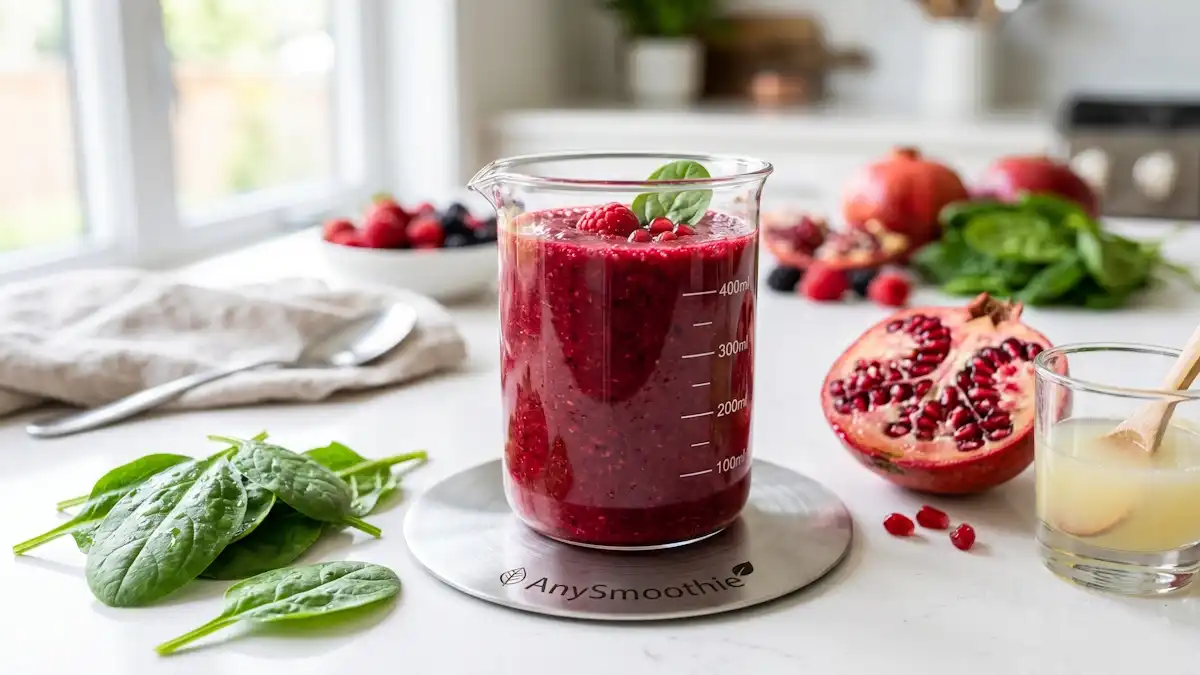
Hemoglobin efficiency is simple, how well your body builds hemoglobin and moves oxygen through red blood cells. A smoothie can support that process when it carries the right nutrients in the right form.
The goal here is not to treat disease. It is to support the body’s normal red blood cell and oxygen transport systems with iron, folate, B12, copper, vitamin C, and smart timing. That is what makes smoothie protocols for hemoglobin efficiency useful instead of random. The real work is in nutrient pairing and absorption.
Erythropoiesis: The Bone Marrow’s Manufacturing Logic
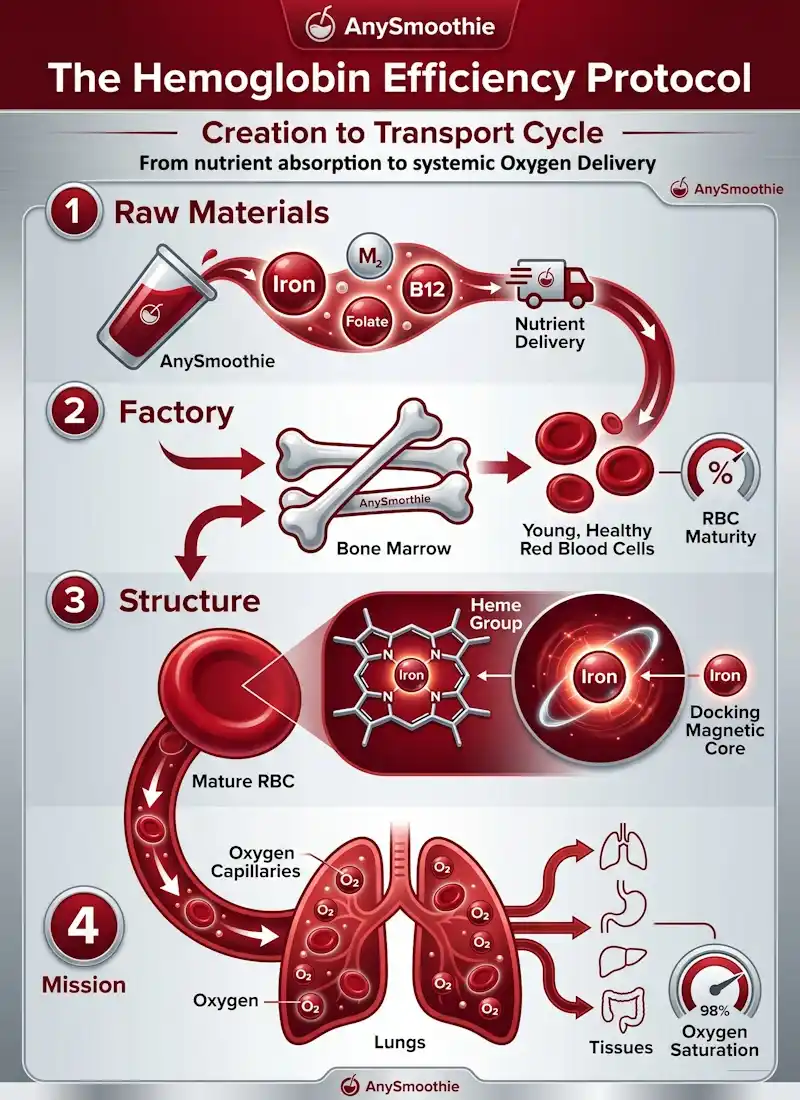
Red blood cells are built in the bone marrow through erythropoiesis. The marrow loads each new cell with hemoglobin, then sends it into circulation. When one raw material is missing, the assembly line slows. For a plain-language overview of iron-rich foods and hemoglobin, hemoglobin and iron basics is a useful starting point.
Erythropoiesis and why red blood cells need the right raw materials
The marrow needs iron, folate, B12, copper, protein, and energy. Iron helps hemoglobin carry oxygen. Folate and B12 help cells divide and mature on schedule. Copper helps move iron through the system. Smoothies work best when they support that whole chain.
5-MTHF and methylcobalamin: the DNA synthesis co-factors
5-MTHF is an active folate form, and methylcobalamin is a usable B12 form. Together they support DNA copying during red blood cell maturation. A smoothie with leafy greens and a B12-fortified milk can fit that need without much fuss.
Why smoothie timing matters for nutrient partitioning
Timing matters because absorption is part chemistry, part traffic control. Pair iron-rich ingredients with vitamin C, and keep coffee, tea, and heavy calcium away from the same window. That is nutrient partitioning in practice, the body gets less competition and more usable iron.
The best smoothie nutrients for supporting blood building
The strongest blends use a few nutrient roles, not a long ingredient list.
| Nutrient | Physiological Mechanism | Rate-Limiting Step | Best Smoothie Pairing | Target System |
|---|---|---|---|---|
| Iron (non-heme from greens) | Supports hemoglobin’s oxygen-binding site | Vitamin C must reduce ferric iron (Fe3+) to ferrous iron (Fe2+) before absorption | Spinach + citrus + berries | Oxygen transport |
| Folate (5-MTHF) | Supports DNA synthesis for RBC maturation | Cell division inside marrow | Kale + avocado + berries | Bone marrow maturation |
| Copper (chlorophyll-bound) | Helps iron mobilization and use | Copper-dependent transport enzymes | Cacao + pumpkin seeds + kiwi | Iron handling |
The pattern is simple. Iron starts the oxygen job, folate keeps cell division moving, and copper helps iron get where it needs to go.
Iron, folate, and copper in a smoothie-friendly form
Spinach, beet greens, molasses, cacao, and pumpkin seeds all fit the blender well. Greens bring non-heme iron and folate. Molasses and cacao add minerals. Seeds add copper and a little protein. That mix supports red blood cell building without making breakfast complicated. blood-building iron tips show the same food-first logic.
Why vitamin C is the absorption key
Vitamin C is the mechanical step that turns plant iron into a form the gut can use.
Citrus, kiwi, berries, and lemon all work. Without that partner, an iron-rich smoothie is less efficient because the gut has more trouble taking the iron in. The rule is simple, keep vitamin C in the same glass as the iron.
The Heme Complex: Iron, Copper, and Glycine Integration
Hemoglobin support is a team project. Heme uses iron, copper helps move and use iron, and glycine is one of the amino acids the body uses when it builds heme. When a smoothie includes greens, seeds, and some protein, it gives the body more of the pieces it uses to assemble that system.
Bioavailability Catalysts: Vitamin C and the Reduction of Non-Heme Iron
This is where citrus earns its place. A squeeze of lemon, a kiwi, or a handful of strawberries helps reduce non-heme iron and improves its chance of absorption. That simple pairing with iron is the difference between a good-looking smoothie and a more usable one. A quick reminder on pairing vitamin C with iron fits this rule well.
Supporting 2,3-BPG Balance
Red blood cells also rely on 2,3-BPG, a small molecule that helps hemoglobin release oxygen where tissue needs it. You do not have to micromanage it, but steady energy intake and good mineral support help the system stay balanced. Smoothies that are too sugary or too small do less for that process.
Mitochondrial Priming: Fueling the Energetic Cost of Red Cell Production
Red blood cell production costs energy, so mitochondrial support matters. Protein, seeds, and modest carbs help the body handle that cost without a sharp glucose spike. That is why a smoothie with some fat and protein works better than fruit alone.
How to build a hemoglobin-support smoothie that actually works
A good formula is built on pairing, not volume. Start with a non-heme iron base like spinach or beet greens, then add a vitamin C source such as orange, kiwi, lemon, or berries. After that, fold in folate-rich greens, a copper source like cacao or pumpkin seeds, and a little protein or healthy fat for staying power.
Keep coffee, tea, and large calcium loads away from the smoothie window. If the blend is all fruit, it tastes fine but does less for hemoglobin support. A smaller, denser smoothie gives the marrow more usable raw materials.
3 Iron-Prime Smoothie Recipes
What to Avoid if You Want Better Hemoglobin Support from Smoothies
Coffee and tea around the smoothie window can block iron absorption, and a big hit of calcium can do the same. Too much fiber without vitamin C leaves plant iron underused. Large, sugary blends may taste good, but they can crowd out the nutrients that matter. Keep the recipe tight and the timing clean.
Conclusion
The best smoothie protocols for hemoglobin efficiency are simple, paired, and steady. Build around iron-rich greens, vitamin C, folate, copper, and enough protein or fat to keep the process moving.
Start with one formula and repeat it for a week. Small daily choices can support red blood cell production, oxygen transport, and metabolic efficiency over time.
🛡️ Safety Notes & Contraindications: Hemoglobin Support Smoothies
Hemochromatosis Risk: If you have a diagnosed genetic iron overload disorder (hemochromatosis), these iron-optimized protocols are NOT suitable and could be dangerous. Maintain a low-iron diet as prescribed by your specialist.
Chelation and Competition: CRITICAL: Polyphenols in coffee/tea and calcium in dairy significantly block non-heme iron absorption. To ensure the protocol works, consume your smoothie at least 90 minutes away from these substances.
Oxalate Management: Spinach and beet greens are high in oxalates. If you have a history of calcium-oxalate kidney stones, rotate these with kale or parsley and ensure you drink extra water to support renal filtration.
Vitamin B12 for Vegans: Plant-based smoothies do not contain natural B12. If you follow a vegan diet, you must use a fortified milk base or a separate supplement to complete the hemoglobin support chain.
Zinc/Copper Ratio: High supplemental zinc intake can induce a copper deficiency, which paradoxically leads to anemia. Keep seed-based copper sources in the mix to maintain a healthy mineral balance.
FAQ
How does “Vitamin C” act as a mechanical catalyst for iron absorption?
Plant-based (non-heme) iron exists in a ferric state ($Fe^{3+}$), which the gut cannot easily absorb. Biochemically, Vitamin C (ascorbic acid) is the essential step that reduces ferric iron into the ferrous state ($Fe^{2+}$). Supporting this physiological system by pairing iron-rich greens (like spinach) with citrus or berries in the same glass optimizes the natural pathways of “mineral reduction,” ensuring the biochemical mechanics of the gut can successfully take in the iron.
Why are “5-MTHF and Methylcobalamin” critical for bone marrow maturation?
Red blood cell production requires rapid cell division, which is dependent on DNA synthesis. Biochemically, 5-MTHF (active folate) and methylcobalamin (usable B12) are the primary co-factors that allow DNA to copy itself during the maturation phase in the marrow. Supporting this physiological system through folate-dense greens and fortified bases facilitates the biochemical mechanics of “cellular maturation,” ensuring the assembly line of red blood cells does not slow down.
What is the role of “Copper” in the mobilization and use of iron?
Iron cannot move through the system or be loaded into hemoglobin without the help of copper-dependent enzymes. Biochemically, copper is a rate-limiting step for iron handling and mobilization. Supporting this physiological system by integrating copper-rich substrates—such as cacao, pumpkin seeds, or kiwi—optimizes the natural pathways of “iron flux,” ensuring that the mineral reaches the bone marrow for hemoglobin assembly.
How does “Nutrient Partitioning” prevent competition for iron transporters?
Absorption is a matter of “traffic control” within the intestinal lumen. Biochemically, substances like tannins in tea and coffee, or large amounts of calcium, can compete with or block the uptake of iron. Supporting this physiological system through smart timing—keeping these inhibitors away from your hemoglobin-support smoothie window—facilitates the biochemical mechanics of “unimpeded absorption,” maximizing the yield of the nutrients you blend.
Why is “Mitochondrial Priming” necessary for the energetic cost of erythropoiesis?
The production of billions of red blood cells daily is an energy-intensive process that requires significant ATP. Biochemically, the body must handle this metabolic cost without causing sharp glucose spikes that could disrupt cellular signaling. Supporting this physiological system by adding healthy fats and protein (seeds or avocado) to your smoothie optimizes the natural pathways of “energy handling,” providing the marrow with steady fuel to support high-volume blood building.

Medical Disclaimer: AnySmoothie content is for educational purposes only and is not a substitute for professional medical advice. Consult a healthcare provider for personalized guidance. See our full Disclaimer & Terms of Use. AI Transparency: AnySmoothie may use AI to support content development. All content undergoes human editorial review for accuracy, clarity, and editorial quality. See our full AI Transparency.