
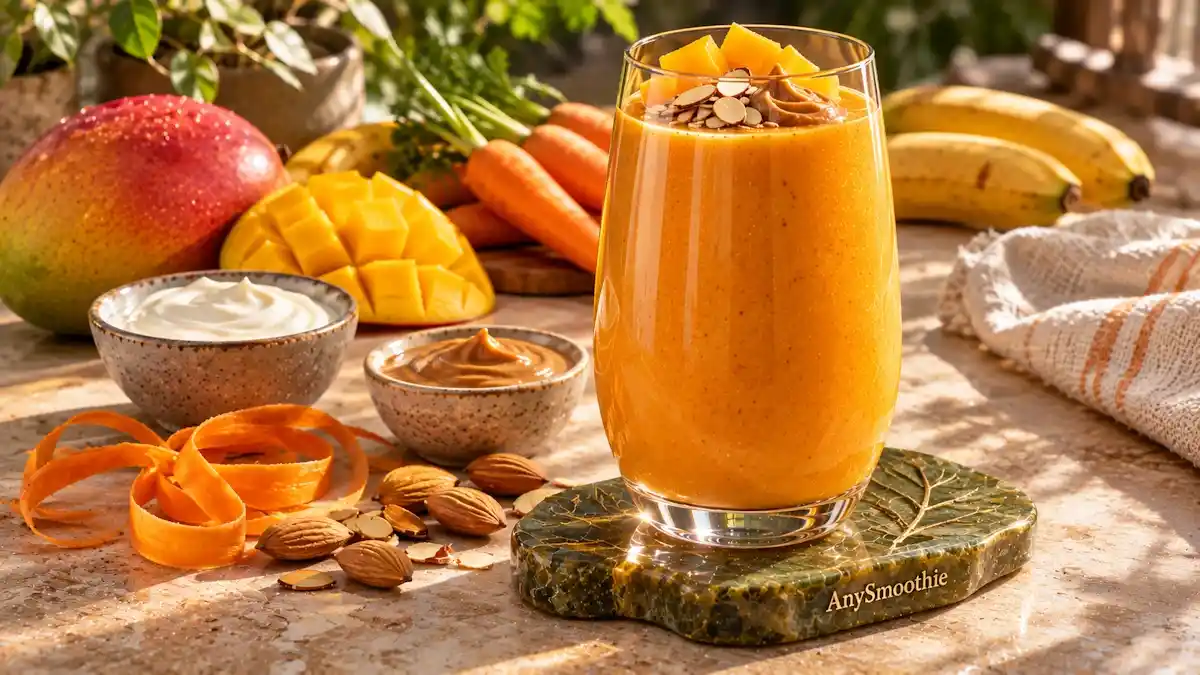
Colorful plant foods can supply provitamin A carotenoids, which your body can convert into vitamin A. Blending them with a modest source of dietary fat can help your body absorb these compounds.
Carrots, mango, spinach, and sweet potato all bring different flavors and textures to a smoothie. The three recipes below offer ways to combine them.
How the Body Converts Carotenoids Into Vitamin A
Carotenoids are pigments found in many plant foods. Some give fruits and vegetables their yellow or orange color, while others are present in leafy greens, where chlorophyll masks their color.
Which carotenoids can become vitamin A?
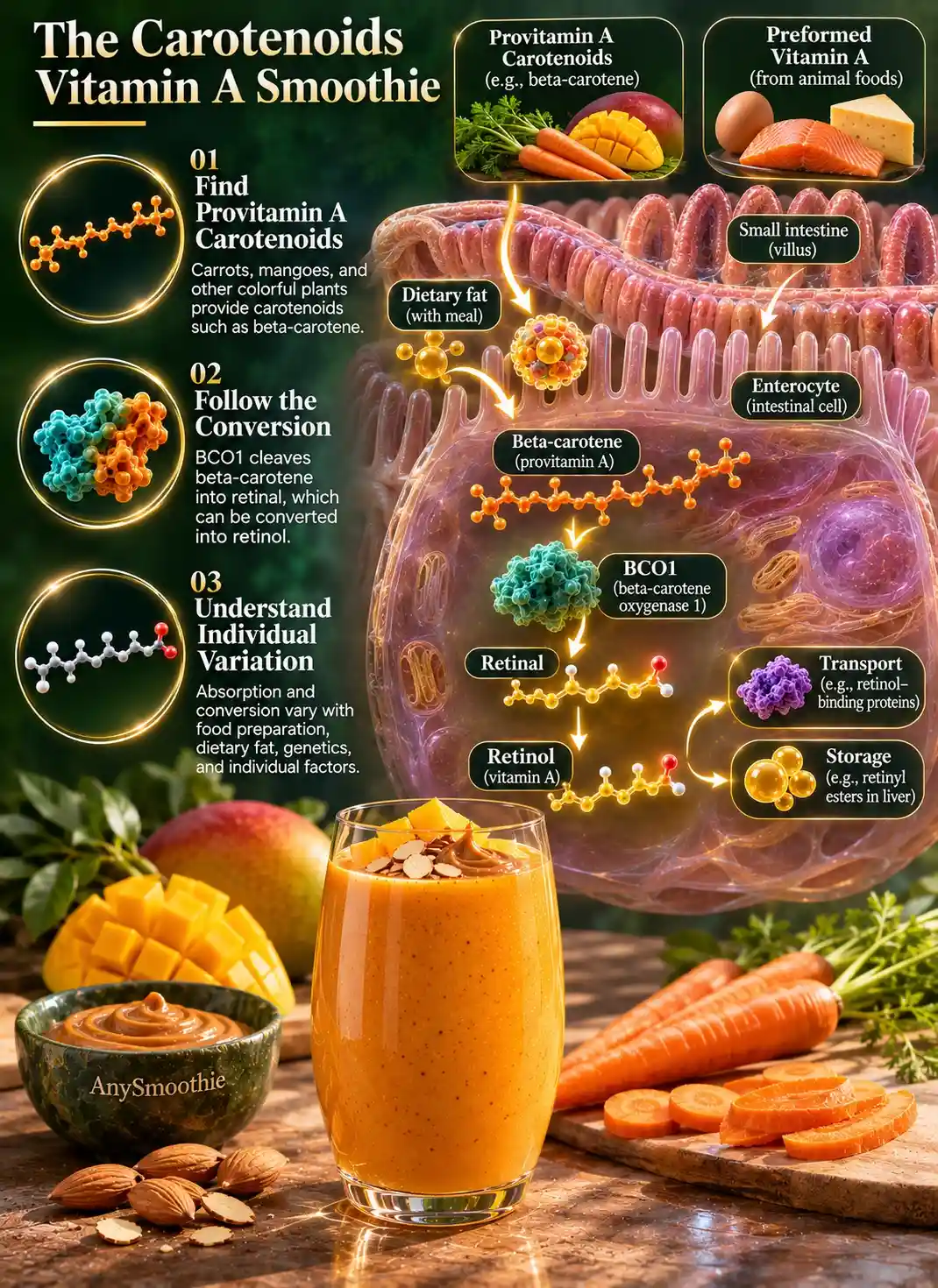
Beta-carotene, alpha-carotene, and beta-cryptoxanthin are provitamin A carotenoids. During digestion, the body can absorb them and use enzymes to convert them into forms of vitamin A.
For a related look at how vitamin A-derived compounds participate in the visual cycle, see rhodopsin regeneration smoothie for night vision.
Not every carotenoid can make that conversion. For example, lutein and lycopene aren’t provitamin A carotenoids. The National Institutes of Health’s vitamin A fact sheet describes the different dietary sources and forms of the vitamin.
Conversion varies among people. It also depends on factors such as the food’s structure, how it’s prepared, and what else is eaten with it. A smoothie doesn’t guarantee a particular vitamin A level.
For another food-based discussion of beta-carotene-containing produce and vitamin A, see hydrating smoothies for dry skin nutrition.
Why blending with a little fat can help
Blending breaks plant foods into smaller pieces, which can help release carotenoids from the food. During digestion, dietary fat helps carotenoids enter tiny structures called micelles, which carry them to the intestinal lining for absorption.
A review of dietary fat and carotenoid absorption explains this process. Almond butter, tahini, chia seeds, and dairy foods can contribute fat to a smoothie. A modest amount is useful; adding more doesn’t automatically produce a better result.
Bile also helps the body digest fats and absorb fat-soluble vitamins. For a related ingredient-focused discussion, see artichoke smoothies for healthy bile flow.
After intestinal absorption, dietary fats are transported through specialized particles called chylomicrons. You can explore this related process in smoothies for chylomicron assembly and fat absorption.
3 Smoothies for Vitamin A Conversion from Carotenoids
Each recipe makes one serving. The nutrition figures are estimates, since brands, produce sizes, and portions vary. Choose plain yogurt or kefir if you want the flavor of the fruit to come through without added sweetness.
Carrot Mango Almond Smoothie
Carrot supplies beta-carotene, while mango adds sweetness. Almond butter gives the drink a rounded, nutty flavor and contributes some fat.
Ingredients
- 1 medium carrot, chopped
- 1/2 cup mango chunks
- 1/2 cup plain Greek yogurt
- 1 tablespoon almond butter
- 1/2 cup cold water, plus more as needed
Instructions
Blend all ingredients until smooth, adding water a little at a time to reach the desired consistency.
Estimated Nutrition (per serving)
- Calories: ~250 kcal
- Protein: ~17 g
- Carbohydrates: ~26 g
- Fat: ~11 g
- Fiber: ~5 g
- Sugars: ~19 g
Mango Spinach Kefir Smoothie
Spinach contains beta-carotene, and the orange adds a bright citrus flavor. Citrus fruit can also supply beta-cryptoxanthin, another provitamin A carotenoid. Kefir gives this smoothie a thinner texture than the yogurt-based options.
Ingredients
- 1 cup baby spinach
- 1/2 cup mango chunks
- 1/2 medium orange, peeled
- 3/4 cup plain low-fat kefir
- 1 teaspoon chia seeds
- 2 to 3 ice cubes
Instructions
Blend the spinach, mango, orange, kefir, chia seeds, and ice until smooth. Let it sit for a minute if you prefer a thicker texture.
Estimated Nutrition (per serving)
- Calories: ~200 kcal
- Protein: ~9 g
- Carbohydrates: ~32 g
- Fat: ~4 g
- Fiber: ~5 g
- Sugars: ~25 g
Sweet Potato Papaya Tahini Smoothie
Cooked, cooled sweet potato provides beta-carotene and gives this blend a creamy consistency. Papaya adds a mild fruit flavor, while tahini brings a subtle savory note.
Ingredients
- 1/2 cup cooked, cooled sweet potato
- 1/2 cup papaya chunks
- 1/2 cup plain Greek yogurt
- 2 teaspoons tahini
- 1/2 cup cold water, plus more as needed
- A pinch of ground cinnamon, optional
Instructions
Blend all ingredients until creamy, adding extra water if needed. Serve cold.
Estimated Nutrition (per serving)
- Calories: ~245 kcal
- Protein: ~16 g
- Carbohydrates: ~31 g
- Fat: ~8 g
- Fiber: ~5 g
- Sugars: ~13 g
Compare the Smoothies by Flavor, Texture, and Best Use
This comparison highlights how the three finished smoothies differ.
| Smoothie | Carotenoid profile | Texture | Flavor | Best suited to |
|---|---|---|---|---|
| Carrot Mango Almond | Beta-carotene focused | Thick, slightly textured | Sweet and nutty | A substantial snack |
| Mango Spinach Kefir | Beta-carotene and beta-cryptoxanthin | Light and pourable | Fruity and tangy | A refreshing drink |
| Sweet Potato Papaya Tahini | Beta-carotene focused | Creamy and thick | Mild and earthy | A spoonable smoothie |
Choose the kefir blend for a lighter drink, or either yogurt-based option for a thicker consistency.
Simple Ways to Make Carotenoid-Rich Smoothies Work for You
Choose ripe produce for a fuller flavor, especially when using mango or papaya. If the fruit is less sweet than you prefer, adjust the balance with a little more ripe fruit rather than relying on sweetened dairy.
Blend thoroughly, especially when using raw carrot or leafy greens. If your blender struggles with the carrot, chop it into smaller pieces before adding it. Extra water can loosen a thick mixture without changing its flavor much.
Keep a modest source of fat in the recipe, whether that comes from dairy, nuts, or seeds. If you avoid an ingredient, choose an alternative that fits your needs and adjust the liquid as needed. For example, a thinner dairy-free yogurt may need less water than Greek yogurt.
The nutrition estimates are approximate, and smoothies are only one way to include colorful plant foods. They don’t guarantee that you’ll meet your vitamin A needs.
Conclusion: Find a Smoothie You Enjoy
Provitamin A carotenoids give your body material it can convert into vitamin A. Including some dietary fat helps with their absorption, though the amount converted varies.
Try one of these three smoothies and adjust the water or fruit to suit your preferred texture and flavor. A blend you enjoy is an easy way to add colorful produce to your routine.
🛡️ Safety Notes & Dietary Interactions
- Vitamin A Balance: These smoothies provide provitamin A carotenoids rather than preformed vitamin A. Conversion varies between people, so don’t assume larger portions will reliably increase vitamin A status.
- Dietary Fat: Almond butter, tahini, chia, kefir, and yogurt provide varying amounts of fat that can support carotenoid absorption. Adding substantially more fat does not guarantee greater conversion.
- Dairy and Allergens: The recipes contain Greek yogurt, kefir, almond butter, tahini, and chia. Check labels and avoid ingredients associated with known dairy, nut, sesame, or seed allergies.
- Digestive Tolerance: Raw carrot, spinach, chia, and relatively thick yogurt or sweet-potato blends can feel filling or affect digestion. Adjust portions and liquid according to individual tolerance.
FAQs
Which smoothie is most focused on beta-carotene?
The Carrot Mango Almond Smoothie is the most explicitly beta-carotene-focused option, with carrot as its main carotenoid-rich ingredient. The Sweet Potato Papaya Tahini Smoothie also provides beta-carotene from cooked sweet potato, while the spinach recipe combines beta-carotene with beta-cryptoxanthin from its plant ingredients.
Does adding more fat increase vitamin A conversion?
Not automatically. A modest amount of dietary fat can help carotenoids enter micelles during digestion and support absorption, but adding increasingly large amounts does not guarantee greater conversion into vitamin A. The recipes therefore use moderate sources such as almond butter, tahini, chia, yogurt, or kefir.
Why does the spinach smoothie include orange?
Orange adds a bright citrus flavor and can provide beta-cryptoxanthin, a provitamin A carotenoid. The spinach also contributes beta-carotene, making the recipe’s carotenoid profile somewhat broader than the more beta-carotene-focused carrot and sweet-potato options.
Can I use these smoothies to guarantee adequate vitamin A intake?
No. The body converts provitamin A carotenoids to vitamin A at variable rates, and these smoothies do not guarantee that you will meet your vitamin A needs. They are one convenient way to include colorful plant foods within an otherwise varied eating pattern.
Is the Sweet Potato Papaya Tahini Smoothie suitable if I want a thicker texture?
Yes. Cooked, cooled sweet potato gives this smoothie a naturally creamy, thick consistency, while Greek yogurt adds further body. Tahini contributes richness. Add cold water gradually if it becomes too thick, rather than substantially increasing the tahini or other fat-containing ingredients.

Medical Disclaimer: AnySmoothie content is for educational purposes only and is not a substitute for professional medical advice. Consult a healthcare provider for personalized guidance. See our full Disclaimer & Terms of Use. AI Transparency: AnySmoothie may use AI to support content development. All content undergoes human editorial review for accuracy, clarity, and editorial quality. See our full AI Transparency.