
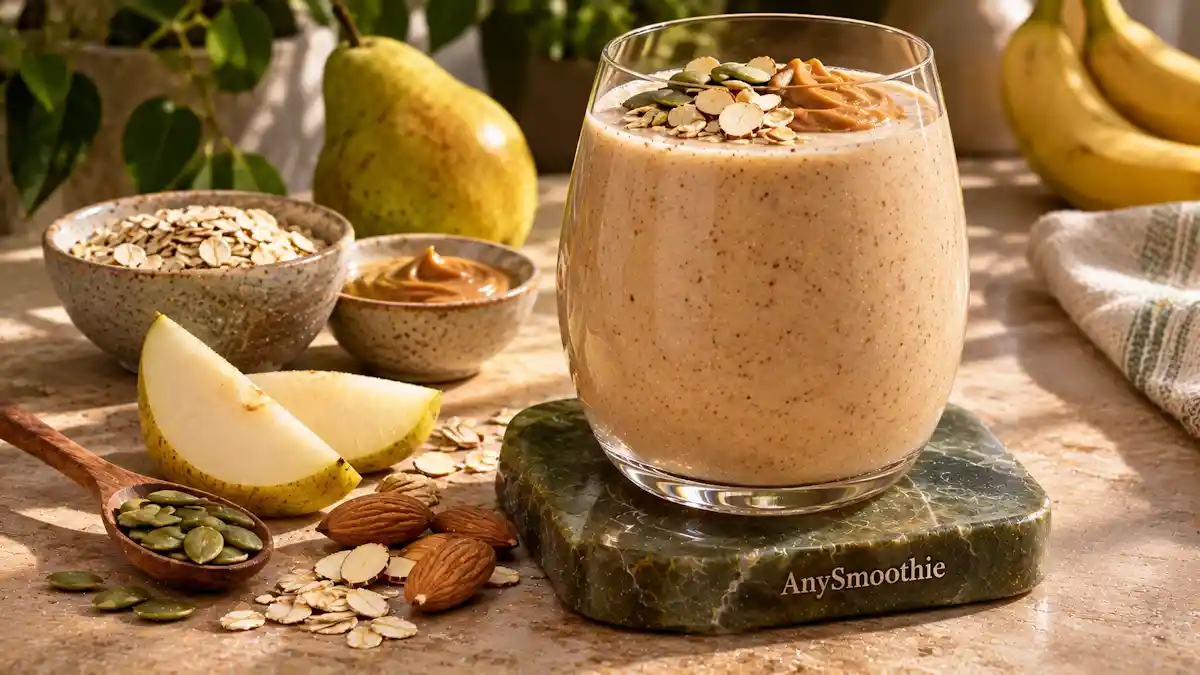
A smoothie can pair plant foods with vitamin C, which supports the absorption of nonheme iron, the type found in plants. But blending alone doesn’t remove phytate, a compound that can bind minerals and make some of them harder to absorb.
Soaking may reduce phytate in some ingredients, though results vary. These three recipes offer practical combinations of fruit, grains, seeds, and soy foods without promising a change in your mineral status.
How Phytate Affects Mineral Absorption in Smoothies
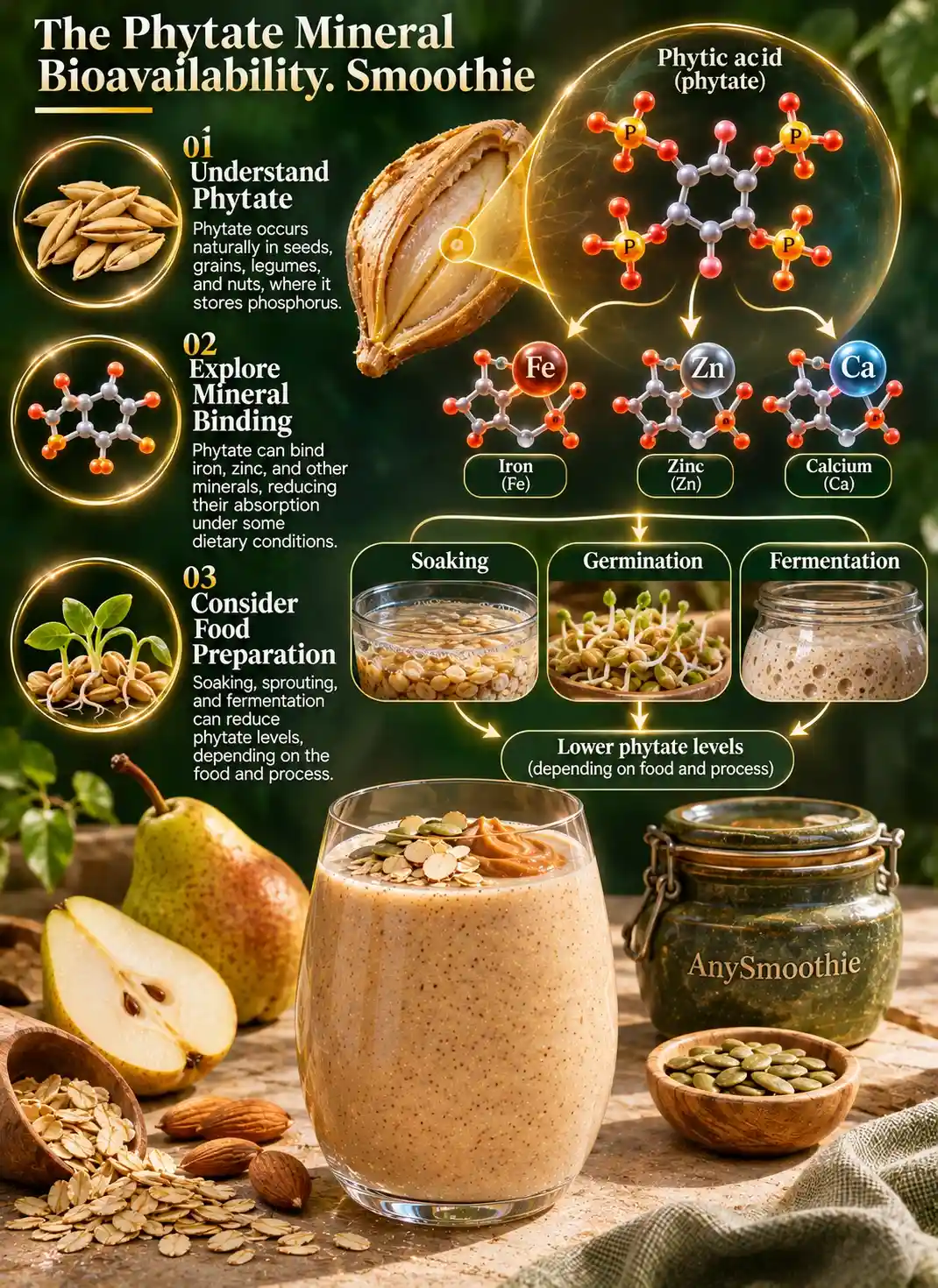
Phytate occurs naturally in grains, legumes, nuts, and seeds. In the digestive tract, it can bind to minerals such as iron, zinc, and calcium, leaving less available for absorption.
Oxalates are another plant compound relevant to mineral availability. For a related ingredient guide, see smoothies for oxalate sensitivity.
A blender breaks foods into smaller pieces, but it doesn’t reliably break down phytate. That doesn’t mean you need to avoid these foods: they also provide protein, fiber, and minerals as part of a varied diet.
For another discussion of food-derived iron and its role in cellular function, see smoothies for iron-sulfur cluster assembly.
What Soaking and Vitamin C Can, and Cannot, Do
Soaking can reduce phytate in some foods, though the effect varies with the food and soaking conditions. Fermentation and sprouting can also change phytate content before an ingredient goes into your blender. A review of phytate reduction methods describes how these processes affect different plant foods.
Vitamin C helps your body absorb nonheme iron when both are eaten together. However, it doesn’t cancel out all phytate or guarantee a particular absorption rate.
Zinc is another mineral discussed in the context of plant compounds in quercetin smoothies for zinc ionophore support.
Why the Whole Meal Matters
The amount of mineral your body absorbs depends on more than the smoothie. The food’s mineral content, other foods eaten at the same time, and your body’s needs all play a part.
For example, a vitamin C-rich fruit can accompany plant sources of iron, but the amount absorbed will vary. A review of phytate and whole grains discusses the effects of both phytate and vitamin C on iron availability.
3 Smoothies for Phytate and Mineral Bioavailability
Each recipe makes one serving. Nutrition figures are estimates based on unsweetened soy milk and typical ingredient values. Brands, fruit size, and any changes you make will affect the totals.
Strawberry-Orange Oat Smoothie
Ingredients
- 1/3 cup rolled oats, about 27 g
- 1 cup whole strawberries, about 144 g
- 1 medium orange, peeled
- 1/2 cup unsweetened soy milk
- Water and ice, as needed
Instructions
Cover the oats with water and soak them in the refrigerator overnight. Drain through a fine strainer, then blend with the strawberries, orange, soy milk, and ice until smooth. Add water to thin the mixture. Soaking can reduce some phytate, but the amount depends on the ingredient and method. It doesn’t remove all of it.
Estimated Nutrition (per serving)
- Calories: ~255 kcal
- Protein: ~9 g
- Carbohydrates: ~47 g
- Fat: ~4 g
- Fiber: ~9 g
- Sugars: ~19 g
Tropical Mango and Soaked Pumpkin Seed Smoothie
Ingredients
- 1 cup mango chunks, about 165 g
- 1/2 medium banana
- 2 tablespoons shelled pumpkin seeds, about 18 g
- 1/2 cup cold water
- Ice, as needed
Instructions
Cover the pumpkin seeds with water and soak them in the refrigerator for several hours. Drain and rinse, then blend with the mango, banana, fresh water, and ice. Blend until the seeds are finely ground. Pumpkin seeds provide minerals, including iron and zinc, but they also contain phytate. Soaking them doesn’t guarantee a particular change in mineral absorption.
Estimated Nutrition (per serving)
- Calories: ~255 kcal
- Protein: ~7 g
- Carbohydrates: ~41 g
- Fat: ~10 g
- Fiber: ~5 g
- Sugars: ~30 g
Cocoa-Berry Smoothie with Silken Tofu
Ingredients
- 1 cup raspberries, about 123 g
- 1/2 cup silken tofu, about 120 g
- 1 medium banana
- 1 tablespoon unsweetened cocoa powder
- 1/2 cup unsweetened soy milk
- Ice, as needed
Instructions
Blend the raspberries, tofu, banana, cocoa, soy milk, and ice until creamy. Raspberries supply vitamin C, while silken tofu adds protein and a smooth texture. Soy foods also contain phytate, and their processing can affect how much remains. Mineral availability depends on the full meal, not just one ingredient.
Compare the Smoothies by Flavor, Nutrition, and Best Use
The three smoothies differ in texture and nutritional emphasis, so choose the one that fits your taste and meal.
| Smoothie | Nutritional feature | Texture | Flavor profile | Best use |
|---|---|---|---|---|
| Strawberry-orange | Vitamin C and fiber | Smooth and lightly thick | Bright and fruity | A refreshing breakfast |
| Tropical mango | Minerals and unsaturated fat | Thick with some body | Sweet and tropical | A satisfying snack |
| Cocoa-berry | Protein and fiber | Creamy | Fruity with cocoa | A filling breakfast |
The cocoa-berry option has the most estimated protein and fiber. The tropical smoothie has more fat, while strawberry-orange offers a lighter texture. None can predict how much mineral you’ll absorb from a meal.
Conclusion: Choose a Smoothie You Enjoy
Blending doesn’t remove phytate, although soaking can reduce it in some foods. Pairing plant sources of iron with vitamin C-rich fruit can support nonheme iron absorption.
Chlorella is another ingredient explored in a smoothie context: chlorella smoothies for everyday wellness.
Choose the recipe that appeals to you and consider it alongside the rest of your diet. One smoothie won’t determine your mineral status.
🛡️ Safety Notes & Dietary Interactions
- Soaking Preparation: Soaked oats and pumpkin seeds should be kept refrigerated during soaking, then drained and rinsed before blending. Soaking may reduce some phytate, but does not eliminate it.
- Mineral Absorption: Vitamin C from strawberries, orange, and raspberries can support nonheme iron absorption, but it does not cancel phytate or guarantee a particular mineral absorption rate.
- Soy and Minerals: Soy milk and tofu contribute protein and minerals but also contain phytate. Processing can change phytate levels, so don’t assume every soy product has the same mineral availability.
- Digestive Tolerance: Oats, seeds, raspberries, tofu, and soy can contribute substantial fiber. If your usual intake is lower, begin with a smaller portion and increase gradually according to tolerance.
FAQs
Does soaking completely remove phytate from oats or pumpkin seeds?
No. The article explains that soaking can reduce some phytate, but the effect depends on the food and soaking conditions. It does not remove all phytate or guarantee a particular improvement in mineral absorption. Fermentation and sprouting can also affect phytate content in some foods.
Which smoothie provides the most vitamin C?
The Strawberry-Orange Oat Smoothie is the most explicitly vitamin-C-focused combination, using both strawberries and a whole orange. The Cocoa-Berry Smoothie also provides vitamin C from raspberries. Vitamin C can support nonheme iron absorption, but the article does not establish an exact absorption benefit for either recipe.
Does vitamin C cancel out phytate?
No. Vitamin C can support absorption of nonheme iron when eaten alongside plant sources, but it does not eliminate phytate or guarantee a specific absorption rate. Mineral availability depends on the complete meal, the mineral content of the foods, other dietary factors, and individual nutritional needs.
Which smoothie is the most filling?
The Cocoa-Berry Smoothie with Silken Tofu has the highest estimated protein and fiber among the three, at approximately 12? Wait article does not provide exact nutrition for cocoa-berry. It only states it has the most estimated protein and fiber. Therefore, it is described as the most filling breakfast option, while the tropical smoothie provides more fat and the strawberry-orange version is lighter.
Should I avoid phytate-containing foods to improve mineral absorption?
Not necessarily. The article emphasizes that grains, legumes, nuts, and seeds also provide protein, fiber, and minerals. Phytate is one factor affecting mineral availability rather than a reason to automatically avoid these foods. Overall diet, accompanying foods, and individual nutritional needs are more important than one smoothie.

Medical Disclaimer: AnySmoothie content is for educational purposes only and is not a substitute for professional medical advice. Consult a healthcare provider for personalized guidance. See our full Disclaimer & Terms of Use. AI Transparency: AnySmoothie may use AI to support content development. All content undergoes human editorial review for accuracy, clarity, and editorial quality. See our full AI Transparency.