
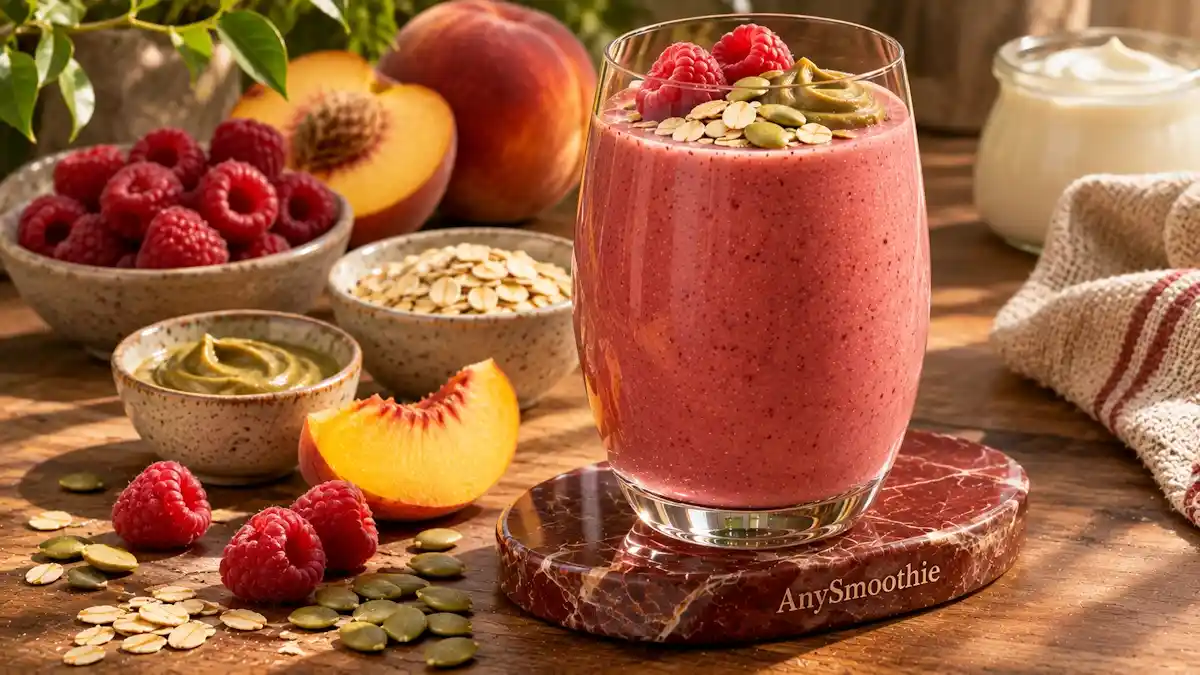
Smoothies for hair follicle and keratin nutrition can add useful nutrients to a balanced diet, but no drink can promise thicker or faster-growing hair. Follicles rely on a steady supply of nutrients, while keratin is a protein built from amino acids.
A smoothie can make it easier to combine protein-rich foods with fruit, vegetables, or seeds. The key is to treat it as one part of your overall diet, rather than a shortcut to a particular hair result. Here’s how the ingredients fit together.
What hair follicles and keratin need from your diet
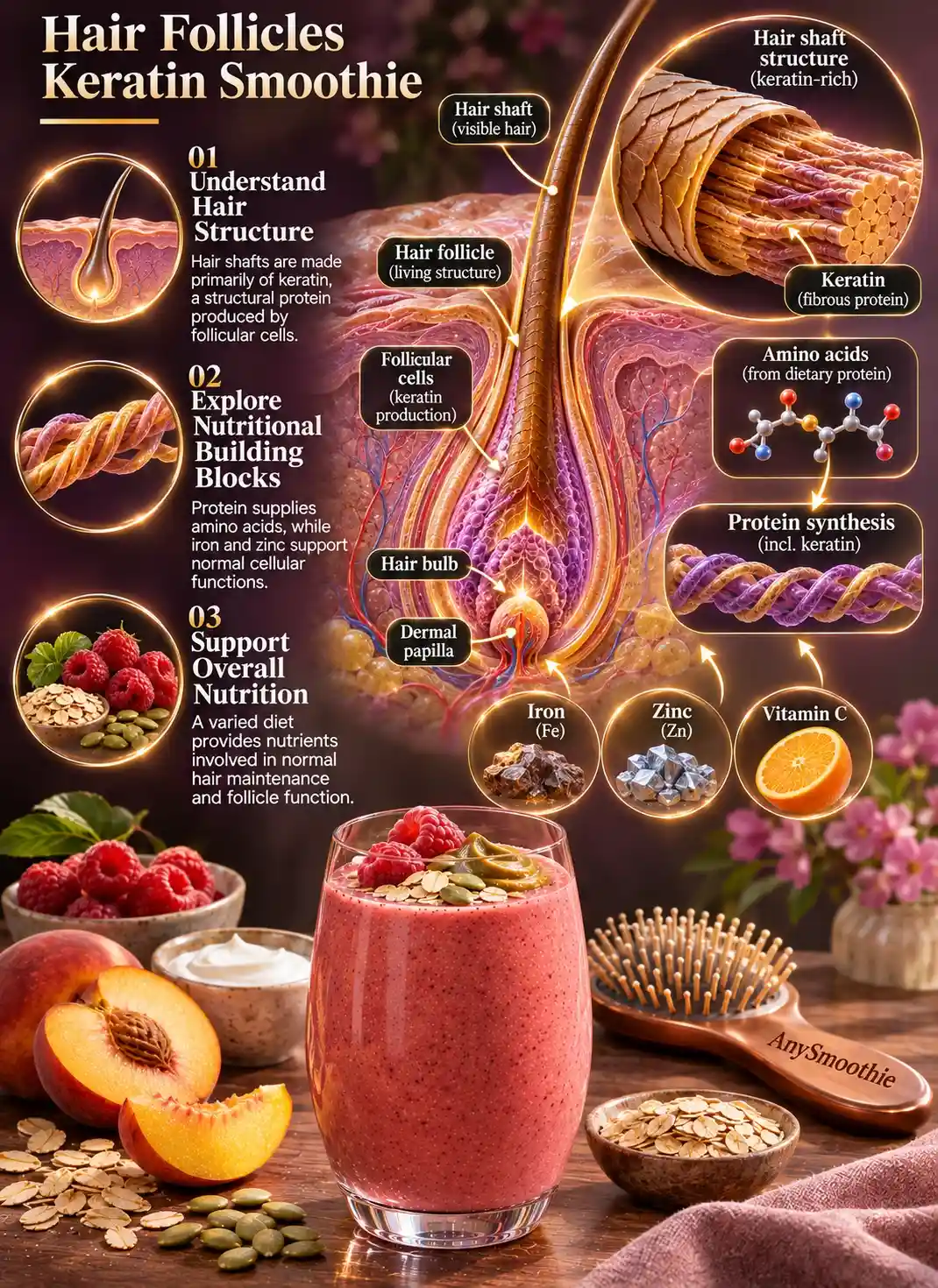
Hair follicles are structures in the skin that produce hair. Their cells need nutrients for normal growth and function, including the materials the body uses to make proteins.
Protein supplies amino acids
Keratin gives hair much of its structure. Your body builds keratin using amino acids, the building blocks it obtains by breaking down dietary protein.
Foods such as yogurt, milk, kefir, tofu, and soy milk provide protein in the recipes below. Eating a variety of protein sources throughout the day helps supply the amino acids your body needs for its normal processes. Adding extra protein to one drink, however, doesn’t guarantee a change in your hair.
Nails also contain keratin, making nutrient smoothie for resilient nails a related food-focused topic.
Minerals, vitamin C, and fats have different roles
Iron helps the body make hemoglobin, which carries oxygen in the blood. Zinc supports normal cell function and protein production. According to the National Institutes of Health, zinc is involved in protein synthesis, a process used throughout the body.
Skin nutrition is another related area, explored in skin elasticity: the nutrient-support smoothie.
Vitamin C helps your body absorb iron from plant foods. Essential fats are also part of a balanced eating pattern and support normal cell function. No single nutrient acts alone, so a mix of foods matters more than relying on one ingredient.
Collagen is a different structural protein found in connective tissues; for a related nutrition topic, see silica-rich smoothies for collagen support.
3 Smoothies for Hair Follicle and Keratin Nutrition
Each recipe makes one serving. Nutrition values are approximate: brands, ingredient sizes, and any extra liquid can change the totals.
The citrus smoothie pairs spinach with orange. Its vitamin C can help the body absorb plant-based iron.
Blueberry, banana, and pumpkin seed smoothie
Ingredients
- 3/4 cup plain 2% Greek yogurt
- 1/2 cup blueberries
- 1/2 medium banana
- 1 tablespoon pumpkin seeds
- 1/4 cup milk
Instructions
Add everything to a blender and blend until smooth. If the mixture is too thick, add a little more milk and blend again.
Estimated Nutrition (per serving)
- Calories: ~300 kcal
- Protein: ~23 g
- Carbohydrates: ~36 g
- Fat: ~9 g
- Fiber: ~4 g
- Sugars: ~23 g
Citrus, spinach, and kefir smoothie
Ingredients
- 1 cup plain low-fat kefir
- 1 cup baby spinach
- 1/2 medium orange
- 1/4 avocado
- 1 tablespoon chia seeds
- Water or ice as needed
Instructions
Blend the kefir, spinach, orange, avocado, and chia seeds until creamy. Add water or ice to reach the consistency you like.
Estimated Nutrition (per serving)
- Calories: ~285 kcal
- Protein: ~13 g
- Carbohydrates: ~31 g
- Fat: ~13 g
- Fiber: ~10 g
- Sugars: ~17 g
Cocoa, banana, and tofu smoothie
Ingredients
- 1/2 cup silken tofu
- 1 medium banana
- 1 tablespoon unsweetened cocoa powder
- 1/4 cup rolled oats
- 1 cup unsweetened soy milk
Instructions
Blend all the ingredients until smooth. If the oats need more time to soften, let the smoothie rest briefly before drinking.
Estimated Nutrition (per serving)
- Calories: ~330 kcal
- Protein: ~17 g
- Carbohydrates: ~50 g
- Fat: ~9 g
- Fiber: ~8 g
- Sugars: ~18 g
Compare the smoothies and choose one that fits your day
The table compares the recipes by taste, texture, and nutritional profile.
| Smoothie | Nutritional standout | Protein and fiber profile | Flavor and texture | Best fit |
|---|---|---|---|---|
| Blueberry and banana | Protein | Highest protein, lower fiber | Fruity and creamy | A higher-protein snack |
| Citrus and spinach | Fiber and vitamin C | Moderate protein, highest fiber | Tangy and creamy | A higher-fiber snack |
| Cocoa and banana | Plant-based protein | Moderate protein and fiber | Chocolatey and thick | A dairy-free choice |
The blueberry blend offers the most protein of the three, while the citrus blend offers the most fiber. The cocoa smoothie sits between them on both measures and uses plant-based ingredients.
Match the smoothie to your preferences
Choose the blueberry recipe if you enjoy a familiar fruit flavor and want a protein-rich snack. For a less sweet, tangier drink, the citrus blend may suit you better. Cocoa and banana make the third option taste more like a chocolate smoothie.
The cocoa recipe is dairy-free, but it contains soy. The other two contain dairy. Substitutions can change both flavor and nutrition, so use the estimates as a starting point rather than exact totals.
Look beyond a single snack
These smoothies can add variety, but they don’t replace a varied diet. For example, iron supports oxygen transport throughout the body, and you can get it from many foods beyond a smoothie.
Hair changes can also have causes that food alone can’t address. If you’re concerned about ongoing hair loss or other changes, a healthcare professional can help assess them.
Conclusion: Choose a smoothie you’ll enjoy
Each recipe offers a different mix of protein, fiber, and flavor. They can make balanced eating more convenient while supplying nutrients your body uses for normal functions.
Keep expectations realistic: no smoothie is a hair treatment or a guarantee of faster growth. Choose the blend you enjoy, and vary your ingredients over time.
🛡️ Safety Notes & Dietary Interactions
- Protein Balance: These smoothies provide approximately 13–23 grams of protein, but adding more protein does not guarantee thicker or faster-growing hair. Overall dietary adequacy matters more than concentrating protein in one drink.
- Dairy and Soy: The blueberry and citrus recipes contain dairy, while the cocoa smoothie contains soy milk and tofu. Check labels and choose appropriate alternatives if dairy or soy is unsuitable.
- Mineral Intake: Pumpkin seeds contribute zinc and other minerals, while spinach contributes plant-based nutrients. Avoid adding concentrated mineral supplements simply because they appear relevant to hair nutrition.
- Digestive Tolerance: Chia, oats, pumpkin seeds, spinach, avocado, and soy can increase fiber and fullness. Adjust portions or liquid if a higher-fiber smoothie feels uncomfortable.
FAQs
Which smoothie provides the most protein?
The Blueberry, Banana, and Pumpkin Seed Smoothie provides the most estimated protein, at approximately 23 grams per serving. The Cocoa, Banana, and Tofu Smoothie provides about 17 grams, while the Citrus, Spinach, and Kefir Smoothie provides about 13 grams. These amounts describe nutritional intake, not a predicted hair-growth effect.
Does more protein make hair grow faster?
Not necessarily. Protein supplies amino acids that the body uses to build keratin and other proteins, but adding extra protein to one smoothie does not guarantee faster or thicker hair growth. A varied diet that supplies adequate nutrients is more relevant than maximizing the protein content of a single drink.
Why does the citrus smoothie include spinach and orange together?
Spinach contributes plant-based nutrients, while orange provides vitamin C. Vitamin C can help the body absorb iron from plant foods, making the combination nutritionally relevant. However, this does not mean the smoothie directly improves hair follicles or guarantees a change in hair growth.
Which smoothie is completely dairy-free?
The Cocoa, Banana, and Tofu Smoothie is the dairy-free option, using silken tofu and unsweetened soy milk for its protein base. It is not soy-free, however. If you avoid soy, both the tofu and soy milk would need suitable replacements, which would also change the nutritional profile.
Can these smoothies treat ongoing hair loss?
No. The article specifically describes them as nutritional additions rather than hair treatments. Persistent hair loss or other significant changes can have causes that food alone cannot address. If those changes continue, a healthcare professional can help assess the underlying situation rather than relying solely on dietary adjustments.

Medical Disclaimer: AnySmoothie content is for educational purposes only and is not a substitute for professional medical advice. Consult a healthcare provider for personalized guidance. See our full Disclaimer & Terms of Use. AI Transparency: AnySmoothie may use AI to support content development. All content undergoes human editorial review for accuracy, clarity, and editorial quality. See our full AI Transparency.