
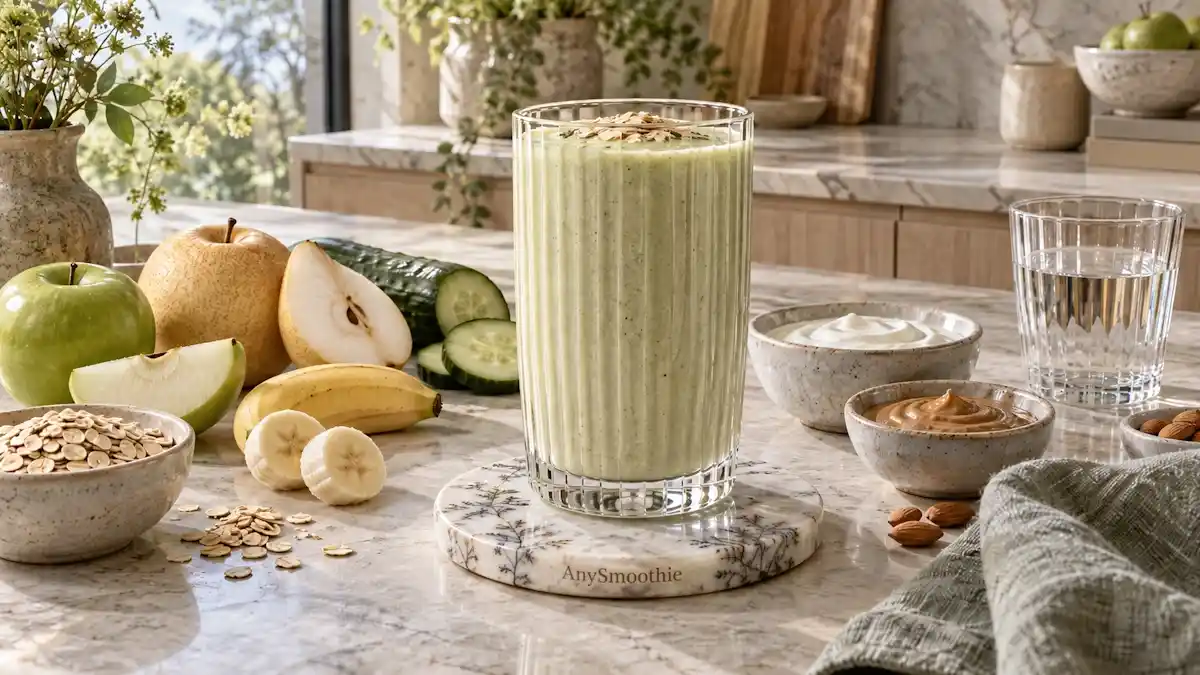
Supporting skin, connective tissue, and everyday protein-building pathways starts with regular meals, not a single ingredient. Silica rich smoothies offer an easy way to combine plant foods with vitamin C, protein, and fiber in one glass.
Silica is a trace mineral found in many plants. These smoothies can complement a balanced diet, but they do not treat health conditions or replace varied meals. The three recipes below keep the focus on practical, whole-food combinations.
For another article centered specifically on silicon-related ingredients and connective tissue, bamboo extract smoothies for collagen synthesis explores that topic from a different angle.
How Silica-Rich Smoothies Support Collagen Formation
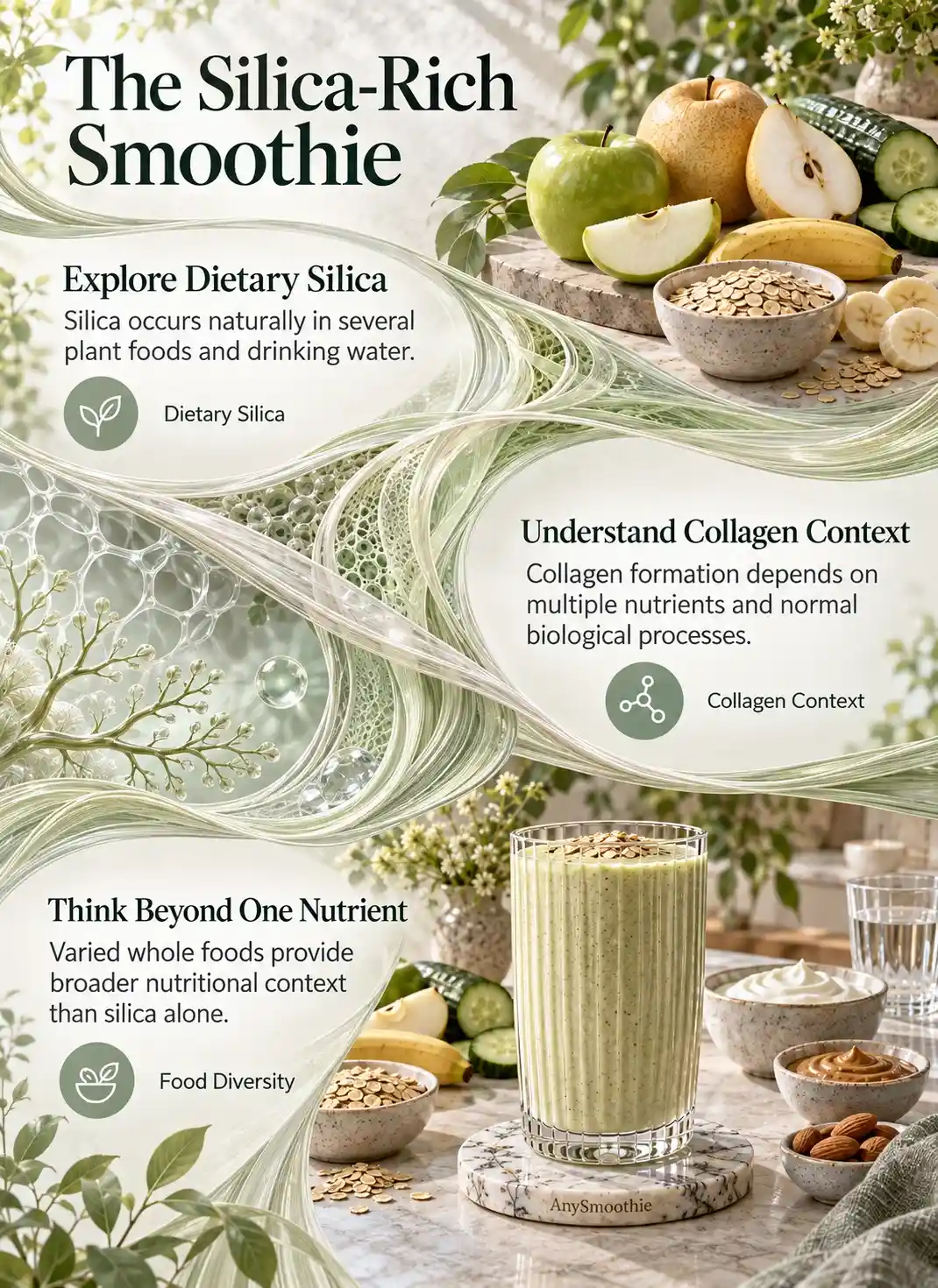
Dietary silica is the form of silicon found in foods and drinks. Whole grains, bananas, leafy greens, green beans, and some mineral waters can contribute it, although amounts vary by plant, soil, processing, and water source. Research on silicon absorption from foods has included sources such as bananas and green beans.
Collagen is a structural protein in connective tissues. Your body builds it from amino acids and needs vitamin C for normal collagen biosynthesis. It also relies on adequate energy intake and an overall nutrient-rich diet. Food labels rarely list silica, so use recognizable plant foods rather than chasing a precise number.
Current research suggests a possible role for silicon in connective tissue and collagen-related processes, but its exact biological role in humans is still not fully established. A review of silicon and bone health notes that much of the mechanistic evidence comes from in vitro and animal research.
Pair silica-containing foods with vitamin C and protein
A useful smoothie combines more than one nutrient. Kiwi, citrus, strawberries, and bell peppers provide vitamin C, which the NIH vitamin C fact sheet identifies as necessary for collagen biosynthesis.
Meanwhile, Greek yogurt, kefir, soy milk, silken tofu, or plain protein powder supply amino acids. Silica is one piece of a broader nutrition pattern, not a standalone collagen booster.
For more ideas centered on protein as part of an overall dietary pattern, protein-rich smoothies for healthy aging provides another practical food-based approach.
What to look for when choosing smoothie ingredients
Start with whole fruits and vegetables, then add an unsweetened liquid and a protein source. Oats or seeds add body and fiber, while greens bring color and plant compounds.
A balanced blend includes produce, protein, and fiber or healthy fat. Mineral water and supplements are not reliable ways to target a fixed silica dose because mineral content and absorption differ.
Whole grains are practical food sources of silicon. A review of silicon and whole grains lists oats, barley, rice bran, and wheat bran among higher-silicon foods.
For another skin-focused whole-food smoothie topic, sea buckthorn smoothies for skin wellness offers a different ingredient profile.
3 Silica-Rich Smoothies for Collagen Support
Each recipe makes one serving. Blend until smooth, then add more cold water or unsweetened milk if the mixture is too thick.
| Smoothie | Main silica-containing ingredients | Vitamin C sources | Protein option | Best flavor profile |
|---|---|---|---|---|
| Green oat and kiwi | Oats, spinach or kale | Kiwi, lemon | Greek yogurt or soy milk | Bright and tangy |
| Berry banana yogurt | Banana, oats | Strawberries or raspberries | Yogurt or kefir | Creamy and fruity |
| Citrus cucumber tofu | Cucumber, oats | Orange or grapefruit | Silken tofu | Light and fresh |
The recipes use familiar ingredients and leave room for personal taste.
Green oat and kiwi smoothie
Ingredients
- 1/4 cup rolled oats
- 1 peeled kiwi
- 1 packed cup spinach
- 1 tablespoon lemon juice
- 3/4 cup plain Greek yogurt
- 1 cup ice
Steps
Blend the rolled oats first until finely ground. Add the kiwi, spinach, lemon juice, Greek yogurt, and ice. Blend until smooth.
Oats and greens add plant nutrients, while kiwi and lemon bring vitamin C. Add 1/4 to 1/2 cup water or milk as needed. The yogurt version is thicker, while soy milk keeps the drink dairy-free.
Estimated Nutrition per Serving
- Calories: ~230 kcal
- Protein: ~20 g
- Carbohydrates: ~34 g
- Fat: ~2 g
- Fiber: ~5 g
- Sugars: ~13 g
Estimate uses plain nonfat Greek yogurt and spinach.
Berry banana yogurt smoothie
Ingredients
- 1 small banana
- 3/4 cup strawberries
- 1/4 cup rolled oats
- 3/4 cup plain Greek yogurt
- 1/2 cup low-fat milk
- Ice
Steps
Add the milk and Greek yogurt first, followed by the banana, strawberries, oats, and ice. Blend until the oats disappear into the fruit.
Banana and oats create a creamy base and contribute silica-containing plant foods. Berries add vitamin C and polyphenols. Choose unsweetened yogurt to limit added sugar, then taste before adding honey or a date.
Estimated Nutrition per Serving
- Calories: ~350 kcal
- Protein: ~24 g
- Carbohydrates: ~60 g
- Fat: ~5 g
- Fiber: ~8 g
- Sugars: ~30 g
Estimate uses strawberries, plain nonfat Greek yogurt, and low-fat dairy milk.
If I wanted to keep this less sweet, I’d taste the finished smoothie before adding any honey or dates.
Citrus cucumber and tofu smoothie
Ingredients
- 1/2 cup chopped cucumber
- 1 peeled orange
- 1/2 cup silken tofu
- 2 tablespoons rolled oats
- 4 mint leaves
- 1/2 cup cold water
- Ice
Steps
Add the water and silken tofu first, followed by the cucumber, orange, oats, mint, and ice. Blend until smooth.
Remove orange seeds first for a cleaner texture.
Cucumber and oats add plant ingredients that may contribute silica, citrus provides vitamin C, and tofu supplies protein. Grapefruit can replace orange, but people taking prescription medicines should ask a pharmacist or clinician before using grapefruit regularly.
Estimated Nutrition per Serving
- Calories: ~185 kcal
- Protein: ~10 g
- Carbohydrates: ~30 g
- Fat: ~5 g
- Fiber: ~5 g
- Sugars: ~18 g
How to use these smoothies wisely in a balanced diet
Treat a smoothie as a snack or part of a meal, not your only source of nourishment. Pair one with eggs, whole-grain toast, or a handful of nuts when you need a more filling option.
Blending retains much of the fiber in whole produce, although eating fruits and vegetables in varied forms still matters. Drink homemade smoothies promptly, or refrigerate them in a sealed container and finish them within 24 hours.
For more detailed make-ahead guidance, smoothie storage and micronutrient stability covers storage and preparation separately.
Avoid common mistakes that weaken the nutrition balance
Fruit juice can make a smoothie high in sugar without adding much filling fiber. Several sweeteners can do the same, while skipping protein may leave the drink less satisfying.
Don’t assume more silica produces better results. Check ingredients for allergies, lactose concerns, and medication interactions. Anyone who is pregnant, has a medical condition, follows a restrictive diet, or is considering supplements should seek individualized guidance from a qualified health professional.
A simple weekly rotation for variety
Rotate the three silica rich smoothies through the week instead of repeating one recipe daily. Swap spinach for kale, strawberries for raspberries, dairy yogurt for soy yogurt, or milk for unsweetened fortified soy milk.
Collagen-building pathways also depend on enough total food, protein, vitamin C-rich produce, sleep, sun protection, and a balanced eating pattern. Variety helps cover those bases without putting unrealistic expectations on one drink.
Conclusion: A Practical Place for Smoothies
Silica-containing plants fit naturally alongside vitamin C, protein, fiber, and varied produce. The green oat and kiwi, berry banana yogurt, and citrus cucumber tofu smoothies each offer a different way to combine those foods.
No smoothie guarantees a particular result for skin or connective tissue. Choose one recipe, adjust it for your dietary needs, and build consistency and variety into the rest of your meals.
🛡️ Safety Notes & Dietary Interactions
- Silica Expectations: Silica-containing foods can contribute to overall nutrient intake, but they should not be treated as direct collagen boosters. Skin and connective-tissue health also depend on protein, vitamin C, energy intake, and broader lifestyle factors.
- Grapefruit Interactions: Grapefruit can alter the metabolism of certain prescription medicines. Use orange instead unless grapefruit is known to be compatible with your medication plan, and ask a pharmacist when you are uncertain about possible interactions.
- Fiber and Digestive Comfort: Oats, berries, greens, and whole fruit can make these smoothies relatively fiber-rich. Increase portions gradually if your usual intake is low, particularly when larger servings cause bloating, fullness, or other digestive discomfort.
- Supplement Caution: Silica supplements, mineral waters, and whole foods can provide very different amounts and forms of silicon. Avoid assuming higher intake produces better collagen support, especially when medical conditions, pregnancy, or restrictive diets require individualized guidance.
FAQs
Which smoothie has the strongest combination for collagen-related nutrition?
The Green Oat and Kiwi Smoothie offers a useful combination because oats and greens contribute plant-based silicon sources, while kiwi and lemon provide vitamin C. Greek yogurt can add protein as well. However, no recipe can be ranked by exact silica content because food values vary widely and are rarely listed on labels.
Does silica directly increase collagen production?
Current evidence does not support treating dietary silica as a direct switch for collagen production. Silicon may play supportive roles in connective tissue biology, but collagen synthesis depends on amino acids, vitamin C, adequate energy, and many other physiological factors. These smoothies are best viewed as balanced food combinations rather than targeted collagen interventions.
Are oats a reliable silica source for smoothies?
Oats are commonly discussed as a useful dietary source of silicon, especially compared with many refined foods. However, actual levels vary with variety, growing conditions, processing, and serving size. Using oats regularly can contribute to plant-based silicon intake, but it does not provide a precise or standardized silica dose.
Is grapefruit better than orange for a silica-rich smoothie?
Not necessarily. Both can contribute vitamin C, but grapefruit carries a more important medication-interaction concern. Orange is usually the simpler choice when prescription medicines are involved. The citrus fruit mainly contributes vitamin C and flavor here rather than acting as the primary silica source, which comes more from ingredients such as oats and greens.
Should I use a silica supplement instead of relying on food?
Not automatically. Whole foods provide fiber, protein, vitamins, minerals, and other plant compounds alongside any silicon they contain, while supplements can deliver more concentrated and variable amounts. If you are considering supplemental silica for skin, hair, bone, or connective-tissue goals, individualized professional guidance is more appropriate than assuming a higher dose is better.

Medical Disclaimer: AnySmoothie content is for educational purposes only and is not a substitute for professional medical advice. Consult a healthcare provider for personalized guidance. See our full Disclaimer & Terms of Use. AI Transparency: AnySmoothie may use AI to support content development. All content undergoes human editorial review for accuracy, clarity, and editorial quality. See our full AI Transparency.