
Iron-sulfur clusters are tiny structures made inside cells, and smoothies can’t directly build or target them. If you’re considering smoothies for iron-sulfur cluster assembly, focus on balanced nutrition rather than promised cellular effects.
A varied diet supplies nutrients that support the body’s normal physiological systems. The citrus, cocoa, and mango recipes below offer three ways to include plant foods, protein, and iron-containing ingredients. First, it helps to separate what cells assemble from what food provides.
What iron-sulfur clusters do, and what food can support
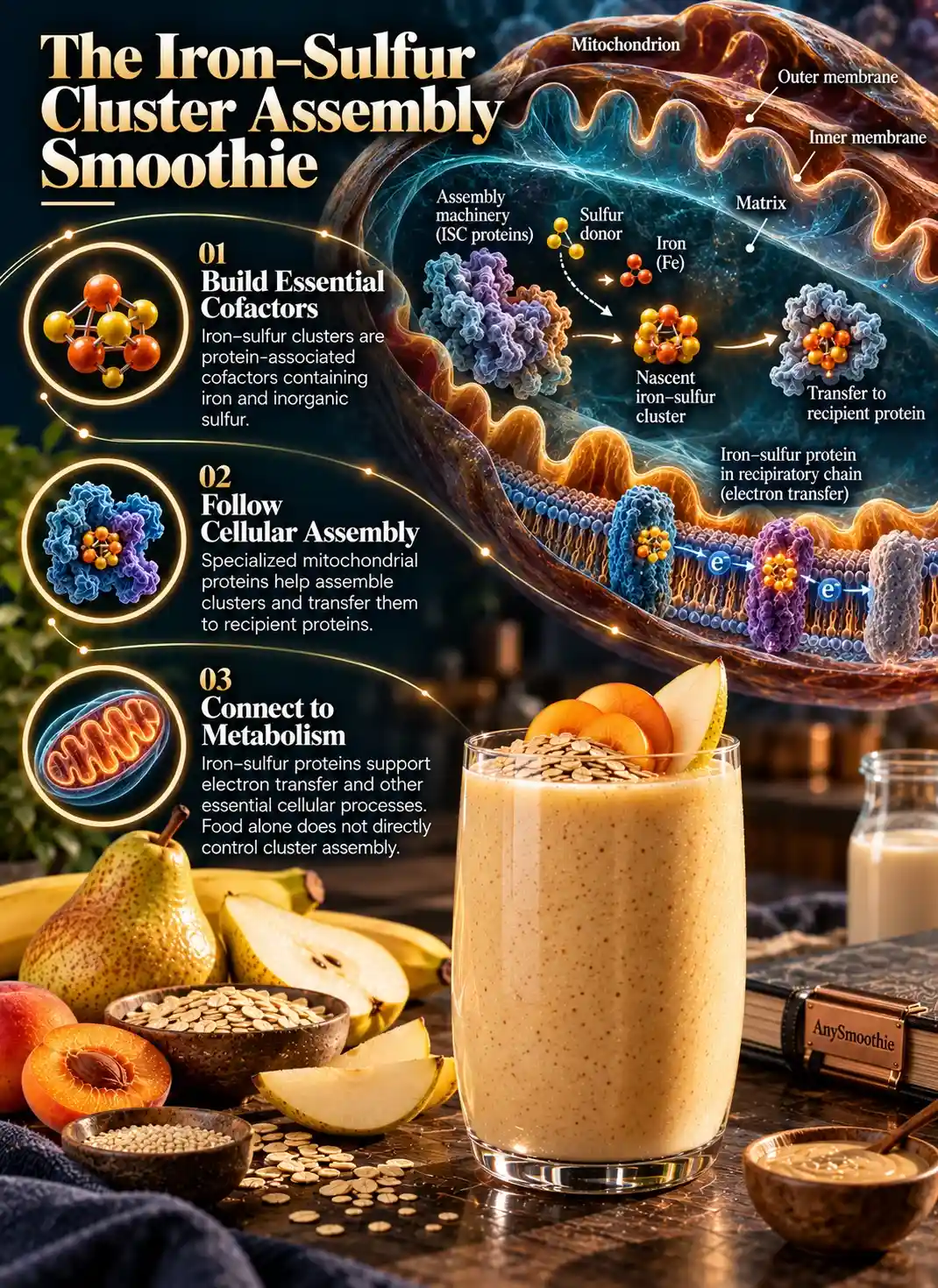
Iron-sulfur clusters are groups of iron and sulfur atoms assembled by specialized proteins inside cells. Once attached to certain proteins, they help those proteins perform basic jobs, including electron transfer.
For a related look at another enzyme in the mitochondrial electron transport chain, see copper-rich smoothies for cytochrome c oxidase.
For example, clusters participate in the mitochondrial respiratory chain, where electrons pass between proteins during energy production. A review of mitochondrial iron-sulfur clusters describes their structure and roles in cellular function.
Assembly requires coordinated biochemical steps
The enzyme NFS1 removes sulfur from the amino acid cysteine, and cellular machinery transfers that sulfur through an organized pathway. A scaffold protein called ISCU helps assemble clusters before other proteins receive them.
That process doesn’t place food-derived sulfur directly into a cluster. Digestion, nutrient absorption, and intracellular processing come first.
A different cofactor pathway involving cysteine is discussed in smoothies for pantothenate and coenzyme a synthesis.
Mitochondrial and nuclear coordination is another related aspect of cellular function discussed in smoothies supporting mitonuclear communication.
Food supplies iron, amino acids from protein, and other nutrients used throughout normal physiology. However, eating more of an ingredient doesn’t demonstrate greater cluster production. No smoothie has been shown to increase iron-sulfur cluster assembly.
For another example of a nutrient-dependent metabolic enzyme pathway, see smoothies for vitamin b12 and odd-chain fat metabolism.
These recipes therefore support ordinary nutrient intake. Their ingredients belong in a varied eating pattern, without claims that they target this cellular machinery.
3 Smoothies for Iron-Sulfur Cluster Assembly
These nutrient-focused drinks aren’t a way to create or boost clusters. Estimates reflect typical ingredient values in USDA FoodData Central; brands, produce sizes, and measuring differences will change the totals.
Citrus, spinach, and white bean smoothie
Ingredients
- 1 medium orange, peeled and seeded
- 1 cup raw spinach
- 1/3 cup canned white beans, drained and rinsed
- 1/2 cup cold water
- 1/2 cup ice
Instructions
Blend the orange, spinach, beans, and water until creamy. Add ice and blend again until no bean skins remain visible. The beans provide a mild, creamy base. Vitamin C from the orange helps your body absorb nonheme iron from plant foods.
Estimated Nutrition (per serving)
- Calories: ~140 kcal
- Protein: ~6 g
- Carbohydrates: ~29 g
- Fat: ~0.5 g
- Fiber: ~7 g
- Sugars: ~13 g
Cocoa, pumpkin seed, and banana smoothie
Ingredients
- 1 medium ripe banana
- 2 tablespoons shelled pumpkin seeds (18 g)
- 1/4 cup rolled oats (20 g)
- 1 tablespoon unsweetened cocoa powder
- 3/4 cup cold water
Instructions
Blend the oats and pumpkin seeds with water first to reduce grittiness. Add the banana and cocoa, then blend until thick and evenly mixed. A ripe banana softens cocoa’s bitterness without added sweetener, while the oats give this drink a substantial texture.
Estimated Nutrition (per serving)
- Calories: ~295 kcal
- Protein: ~10 g
- Carbohydrates: ~46 g
- Fat: ~11 g
- Fiber: ~8 g
- Sugars: ~15 g
Mango, kale, hemp, and chia smoothie
Ingredients
- 1 cup frozen mango chunks
- 1 cup loosely packed chopped kale, tough stems removed
- 2 tablespoons hemp hearts (20 g)
- 1 tablespoon chia seeds (12 g)
- 3/4 cup cold water
Instructions
Blend the kale and water first. Add the mango, hemp hearts, and chia, then blend until smooth. Let it stand briefly if you prefer a thicker drink, because chia absorbs liquid. Mango gives the smoothie a bright flavor that balances the kale.
Estimated Nutrition (per serving)
- Calories: ~275 kcal
- Protein: ~10 g
- Carbohydrates: ~32 g
- Fat: ~14 g
- Fiber: ~8 g
- Sugars: ~23 g
Compare the three smoothies by flavor, texture, and nutrition
Choose according to your appetite and taste, rather than expecting different effects on cluster assembly.
| Smoothie | Main nutrition focus | Texture | Flavor | Best use |
|---|---|---|---|---|
| Citrus blend | Plant iron with vitamin C | Light and creamy | Mild, fresh citrus | Lighter snack |
| Cocoa blend | Protein, fiber, and plant iron | Thick and substantial | Cocoa-forward, gently sweet | More substantial snack |
| Tropical blend | Unsaturated fats, protein, and fiber | Thick with seed texture | Bright and fruity | Fruit-forward snack |
The citrus option has the lowest estimated calorie content. Meanwhile, the cocoa and tropical versions provide more protein and fat. Those differences can help you choose a portion that fits the rest of your day’s meals.
All three contain fiber because they retain the blended whole foods rather than straining away their solids.
How to make these smoothies part of a balanced routine
Rotate the recipes according to the foods you enjoy and already eat. Variety helps you include different nutrient sources without relying on one drink every day.
For sweetness, start with ripe fruit before adding honey, syrup, or other sweeteners. If a smoothie tastes too sweet, use less fruit next time and adjust the water for consistency. Remember that ingredient changes also change the nutrition estimates.
Pair plant-based iron foods with vitamin C foods across your meals. Michigan State University Extension explains how iron and vitamin C work together to support nonheme iron absorption.
Calcium-rich additions may reduce iron absorption when consumed together, but the effect on long-term iron status is less clear. You don’t need to remove nutritious foods automatically.
If you have specific nutrition concerns, ask a registered dietitian or another qualified health professional for individualized guidance. Smoothies can complement meals, but they don’t replace dietary variety.
Conclusion: Keep the focus on food variety
Smoothies offer a convenient way to include fruit, greens, beans, and seeds in your routine. Their value comes from nutrient variety, while iron-sulfur clusters form through complex, regulated processes inside cells.
Choose a recipe for its flavor and how it fits your meals, without expecting a targeted cellular effect. Try the blend that best matches your taste and routine.
🛡️ Safety Notes & Dietary Interactions
- Iron Awareness: These recipes contain plant-based iron, but more iron is not automatically beneficial. Avoid adding iron supplements or concentrated iron products unless individualized nutrition guidance indicates they are appropriate.
- Digestive Tolerance: White beans, oats, kale, chia, and hemp provide substantial fiber. Start with smaller portions if your usual intake is lower, particularly when introducing several fiber-rich ingredients.
- Mineral Interactions: The article notes that calcium-rich foods consumed alongside plant iron may influence absorption, although effects on long-term iron status are less certain. Dietary changes should remain individualized.
- Seed and Legume Allergies: Pumpkin seeds, hemp hearts, chia, and white beans introduce different allergen considerations. Check packaged products carefully and avoid ingredients associated with known allergies or intolerances.
FAQs
Which smoothie provides the most plant-based iron?
The article emphasizes iron-containing ingredients rather than ranking the recipes by exact iron content. The citrus smoothie combines spinach and white beans with orange, whose vitamin C can support nonheme iron absorption. Pumpkin seeds, cocoa, kale, hemp, and chia also contribute nutrients within their respective recipes.
Why is orange paired with spinach and white beans?
Orange provides vitamin C, which can support absorption of nonheme iron from plant foods. The pairing is therefore nutritionally relevant, but it does not mean the smoothie specifically increases iron-sulfur cluster assembly. The article distinguishes ordinary nutrient absorption from the regulated cellular machinery that assembles these clusters.
Does eating more iron increase iron-sulfur cluster assembly?
Not necessarily. Iron-sulfur clusters are assembled through coordinated intracellular processes involving specialized proteins such as NFS1 and ISCU. Food supplies iron, amino acids, and other nutrients used throughout normal physiology, but the article states that eating more of an ingredient does not demonstrate greater cluster production.
Which smoothie is most substantial?
The Cocoa, Pumpkin Seed, and Banana Smoothie is the most calorie-dense at approximately 295 calories, with about 10 grams of protein, 11 grams of fat, and 8 grams of fiber. Its oats and pumpkin seeds also create a thicker texture, making it more substantial than the citrus option.
Should I avoid calcium-rich foods because they may affect iron absorption?
Not automatically. The article notes that calcium-rich foods consumed alongside plant iron may reduce absorption, while the effect on long-term iron status is less clear. Nutritious calcium sources do not need to be removed solely for this reason; individualized dietary concerns are better discussed with a qualified professional.

Medical Disclaimer: AnySmoothie content is for educational purposes only and is not a substitute for professional medical advice. Consult a healthcare provider for personalized guidance. See our full Disclaimer & Terms of Use. AI Transparency: AnySmoothie may use AI to support content development. All content undergoes human editorial review for accuracy, clarity, and editorial quality. See our full AI Transparency.