
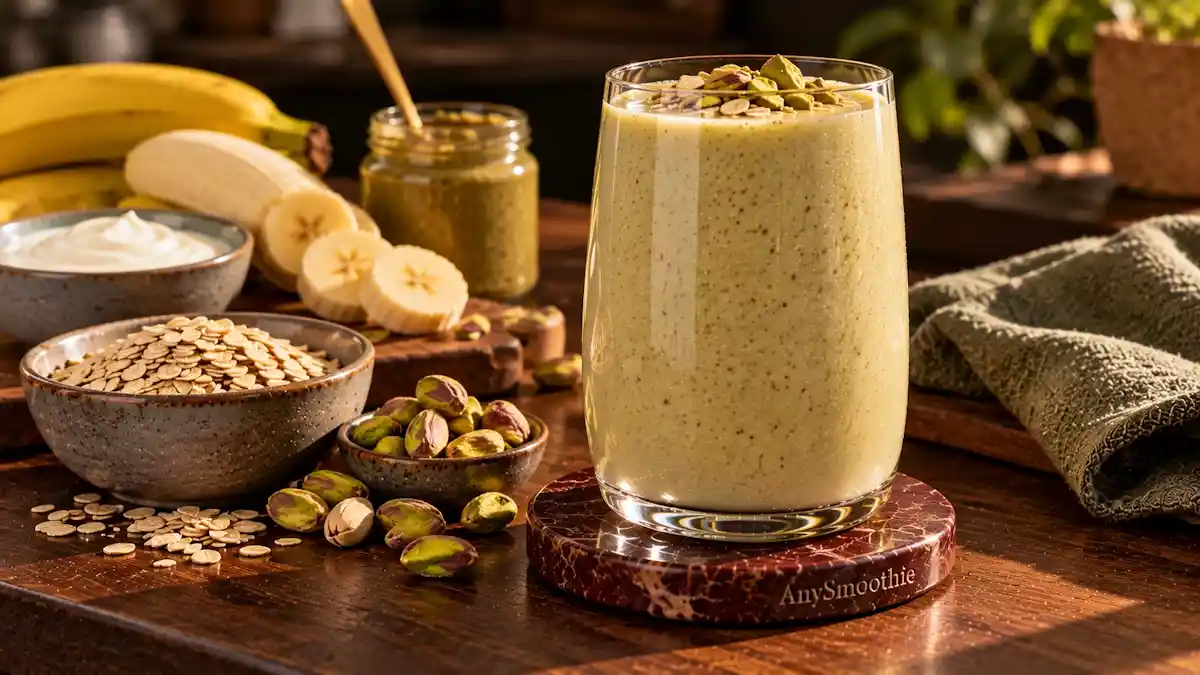
Branched-chain amino acids (BCAAs) are leucine, isoleucine, and valine, found in many protein foods. Smoothies can provide convenient energy and nutrients, but no smoothie has been shown to speed BCAA breakdown or treat a metabolic condition.
If you’re considering smoothies for branched-chain amino acid catabolism, focus on everyday nourishment rather than metabolic promises. Understanding how your body processes these amino acids helps put the recipes in context.
How smoothie ingredients fit into branched-chain amino acid breakdown
During digestion, your body breaks food proteins into amino acids. It can then use these amino acids to build proteins or process them through metabolic pathways.
BCAA breakdown begins with enzymes called branched-chain aminotransferases. They transfer nitrogen-containing amino groups from BCAAs to another molecule, leaving compounds called branched-chain keto acids. Next, the branched-chain keto acid dehydrogenase complex, or BCKDH, helps break down those compounds.
For a related topic on nitrogen handling, see ammonia clearance support smoothies.
These reactions happen inside your body. A particular fruit, protein source, or drink doesn’t control the process. Supplying nutrients and changing the rate of an enzyme pathway are different things.
For a related example of nutrient cofactors used by metabolic enzymes, see smoothies for thiamine and transketolase activity. Transketolase is involved in a different pathway, rather than directly breaking down BCAAs.
The Association for Diagnostics & Laboratory Medicine explains that BCKDH defects cause maple syrup urine disease. This rare inherited disorder requires care from a metabolic specialist. Its dietary management is different from choosing a smoothie for an ordinary snack.
For a broader discussion of metabolic pathways involving amino acids and the liver, see smoothies for healthy hepatic methylation.
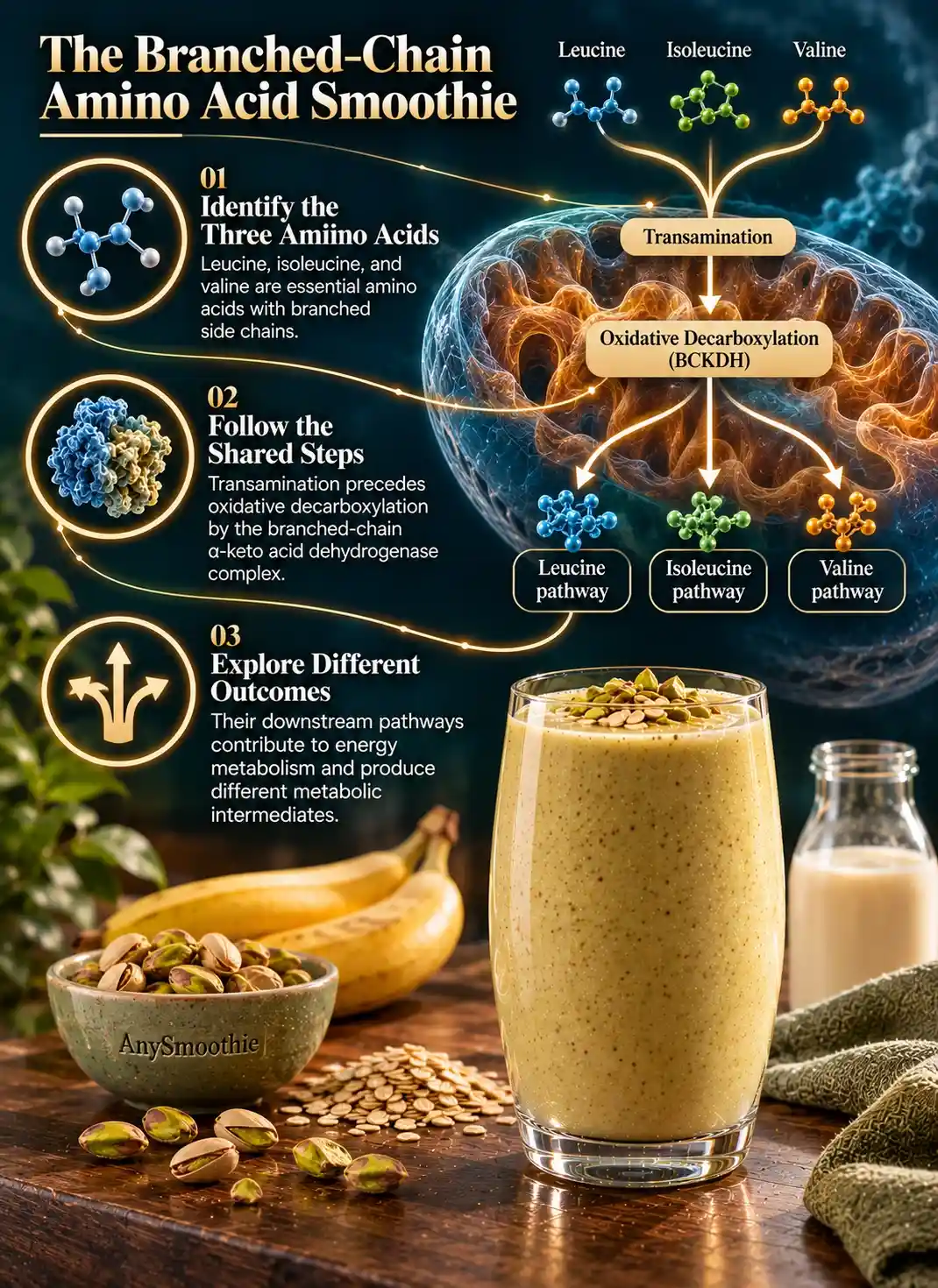
3 Smoothies for Branched-Chain Amino Acid Catabolism
These are everyday smoothie ideas, not treatments or proven ways to change BCAA catabolism. Each recipe makes one serving. Nutrition estimates are approximate and may vary by brand, fruit size, and ingredient choice.
Berry, banana, and yogurt smoothie
Ingredients
- 3/4 cup plain nonfat Greek yogurt
- 1 cup strawberries, fresh or frozen
- 1/2 medium banana
- 1 tablespoon rolled oats
- 1/2 cup water, plus more as needed
Instructions
Add the yogurt, strawberries, banana, oats, and water to a blender. Blend until smooth, adding a little more water if needed.
Estimated Nutrition (per serving)
- Calories: ~220 kcal
- Protein: ~19 g
- Carbohydrates: ~30 g
- Fat: ~1 g
- Fiber: ~5 g
- Sugars: ~15 g
Mango, kefir, and chia smoothie
Ingredients
- 3/4 cup plain low-fat kefir
- 1 cup mango chunks, fresh or frozen
- 1 tablespoon chia seeds
- 1/4 cup water, plus more as needed
Instructions
Blend the kefir, mango, chia seeds, and water until smooth. Let the drink sit for a few minutes so the chia seeds can soften, then blend briefly again if desired.
Estimated Nutrition (per serving)
- Calories: ~250 kcal
- Protein: ~11 g
- Carbohydrates: ~40 g
- Fat: ~6 g
- Fiber: ~5 g
- Sugars: ~33 g
Green kiwi, pineapple, and tofu smoothie
Ingredients
- 1/2 cup silken tofu
- 1 cup baby spinach
- 1 medium kiwi, peeled
- 1/2 cup pineapple chunks, fresh or frozen
- 1 tablespoon almond butter
- 1/2 cup cold water
Instructions
Place all ingredients in a blender and blend until creamy. Add a splash of water to thin the smoothie to your preferred texture.
Estimated Nutrition (per serving)
- Calories: ~290 kcal
- Protein: ~12 g
- Carbohydrates: ~36 g
- Fat: ~13 g
- Fiber: ~6 g
- Sugars: ~24 g
Compare the smoothies by flavor, texture, and everyday use
The main differences are protein content, richness, and how sweet each option tastes.
| Smoothie | Main nutrition feature | Texture | Flavor | Best use |
|---|---|---|---|---|
| Berry blend | Highest protein of the three | Thick and creamy | Tangy and fruity | Protein-focused snack |
| Mango blend | Carbohydrates with fiber | Creamy, lightly textured | Sweet and tropical | Sweeter snack option |
| Green blend | Plant-based protein; more fat | Smooth and rich | Tart with tropical sweetness | Dairy-free snack |
Choose the berry version when protein content matters most. Meanwhile, the mango option suits a sweeter preference, and the green blend offers a richer dairy-free choice. None has a demonstrated advantage for BCAA breakdown.
Choose a smoothie that fits your needs and stay within safe limits
Start with what you’ll enjoy drinking. Greek yogurt gives the berry smoothie a thicker consistency, while kefir adds tang to the mango version. Chia seeds also thicken the drink as it sits, so adjust the water to your preference.
If you prefer plant-based ingredients, choose the tofu smoothie. However, dairy-free doesn’t mean protein-free or BCAA-free. Soy protein naturally contains BCAAs, just as dairy protein does. The almond butter also makes this recipe unsuitable for someone with an almond allergy.
A higher protein content tells you how much protein a drink supplies, not how quickly your body breaks down BCAAs.
For maple syrup urine disease, ordinary nutrition advice isn’t enough. Children’s Hospital of Philadelphia describes specialized dietary management for MSUD, including careful control of BCAA intake.
If you have MSUD or another diagnosed amino acid disorder, don’t rely on these recipes or change your diet without your specialist’s plan. That includes adding protein powders or BCAA supplements. Your prescribed intake takes priority over a recipe’s general nutrition profile.
A related topic on how metabolic pathways use intermediates is metabolic switching smoothies with oxaloacetate.
Conclusion
These smoothies offer convenient ways to enjoy varied foods, but they aren’t proven methods for changing BCAA catabolism. Choose according to flavor, texture, and your ordinary nutrition needs.
For a diagnosed metabolic condition, individualized nutrition care comes first. A metabolic specialist can guide food choices within your treatment plan.
🛡️ Safety Notes & Dietary Interactions
- Metabolic Disorders: These smoothies contain meaningful amounts of protein and naturally occurring BCAAs. Anyone with MSUD or another amino-acid disorder should follow their specialist’s prescribed intake rather than adapting these recipes independently.
- Protein Supplements: Adding protein powders or BCAA supplements can substantially change the amino-acid content. They should not be added to these recipes when following a medically prescribed protein or BCAA restriction.
- Allergen Awareness: The green smoothie contains almond butter, while the yogurt and kefir recipes contain dairy. Check labels carefully and substitute only when the resulting nutrition remains appropriate for your needs.
- Digestive Tolerance: Greek yogurt, kefir, chia, oats, tofu, and almond butter can alter thickness and fullness. Start with a portion that fits your usual tolerance, particularly when increasing protein or fiber.
FAQs
Which smoothie provides the most protein?
The Berry, Banana, and Yogurt Smoothie provides the most estimated protein, at approximately 19 grams per serving. The Green Kiwi, Pineapple, and Tofu Smoothie provides about 12 grams, while the Mango, Kefir, and Chia Smoothie provides about 11 grams. Protein content describes intake, not how quickly BCAAs are metabolized.
Does a higher-protein smoothie speed BCAA breakdown?
No. The article specifically distinguishes supplying protein from changing the rate of BCAA catabolism. A higher-protein drink provides more amino acids, including BCAAs, but there is no established evidence that one of these smoothies accelerates the enzymes responsible for their breakdown.
Can someone with maple syrup urine disease drink these smoothies?
These recipes should not be used to manage MSUD. People with MSUD require individualized control of BCAA intake under specialist supervision. Because all three recipes contain protein and therefore BCAAs, the appropriate portion and ingredient choices depend on the person’s prescribed dietary plan.
Is the tofu smoothie completely free of BCAAs?
No. Choosing tofu instead of dairy does not remove BCAAs. Soy and other plant proteins naturally contain leucine, isoleucine, and valine. The tofu smoothie therefore provides protein and BCAAs just as dairy-based smoothies do, although its overall nutritional profile differs from the yogurt and kefir options.
Why shouldn’t I add BCAA powder to these smoothies?
Adding BCAA powder would change the nutritional composition and could substantially increase leucine, isoleucine, and valine intake. For ordinary nutrition, there is no demonstrated need to add it for faster BCAA breakdown. For MSUD or another metabolic disorder, supplementation should only follow the specialist’s specific plan.

Medical Disclaimer: AnySmoothie content is for educational purposes only and is not a substitute for professional medical advice. Consult a healthcare provider for personalized guidance. See our full Disclaimer & Terms of Use. AI Transparency: AnySmoothie may use AI to support content development. All content undergoes human editorial review for accuracy, clarity, and editorial quality. See our full AI Transparency.