
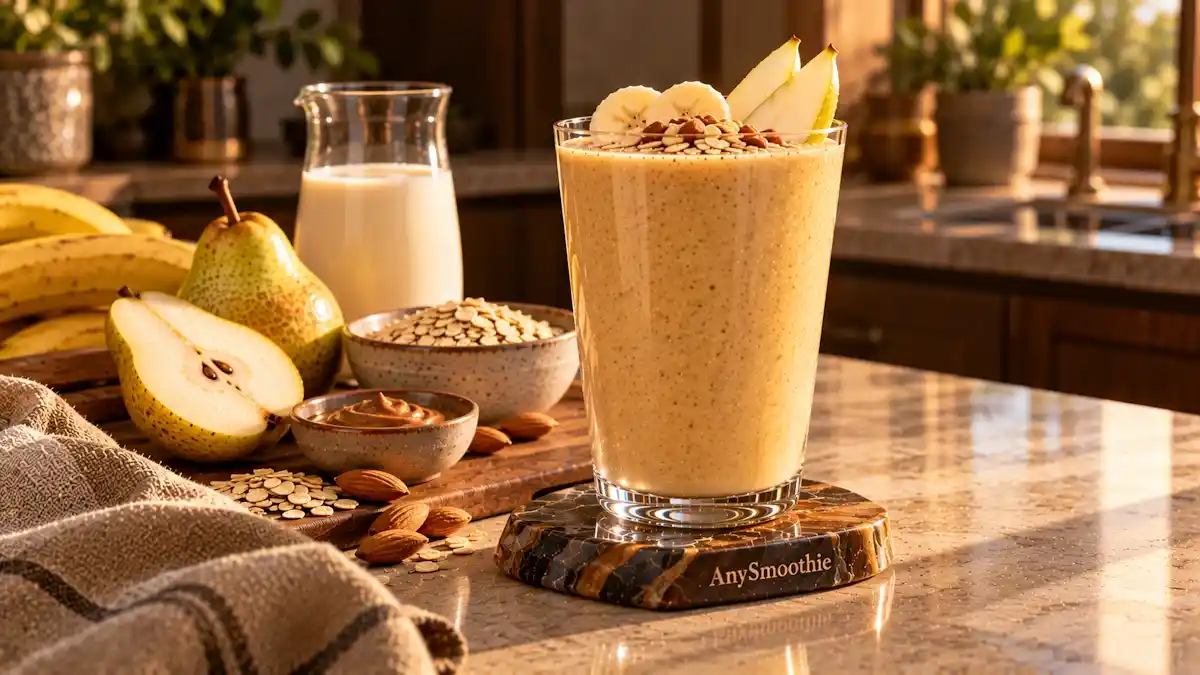
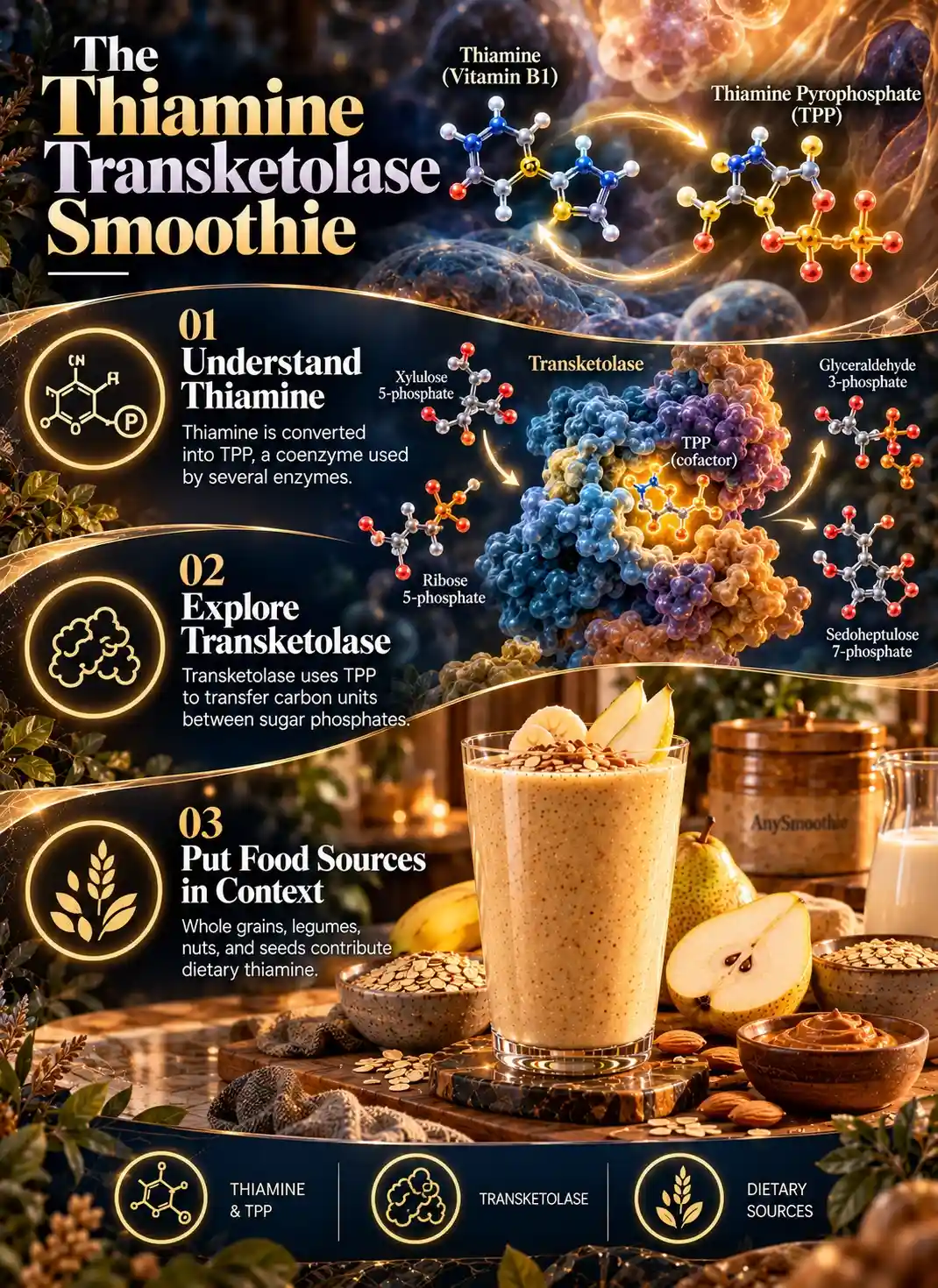
Oats, sunflower seeds, beans, and some fortified beverages can add thiamine, also called vitamin B1, to your smoothies. Your body converts thiamine into thiamine pyrophosphate, a helper molecule used by enzymes such as transketolase.
A smoothie can contribute nutrients to a balanced diet, but it doesn’t treat a condition or guarantee changes in enzyme activity. Start with the connection between thiamine and transketolase, then choose ingredients you enjoy.
How thiamine supports transketolase activity
Transketolase works in the pentose phosphate pathway, a series of chemical reactions inside cells. This pathway helps supply ribose sugars for DNA and RNA and rearranges sugars involved in carbohydrate metabolism. For a related discussion of ribose and nucleotide production, see ribose smoothie for nucleotide synthesis.
To carry out its reactions, transketolase needs thiamine pyrophosphate, also called thiamine diphosphate. This molecule is a cofactor, a chemical partner that an enzyme needs to work. Cornell University’s thiamine biochemistry resource describes this relationship between thiamine-derived cofactors and metabolic enzymes.
Transketolase transfers two-carbon units between sugar molecules. Its thiamine-derived cofactor helps those transfers happen. Eating foods containing thiamine supplies the vitamin your body uses to make that cofactor. For a related topic involving a different form of vitamin B1, see benfotiamine smoothies for glycation balance. This is a distinct thiamine-derivative topic, not a direct measure of transketolase activity.
However, supplying a nutrient and measuring enzyme activity are different things. The amount of thiamine in a drink doesn’t reveal how active transketolase is in your body.
Laboratory measurements require defined testing methods and clinical interpretation. A recipe can’t diagnose thiamine status, and its ingredients don’t establish that enzyme activity will increase after you drink it. The practical goal is to include dietary thiamine while supporting normal physiological systems. For a separate topic involving cellular cofactor metabolism, see nicotinamide riboside smoothies for nad support; NAD-related metabolism is distinct from the thiamine-derived cofactor used by transketolase.
Choose smoothie ingredients that provide thiamine
Start with ingredients that suit both the nutrient goal and the texture you want. Oats add thickness, while sunflower seeds contribute thiamine and a mild, nutty flavor. Finely blending the seeds helps prevent a gritty finish.
Cooked white beans also contribute thiamine. Their mild flavor works with berries, and a modest portion adds creaminess without dominating the drink. Use fully cooked beans, including canned beans that you’ve drained and rinsed.
Fortified soy or oat beverages offer another option, but fortification varies by brand. Added calcium, vitamin D, or vitamin B12 doesn’t automatically mean a beverage contains added thiamine. Look for thiamine, thiamin, or vitamin B1 on the label when comparing products.
Soy beverages generally provide more protein than oat beverages, although recipes and brands differ. Choose unsweetened versions when you want fruit to supply most of the sweetness.
The USDA FoodData Central database provides nutrient information for individual foods. Actual amounts depend on the product and serving size. Blending combines those nutrients; it doesn’t create thiamine. A varied diet matters more than relying on one drink.
3 Smoothies for Thiamine and Transketolase Activity
Each recipe makes one serving. Nutrition estimates use typical unsweetened soy beverage values; brands and ingredient sizes will change totals.
Oat, banana, and sunflower seed smoothie
Ingredients
- 1 cup unsweetened fortified soy beverage
- 1 medium banana
- 1/4 cup rolled oats
- 1 tablespoon unsalted sunflower kernels
Instructions
Blend the oats and sunflower kernels first until finely ground. Add the soy beverage and banana, then blend until smooth.
Estimated Nutrition (per serving)
- Calories: ~315 kcal
- Protein: ~14 g
- Carbohydrates: ~46 g
- Fat: ~10 g
- Fiber: ~8 g
- Sugars: ~16 g
This smoothie is a simple, comforting option for busy mornings, with a creamy texture and gentle sweetness from the banana. The oats and sunflower seeds add a satisfying touch without making preparation complicated.
Berry and white bean smoothie
Ingredients
- 3/4 cup unsweetened fortified soy beverage
- 1 cup frozen mixed berries
- 1/3 cup cooked white beans, drained and rinsed
Instructions
Blend the soy beverage and beans until creamy. Add the berries and blend again, pausing to scrape down the sides as needed.
Estimated Nutrition (per serving)
- Calories: ~210 kcal
- Protein: ~12 g
- Carbohydrates: ~35 g
- Fat: ~4 g
- Fiber: ~10 g
- Sugars: ~11 g
Peanut butter and fortified soy smoothie
Ingredients
- 1 cup unsweetened fortified soy beverage
- 2 tablespoons smooth peanut butter
- 1/2 medium banana
- 1 teaspoon unsweetened cocoa powder
Instructions
Blend everything until smooth. For a colder, thicker texture, freeze the banana beforehand. Choose a soy beverage with listed thiamine when available.
Estimated Nutrition (per serving)
- Calories: ~330 kcal
- Protein: ~15 g
- Carbohydrates: ~26 g
- Fat: ~20 g
- Fiber: ~6 g
- Sugars: ~11 g
The peanut butter and cocoa give this smoothie a rich, chocolatey flavor, while banana adds natural sweetness. It’s an easy, creamy option when you want something satisfying with minimal preparation.
How to fit these smoothies into a balanced eating pattern
Choose a smoothie according to your appetite and the rest of your meal. The berry option is lighter, while the peanut butter version contains more fat and calories. Neither difference makes one universally better.
Because these recipes retain the whole fruit and other blended ingredients, they retain fiber. However, a drink may feel less satisfying than a meal you chew. Adjust your meal pattern according to hunger rather than assuming every smoothie replaces breakfast.
Read beverage labels for serving size, added sugars, and listed vitamins. Also, remember that nutrition estimates describe the whole recipe, so changing the beverage or peanut butter changes the totals.
For another distinct aspect of cellular energy metabolism, see mitochondrial uncoupling smoothies for energy metabolism. Mitochondrial uncoupling is separate from the pentose phosphate pathway, but the topic provides a broader perspective on cellular energy processes.
If you have concerns about thiamine intake, absorption, or enzyme testing, discuss them with a qualified health professional. Research on transketolase assay methodology addresses laboratory measurement issues, not a way to assess yourself through food choices.
Individualized nutrition advice is especially useful when dietary restrictions limit your usual food options.
Conclusion: Choose variety over promises about enzyme activity
Thiamine helps your body form a cofactor that transketolase needs for its normal work. Oats, sunflower seeds, beans, and appropriately fortified beverages can contribute thiamine within a varied diet.
Choose the smoothie you enjoy and can prepare comfortably. Its role is to provide food and nutrients, without promising a measurable change in transketolase activity.
🛡️ Safety Notes & Dietary Interactions
- Bean preparation: Use fully cooked white beans, including canned beans that are drained and rinsed. Undercooked or poorly prepared legumes can be difficult to tolerate and may cause unnecessary digestive discomfort.
- Allergen awareness: The recipes include soy, sunflower seeds, peanuts, and cocoa. Check packaged ingredients carefully and use alternatives appropriate for known allergies, intolerances, or dietary restrictions.
- Fortification varies: Fortified soy and oat beverages don’t necessarily contain thiamine. Check the nutrition label for thiamine, thiamin, or vitamin B1 rather than assuming fortification provides it.
- Digestive tolerance: Oats, beans, sunflower kernels, and peanut butter contribute fiber or fat and can make smoothies more filling. Adjust portions according to appetite and individual digestive tolerance.
FAQs
Which smoothie provides the most fiber?
The berry and white bean smoothie provides approximately 10 grams of fiber per serving, making it the highest-fiber option of the three. The oat, banana, and sunflower seed smoothie provides about 8 grams, while the peanut butter version provides approximately 6 grams. Actual values vary with products and ingredient portions.
How can I tell whether a fortified beverage actually contains thiamine?
Check the nutrition label rather than relying on the word “fortified.” Look specifically for thiamine, thiamin, or vitamin B1 in the listed nutrients. Fortification with calcium, vitamin D, or vitamin B12 does not automatically mean thiamine has been added.
Why are white beans used in a smoothie?
Cooked white beans provide thiamine while also contributing carbohydrate, protein, and fiber. Their mild flavor can blend with berries without dominating the smoothie. The article specifically recommends using fully cooked beans, including canned beans that have been drained and rinsed, for practical preparation.
Does drinking more thiamine make transketolase more active?
Not necessarily. Thiamine is used to form thiamine pyrophosphate, a cofactor required by transketolase, but the amount of thiamine in a smoothie doesn’t reveal enzyme activity. Measuring transketolase activity requires defined laboratory methods and clinical interpretation rather than dietary observation.
Is the peanut butter smoothie a better choice for transketolase?
The article doesn’t establish that one recipe increases transketolase activity more effectively than another. The peanut butter version is simply more energy-dense and higher in fat, while the other recipes emphasize different food combinations. Choose according to appetite, dietary needs, and the rest of your eating pattern.

Medical Disclaimer: AnySmoothie content is for educational purposes only and is not a substitute for professional medical advice. Consult a healthcare provider for personalized guidance. See our full Disclaimer & Terms of Use. AI Transparency: AnySmoothie may use AI to support content development. All content undergoes human editorial review for accuracy, clarity, and editorial quality. See our full AI Transparency.