
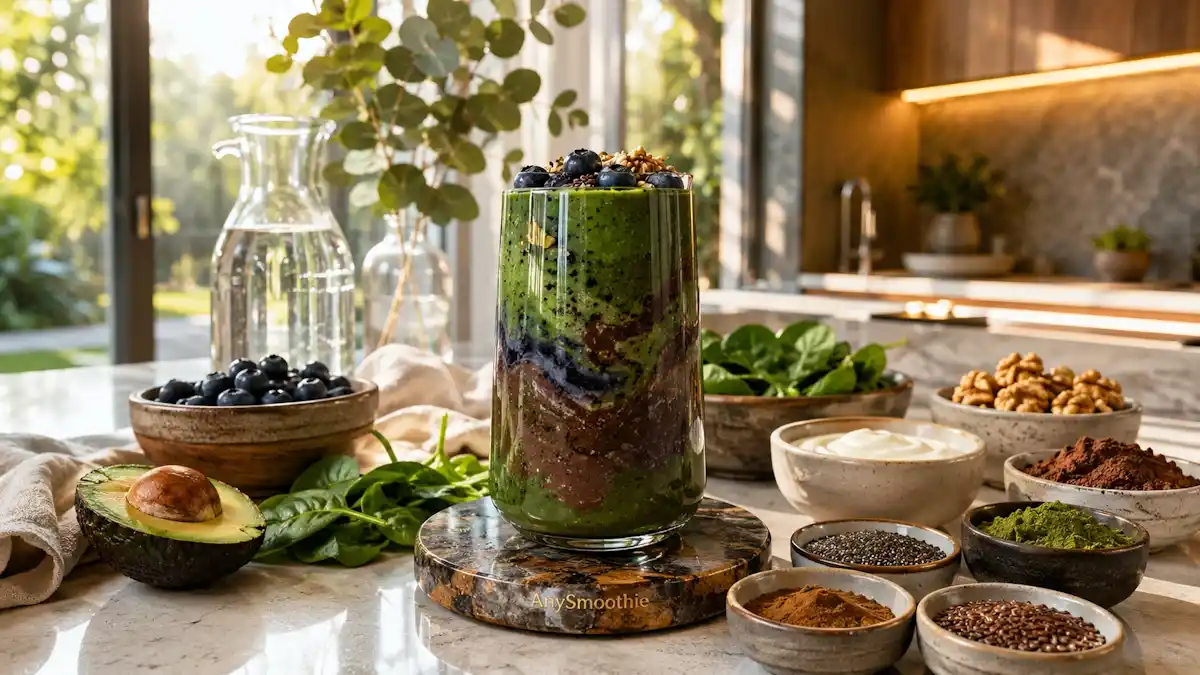
Steady energy depends on more than a quick hit of fruit sugar. Your cells need usable fuel, enough protein and fiber, and the right conditions to turn nutrients into ATP.
Mitochondrial uncoupling smoothies for energy metabolism take inspiration from a real cellular process, but a smoothie cannot switch mitochondrial uncoupling on at will. These food-based blends use ingredients linked to antioxidant systems, circulation, thermogenesis, and balanced fuel use.
The goal is a satisfying smoothie that fits normal energy physiology, not a shortcut or a treatment.
How Mitochondrial Uncoupling May Support Energy Metabolism
Mitochondria make much of the ATP that powers routine cell work. They do this by building a proton gradient across their inner membrane, then using that gradient to drive ATP production.
With mild physiological uncoupling, some protons return across the membrane without producing ATP. The released energy becomes heat instead. Brown fat uses uncoupling protein 1 (UCP1) in this controlled way, especially during cold exposure.
That does not mean more uncoupling is better. Excessive uncoupling can waste fuel, raise heat production too far, and disrupt normal cellular energy balance. Food cannot reliably target this process, and no smoothie can be expected to activate uncoupling proteins.
Still, certain foods contain compounds studied in related pathways. Green tea catechins, berry polyphenols, capsaicin from chili, and ginger compounds may influence thermogenesis or metabolic signaling. Human evidence for direct smoothie-based uncoupling remains limited.
Brown adipose tissue and energy metabolism continue to be active areas of scientific research. The National institute of diabetes and digestive and kidney diseases (NIDDK) provides evidence-based information about metabolism, body weight, and energy balance.
For a broader food-first approach, these Smoothies for sustained cellular energy also focus on balancing carbohydrate, protein, and fat rather than chasing a single mechanism.
What Ingredients Belong in an Energy Metabolism Smoothie?
Build the base around whole foods with clear jobs. Berries and leafy greens provide polyphenols and micronutrients. Cooled, unsweetened green tea adds catechins, while fresh ginger or a tiny amount of chili adds warming flavor.
Protein helps turn fruit into a more complete snack. Use plain Greek yogurt, unsweetened soy yogurt, silken tofu, or another unsweetened protein source. Chia and ground flax add fiber, while avocado or nut butter supplies fat.
A balanced blend digests more gradually than juice-heavy drinks. Portion size matters, too. A handful of fruit and a protein anchor usually make more sense than a long list of powders and extracts. Building meals around fruits, vegetables, whole grains, legumes, and quality protein sources remains one of the most evidence-based nutrition strategies for long-term health.
The Healthy eating plate provide practical recommendations for creating balanced eating patterns.
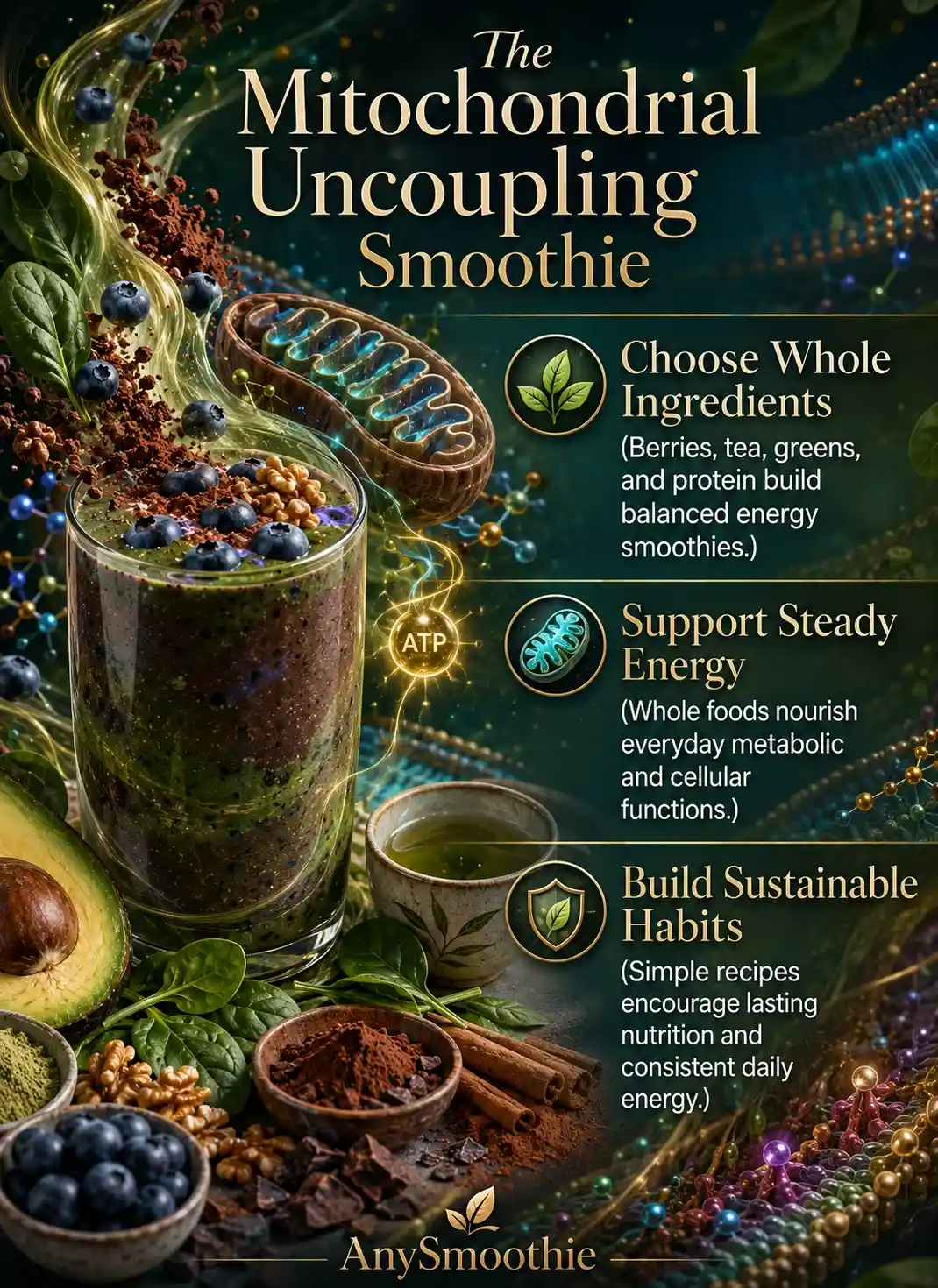
3 Mitochondrial Uncoupling Smoothies for Energy Metabolism
These mitochondrial uncoupling smoothies for energy metabolism support normal fuel use with whole ingredients. They do not guarantee uncoupling, fat loss, or a performance boost.
Berry Green Tea and Chia Smoothie
Ingredients
- 3/4 cup cooled unsweetened green tea
- 1 cup frozen mixed berries
- 1 packed cup spinach
- 1/2 cup plain Greek yogurt or unsweetened soy yogurt
- 1 tablespoon chia seeds
- A squeeze of lemon
Blend until smooth.
Berries and tea contribute plant compounds, while yogurt and chia bring protein and fiber. Add a few tablespoons of water if the blend is too thick.
Estimated Nutrition per Serving
Estimated with unsweetened green tea, mixed frozen berries, spinach, plain nonfat Greek yogurt, chia seeds, and approximately one teaspoon of lemon juice.
- Calories: ~230 kcal
- Protein: ~15 g
- Carbohydrates: ~34 g
- Fat: ~6 g
- Fiber: ~12 g
- Sugars: ~18 g
Green tea can become noticeably more bitter when brewed strongly and then paired with tart berries. Brew it a little lighter than you would for drinking on its own, cool it completely, and taste before deciding whether the lemon is actually needed.
Never blend boiling-hot tea. Let it cool first to protect both the blender and the texture of the smoothie.
Ginger Citrus and Chili Protein Smoothie
Ingredients
- 1 peeled orange or 1/2 peeled grapefruit
- 1/2 cup frozen mango
- 1 teaspoon grated fresh ginger
- A tiny pinch of cayenne
- 3/4 cup unsweetened milk
- 1/2 cup Greek yogurt or silken tofu
Blend until smooth.
Ginger and cayenne give this smoothie its warming edge. Meanwhile, the protein source slows the rush from fruit sugars and makes the drink more filling.
Start without cayenne if you are unsure about spice tolerance. Citrus can also aggravate reflux for some people.
Estimated Nutrition per Serving
Estimated with one medium orange, frozen mango, fresh ginger, unsweetened soy milk, plain nonfat Greek yogurt, and a tiny pinch of cayenne.
- Calories: ~260 kcal
- Protein: ~20 g
- Carbohydrates: ~43 g
- Fat: ~4 g
- Fiber: ~6 g
- Sugars: ~32 g
Cocoa Avocado and Raspberry Smoothie
Ingredients
- 1 cup raspberries
- 1/4 avocado
- 1 tablespoon unsweetened cocoa powder
- 3/4 cup unsweetened milk
- 1 tablespoon ground flax
- Cinnamon to taste
Blend until completely smooth.
Cocoa and raspberries supply polyphenols, while avocado and flax add fat and fiber. This combination has a richer texture without added sugar.
Choose unsweetened cocoa powder, not a sweetened hot chocolate mix. If raspberries are too tart, add a few slices of banana rather than syrup.
Estimated Nutrition per Serving
Estimated with raspberries, 1/4 medium avocado, unsweetened cocoa powder, unsweetened soy milk, ground flaxseed, and cinnamon.
- Calories: ~280 kcal
- Protein: ~11 g
- Carbohydrates: ~31 g
- Fat: ~15 g
- Fiber: ~16 g
- Sugars: ~9 g
Raspberry seeds and ground flax can leave this blend more textured than its creamy avocado base suggests. Give it an extra 15 to 20 seconds of blending before adding more liquid; that usually smooths the drink without diluting the cocoa flavor.
How to Use These Smoothies Safely and Effectively
Use one smoothie as breakfast, a snack, or part of a meal when its portions suit your appetite. If it replaces a meal, add enough protein and consider a side such as eggs, whole-grain toast, or leftover beans and vegetables.
Mitochondrial uncoupling smoothies for energy metabolism work best within a pattern that includes regular meals, hydration, sleep, and movement. Start with one recipe and notice how your hunger, digestion, and caffeine tolerance respond.
| Smoothie | Key ingredients | Protein and fiber focus | Flavor profile | Best use |
|---|---|---|---|---|
| Berry Green Tea | Berries, tea, spinach, chia | Yogurt and chia | Bright, lightly tart | Morning or afternoon |
| Ginger Citrus | Citrus, mango, ginger, cayenne | Yogurt or tofu | Zesty, warming | Midday snack |
| Cocoa Avocado | Cocoa, raspberries, avocado, flax | Flax, avocado, optional yogurt | Rich, chocolatey | Breakfast or snack |
The berry blend is the mildest starting point, while the citrus smoothie has the strongest warming ingredients.
Who Should Limit Spicy, Caffeinated, or High-Fiber Ingredients?
Chili, ginger, citrus, caffeine, cocoa, and larger amounts of fiber do not suit every stomach. They can cause digestive discomfort, reflux symptoms, loose stools, or jitters in sensitive people.
Food allergies also matter, especially with dairy, soy, nuts, and seeds. People who are pregnant, managing a health condition, taking medication, or considering concentrated supplements should check with a qualified clinician or dietitian first.
Conclusion: A Food-First Energy Routine
These recipes are nutrient-dense smoothies that support normal energy metabolism as part of a balanced diet. They are not guaranteed mitochondrial uncouplers or medical treatments.
Keep added sugar low, use whole ingredients, and include protein and fiber. Treat green tea, ginger, chili, and cocoa as optional flavor tools, then choose the smoothie that feels good and fits your overall eating pattern.

Medical Disclaimer: AnySmoothie content is for educational purposes only and is not a substitute for professional medical advice. Consult a healthcare provider for personalized guidance. See our full Disclaimer & Terms of Use. AI Transparency: AnySmoothie may use AI to support content development. All content undergoes human editorial review for accuracy, clarity, and editorial quality. See our full AI Transparency.