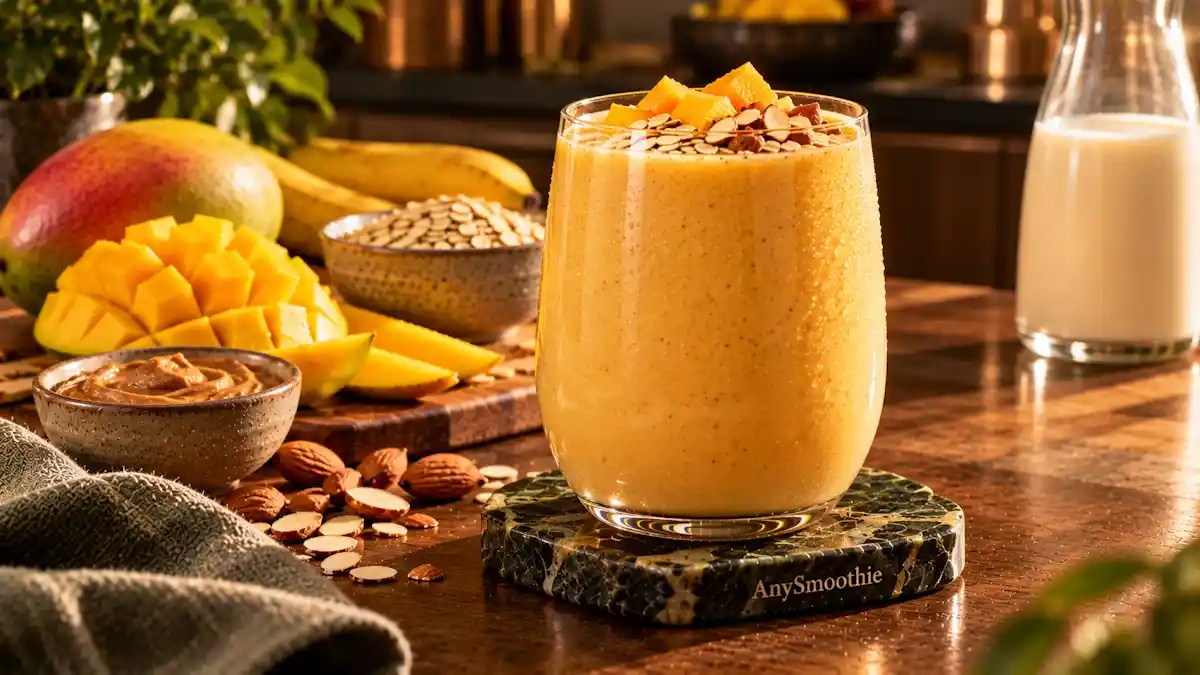
A smoothie can supply dietary fat and other nutrients for your body’s normal digestive processes. However, no recipe guarantees better fat absorption or greater chylomicron production.
If you’re choosing smoothies for chylomicron assembly and fat absorption, the useful distinction is between providing nutrients and changing how your body processes them. Ingredients supply the raw materials; your digestive system handles their breakdown and transport. The basic process, three everyday recipes, and a flavor comparison can help you choose without overstating what blending accomplishes.
How smoothies fit into the natural steps of fat absorption
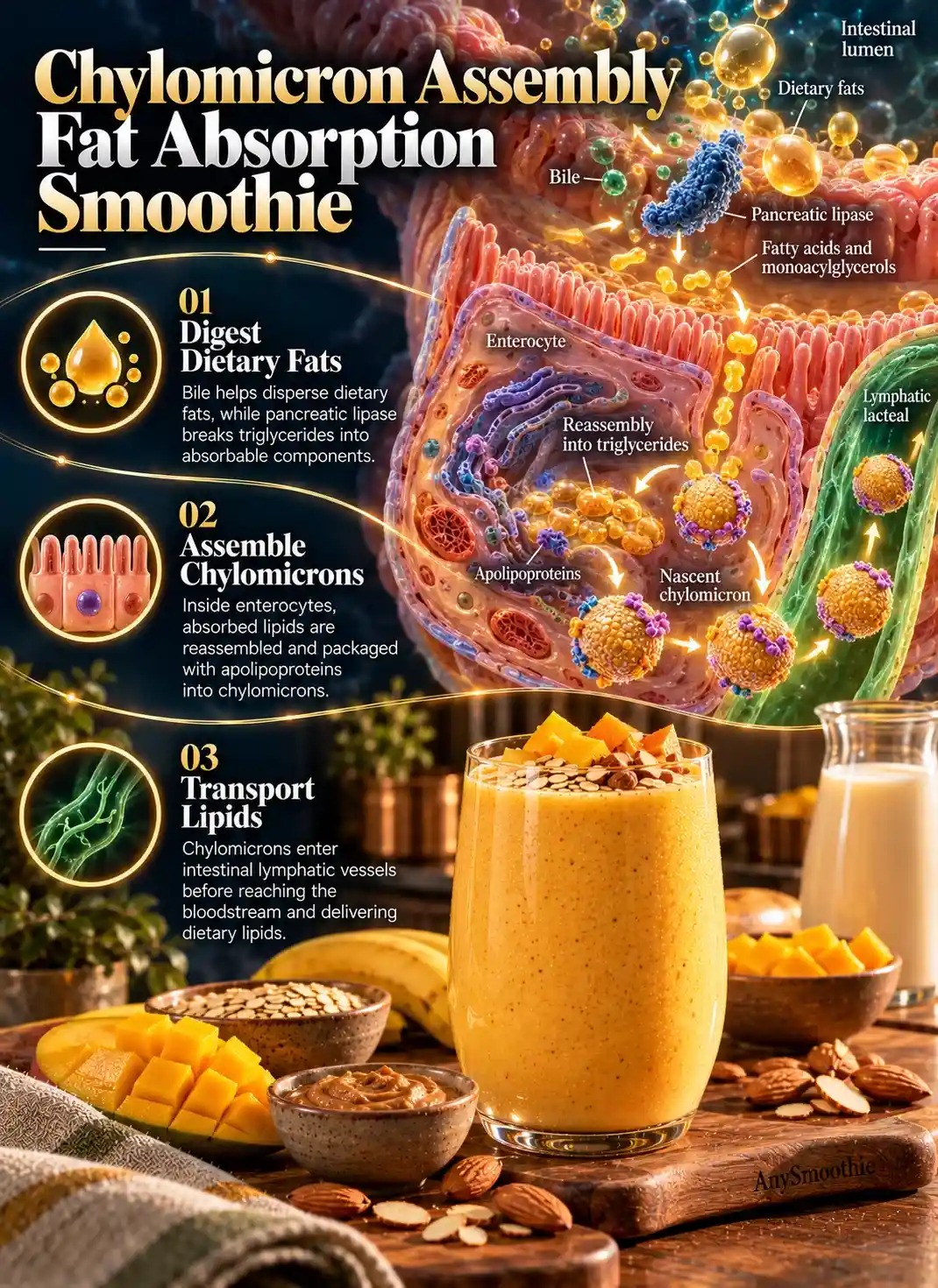
Most dietary fat digestion and absorption happens in the small intestine. Digestive enzymes break fats into smaller components that intestinal cells can absorb. Those cells then rebuild much of the absorbed long-chain fat into triglycerides.
For a related overview of bile’s role in fat digestion, see dandelion root smoothies for bile flow support.
What chylomicrons do with dietary fat
Chylomicrons are particles containing fat and proteins. Intestinal cells package triglycerides and other lipids into these particles so they can travel through watery body fluids.
As described in this review of intestinal lipid absorption, chylomicrons leave the intestine through the lymphatic system before reaching the bloodstream. They transport absorbed dietary fat for use or storage elsewhere in the body.
What a smoothie can and cannot support
A smoothie makes it convenient to eat foods containing long-chain fats, including avocado, yogurt, peanuts, and sesame seeds. These foods also supply other nutrients.
For a related look at dietary fatty-acid sources, see smoothies for omega-3 epa and dha intake.
However, blending changes food texture without replacing digestion. Absorption and packaging still require normal intestinal function, digestive secretions, and cellular machinery, including proteins. Adding more fat doesn’t establish that your body will absorb it better or assemble chylomicrons more efficiently.
3 Smoothies for Chylomicron Assembly and Fat Absorption
Each recipe makes one serving. Nutrition values are estimates, rounded consistently using typical ingredient values. Brands and produce sizes affect totals. Sugars include those naturally present in fruit and dairy.
Creamy Berry and Avocado Smoothie
Ingredients
- 1 cup frozen unsweetened strawberries (150 g)
- 1/4 medium avocado (50 g flesh)
- 3/4 cup plain whole-milk yogurt (180 g)
- 1/4 cup cold water
Instructions
Add the water and yogurt to the blender, followed by the avocado and strawberries. Blend until smooth, stopping once to scrape down the sides if needed. The frozen fruit makes a thick, cool smoothie, while avocado softens the berries’ tartness without adding much sweetness.
Estimated Nutrition (per serving)
- Calories: ~240 kcal
- Protein: ~8 g
- Carbohydrates: ~24 g
- Fat: ~14 g
- Fiber: ~6 g
- Sugars: ~16 g
Banana and Peanut Butter Oat Smoothie
Ingredients
- 1 medium ripe banana (118 g peeled)
- 1 tablespoon smooth peanut butter (16 g)
- 1/4 cup dry rolled oats (20 g)
- 3/4 cup 2% milk (180 mL)
- 1/4 cup ice cubes
Instructions
Blend the milk and oats first to break down the flakes. Add the banana, peanut butter, and ice, then blend until creamy. Serve promptly because the oats thicken the mixture as it stands. A ripe banana provides enough sweetness for most tastes without honey or syrup.
Estimated Nutrition (per serving)
- Calories: ~370 kcal
- Protein: ~14 g
- Carbohydrates: ~53 g
- Fat: ~13 g
- Fiber: ~6 g
- Sugars: ~25 g
For a warmer flavor, add a pinch of cinnamon. It pairs beautifully with the banana and peanut butter, bringing out the oats’ natural nuttiness without needing extra sweetener.
Mango and Tahini Yogurt Smoothie
Ingredients
- 1 cup frozen unsweetened mango chunks (165 g)
- 1 tablespoon tahini (15 g)
- 3/4 cup plain whole-milk yogurt (180 g)
- 1/4 cup cold water
- 1 teaspoon lime juice
Instructions
Stir the tahini in its jar before measuring so the separated oil mixes back into the sesame paste. Add all ingredients to the blender and blend until smooth. Mango provides sweetness, tahini adds a mildly nutty flavor, and lime keeps the yogurt-based drink bright and tangy.
Estimated Nutrition (per serving)
- Calories: ~300 kcal
- Protein: ~10 g
- Carbohydrates: ~37 g
- Fat: ~15 g
- Fiber: ~4 g
- Sugars: ~31 g
Compare the smoothie options by flavor and nutrition
The main differences are taste, texture, and overall nutrient balance.
| Smoothie | Fat profile | Nutrition pattern | Texture and flavor | Best suited for |
|---|---|---|---|---|
| Creamy berry and avocado | Unsaturated and saturated fats | Lowest energy; substantial fiber | Thick, mild, gently tart | A lighter snack |
| Banana and peanut butter oat | Mostly unsaturated fats | Highest protein and carbohydrates | Hearty, nutty, naturally sweet | Part of a more substantial meal |
| Mango and tahini yogurt | Mostly unsaturated fats | Highest total sugars; moderate protein | Creamy, tropical, tangy | A sweeter snack preference |
The best choice depends on your taste, dietary needs, and the smoothie’s role in a meal. Higher fat or protein doesn’t automatically mean better absorption. Also, the sweetest option here gets its sugars primarily from fruit and plain dairy.
Choose portions that fit your needs and routine
Use a smaller portion when you want a snack, or serve a full recipe alongside other foods as part of a meal. Because the banana option supplies more energy, it may fit differently into your routine than the berry smoothie.
You can adjust thickness with water or change fruit amounts for taste. However, substitutions also change the nutrition estimates.
Normal fat digestion depends on bile and pancreatic enzymes, among other processes. For related food-planning considerations involving the gallbladder, see smoothies for gallbladder nutrition support. If you have known fat-digestion problems or prescribed dietary limits, ask a qualified health professional for personalized guidance. A smoothie doesn’t replace that care.
Conclusion: Keep the focus on food, not promises
Smoothies can provide dietary fat for your body’s normal digestive and transport processes. Chylomicron assembly and fat absorption depend on broader physiology, rather than a particular ingredient combination.
Choose the recipe you enjoy and a portion that fits your routine. Keep expectations grounded: a smoothie supplies food, while your body performs the digestive work.
🛡️ Safety Notes & Dietary Interactions
- Fat digestion: These smoothies provide dietary fat, but higher-fat ingredients don’t guarantee better absorption. If you have known fat-digestion problems or prescribed dietary limits, seek individualized guidance.
- Allergen awareness: Peanut butter, tahini, dairy yogurt, and milk introduce potential allergens. Check labels carefully and use suitable alternatives when allergies, intolerances, or dietary restrictions apply.
- Portion size: Avocado, peanut butter, tahini, and whole-milk yogurt increase fat and energy density. Adjust serving size according to appetite and the smoothie’s role within your overall meal.
- Digestive function: Normal fat absorption depends on bile, pancreatic enzymes, intestinal function, and cellular transport machinery. A smoothie cannot replace evaluation or dietary guidance when fat digestion is impaired.
FAQs
Which smoothie has the most dietary fat?
The mango and tahini yogurt smoothie provides the highest estimated fat content at approximately 15 grams per serving. The creamy berry and avocado smoothie provides about 14 grams, while the banana and peanut butter oat version provides approximately 13 grams. Actual values vary with brands and ingredient portions.
Does eating more fat increase chylomicron production?
Not necessarily in a way that makes a smoothie more effective. Dietary fat provides material that intestinal cells process and package into chylomicrons, but absorption and chylomicron assembly depend on normal digestive and cellular machinery. Increasing the fat content doesn’t establish more efficient absorption or a predictable physiological outcome.
Why are avocado, peanut butter, and tahini useful in these recipes?
They provide dietary fat while also contributing other nutrients and distinct textures. Avocado creates creaminess, peanut butter adds richness, and tahini provides a mildly nutty flavor. Their inclusion makes the smoothies practical sources of dietary fat, but none has been established as a way to specifically improve chylomicron assembly.
Is the banana and peanut butter smoothie better for fat absorption because it contains oats?
No. Oats add carbohydrates and fiber and make the smoothie more substantial, while peanut butter supplies dietary fat. These nutritional differences don’t establish improved fat absorption. The body still relies on bile, pancreatic enzymes, intestinal cells, and transport processes regardless of whether the fat is consumed in an oat smoothie.
What if I have difficulty digesting fatty foods?
A smoothie shouldn’t be used to test or overcome a suspected fat-digestion problem. The article notes that normal fat absorption depends on bile, pancreatic enzymes, and other physiological processes. If you have known fat-digestion problems or prescribed dietary limits, discuss appropriate portions and ingredients with a qualified health professional.

Medical Disclaimer: AnySmoothie content is for educational purposes only and is not a substitute for professional medical advice. Consult a healthcare provider for personalized guidance. See our full Disclaimer & Terms of Use. AI Transparency: AnySmoothie may use AI to support content development. All content undergoes human editorial review for accuracy, clarity, and editorial quality. See our full AI Transparency.