
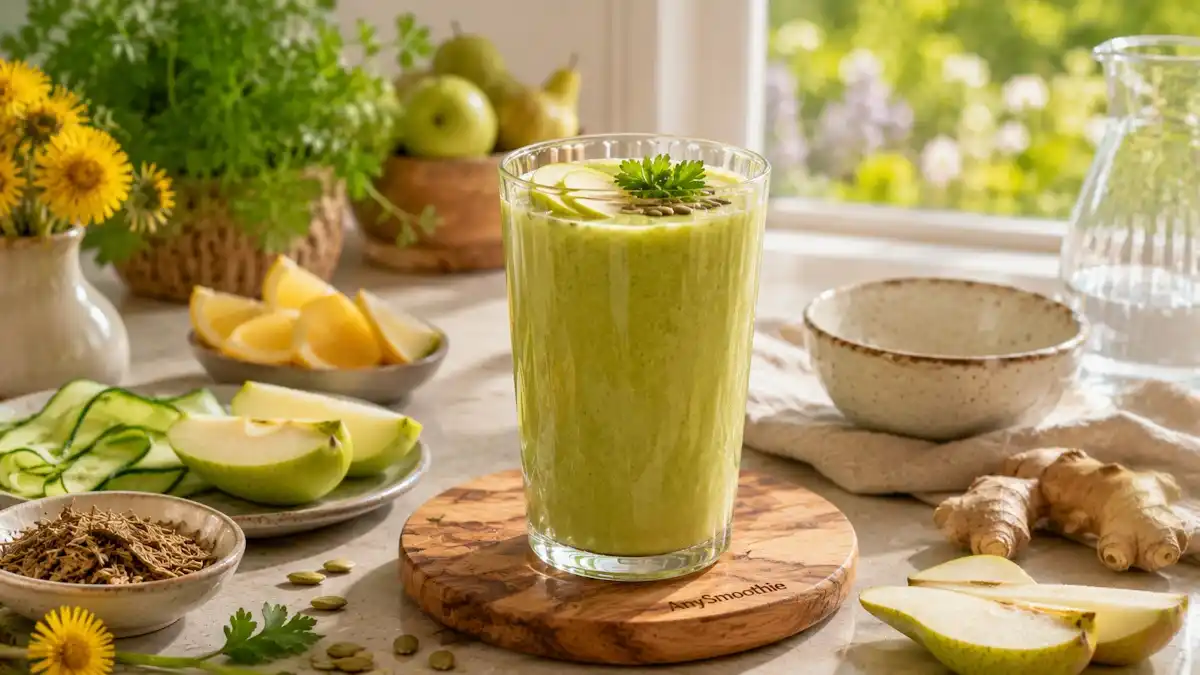
Fatty meals can feel heavy when digestion is slow. Bile helps break fats into smaller pieces so your body can handle them more easily. That is why some people look at dandelion root smoothies for bile flow support as a food-first option.
This is about support, not treatment. Dandelion root has a bitter edge, so it works best in a smoothie that balances flavor, texture, and tolerance. The goal is simple, a blend you can enjoy often enough to fit into real life.
How bile flow works, and where dandelion root may fit
Bile is made in the liver, stored in the gallbladder, and released into the small intestine when food arrives. Its main job is to help fats mix with water-based digestive fluid. That makes the rest of digestion smoother and helps waste move through the system in a normal way.
For a broader background, see this overview of bile flow. The root is often used because it brings bitter compounds into the picture, and bitterness can cue digestive readiness before a meal.
What bile does during digestion
Bile works like an emulsifier. It breaks big fat droplets into smaller ones, so enzymes can do their job.
When bile moves well, meals with avocado, eggs, cheese, or olive oil often feel easier to handle. When it doesn’t, some people notice a heavy feeling after richer food.
Why bitter foods can matter for digestive signaling
Bitter flavor is more than taste. Bitter receptors show up in the mouth and parts of the gut. That’s one reason bitter foods and herbs often appear in digestive traditions.
A research review on dandelion and liver health looks at the plant’s bitter compounds and related activity. The takeaway is simple. Bitter foods may help the body notice that food is coming and prepare the digestive tract.
What makes dandelion root different from dandelion leaf
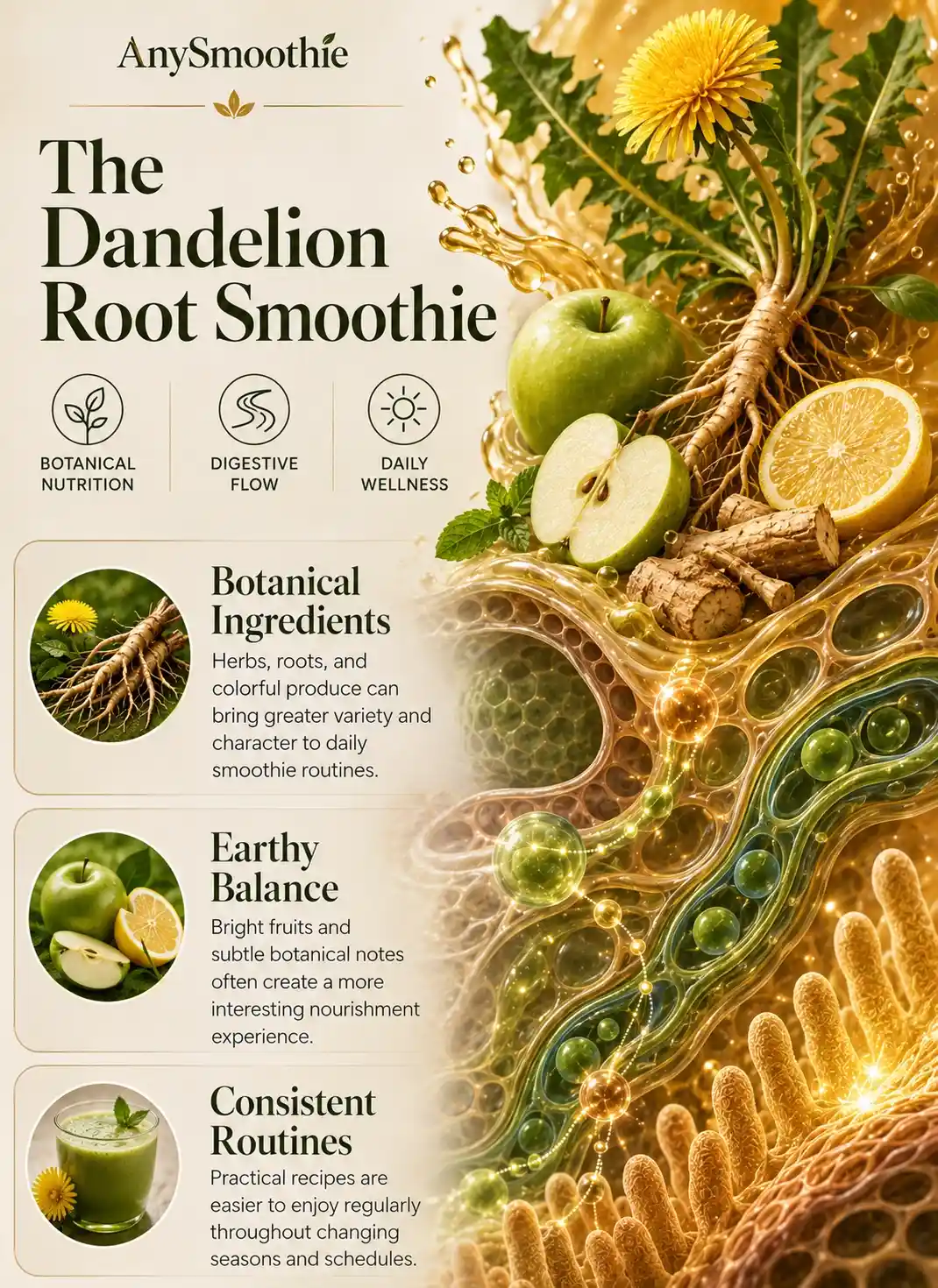
Dandelion leaf and root are not used the same way. The leaf tastes greener and sharper, so it fits salads or herb-heavy drinks. The root tastes earthier and more roasted, which makes it easier to blend into smoothies or warm drinks.
That earthy note is useful. It gives the smoothie a grounded flavor that pairs well with banana, citrus, ginger, and creamy bases. In other words, the root is usually the better pick when you want a stronger bitter tone without making the drink taste like a salad.
How to build a smoothie that supports bile flow without tasting bitter
A good smoothie keeps the root in the background, not at the front. Start with a liquid base, add a sweet or creamy fruit, then use a small amount of dandelion root. If the blend tastes too sharp, adjust the fruit or fat before adding more root. If you want more simple blend ideas, the smoothie recipes for improved digestion page keeps the base ingredients easy to work with.
Here’s a quick comparison of common add-ins.
| Ingredient | Taste | Texture | Digestive role | Best use |
|---|---|---|---|---|
| Dandelion root powder | Earthy, bitter | Thin, a little gritty | Adds bitter flavor cues | Small amounts in fruit-based blends |
| Chilled brewed root tea | Mild, roasted | Light | Gentler way to include the root | Smoothies when you want a softer taste |
| Banana | Sweet, mild | Creamy | Softens bitterness | Beginner-friendly blends |
| Kefir | Tangy | Creamy, thin | Adds body and a bright finish | Breakfast smoothies |
| Ginger | Sharp, warm | Smooth when fresh | Lifts flavor fast | Citrus or green blends |
The pattern is easy to see. Bitter root works best when sweet, creamy, or bright ingredients keep it in check.
Best base ingredients for a balanced blend
Yogurt and kefir make thicker smoothies with a tangy edge. Coconut milk gives a rich texture and a softer mouthfeel. Almond milk keeps things light, while water or iced tea makes the blend thinner and easier to sip.
If you want the smoothie to feel more like a meal, choose yogurt or kefir. If you want something lighter, almond milk or water is enough. The base should fit your stomach, not fight it.
Ingredients that help round out the flavor
Banana is the easiest fix for bitterness. Mango and pineapple add sweetness plus a bright fruit note. Cinnamon makes the flavor warmer. Lemon and orange lift the blend, while ginger gives it a clean finish.
A little fat also helps. Avocado, almond butter, or coconut milk smooth out the earthy edge of the root. That matters because a harsh smoothie rarely becomes a daily habit.
When to use powder, tea, or brewed root in smoothies
Powder is the most direct option, but it can taste the strongest. Chilled tea is milder and mixes in easily. Brewed root extract sits between the two, with more flavor than tea and less grit than powder.
If you care most about convenience, powder is the fastest route. If you care most about taste, chilled tea often wins. A guide to dandelion and digestion also points out how the root’s bitterness shapes its use in digestive blends.
3 Dandelion root smoothie recipes for bile flow support
Each of these recipes keeps dandelion root present without letting it take over. Use the one that matches your mood and your pantry.
Who should be careful with dandelion root smoothies
Dandelion root is a food for many people, but it is not a fit for everyone. People with allergies to ragweed-family plants should be careful. The same goes for anyone with gallbladder concerns, people who are pregnant or nursing, and anyone taking prescription medication.
Start low, pay attention, then adjust.
Signs a smoothie may not agree with you
- Stomach discomfort after drinking it
- Bloating or a heavy feeling
- Loose stools
- An aftertaste that feels too strong
- Nausea or poor appetite
If the smoothie feels off, reduce the dose or stop for a while. A small amount can still be enough for flavor.
When to ask a health professional before trying it
Get personalized advice if you have a digestive condition, a history of allergies, or a gallbladder issue. The same is true if you take medication on a regular basis. A clinician can help you judge whether dandelion root belongs in your routine.
Conclusion
Dandelion root smoothies can be a simple, food-first way to support bile flow and keep digestion in mind. The best version is the one that tastes good, fits your schedule, and uses ingredients your body handles well.
Start small, keep the flavor balanced, and test one recipe at a time. With the right mix, dandelion root smoothies for bile flow support can feel easy to repeat and easy to live with.
🛡️ Safety Notes & Dietary Interactions
- Start With Small Amounts: Dandelion root has a naturally bitter profile and may affect digestion differently from person to person. Begin with a small serving and gradually adjust based on your individual comfort and tolerance.
- Consider Allergy Sensitivities: Dandelion belongs to the ragweed family. People with allergies to ragweed, daisies, chrysanthemums, or related plants should use extra caution before adding dandelion root products.
- Medication Interactions Matter: Dandelion root may interact with certain medications, including diuretics, blood sugar medications, and some prescription treatments. Review supplement use with a qualified healthcare professional if you take medication regularly.
- Gallbladder And Digestive Conditions Require Care: Individuals with gallbladder concerns, bile duct disorders, digestive diseases, pregnancy, or breastfeeding should seek personalized medical guidance before routinely using dandelion root supplements.
FAQ
What does dandelion root do in a smoothie?
Dandelion root adds a distinctive bitter flavor that many people associate with digestive-support routines. In smoothies, it is often paired with fruit, healthy fats, and fiber-rich ingredients to create a more balanced flavor while fitting into a food-first approach to digestive wellness.
Is dandelion root powder better than dandelion root tea for smoothies?
Neither option is automatically better. Powder provides a stronger flavor and more concentrated presence, while chilled dandelion root tea tends to blend more smoothly and creates a milder taste. Many beginners prefer tea because it softens the root’s naturally bitter character.
What fruits pair best with dandelion root smoothies?
Banana, mango, pineapple, pear, and citrus fruits are among the most common choices. These fruits help balance bitterness while adding natural sweetness and texture. Banana is especially useful because its creamy consistency can make dandelion root smoothies easier to enjoy regularly.
When is the best time to drink a dandelion root smoothie?
Many people prefer these smoothies in the morning or before meals as part of a digestive-support routine. Others enjoy them earlier in the day rather than late at night. The best timing depends on personal preference, digestive comfort, and how the ingredients fit your daily schedule.
Can I drink dandelion root smoothies every day?
Many people incorporate dandelion root into a regular routine, but daily use should depend on individual tolerance and overall dietary habits. Starting with smaller servings and monitoring how you feel can help determine whether regular use fits comfortably within your nutrition plan.

Medical Disclaimer: AnySmoothie content is for educational purposes only and is not a substitute for professional medical advice. Consult a healthcare provider for personalized guidance. See our full Disclaimer & Terms of Use. AI Transparency: AnySmoothie may use AI to support content development. All content undergoes human editorial review for accuracy, clarity, and editorial quality. See our full AI Transparency.