
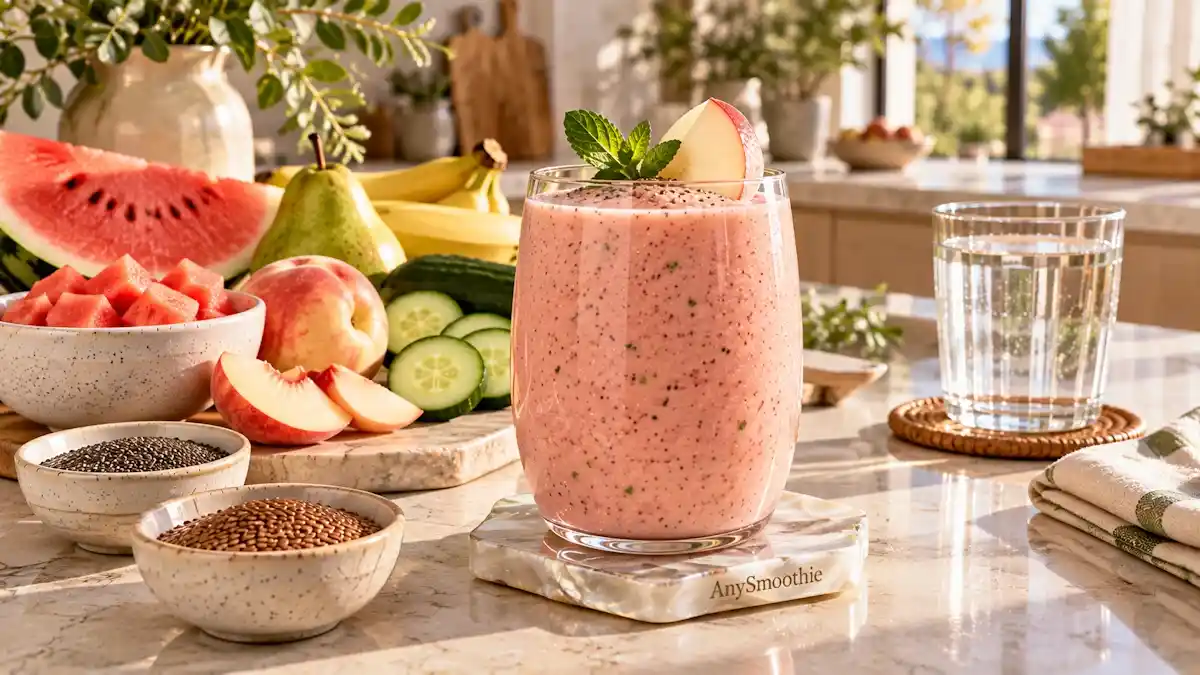
A smoothie can make it easier to add fluids and nutrient-rich foods to your daily routine. If you’re thinking about nutrition for dry skin, it offers a convenient way to combine produce, protein, and dietary fats.
However, nutrition support has limits: smoothies support normal hydration and skin physiology, but they don’t treat dry skin or replace skin care or medical advice. Understanding the ingredients helps you keep expectations realistic.
Start with the nutrient science, then try three single-serving recipes you can adjust for flavor, thickness, and your nutrition needs.
How smoothie nutrients support skin’s moisture barrier
Skin hydration depends on your outer skin barrier, the environment, and your overall health, as well as fluid intake. A smoothie cannot deliver water directly to dry patches. After digestion, your body absorbs fluids and regulates their distribution.
Water supports normal fluid balance. Meanwhile, electrolytes such as sodium and potassium help regulate fluid movement between body compartments. You don’t need to add salt to these recipes; ordinary meals usually supply sodium.
Dietary fats provide fatty acids used in cell membranes. However, eating avocado or chia doesn’t guarantee that your skin will retain more moisture.
Vitamin C is needed for normal collagen formation. It helps enzymes stabilize collagen, a structural protein in skin and other tissues. A review in Nutrients describes vitamin C’s role in skin physiology, but this biochemical role doesn’t establish a smoothie as a dry-skin treatment.
Colorful produce also supplies carotenoids and other plant compounds. Some carotenoids, including beta-carotene, can become vitamin A. These nutrients support physiological systems without promising visible changes in dryness.
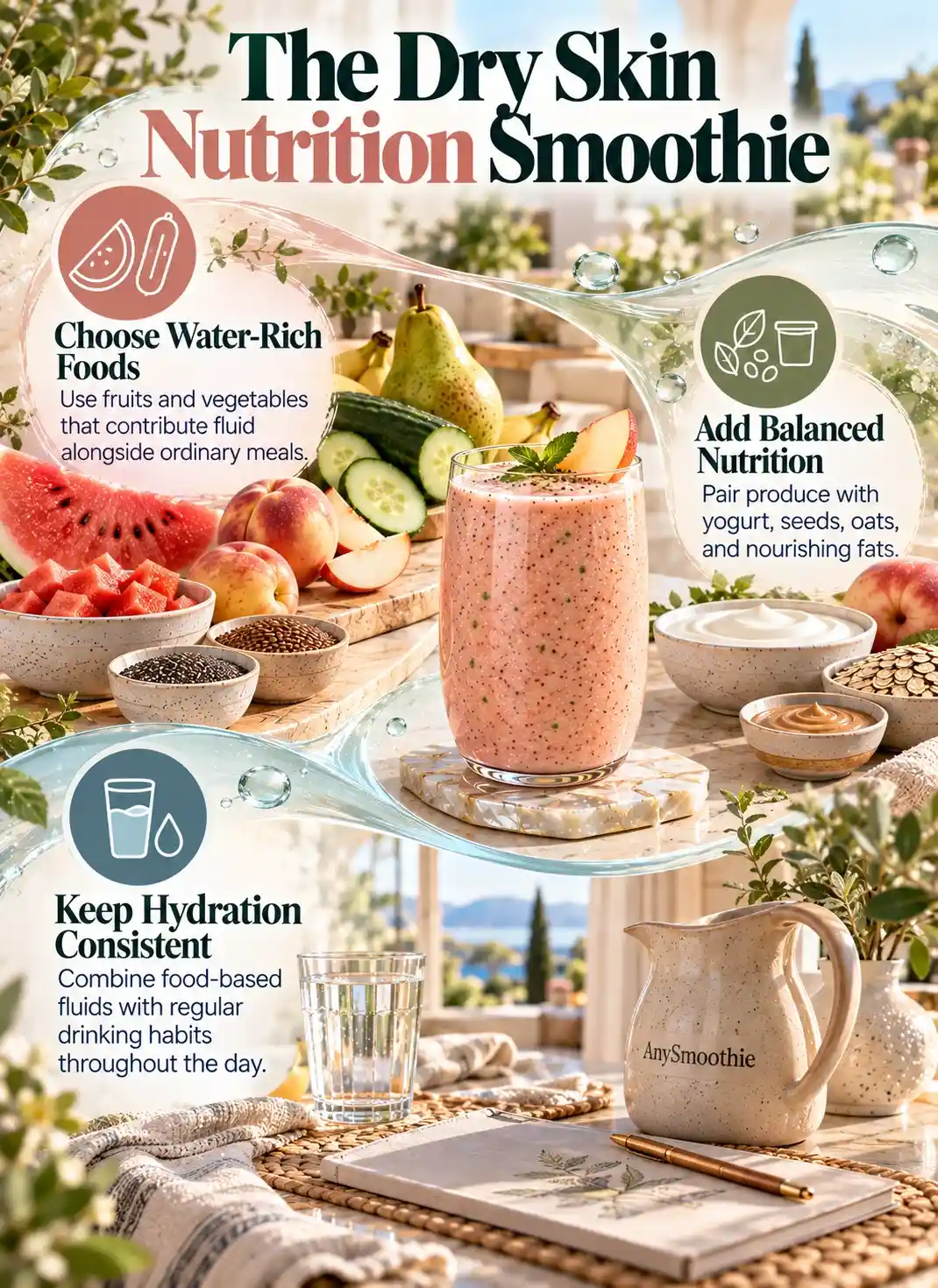
3 Hydrating Smoothies for Dry Skin Nutrition
Each recipe makes one serving. Use washed produce and plain, unsweetened dairy products or suitable alternatives. Their nutrients support normal body processes, rather than cure dry skin.
Here’s how the three options compare.
| Smoothie | Main ingredients | Fluid source | Skin-supporting nutrients | Best fit or flavor |
|---|---|---|---|---|
| Cucumber-avocado | Cucumber, spinach, avocado, yogurt | Water or milk | Unsaturated fat, carotenoids | Mild and creamy |
| Berry-chia | Mixed berries, chia, kefir | Kefir plus water or milk | Vitamin C, ALA omega-3 | Tangy and fruity |
| Mango-carrot | Mango, carrot, yogurt | Water or milk | Carotenoids, protein | Sweet with optional ginger |
Choose by taste, then adjust the liquid and protein source to suit your needs.
Cucumber, avocado, and spinach smoothie
Ingredients
- 1/2 cup chopped cucumber
- 1 cup loosely packed spinach
- 1/4 medium avocado
- 1/2 cup plain yogurt
- 1/2 cup water or milk
Steps
Blend until smooth, pausing to scrape down the sides if needed. Then add more liquid, one tablespoon at a time, until it pours easily. For a dairy-free version, use a fortified, unsweetened yogurt alternative.
Avocado contributes unsaturated fat, while spinach supplies folate and carotenoids. Folate supports normal cell division, and some spinach carotenoids have vitamin A activity. Cucumber adds water and a mild flavor, so this recipe suits readers who prefer a less-sweet smoothie.
Estimated Nutrition per Serving
- Calories: ~180 kcal
- Protein: ~7 g
- Carbohydrates: ~15 g
- Fat: ~10 g
- Fiber: ~4 g
- Sugars: ~7 g
If I were making this as part of a regular breakfast, I’d keep the texture slightly thinner so it is easier to drink alongside the rest of the meal.
Berry, chia, and kefir smoothie
Ingredients
- 3/4 cup mixed berries
- 1 tablespoon chia seeds
- 3/4 cup plain kefir
- 1/4 cup water or milk
Steps
Blend thoroughly, then let it stand briefly if you’d like the chia to thicken the drink. Add a little extra liquid if it becomes too thick. Fresh or frozen berries both work.
Berries contribute vitamin C and plant compounds, though amounts vary by berry. Chia supplies fiber and alpha-linolenic acid (ALA), a plant-based omega-3 fatty acid. Meanwhile, dairy kefir provides protein; check labels because nondairy versions can contain much less.
Estimated Nutrition per Serving
- Calories: ~240 kcal
- Protein: ~10 g
- Carbohydrates: ~31 g
- Fat: ~8 g
- Fiber: ~8 g
- Sugars: ~20 g
Mango, carrot, and yogurt smoothie
Ingredients
- 3/4 cup mango
- 1/4 cup finely grated carrot
- 1/2 cup plain yogurt
- 1/2 cup water or milk
- 1/4 teaspoon freshly grated ginger, optional
Steps
Blend until smooth. Raw carrot can remain gritty in a less-powerful blender, so finely grate it before blending. You can also use cooked, cooled carrot for a softer texture.
Mango and carrot supply carotenoids, including beta-carotene. Yogurt contributes protein, which supplies amino acids for normal tissue maintenance. The mango adds sweetness without needing honey or juice, while ginger gives the drink a sharper finish.
Estimated Nutrition per Serving
- Calories: ~185 kcal
- Protein: ~7 g
- Carbohydrates: ~31 g
- Fat: ~4 g
- Fiber: ~4 g
- Sugars: ~25 g
Make these smoothies fit your routine and nutrition needs
Choose unsweetened liquids and plain yogurt or kefir to limit added sugar. Whole fruit still contributes naturally occurring sugars, so consider portions and total carbohydrates if you’re managing your intake. Juice, sweetened milk, and flavored yogurt can add more sugar without improving the recipe’s balance.
For more staying power, choose a protein-rich base such as plain Greek yogurt or dairy kefir. Unsweetened soy milk is another option, although protein content varies by product. Avocado and chia already contribute dietary fat, so extra nut butter isn’t necessary unless it fits your preferences.
Water-rich produce contributes fluid, but keep drinking fluids throughout the day. Likewise, a smoothie doesn’t replace varied meals. For a deeper look at fluid and electrolyte-focused smoothie formulation, see our cellular hydration and electrolyte balance smoothie. If you’re using one as breakfast, consider whether its portion and protein content satisfy your needs.
Check labels for milk, soy, and nut allergens. Fortified dairy alternatives differ in calcium, vitamin D, and protein, so choose by the nutrition label rather than the word “plant-based.”
Finally, pair food choices with everyday skin care. The American Academy of Dermatology recommends gentle washing and regular moisturizer use. If dryness persists, becomes painful, or worsens, seek advice from a qualified health professional instead of relying on dietary changes alone.
Conclusion: Pair balanced nutrition with everyday skin care
Smoothies can conveniently combine fluids, produce, and nutrients that support normal physiological systems. Their value lies in making balanced eating easier, without guaranteeing changes in skin moisture or replacing care for persistent dryness.
Choose one recipe that appeals to you, then adjust its texture and ingredients to your tastes and dietary needs. Keep consistent skin care alongside those food choices, and treat a smoothie as one useful part of your routine.
🛡️ Safety Notes & Dietary Interactions
- Hydration expectations: These smoothies contribute fluids and water-rich produce, but they do not directly hydrate dry skin or replace regular fluid intake, especially during heat, exercise, or illness.
- Kefir and dairy tolerance: Kefir and yogurt provide protein but may cause digestive symptoms for people sensitive to dairy. Nondairy alternatives can differ substantially in protein and added ingredients.
- Fiber and texture: Chia, spinach, berries, avocado, and carrot contribute fiber and can make smoothies thicker. Increase fiber gradually and adjust liquid if larger amounts cause digestive discomfort.
- Allergen awareness: Check labels for dairy, soy, and nut ingredients, particularly when choosing fortified yogurt or milk alternatives. Products labeled plant-based can have very different nutrient and allergen profiles.
FAQs
Can these smoothies actually treat dry skin?
No. The article presents smoothies as a way to support normal hydration and provide nutrients involved in ordinary skin physiology, not as a treatment for dryness. Persistent or painful dryness should be addressed with appropriate skin care and professional advice rather than relying on dietary changes alone.
Which smoothie is best if I prefer a less-sweet option?
The cucumber, avocado, and spinach smoothie is the least sweet choice. Cucumber and spinach provide a mild flavor, while avocado adds creaminess and unsaturated fat. Plain yogurt keeps the recipe balanced without requiring fruit juice or added sweeteners, making it useful when you prefer a more savory-leaning smoothie.
Does adding chia or avocado guarantee better skin moisture?
No. Chia provides fiber and ALA, while avocado supplies unsaturated fats, but consuming either ingredient does not guarantee that skin will retain more moisture. Their role in the recipes is nutritional rather than therapeutic. Skin hydration also depends on the outer barrier, environment, overall health, and fluid intake.
Can I use plant-based yogurt or kefir?
Yes, but the nutritional profile can change considerably. The article specifically notes that nondairy kefir may contain much less protein than dairy kefir, while fortified yogurt alternatives can vary in calcium, vitamin D, and protein. Check the nutrition label rather than assuming plant-based products are nutritionally equivalent to dairy.
What should I do if my skin stays very dry despite changing my diet?
Keep everyday skin care alongside your food choices. The article recommends gentle washing and regular moisturizer use, while persistent, painful, or worsening dryness warrants advice from a qualified health professional. A smoothie should remain one part of a balanced routine rather than the primary strategy for managing ongoing skin symptoms.

Medical Disclaimer: AnySmoothie content is for educational purposes only and is not a substitute for professional medical advice. Consult a healthcare provider for personalized guidance. See our full Disclaimer & Terms of Use. AI Transparency: AnySmoothie may use AI to support content development. All content undergoes human editorial review for accuracy, clarity, and editorial quality. See our full AI Transparency.