
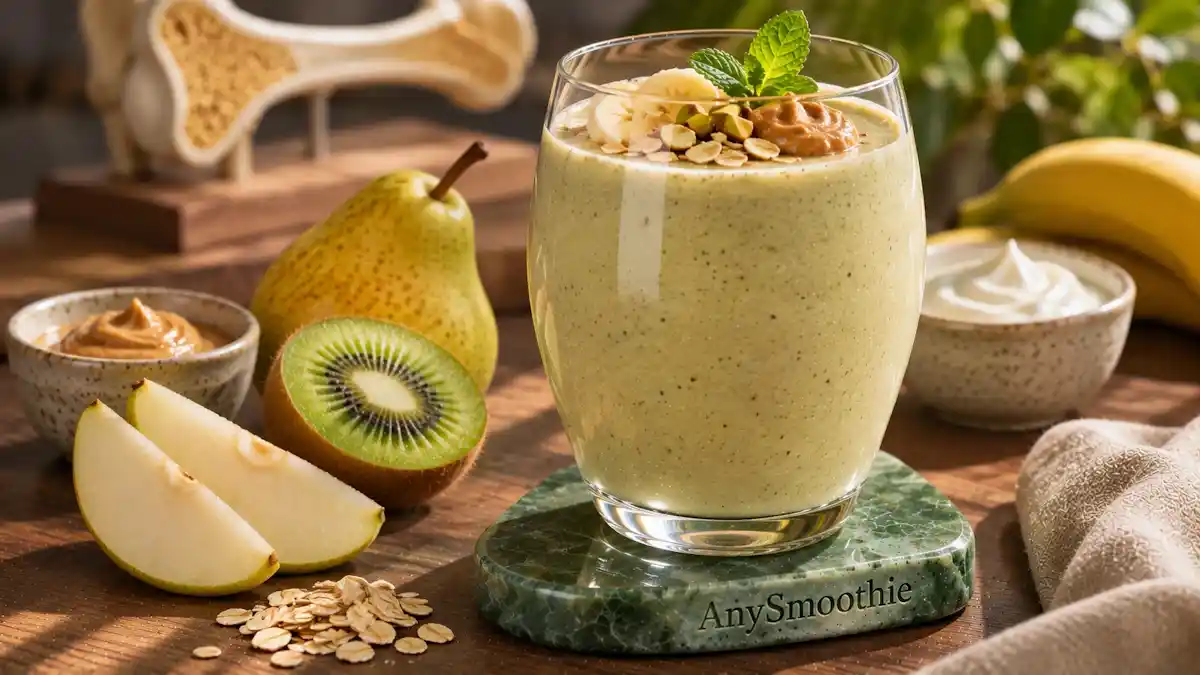
Osteocytes are bone cells that sense physical forces, including those created when you walk or exercise. Smoothies can supply nutrients your body uses, but they don’t directly activate osteocytes or replace weight-bearing activity or medical care.
If you’re choosing smoothies for osteocyte mechanosensing support, focus on balanced nutrition rather than a promised effect on bone cells. Start with how food and movement play different roles, then choose a recipe that fits your needs.
How nutrition fits into osteocyte mechanosensing
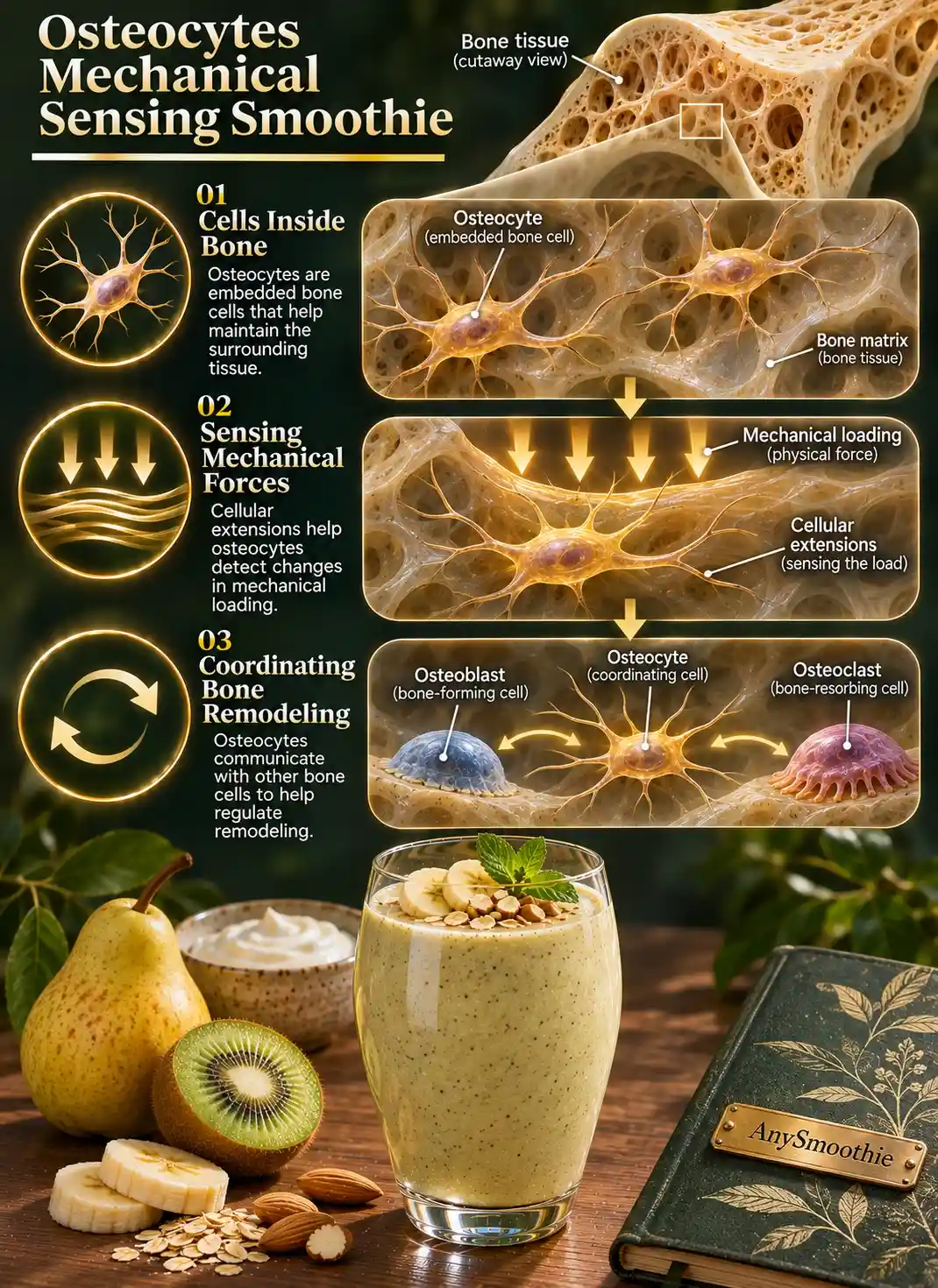
Osteocytes live within bone tissue. Their branching cell processes, membranes, and internal structures help detect mechanical forces and convert them into biochemical signals. These signals help coordinate bone’s response to loading, as described in research on osteocyte mechanobiology.
Nutrients supply building materials and support normal metabolism. However, eating a particular ingredient doesn’t reproduce the physical stimulus created by movement.
Focus on nutrients that support normal bone and cell function
Protein provides amino acids used in bone’s protein framework and throughout the body. Calcium contributes to bone structure, while vitamin D helps the body absorb calcium. Magnesium supports normal muscle and nerve function and contributes to bone structure. A related nutritional topic is eggshell membrane smoothies for cartilage nutrition; cartilage is a distinct tissue, not bone.
Vitamin K also participates in normal bone protein carboxylation, a related process discussed in smoothies for vitamin k cycle and protein carboxylation.
Omega-3 fats are components of cell membranes and participate in cell signaling. Chia and flax supply the plant omega-3 fat alpha-linolenic acid, or ALA. None of these nutrients acts as a direct switch for mechanosensing.
Nutrient needs vary with age, health, and eating patterns. Fortified milk and soy milk can help supply calcium or vitamin D, although fortification differs among products. For a separate overview of mineral-focused smoothie formulations, see shilajit smoothies for fulvic acid minerals.
Pair smoothies with movement and realistic expectations
Walking, strength training, and other suitable weight-bearing activities create forces that bones sense. Muscle contractions also place loads on bone, so movement matters alongside adequate nutrition. A related discussion of spinal tissues, hydration, and everyday loading appears in support smoothie for spinal decompression.
A smoothie is a convenient food choice, not a treatment for osteoporosis or a substitute for activity. Its place in your day depends on your appetite and overall diet.
If you have osteoporosis, a fracture history, kidney disease, or exercise restrictions, seek advice from a qualified health professional. Appropriate food choices and movement may need individual adjustments.
3 Smoothies for Osteocyte Mechanosensing Support
The nutrition estimates below can vary by brand, fruit size, and product formulation. Calcium and vitamin D content also depend on fortification. Choose according to your eating preferences, allergies, and appetite.
Berry Chia Calcium-and-Protein Smoothie
Plain Greek yogurt supplies much of this recipe’s protein, while berries and chia contribute fiber. Banana softens the tartness. Frozen berries work well when you want a colder drink without adding ice.
Ingredients
- 3/4 cup plain Greek yogurt
- 1 cup 2% milk fortified with vitamin D
- 1 cup mixed berries
- 1/2 medium banana
- 1 tablespoon chia seeds
Instructions
Add everything to a blender and blend until smooth. Add a splash of water or milk if you prefer a thinner texture.
Estimated Nutrition (per serving)
- Calories: ~400 kcal
- Protein: ~30 g
- Carbohydrates: ~53 g
- Fat: ~10 g
- Fiber: ~11 g
- Sugars: ~35 g
Mango Pineapple Tofu Smoothie
Fortified soy milk supplies nutrients that unfortified drinks may lack. Silken tofu blends smoothly, while oats give this version more body. Mango and pineapple provide sweetness without flavored yogurt or juice.
Ingredients
- 150 g silken tofu
- 1 cup unsweetened soy milk fortified with calcium and vitamin D
- 1/2 cup mango chunks
- 1/2 cup pineapple chunks
- 1/4 cup rolled oats
Instructions
Blend the tofu and soy milk first, then add the fruit and oats. Blend until creamy, adding a little water if needed.
Estimated Nutrition (per serving)
- Calories: ~330 kcal
- Protein: ~18 g
- Carbohydrates: ~45 g
- Fat: ~11 g
- Fiber: ~5 g
- Sugars: ~27 g
Banana Cocoa Flax Kefir Smoothie
Kefir gives this drink a tangy base, while banana balances unsweetened cocoa’s bitterness. Ground flaxseed adds fiber and plant omega-3 fat. Almond butter makes the texture richer without requiring a sweetened spread.
Ingredients
- 1 cup plain low-fat kefir
- 1 medium banana
- 1 tablespoon almond butter
- 1 tablespoon ground flaxseed
- 1 tablespoon unsweetened cocoa powder
Instructions
Blend all ingredients until smooth. For a colder, thicker drink, use a frozen banana.
Estimated Nutrition (per serving)
- Calories: ~360 kcal
- Protein: ~17 g
- Carbohydrates: ~47 g
- Fat: ~16 g
- Fiber: ~9 g
- Sugars: ~27 g
Compare the three smoothies at a glance
Use these differences to choose a drink that suits your preferences.
| Smoothie | Nutrient emphasis | Protein | Texture | Flavor and best use |
|---|---|---|---|---|
| Berry Chia | Dairy protein, calcium, chia fiber | ~30 g | Thick, lightly seedy | Bright and tart, filling snack |
| Mango Pineapple Tofu | Fortified soy nutrients, plant protein, oats | ~18 g | Creamy and smooth | Tropical, dairy-free option |
| Banana Cocoa Flax Kefir | Kefir protein, flax fats, cocoa | ~17 g | Creamy, drinkable | Mildly chocolatey, quick breakfast |
The berry option has the highest estimated protein, while the tofu version offers a dairy-free choice. Texture matters too: chia creates a lightly seedy drink, whereas silken tofu blends into a smoother base. Choose what you’ll enjoy as part of your usual meals rather than treating the comparison as a ranking of bone benefits.
Conclusion: Keep nutrition and suitable movement together
These smoothies offer practical ways to include varied nutrients in a balanced diet. Osteocyte mechanosensing responds to physical forces, and research on mechanical signaling in bone explains how loading influences bone modeling and remodeling.
No particular drink replaces that physical input or guarantees better bone outcomes. Choose a recipe that fits your needs, and pair good nutrition with suitable movement and medical guidance when needed.
🛡️ Safety Notes & Dietary Interactions
- Bone Loading: These smoothies provide nutrients used in normal bone and cell function, but they do not replace weight-bearing activity. Exercise plans should reflect individual capacity, fracture history, and medical restrictions.
- Calcium and Vitamin D: Fortified milk and soy milk can provide calcium and vitamin D, but amounts vary by product. Check labels rather than assuming every milk or plant beverage has equivalent fortification.
- Dairy, Soy, and Almonds: The recipes contain yogurt, milk, kefir, soy, tofu, and almond butter. Check labels and choose appropriate alternatives for milk, soy, or tree-nut allergies and dietary restrictions.
- Fiber and Texture: Chia, flaxseed, oats, berries, and fruit contribute fiber and can alter thickness. Increase fiber gradually if needed, and adjust liquid according to digestive tolerance and preferred consistency.
FAQs
Which smoothie provides the most protein?
The Berry Chia Calcium-and-Protein Smoothie provides the highest estimated protein, at approximately 30 grams per serving. The Mango Pineapple Tofu Smoothie provides about 18 grams, while the Banana Cocoa Flax Kefir Smoothie provides approximately 17 grams.
Does a calcium-rich smoothie directly activate osteocyte mechanosensing?
No. Osteocyte mechanosensing responds to physical forces created by activities such as walking or exercise. Calcium, vitamin D, protein, and other nutrients support normal bone-related processes, but eating them does not reproduce the mechanical stimulus.
Which smoothie is the best dairy-free option?
The Mango Pineapple Tofu Smoothie is the dairy-free option as written. It uses silken tofu and fortified soy milk and provides approximately 18 grams of protein. It does contain soy, so someone avoiding both dairy and soy would need a different protein and milk substitute.
Why is fortified soy milk used in the tofu smoothie?
Fortified soy milk can provide calcium and vitamin D, depending on the product, while also contributing plant protein. The article specifically notes that unfortified plant beverages may not provide the same nutrients, so checking the product label is important.
Can these smoothies replace exercise for bone health?
No. The article separates nutrition from mechanical loading: smoothies provide nutrients, while suitable weight-bearing movement supplies physical forces that bone cells sense. If you have osteoporosis, a fracture history, or exercise restrictions, follow an individualized activity plan from a qualified professional.

Medical Disclaimer: AnySmoothie content is for educational purposes only and is not a substitute for professional medical advice. Consult a healthcare provider for personalized guidance. See our full Disclaimer & Terms of Use. AI Transparency: AnySmoothie may use AI to support content development. All content undergoes human editorial review for accuracy, clarity, and editorial quality. See our full AI Transparency.