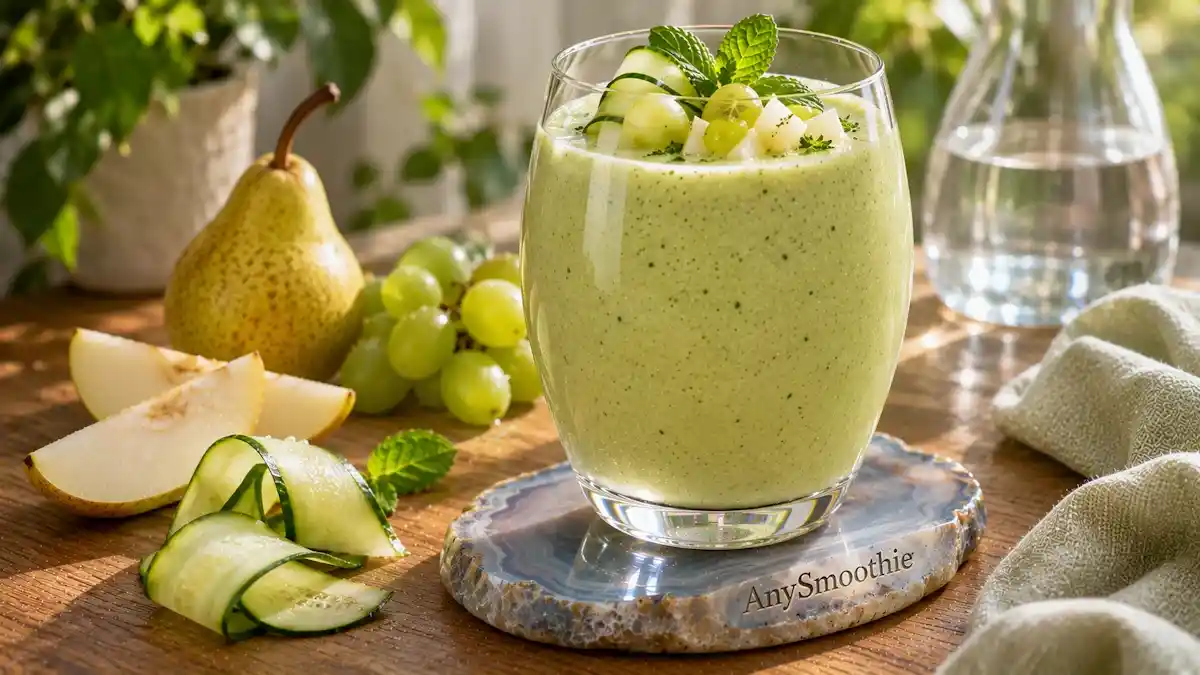
Smoothies can fit an oral-care routine, but no recipe can guarantee increased saliva flow or a particular oral pH. The practical goal is to choose drinks that work alongside everyday dental care and saliva’s normal protective functions. For a broader look at water movement through cell membranes, see smoothies supporting aquaporin channel hydration.
Ingredients matter, but so do your sipping habits and the rest of your diet. These three recipes use mild-tasting fruit and unsweetened dairy, with no added sweeteners. Start with the combination you enjoy enough to finish in one sitting.
How to enjoy smoothies while supporting your mouth’s natural balance
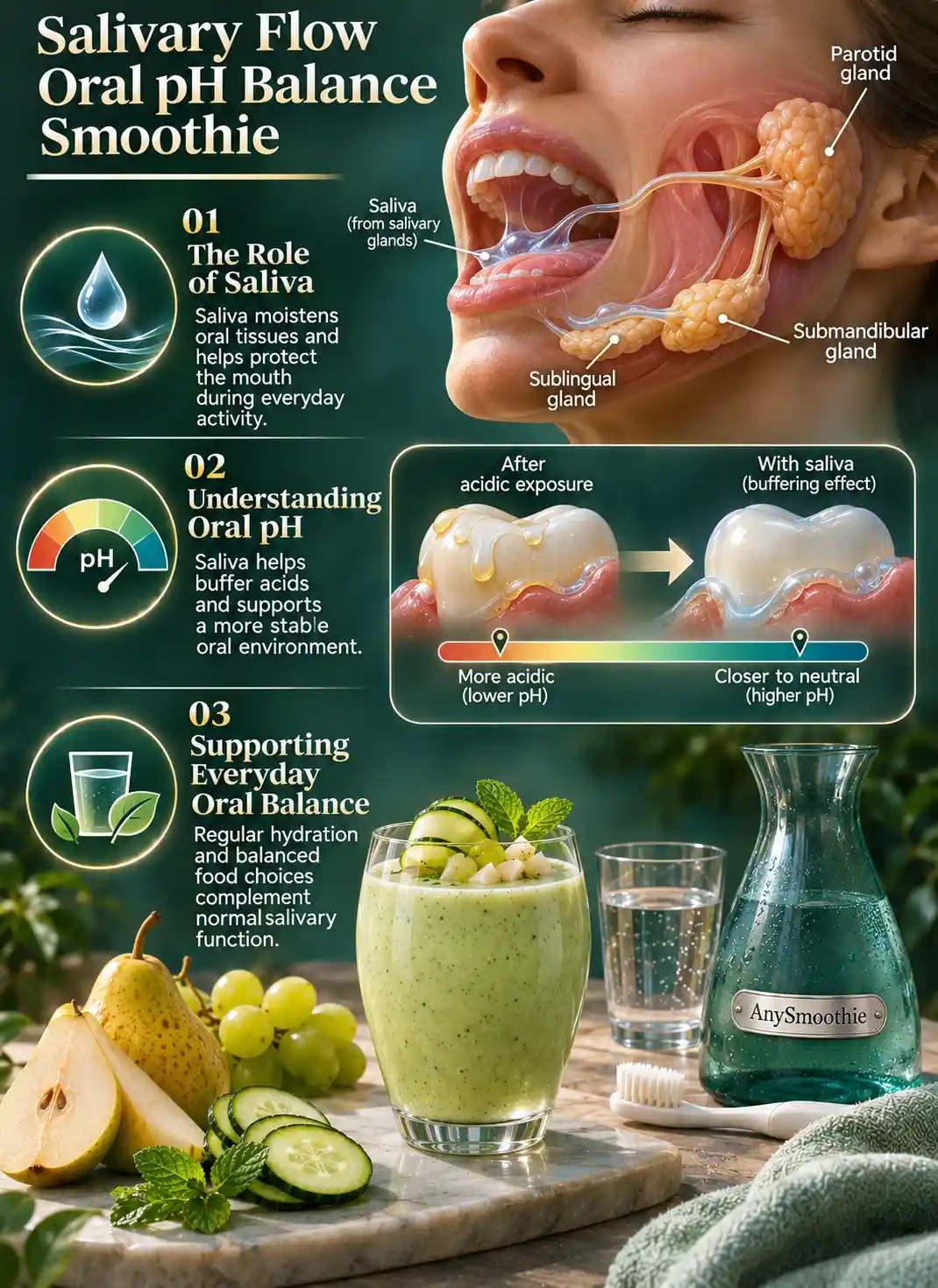
Saliva washes away food particles and helps clear acids. Its minerals support enamel remineralization, while its buffering system helps the mouth return toward its usual pH. The American Dental Association describes this salivary acid-buffering system, which includes bicarbonate.
These recipes haven’t been tested for their effects on saliva flow or oral pH. They aren’t treatments for dry mouth.
Why ingredients and sipping habits both matter
Bacteria in dental plaque can use sugars to produce acids. Meanwhile, acids already present in fruit and fermented dairy can also expose enamel to acid. A mild flavor doesn’t reliably tell you a drink’s pH. For a separate guide to ingredient choices and personal triggers when reflux reaches the throat, see smoothies for silent reflux (lpr): ingredient guide.
Yogurt and kefir provide protein, but neither ingredient guarantees protection against decay or control over oral pH. Likewise, blending fruit doesn’t remove its sugars.
Because repeated sipping prolongs exposure, enjoy your smoothie in one sitting, preferably with a meal. Avoid swishing it around your mouth, and drink plain water afterward.
Brushing and getting help for dry mouth
After acidic foods or drinks, allow time before brushing. The ADA’s guidance on acidic drinks recommends waiting an hour so saliva has time to wash away acids and help enamel re-harden.
Keep brushing twice daily with fluoride toothpaste and cleaning between your teeth. A smoothie can’t replace either habit.
If your mouth regularly feels dry, or you have burning, mouth sores, or swallowing problems, speak with a dentist or healthcare professional. Medications and health conditions can contribute to dry mouth, so identifying the cause matters more than choosing a particular drink.
3 smoothies for salivary flow and oral pH balance
Each recipe makes one serving. Nutrition estimates assume plain, unsweetened, low-fat yogurt or kefir.
Creamy Banana-Oat Yogurt Smoothie
Ingredients
- 1 small banana (100 g peeled)
- 3/4 cup plain unsweetened low-fat yogurt (170 g)
- 2 tablespoons rolled oats (10 g)
- 1/4 cup cold water
Instructions
Blend everything until smooth. Let it stand for a minute so the oats soften, then blend briefly again.
Estimated Nutrition (per serving)
- Calories: ~235 kcal
- Protein: ~11 g
- Carbohydrates: ~42 g
- Fat: ~4 g
- Fiber: ~4 g
- Sugars: ~24 g
Pear, Spinach, and Yogurt Smoothie
Ingredients
- 1 medium ripe pear, cored (178 g edible portion)
- 1/2 cup loosely packed spinach (15 g)
- 3/4 cup plain unsweetened low-fat yogurt (170 g)
- 1/4 cup cold water
Instructions
Wash the pear and spinach. Leave the pear’s skin on, chop the fruit, and blend all ingredients until smooth.
Estimated Nutrition (per serving)
- Calories: ~210 kcal
- Protein: ~10 g
- Carbohydrates: ~40 g
- Fat: ~3 g
- Fiber: ~6 g
- Sugars: ~30 g
Cucumber-Melon Kefir Smoothie
Ingredients
- 1/2 cup peeled, chopped cucumber (75 g)
- 3/4 cup ripe honeydew chunks (128 g)
- 3/4 cup plain unsweetened low-fat kefir (180 mL)
- 1/4 cup ice
Instructions
Blend the cucumber, honeydew, and kefir until smooth. Add the ice and blend again until no large pieces remain.
Estimated Nutrition (per serving)
- Calories: ~140 kcal
- Protein: ~9 g
- Carbohydrates: ~23 g
- Fat: ~2 g
- Fiber: ~1 g
- Sugars: ~18 g
How the three smoothies compare for flavor, texture, and everyday use
Use this comparison to match your preferred flavor and texture with your appetite.
| Smoothie | Flavor and texture | Nutrition profile | Oral-care consideration | Best use |
|---|---|---|---|---|
| Banana-oat | Sweet, creamy, thick | Most energy; moderate fiber | Natural sugars; potentially clingy texture | More substantial breakfast accompaniment |
| Pear-spinach | Mild, gently sweet, slightly pulpy | Most fiber; moderate protein | Natural sugars despite no added sweeteners | Fiber-focused meal accompaniment |
| Cucumber-melon | Fresh, tangy, lighter | Least energy; lowest fiber | Fermented dairy remains acidic | Lighter snack alongside food |
Choose the texture you’ll comfortably finish during a meal or snack. A thick smoothie that you sip throughout the morning creates a different exposure pattern than one you finish at breakfast.
Reading the nutrition estimates
The listed sugars include naturally occurring fruit sugars and milk sugar, or lactose. Unsweetened doesn’t mean sugar-free, so even these recipes deserve the same attention to drinking habits as other fruit-based drinks.
Produce size and dairy brands change the totals. The estimates also assume you drink the entire serving, including any pulp.
Choosing a comfortable texture
Banana and oats produce a thicker drink, while pear skin can leave a little texture even after blending. That difference matters if your mouth feels tender or sticky. For another discussion of soft, hydrated smoothie textures and mucilage, see marshmallow root smoothie for mucilaginous support.
A smoothie that feels comfortable isn’t evidence that it improves saliva production. Persistent discomfort, trouble swallowing, or difficulty eating deserves professional advice rather than repeated changes to your smoothie routine.
Conclusion: Keep the routine bigger than the smoothie
These three smoothies offer convenient ways to enjoy fruit and unsweetened dairy, without promising changes in saliva flow or oral pH. They’re food choices, not substitutes for dental care or professional advice.
Keep the routine simple: choose unsweetened ingredients, finish your smoothie in one sitting, and follow it with water. Consistent habits matter more than any single recipe.
🛡️ Safety Notes & Dietary Interactions
- Dental Exposure: Natural fruit and dairy sugars can still feed plaque bacteria. Finish the smoothie in one sitting rather than sipping continuously, and follow with plain water.
- Acidic Foods: Kefir, yogurt, and fruit can contribute to oral acid exposure. Avoid swishing the smoothie around your mouth, and allow time before brushing after acidic drinks.
- Digestive and Oral Texture: Banana, oats, and pear skin create thicker or pulpy textures. Reduce oats or blend longer if mouth tenderness, stickiness, or swallowing difficulty makes these uncomfortable.
- Dry Mouth Concerns: These smoothies are not treatments for reduced saliva flow. Persistent dryness, burning, sores, swallowing difficulty, or medication-related symptoms warrant dental or healthcare evaluation.
FAQs
Can these smoothies actually increase saliva flow?
Not reliably. The recipes contain foods and fluids that may feel refreshing, but they have not been tested to increase salivary flow. Saliva naturally helps clear food particles, buffer acids, and support enamel. These smoothies should therefore complement, rather than replace, regular brushing, interdental cleaning, and professional dental care.
Which smoothie is the lightest choice for oral-care routines?
The Cucumber-Melon Kefir Smoothie is the lightest, at about 140 calories with only 1 gram of fiber. Its cucumber and honeydew provide a fresh texture, while kefir adds protein. However, its lower calorie content does not mean it is automatically better for teeth or oral pH.
Why is finishing the smoothie in one sitting recommended?
Finishing it in one sitting limits the amount of time teeth are repeatedly exposed to fruit and milk sugars. Continuous sipping can prolong plaque exposure to fermentable carbohydrates and acids. Having the smoothie with a meal, then drinking plain water afterward, creates a simpler routine than slowly consuming it throughout the morning.
Does unsweetened yogurt or kefir prevent tooth decay?
No. Unsweetened yogurt and kefir contain less added sugar because none is included, but they still contain naturally occurring lactose. Fermented dairy also does not guarantee protection against decay or control of oral pH. Their role here is nutritional and textural rather than a substitute for fluoride toothpaste or dental care.
What should I do if my mouth stays dry despite these smoothies?
Changing smoothies repeatedly may not address the underlying cause. Persistent dry mouth can be associated with medications or health conditions and may increase oral discomfort. If dryness is frequent, especially with burning, sores, or swallowing difficulty, discuss it with a dentist or healthcare professional rather than relying on smoothies.

Medical Disclaimer: AnySmoothie content is for educational purposes only and is not a substitute for professional medical advice. Consult a healthcare provider for personalized guidance. See our full Disclaimer & Terms of Use. AI Transparency: AnySmoothie may use AI to support content development. All content undergoes human editorial review for accuracy, clarity, and editorial quality. See our full AI Transparency.