
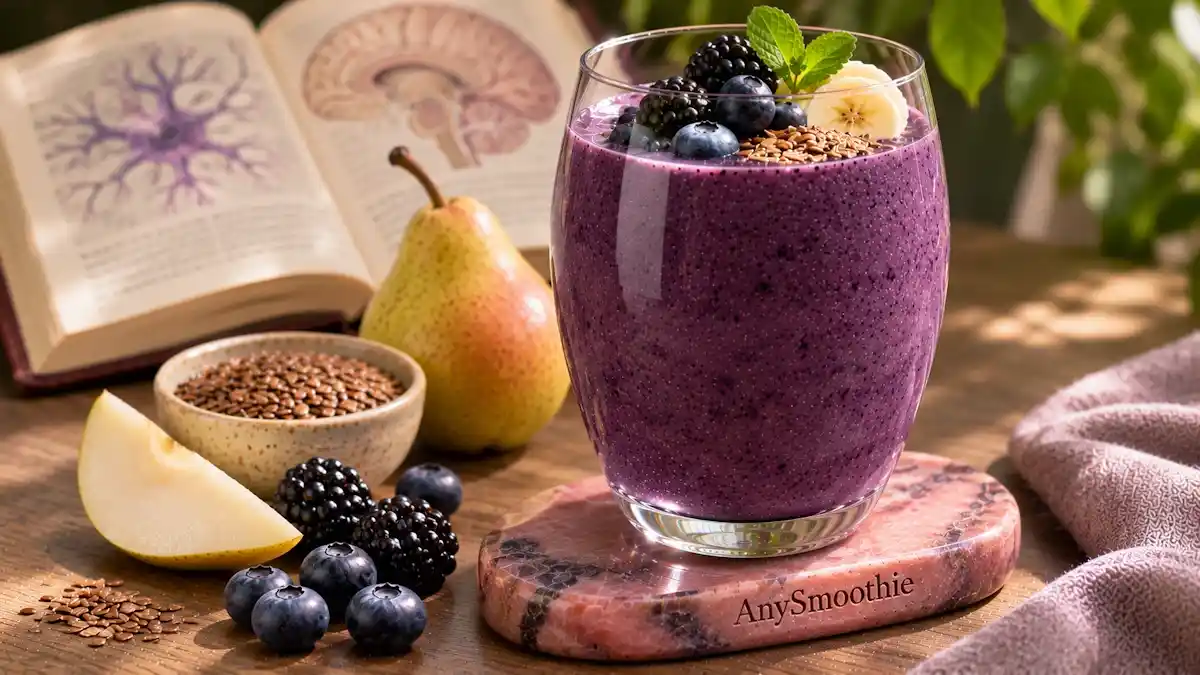
Microglia are immune cells in the brain that sense signals from their surroundings, including nutrients. For a separate discussion focused specifically on luteolin and microglia, see luteolin smoothies for neuro efficiency. Smoothies can provide nutrients within an overall eating pattern, but no smoothie is proven to control microglial activity or treat a condition.
That distinction matters when food advice borrows language from brain research. You can enjoy a balanced drink without expecting it to change brain-cell behavior. The three recipes below offer different flavors and nutrient sources, followed by a practical guide to choosing ingredients while keeping the science in perspective.
How nutrients can take part in microglial signaling
Microglia monitor their local environment and respond to signals associated with injury, infection, and metabolism. Nutrients are part of that environment, but hormones and signals from nearby cells also influence their behavior. Food is only one part of this complex system. Another perspective on plant-derived compounds and brain health appears in polygala tenuifolia smoothies for brain health.
Researchers study how glucose, fats, and amino acids affect cellular energy use and signaling. Glucose supplies fuel through processes such as glycolysis. Fatty acids contribute to membranes and energy metabolism, while amino acids support protein production and nutrient-sensing pathways. A review of microglia and metabolic regulation describes transporters that help these cells access such fuels. A different example of research into brain-related signaling is discussed in l-theanine smoothies for alpha brain waves.
Plant compounds, including polyphenols, also appear in laboratory studies of inflammatory signaling. However, an effect in cultured cells doesn’t establish what happens after someone drinks a smoothie. Digestion, absorption, and access to brain tissue all matter. For a broader collection of brain-focused ingredients, see best nootropic smoothies for memory and brain performance.
Animal findings need similar care. For example, NIDDK’s summary of mouse research discusses microglia, food intake, and obesity. Those results don’t prove that a particular recipe changes microglial activity in people.
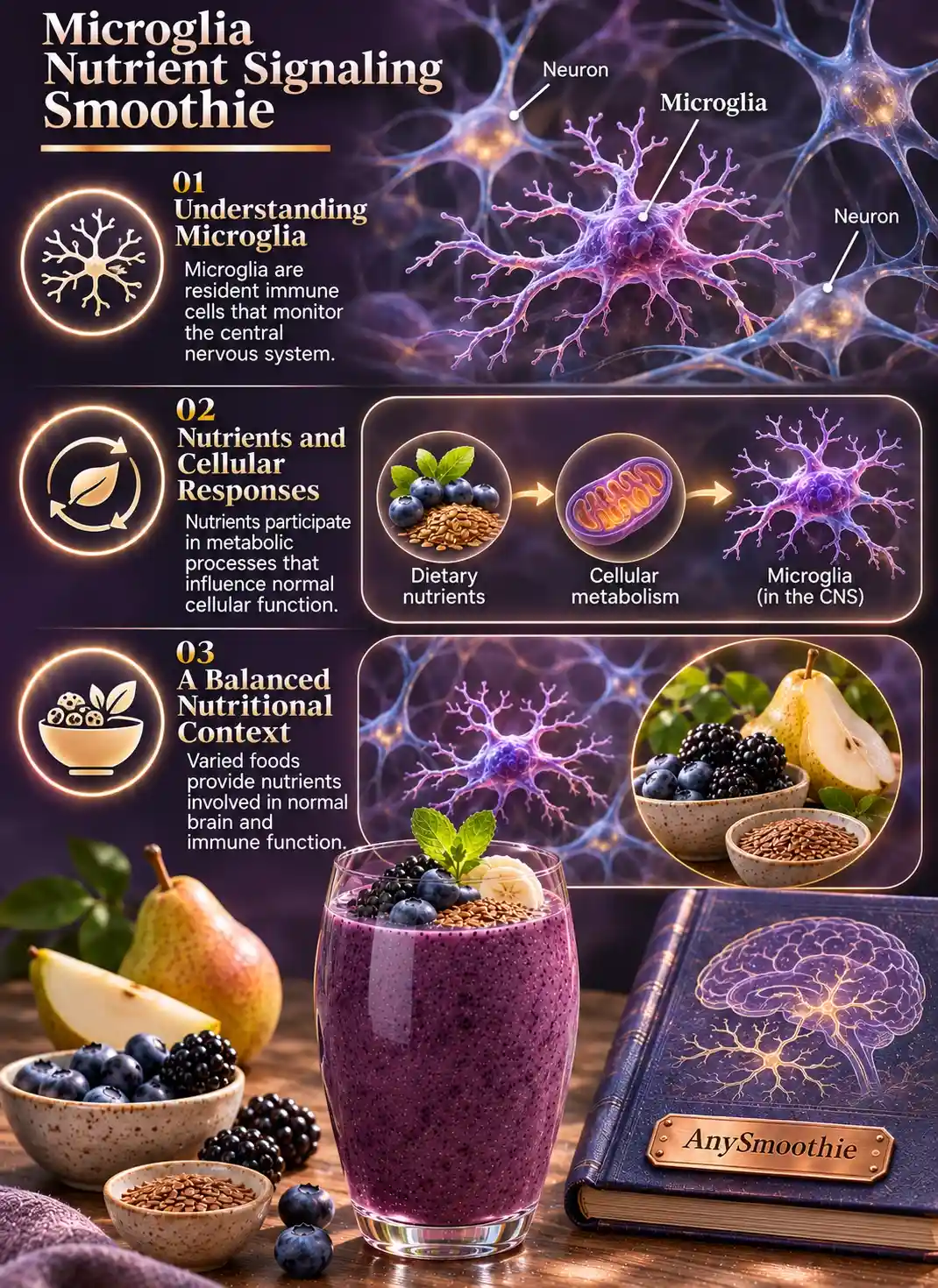
3 Smoothies for Microglial Nutrient Signaling
Each recipe makes one serving. Nutrition values are estimates and may vary by product. Choose your preferred flavor rather than a promised cellular effect.
Berry, Walnut, and Flax Smoothie
Ingredients
- 1 cup mixed berries, fresh or frozen
- 3/4 cup plain kefir
- 1/2 medium banana
- 1 tablespoon chopped walnuts
- 1 tablespoon ground flaxseed
- 1/4 cup water, or more as needed
Instructions
Add all ingredients to a blender and blend until smooth. Add a little more water to reach your preferred texture.
Estimated Nutrition (per serving)
- Calories: ~315 kcal
- Protein: ~12 g
- Carbohydrates: ~44 g
- Fat: ~13 g
- Fiber: ~10 g
- Sugars: ~26 g
Kiwi, Spinach, and Pumpkin Seed Smoothie
Ingredients
- 1 cup unsweetened soy milk
- 1 medium kiwi, peeled
- 1 cup baby spinach
- 1/4 medium avocado
- 1 tablespoon pumpkin seeds
- 1 tablespoon rolled oats
- 1/2 cup ice
Instructions
Blend the soy milk, kiwi, spinach, avocado, pumpkin seeds, oats, and ice until creamy. Add a splash of water if needed.
Estimated Nutrition (per serving)
- Calories: ~285 kcal
- Protein: ~13 g
- Carbohydrates: ~29 g
- Fat: ~15 g
- Fiber: ~9 g
- Sugars: ~13 g
Cherry, Cocoa, and Chia Smoothie
Ingredients
- 1 cup pitted sweet cherries, fresh or frozen
- 1 cup unsweetened soy milk
- 1 tablespoon rolled oats
- 1 tablespoon chia seeds
- 1 tablespoon unsweetened cocoa powder
- 1/2 cup ice
Instructions
Blend all ingredients until smooth. Let the drink sit for a few minutes if you prefer a thicker texture from the chia seeds.
Estimated Nutrition (per serving)
- Calories: ~265 kcal
- Protein: ~11 g
- Carbohydrates: ~37 g
- Fat: ~10 g
- Fiber: ~10 g
- Sugars: ~19 g
Compare the three smoothies by flavor and nutrition
Use these differences to choose a drink that fits your appetite and preferences.
| Smoothie | Nutrient highlights | Texture | Flavor | Best suited to |
|---|---|---|---|---|
| Berry, walnut, and flax | Fiber and unsaturated fats | Thick and creamy | Tart, mildly nutty | A filling breakfast |
| Kiwi, spinach, and pumpkin seed | Plant protein and fiber | Creamy, with a light seed texture | Fresh and gently sweet | A less-sweet option |
| Cherry, cocoa, and chia | Fiber and plant compounds | Thick and smooth | Fruity with cocoa notes | A dessert-like snack |
These are practical food comparisons, not rankings of effects on microglia.
Choose ingredients with balance, not big promises
Start with unsweetened milk or plain yogurt or kefir to limit added sugars. Use whole fruit rather than juice because whole fruit retains its fiber. Frozen fruit works well, too, and often makes the drink thicker without extra ice.
Berries and cherries supply fiber and plant pigments. Leafy greens contribute folate and vitamin K, while nuts and seeds add unsaturated fats. Soy milk provides plant protein, although protein content varies across milk alternatives.
Cocoa also contains polyphenols. However, research on food compounds and microglia doesn’t establish that adding cocoa to a drink improves microglial function. Choose it for flavor and as part of a varied eating pattern.
Adjust liquid gradually until the texture suits you. Chia and ground flax absorb liquid, so a smoothie may thicken as it stands.
Swaps can accommodate taste, allergies, or dietary needs. For example, replace walnuts with a tolerated seed, or use lactose-free kefir if lactose causes symptoms. These changes also alter nutrition estimates. Milk, soy, and tree-nut allergies need separate consideration, and personal energy or carbohydrate needs may affect your preferred portion. You don’t need to add every nutrient-rich ingredient to one glass.
Conclusion: Keep smoothies in their proper role
These recipes offer convenient ways to include fruit, seeds, and other foods in your eating pattern. Their value comes from the foods they provide and how they fit your needs.
Microglial nutrient signaling is complex, and a single drink can’t manage it. Treat these smoothies as food choices rather than medical care. If you have symptoms, a diagnosed condition, or questions about dietary restrictions, seek guidance from a qualified healthcare professional or registered dietitian.
🛡️ Safety Notes & Dietary Interactions
- Allergen Awareness: The recipes include kefir, soy, walnuts, pumpkin seeds, flax, and chia. Check labels carefully and substitute only with ingredients that match known allergies, intolerances, and dietary requirements.
- Fiber Tolerance: The berry and cherry smoothies each provide about 10 grams of estimated fiber, while chia and flax can thicken substantially. Increase fiber gradually if your usual intake is lower.
- Vitamin K Considerations: The kiwi-spinach smoothie contains leafy greens that provide vitamin K. If you use medication requiring consistent vitamin K intake, keep portions and intake patterns consistent with your care guidance.
- Cocoa Expectations: Cocoa and other plant compounds are studied in laboratory research involving microglia, but consuming cocoa in a smoothie has not been established to control microglial activity or brain-cell signaling.
FAQs
Can these smoothies actually change microglial activity?
There is no established evidence that these recipes can predictably control microglial activity in people. Microglia respond to complex metabolic, hormonal, immune, and local tissue signals. The smoothies provide nutrients used in normal metabolism, but digestion and absorption mean their ingredients cannot be treated as targeted regulators of brain immune-cell behavior.
Which smoothie has the most protein?
The Kiwi, Spinach, and Pumpkin Seed Smoothie has the highest estimated protein content at about 13 grams per serving, followed closely by the Berry, Walnut, and Flax Smoothie at approximately 12 grams. The Cherry, Cocoa, and Chia Smoothie provides about 11 grams, according to the article’s estimates.
Why do chia and flax make these smoothies thicker?
Chia seeds and ground flaxseed absorb liquid and form a thicker texture as they stand. This is particularly noticeable in the Cherry, Cocoa, and Chia Smoothie after blending. Add water gradually if needed, and drink promptly if you prefer a thinner consistency rather than letting the smoothie sit.
Is the Kiwi, Spinach, and Pumpkin Seed smoothie the best brain-health option?
Not according to the evidence presented. It provides spinach, pumpkin seeds, soy protein, avocado, and kiwi, but the article does not establish a brain-specific advantage for this combination. Choose it because you enjoy its fresh, less-sweet flavor and because its ingredients fit your dietary needs.
Can I replace walnuts, soy, or kefir if I cannot tolerate them?
Yes, but substitutions change the recipe’s nutrition and texture. Walnuts can be replaced with a tolerated seed, while lactose-free kefir may work when lactose is the issue. Soy milk requires a different plant beverage if soy must be avoided. For allergies, choose verified suitable products rather than assuming alternatives are interchangeable.

Medical Disclaimer: AnySmoothie content is for educational purposes only and is not a substitute for professional medical advice. Consult a healthcare provider for personalized guidance. See our full Disclaimer & Terms of Use. AI Transparency: AnySmoothie may use AI to support content development. All content undergoes human editorial review for accuracy, clarity, and editorial quality. See our full AI Transparency.