
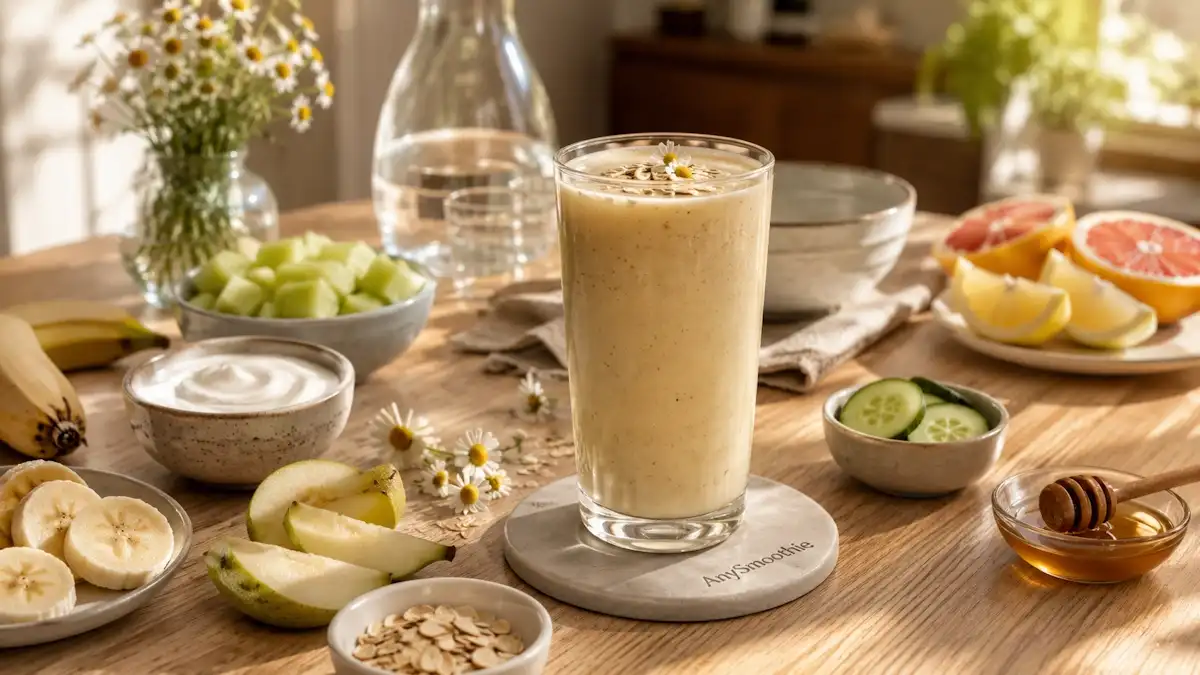
Heartburn can show up as a hot burn behind the breastbone, a sour taste in the throat, or a heavy feeling after eating. A smoothie sounds gentle, yet it can still push those same buttons.
The reason is usually a mix of acid, sugar, fat, volume, temperature, and timing. If a “healthy” drink leaves you uncomfortable, the issue is often the blend, not the idea of smoothies itself. A good starting point is understanding what part of the recipe is doing the damage.
Why do smoothies cause heartburn? The main reasons
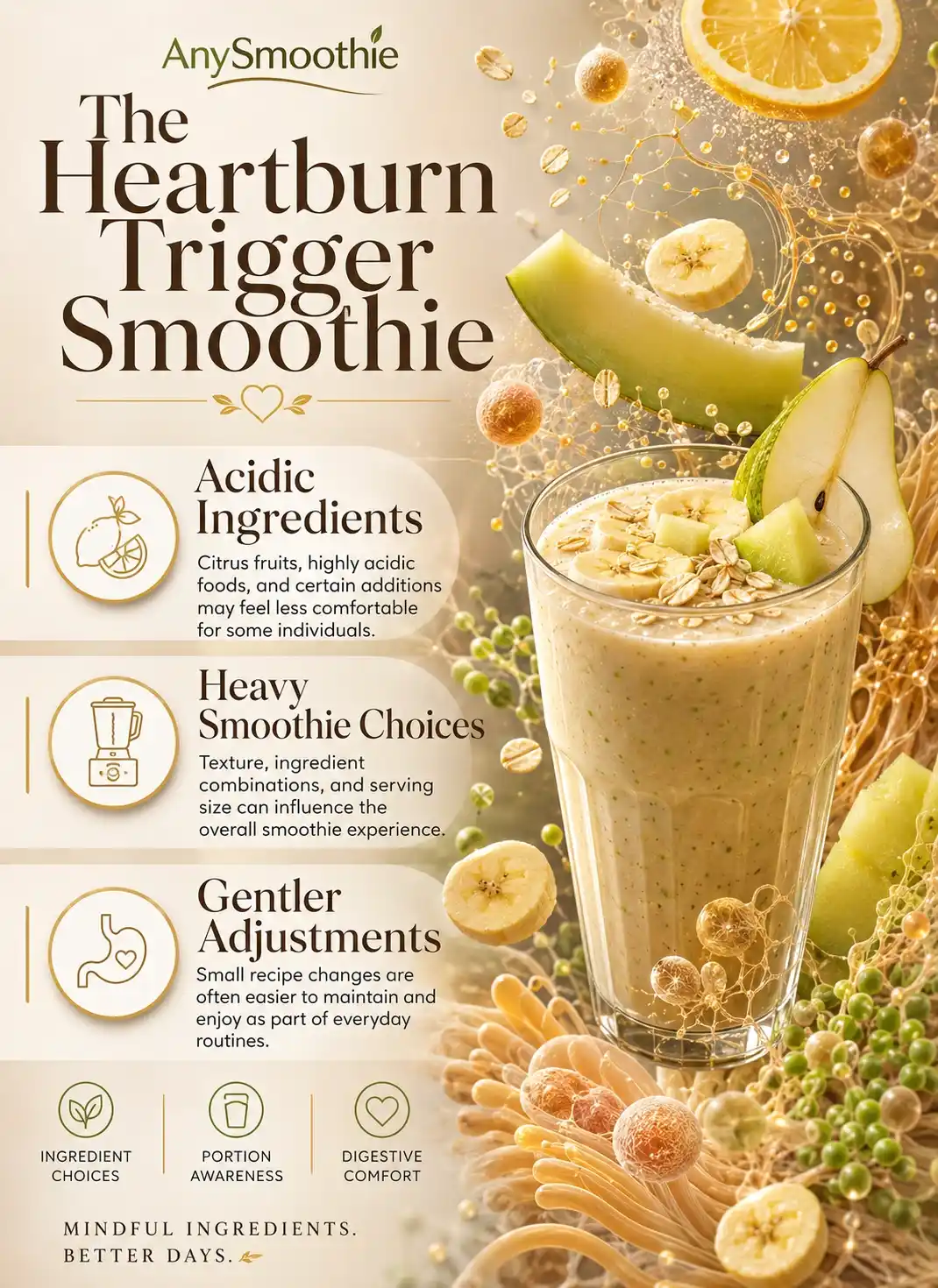
Smoothies can trigger reflux when they stack several stressors at once. Acidic fruit can irritate a sensitive esophagus. A large, fast-drunk smoothie can stretch the stomach and raise pressure. Added sugar and fat can slow digestion, which keeps the drink in the stomach longer.
A smoothie can feel light in your hand and heavy in your stomach.
That pressure matters because reflux usually happens when stomach contents move upward. When the stomach is crowded, the lower esophageal sphincter has a harder job holding things in place.
For people who want a simple comparison, GERD-friendly smoothie ideas show how small ingredient changes can make a big difference.
Acidic fruit can be a big trigger
Citrus, pineapple, and tart berries can lower the pH of a smoothie. That sharper mix can sting if your throat or stomach is already sensitive.
Acid does not bother everyone the same way. Some people handle orange or pineapple with no issue. Others feel it fast, especially on an empty stomach.
A full glass can put pressure on the stomach
Smoothies are easy to drink quickly. That means a lot of liquid can reach the stomach in a short time. Extra volume can raise pressure, and that makes reflux more likely.
The effect is stronger when you drink a smoothie after a large meal. The stomach is already busy, so one more heavy load can tip the balance.
Sugar, fat, and thick add-ins can slow digestion
Honey, syrups, sweetened yogurt, nut butters, coconut cream, and full-fat dairy can all slow the pace of digestion. Thick blends also sit longer in the stomach. When that happens, reflux has more time to show up.
The same idea applies to protein powders and heavy bases. A smoothie can go from easy to digest to slow and dense very quickly.
The smoothie ingredients most likely to trigger heartburn
If you want to spot your own pattern, start with the usual troublemakers. Acid reflux safe fruits for smoothies can help you swap out the fruit that hits you hardest.
Citrus, pineapple, and tart berries
Orange, grapefruit, lemon, lime, pineapple, and tart berries are common acid-heavy choices. They can make a smoothie taste bright, but they can also leave a burn in people who react to acid.
Frozen fruit does not change the acid level. It only changes the texture. If citrus bothers you, start with banana, melon, pear, or cucumber instead.
Dairy, protein powders, and thick bases
Whole milk, ice cream-style yogurt, whey-based powders, and very thick smoothie bases can feel heavy. Fat slows stomach emptying, and a dense blend can linger longer than you expect.
That does not mean dairy is off-limits for everyone. It means the dose matters. A small amount of yogurt may feel fine, while a large, rich blend may not.
Sweeteners, chocolate, mint, and caffeine
Honey overload, flavored syrups, cocoa, peppermint, coffee, and matcha can be rough for some people. These ingredients can affect stomach comfort, acid control, or the lower esophageal sphincter.
The reaction is often dose-dependent. A little cocoa may be fine, but a chocolate-heavy smoothie can hit harder, especially with nut butter and sweetened milk.
3 Smoothies that commonly trigger heartburn
Here’s a quick side-by-side look at three common blends that can cause trouble.
| Smoothie type | Common ingredients | Why it may trigger heartburn | Who may be most sensitive | Gentler swap |
|---|---|---|---|---|
| Citrus green smoothie | Spinach, orange, lemon, pineapple | High acid plus a large liquid volume | People with reflux or an empty stomach | Use banana, cucumber, or pear |
| Chocolate peanut butter smoothie | Cocoa, peanut butter, sweetener, milk | Fat, sugar, and heavy texture slow digestion | People who feel full fast or reflux after rich foods | Use a smaller scoop of nut butter and skip cocoa |
| Tropical pineapple smoothie | Pineapple, mango, yogurt, juice | Acid, sugar, and dairy can stack up | People sensitive to acid or full-fat dairy | Use melon, oat milk, and a smaller portion |
A citrus-heavy smoothie can feel especially sharp first thing in the morning. A chocolate peanut butter blend tends to sit heavier, which can raise pressure in the stomach. A tropical smoothie with pineapple and yogurt often combines several triggers at once.
How to make a smoothie that is easier on reflux
Start with gentler fruit and a lighter base. Bananas, pears, melon, oats, spinach, and cucumber usually keep acidity lower. If you want a simple reference, heartburn-friendly smoothie ingredients can help you build a calmer mix without making it boring.
Balancing tart fruit with low-acid ingredients helps too. A small piece of pineapple can work better when it sits beside banana or oats instead of orange juice. Test one change at a time so you can spot your own trigger.
Choose gentler fruit and keep acid in check
Keep the bright fruit, but use it with care. A handful of blueberries may be easier than a whole cup of citrus. Water, oat milk, or almond milk can keep the texture smooth without adding much acid.
For a medical reference on reflux disease, see functional food in relation to gastroesophageal reflux.
Watch the size, speed, and timing of your smoothie
A smaller serving often feels better than a huge one. Sip slowly instead of chugging, and avoid drinking right before you lie down. Timing matters as much as ingredients for many people.
Conclusion
Smoothies cause heartburn when they combine acid, sugar, fat, and volume in one glass. That mix can raise stomach pressure and make reflux more likely.
The fix is usually simple. Change the fruit, lighten the base, shrink the portion, and notice which ingredients hit you hardest.
If you’re looking for a gentler option, this banana smoothie for acid reflux shows how simple ingredient swaps can create a lower-acid blend that feels easier on sensitive stomachs. Once you spot your pattern, a smoothie can go back to feeling easy instead of irritating.
🛡️ Safety Notes & Dietary Interactions
- Trigger Awareness: Personal Tolerance: Heartburn triggers vary widely between individuals. A smoothie ingredient that feels comfortable for one person may cause symptoms for another, making personal observation especially important.
- Portion Size: Volume Matters: Even gentle ingredients can contribute to discomfort when consumed in very large amounts. Smaller smoothies often feel easier to tolerate than oversized servings consumed quickly.
- Hidden Ingredients: Label Check: Store-bought smoothies, flavored yogurts, and protein products may contain added sugars, acids, caffeine, or other ingredients that influence digestive comfort and reflux sensitivity.
- Persistent Symptoms: Medical Evaluation: Frequent heartburn, worsening symptoms, or ongoing digestive discomfort should be discussed with a qualified healthcare professional to identify potential underlying causes and appropriate management strategies.
FAQ
Why can a smoothie cause heartburn if it is considered healthy?
A smoothie may still trigger heartburn when it combines large portions, acidic fruit, high-fat ingredients, excess sugar, or heavy add-ins. Healthfulness and digestive tolerance are not always the same thing. The overall ingredient combination often matters more than whether individual ingredients are considered healthy.
Which smoothie ingredients most commonly trigger heartburn?
Common triggers include citrus fruits, pineapple, chocolate, peppermint, coffee, sweetened syrups, large amounts of nut butter, and full-fat dairy products. These ingredients may increase acidity, slow digestion, or contribute to stomach pressure that makes reflux symptoms more likely for sensitive individuals.
Are fruit smoothies always bad for acid reflux?
No. Many people tolerate fruit smoothies well when they use lower-acid fruits such as bananas, pears, melons, or peaches. Problems tend to occur when highly acidic fruits, excessive sweetness, large portions, or rich ingredients are combined in the same smoothie.
Does drinking a smoothie too quickly make heartburn worse?
For some people, yes. Drinking a large smoothie rapidly can increase stomach volume and pressure in a short period of time. Slower sipping allows the digestive system more time to adjust and may reduce the likelihood of reflux-related discomfort.
How can I make a smoothie less likely to trigger heartburn?
Choose low-acid fruits, use moderate portions, limit heavy fats and sweeteners, and avoid known personal triggers. Drinking the smoothie slowly and avoiding large servings close to bedtime may also help create a more comfortable digestive experience for many individuals.

Medical Disclaimer: AnySmoothie content is for educational purposes only and is not a substitute for professional medical advice. Consult a healthcare provider for personalized guidance. See our full Disclaimer & Terms of Use. AI Transparency: AnySmoothie may use AI to support content development. All content undergoes human editorial review for accuracy, clarity, and editorial quality. See our full AI Transparency.