
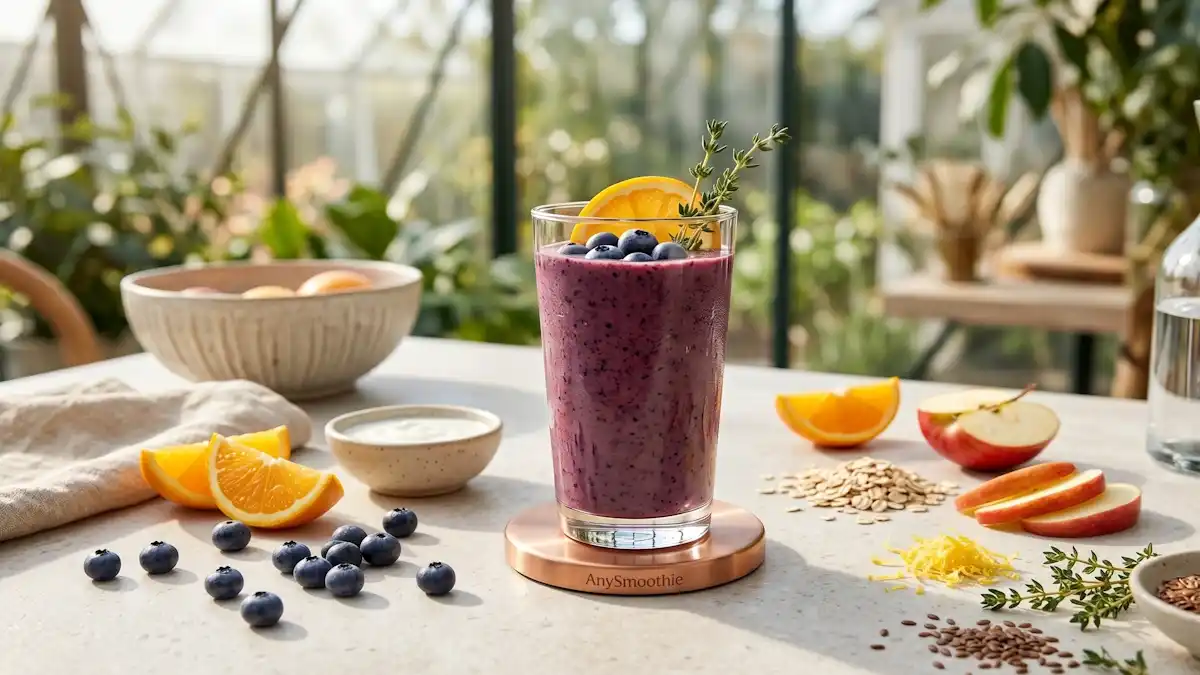
Your gut does a lot of quiet work every day, and intestinal alkaline phosphatase is part of that system. It helps the intestine handle food debris, bacterial byproducts, and the stress of a meal in a way that supports normal balance.
That is why intestinal alkaline phosphatase smoothies have started showing up in wellness and biohacking circles. People want a food-first routine that feels practical, simple, and easy to repeat. This article is for anyone who wants that approach without turning breakfast into a science project.
What intestinal alkaline phosphatase does in the body
Intestinal alkaline phosphatase, often called IAP, is a brush-border enzyme in the small intestine. A PMC review on intestinal alkaline phosphatase gives a clear summary of its role at the gut lining. In plain language, it helps the intestine respond to what comes through after a meal.
It acts near the gut wall, where it can interact with dietary fats and bacterial fragments. It also helps the body handle signals that come from food and microbes. That makes it interesting to people who care about digestion, gut comfort, and steady nutrient handling.
How it supports the gut barrier and local balance
The gut barrier is the thin line between the contents of the intestine and the rest of the body. When that barrier is calm and intact, digestion tends to feel smoother. IAP is part of that local balance because it helps the lining deal with irritating signals before they build up.
A JCI Insight article on barrier protection connects IAP activity with support for the gut lining. The takeaway is simple, the enzyme is part of the intestine’s normal defense system.
Why food quality can influence this pathway
Meal quality matters because the gut responds to patterns, not single bites. Fiber, plant compounds, and healthy fats tend to fit a calmer digestive rhythm. Highly processed foods, on the other hand, often push the opposite direction.
A recent review on homeostasis and immune signaling fits that picture well. Foods rich in fiber and polyphenols can support normal signaling in the intestine, while ultra-processed choices often lack that balance. That is where smoothies can help, if you build them with the right base.
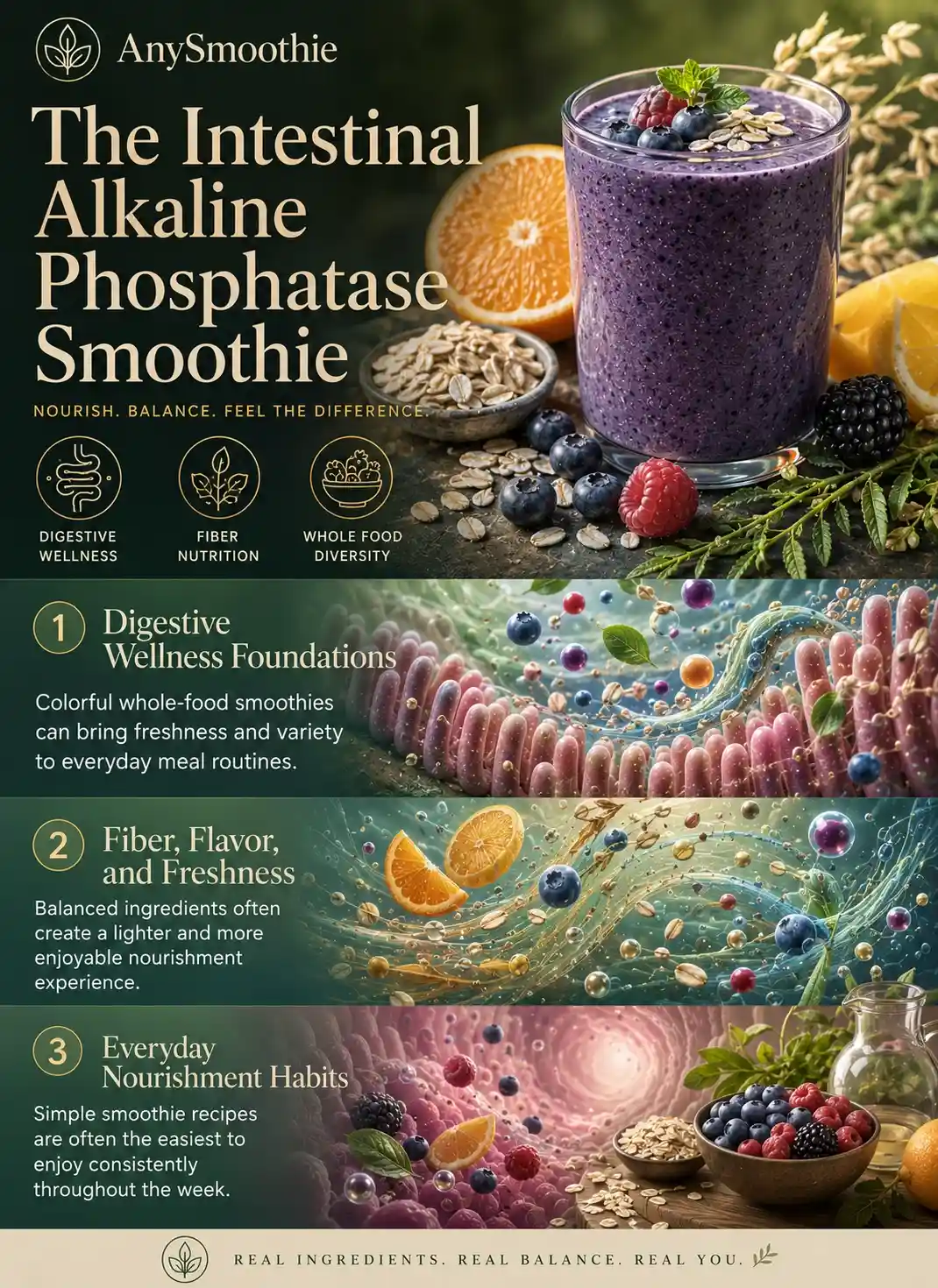
What makes a smoothie more supportive for this enzyme
A good smoothie for gut support does not need a long ingredient list. It needs balance. Fiber slows the hit of sugar, plant compounds add color and depth, and a little fat keeps the drink satisfying.
Here is a quick side-by-side look at useful ingredients.
| Smoothie ingredient | What it does | Best use cases | Texture or taste | Cautions |
|---|---|---|---|---|
| Berries | Add polyphenols and natural sweetness | Morning blends, lighter snacks | Bright, tart, fresh | Can taste sharp without a creamy base |
| Ground flax or chia | Adds soluble fiber and thickness | Breakfast or post-workout | Thick, smooth, slightly earthy | Needs enough liquid |
| Avocado | Brings creaminess and monounsaturated fat | Filling morning smoothies | Mild, rich, soft | Too much can feel heavy for some people |
| Kefir or plain yogurt | Adds protein and a cultured base | Breakfast or recovery drinks | Tangy, creamy, easy to sip | Skip if dairy bothers you |
| Spinach or cucumber | Adds volume with a light taste | Green blends and lighter recipes | Fresh, clean, mild | Large raw portions can feel rough for some |
That mix works because it keeps the drink useful, not bloated with extras. A smoothie should help you feel settled, not overloaded.
Fiber, polyphenols, and healthy fats that work together
Soluble fiber is one of the easiest places to start. Oats, chia, and flax give a smoother texture while helping slow the sugar hit from fruit. Berries add a strong polyphenol profile without making the drink too sweet.
Healthy fats matter too. A quarter of an avocado, a spoon of flax, or a small amount of yogurt can make the smoothie feel more complete. The result is a blend that fits a gut-friendly routine better than a sugar-heavy shake.
Ingredients to limit if you want a calmer gut response
Some add-ins make a smoothie harder to digest. Large amounts of fruit juice can push the sugar load up fast. Very sweet protein powders, sugar alcohols, and artificial sweeteners can also feel rough for some people.
More is not always better with protein powder either. A huge scoop can turn a light smoothie into a heavy one. If your stomach is sensitive, start with one new ingredient at a time and keep the first version simple.
3 Intestinal Alkaline Phosphatase Smoothies
Berry Flax Smoothie for Polyphenol Support
Ingredients
- 1 cup unsweetened almond milk or water
- 1 cup mixed berries
- 1 tablespoon ground flaxseed
- 1/2 cup plain kefir or yogurt
- 1 teaspoon chia seeds
Blend until smooth, then let it sit for a minute so the flax thickens slightly. This mix brings color, fiber, and a bright taste that works well in a morning routine.
Estimated Nutrition per Serving
Estimated with unsweetened almond milk and plain low-fat kefir.
- Calories: ~285 kcal
- Protein: ~11 g
- Carbohydrates: ~39 g
- Fat: ~10 g
- Fiber: ~13 g
- Sugars: ~21 g
Green Avocado Smoothie for Healthy Fats and Fiber
Ingredients
- 1 cup water or coconut water
- 1/2 avocado
- 1 cup spinach
- 1/2 cucumber
- Juice of 1/2 lemon
- 1 tablespoon hemp seeds or ground flaxseed
Blend until creamy and add ice if you want it colder. The avocado softens the greens, while the cucumber keeps the flavor light enough for a first meal.
Estimated Nutrition per Serving
Estimated with plain water and hemp seeds.
- Calories: ~260 kcal
- Protein: ~8 g
- Carbohydrates: ~19 g
- Fat: ~20 g
- Fiber: ~11 g
- Sugars: ~4 g
Cucumber releases enough water that this blend can become surprisingly loose. Start with about half the liquid, blend the avocado completely, and add the remainder only if the texture needs it.
Kefir or Yogurt Smoothie for a Fermented Base
Ingredients
- 1 cup plain kefir or unsweetened yogurt
- 1/2 banana
- 1/2 cup berries or peach
- 1 tablespoon rolled oats
- Cinnamon, to taste
- Splash of water, as needed
Blend until smooth, then adjust thickness with a splash of water. If you want a dairy-free version, use unsweetened coconut yogurt and add water until it pours easily.
Estimated Nutrition per Serving
Estimated with plain low-fat kefir and mixed berries.
- Calories: ~280 kcal
- Protein: ~12 g
- Carbohydrates: ~48 g
- Fat: ~6 g
- Fiber: ~7 g
- Sugars: ~29 g
Kefir naturally produces a thinner, tangier result than Greek-style yogurt. If you switch between the two, adjust the water only after blending so you do not accidentally make the kefir version too runny.
A smoothie works best when it feels like food, not a project.
How to use these smoothies without overdoing it
Start with one smoothie a day, or even a few times a week. A 12 to 16 ounce serving is enough for most people. Consistency matters more than chasing the perfect recipe.
If a new ingredient bothers your stomach, remove it and test again later. Pair the smoothie with whole foods across the day, since one drink cannot do all the work on its own.
When to drink them for the easiest digestion
Breakfast is the most common choice because the gut is already waking up. A light snack works too, especially if you do not want a heavy meal. Some people also like these after a workout, when a cool drink feels easy to handle.
Small tweaks for different goals and food sensitivities
If you want more sweetness, add half a banana instead of juice. If you want less sugar, use cucumber, spinach, and lemon. For more richness, add avocado or yogurt. For a lighter feel, keep fat and fiber moderate until you know what sits well.
Conclusion
Intestinal alkaline phosphatase smoothies fit best as part of a steady food-first routine. They support the kind of daily pattern that gives the gut a calmer mix of fiber, color, fat, and gentle texture.
The strongest blends are usually the simplest ones. Start with one recipe, pay attention to how it feels, then adjust the fruit, fiber, or dairy to match your body.

Medical Disclaimer: AnySmoothie content is for educational purposes only and is not a substitute for professional medical advice. Consult a healthcare provider for personalized guidance. See our full Disclaimer & Terms of Use. AI Transparency: AnySmoothie may use AI to support content development. All content undergoes human editorial review for accuracy, clarity, and editorial quality. See our full AI Transparency.