
If your stomach reacts to too much fiber, acid, or sugar, a smoothie can help or hurt. The difference is formula. A well-built L-glutamine smoothie supports normal barrier function, tight junction integrity, and digestive resilience without turning breakfast into a gut stress test.
The gut lining renews fast, and that work takes fuel. L-glutamine is one of the main inputs for intestinal cells, so the goal here is simple, food-first blending that supports enterocyte health instead of overloading it. These l-glutamine smoothie formulations for gut barrier integrity focus on calm ingredients, steady texture, and easy digestion.
How L- Supports the Cells That Line Your Gut
Intestinal cells use glutamine as a preferred fuel during repair and turnover. A 2024 glutamine and gut permeability review looked at adult trials, and older mechanistic reviews point in the same direction, the amino acid matters when the lining is under strain.
When the barrier stays in good shape, fewer luminal irritants like LPS cross too easily. That keeps the gut wall doing its job without extra load.
Enterocyte Bioenergetics: L-Glutamine as Fuel for the Epithelium
Enterocytes line the small intestine, and they turn over quickly. Glutamine helps feed their mitochondria, supports ATP production, and gives the epithelium raw material for normal renewal.
That matters because the gut barrier is only as strong as its newest cells. When glutamine supply is adequate, the lining can keep up with repair work more smoothly. In plain terms, it helps the gut do maintenance without running on empty.
Tight Junction Proteins: Claudin, Occludin, and ZO-1
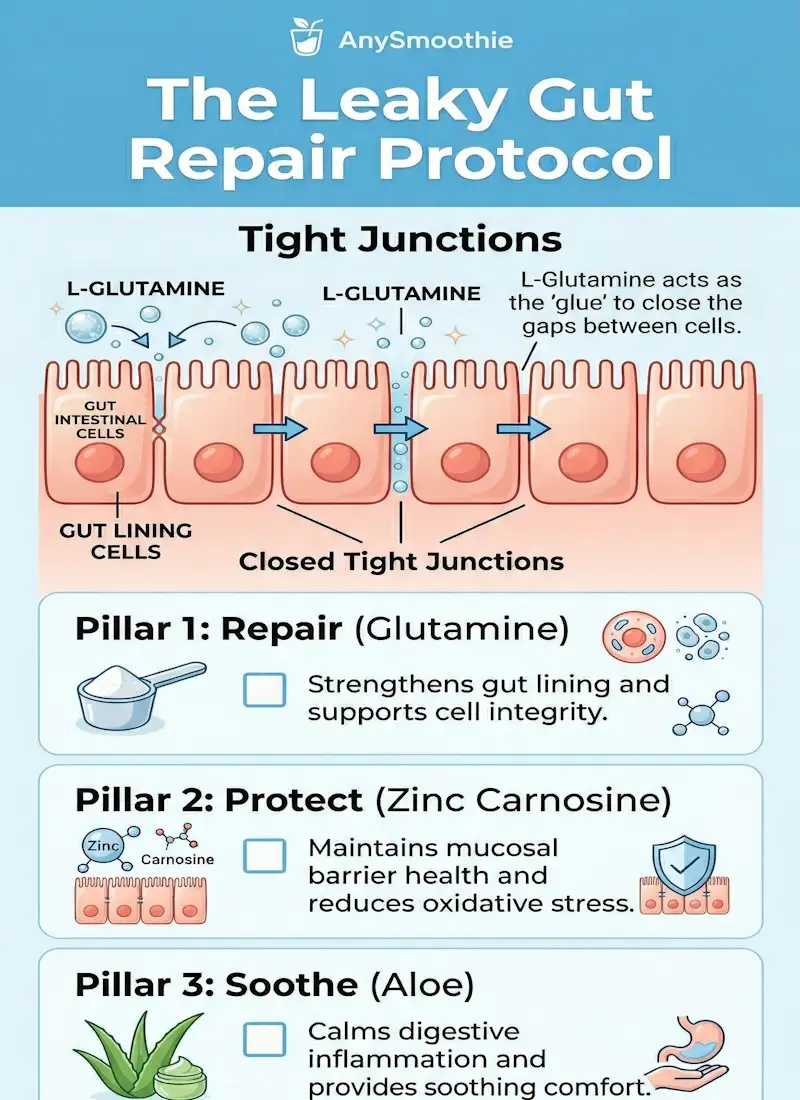
Tight junctions are the seals between adjacent intestinal cells. They depend on structural proteins such as claudin, occludin, and ZO-1. When those proteins stay organized, the barrier keeps its shape and function.
A tight junction protection review describes glutamine’s role in epithelial junction support. That is why smoothie ingredients should calm the gut, not add more irritation. Low acid, moderate fiber, and tolerable fats usually work better than a crowded blender bottle.
What Makes an Effective Gut-Support Smoothie Formula
A good gut-support smoothie feels light, not heavy. It should mix easily, digest cleanly, and avoid sugar spikes that make the drink feel more like dessert.
The best formula is the one your gut can process without effort.
Start with a simple base, then layer in one or two supportive ingredients. If you want better tolerance, keep the texture smooth, use modest sweetness, and avoid huge amounts of raw crucifers, nut butters, or high-FODMAP fruit.
Choosing the Right Base for Absorption and Comfort
Filtered water keeps the formula clean and neutral. Unsweetened coconut water adds mild sweetness and a little potassium. Kefir works well if you tolerate dairy and want a fermented base.
For dairy-free options, unsweetened almond milk or macadamia milk keeps the blend creamy without much residue. A colder drink also tends to feel easier on the stomach. The base changes both digestion speed and flavor, so pick the one you can drink regularly.
Pairing L-Glutamine with Ingredients That Support the Gut Lining
Avocado adds soft fat and a smooth mouthfeel. Chia thickens the drink and slows the pace of digestion. Cucumber keeps the blend light, while low-acid fruits such as blueberries or a small kiwi portion add flavor without much bite.
Collagen peptides also fit well because they raise protein density without a gritty texture. For a deeper look at epithelial support, the intestinal glutamine review explains how glutamine interacts with intestinal function and tight junction proteins.
A Quick Comparison of the Best Mucosal Barrier Substrates
Here is a simple way to compare the main ingredients people use for barrier-focused blends.
| Substrate | Physiological Mechanism | Cellular Influx Transport | Best Smoothie Pairing | Target Junction Component |
|---|---|---|---|---|
| L-Glutamine, free-form amino acid | Primary fuel for enterocyte proliferation and tight junction assembly, and the absolute rate-limiting fuel source for enterocyte structural retention | Sodium-linked amino acid transporters in the small intestine | Water, coconut water, kefir, or light fruit | Tight junction proteins |
| Zinc carnosine | Stabilizes epithelial membranes and supports mucosal repair signaling | Peptide-linked uptake and zinc handling | Cucumber, yogurt, or berry blends | Mucus layer |
| Hydrolyzed collagen peptides | Supplies glycine and proline for matrix and basement repair | Small peptide transporters | Avocado, berries, or dairy-free creamy bases | Basement membrane |
The table shows why these ingredients are not interchangeable. Zinc carnosine and collagen peptides have useful roles, but glutamine is the anchor in a barrier-focused smoothie because enterocytes burn through it fast when support is needed. If you want to think in systems terms, glutamine is the fuel, while the others help with structure.
3 Practical L-Glutamine Smoothie Formulations You Can Actually Make
These are simple enough for daily use. They are built for tolerance first, because a good gut smoothie should feel easy from the first sip.
Mucosal-Armor: Pure L-Glutamine, Bone Broth Collagen, and Avocado Blend
Ingredients
- 8–10 ounces (240–300 ml) filtered water
- L-glutamine according to the product’s labeled serving or clinician guidance
- 1 scoop (about 10 g) collagen peptides
- ½ avocado
- ½ cup ice
Add all ingredients to the blender and blend until smooth and creamy.
Glutamine is an amino acid used as a metabolic fuel by intestinal cells, while collagen peptides provide glycine, proline, and other amino acids. Avocado contributes fiber and unsaturated fats. These ingredients can complement a nutrient-rich diet, but the smoothie should not be presented as directly repairing or sealing the intestinal barrier.
Estimated Nutrition per Serving
- Calories: ~250 kcal
- Protein: ~13 g
- Carbohydrates: ~13 g
- Fat: ~18 g
- Fiber: ~7 g
- Sugars: ~1 g
Green Repair Blend with Cucumber, Kiwi, and Zinc Carnosine Support
Ingredients
- ½ medium cucumber, chopped (about 100 g)
- ½ kiwi, peeled
- L-glutamine according to the product’s labeled serving or clinician guidance
- 1 cup unsweetened coconut water
- ½ cup baby spinach, optional
- Zinc carnosine according to the product’s labeled serving or clinician guidance, if used separately
Add the cucumber, kiwi, L-glutamine, coconut water, and spinach to the blender. Blend until completely smooth. If using zinc carnosine, follow the product directions rather than blending an unspecified amount into the recipe.
This version is lighter and fresher. Cucumber and coconut water contribute fluid, while kiwi provides vitamin C and spinach adds folate and carotenoids. Zinc carnosine has been studied in gastrointestinal contexts, but it should not be presented as a guaranteed intestinal-repair treatment.
Estimated Nutrition per Serving
- Calories: ~80 kcal
- Protein: ~2 g
- Carbohydrates: ~17 g
- Fat: ~1 g
- Fiber: ~3 g
- Sugars: ~11 g
Berry Calm Smoothie with L-Glutamine, Yogurt, and Chia
Ingredients
- ½ cup plain Greek yogurt
- ½ cup blueberries
- L-glutamine according to the product’s labeled serving or clinician guidance
- 1 teaspoon chia seeds
- ½ cup cold water, or as needed
Add all ingredients to the blender and blend until smooth. Adjust the water at the end if you prefer a thinner consistency.
This smoothie is thicker and more filling. Blueberries provide anthocyanins and other polyphenols, Greek yogurt contributes protein and may provide live cultures, and chia adds fiber and ALA omega-3 fatty acids.
Estimated Nutrition per Serving
- Calories: ~150 kcal
- Protein: ~13 g
- Carbohydrates: ~19 g
- Fat: ~3 g
- Fiber: ~4 g
- Sugars: ~12 g
If I were making this ahead, I’d add a little extra water before refrigerating it. Chia continues absorbing liquid as it sits, so the smoothie becomes noticeably thicker after even 20–30 minutes.
How to Use These Smoothies Without Overdoing It
Start with a small serving, especially if you have a sensitive gut. Half a smoothie is enough for the first few tries, and consistency matters more than loading every blend with extras. Track how you feel over the next few hours, then adjust the base or fruit list.
Morning or mid-day usually works best, but timing is less important than tolerance. If a blend feels heavy, simplify it. If it feels too thin, add avocado, chia, or more yogurt next time.
People with medical conditions, pregnancy, or food sensitivities should check with a qualified clinician before changing supplements or diet routines. That matters even when the formula looks harmless on paper.
Conclusion
A good gut smoothie does not need a long ingredient list. It needs the right fuel, a calm base, and enough texture to support digestion instead of fighting it.
That is why L-glutamine sits at the center of barrier-focused blends. It supports enterocyte fueling, while the rest of the formula helps the drink stay gentle and useful.
Start with one simple recipe, then adjust for tolerance and goals. The best version is the one your gut can handle well, day after day.
🛡️ Safety Notes & Contraindications
🛡️ Check for Mind and Mood Jitters: L-Glutamine can easily cross into your brain and turn into glutamate, a highly stimulating messenger. If you prone to high anxiety, panic spikes, or severe insomnia, large isolated doses of glutamine can over-excite your nervous system, causing restlessness or physical racing thoughts.
🛡️ Watch the Liver and Gut Gases: Breaking down pure amino acids creates ammonia, which a healthy liver clears easily. However, if you manage liver fatigue or have active Hydrogen-Sulfide SIBO, these amino acids can overwhelm your filters or feed dislocated gut bacteria, triggering immediate sulfur-scented bloating and irritation.
🛡️ Never Skip the Calcium Shield: Blending raw greens like spinach daily without a calcium source allows free oxalates to easily flood your bloodstream and saturate your kidneys, creating a high risk for painful kidney stones. Always add Greek yogurt, kefir, or calcium-fortified plant milks to trap them in the gut.
🛡️ Don’t Chug Your Smoothie: Gulping a dense, nutrient-heavy drink too fast shocks your stomach and stretches the walls. This forces your body to divert all its blood flow to your digestive tract, paradoxically slowing down your system and making you feel heavy or sluggish. Sip it slowly over 10 minutes.
FAQ
Why do the cells in your gut wall prefer L-glutamine over glucose for energy?
Unlike most cells in your body that run primarily on glucose, the cells lining your small intestine (enterocytes) prefer free L-glutamine as their primary fuel source. When you consume glutamine, these cells pull it in rapidly through specialized sodium-linked transporters. Once inside, the glutamine goes straight into their mitochondria, where it undergoes a process called glutaminolysis to generate a massive amount of cellular energy (ATP). Because your gut lining renews itself incredibly fast, this steady energy supply is exactly what these cells need to fuel constant cell turnover and keep the gut wall from running on empty.
How do proteins like claudin, occludin, and ZO-1 physically protect your gut lining?
The spaces between the cells in your gut wall are held together by a microscopic sealing system called tight junctions. Think of transmembrane proteins like claudin and occludin as the physical locks that reach across the gap to velcro the cells tightly together. Meanwhile, an internal anchoring protein called Zonula Occludens-1 (ZO-1) acts like a steel bracket, tethering this lock directly to the cell’s internal skeleton. Providing your body with steady amino acids like L-glutamine sparks cellular signaling pathways (like MAPK) that tell your body to build and correctly align these proteins, keeping your gut barrier tight and secure.
Why do high-sugar or overly thick smoothies cause sudden bloating and digestive stress?
When a smoothie is packed with massive amounts of fruit sugars, high-FODMAP ingredients, or heavy sugar alcohols, it creates a highly concentrated mix in your upper digestive tract. Because this mixture is much denser than your blood serum, it creates an osmotic pull, literally dragging water out of your circulation and forcing it into the intestinal cavity to dilute the sugar. This sudden rush of water physically stretches the delicate epithelial cells and distorts the tight junctions, leading to immediate bloating, gas, and a loose, unpredictable transit. Keeping your blends light and low-sugar completely avoids this fluid overload.
How does Zinc Carnosine work alongside L-glutamine to patch up the gut lining?
While L-glutamine works as the internal fuel that feeds cell repair, Zinc Carnosine acts like a targeted, external protective patch. This specific chelated compound is unique because it dissolves very slowly in the gut, allowing it to stick directly to any raw, sensitive, or worn-down patches along your intestinal wall. Once attached, it triggers the local secretion of a repair compound called TGF-beta, which kickstarts localized healing and strengthens the protective mucus layer that shields your gut cells from daily irritation.
Why does your gut infrastructure need short-chain peptides like hydrolyzed collagen?
A strong gut wall depends on more than just the surface cells; it relies heavily on the underlying mesh support structure known as the basement membrane. Hydrolyzed collagen peptides are incredibly useful here because they have already been broken down into tiny, low-molecular-weight pairs of amino acids (like glycine and proline). Because these clusters are so small, they slide through your gut wall instantly using fast-track PEPT1 transporters. This delivers the raw building blocks straight to the foundation of your gut, helping to rebuild the deep structural scaffolding that keeps your entire digestive lining resilient.

Medical Disclaimer: AnySmoothie content is for educational purposes only and is not a substitute for professional medical advice. Consult a healthcare provider for personalized guidance. See our full Disclaimer & Terms of Use. AI Transparency: AnySmoothie may use AI to support content development. All content undergoes human editorial review for accuracy, clarity, and editorial quality. See our full AI Transparency.