
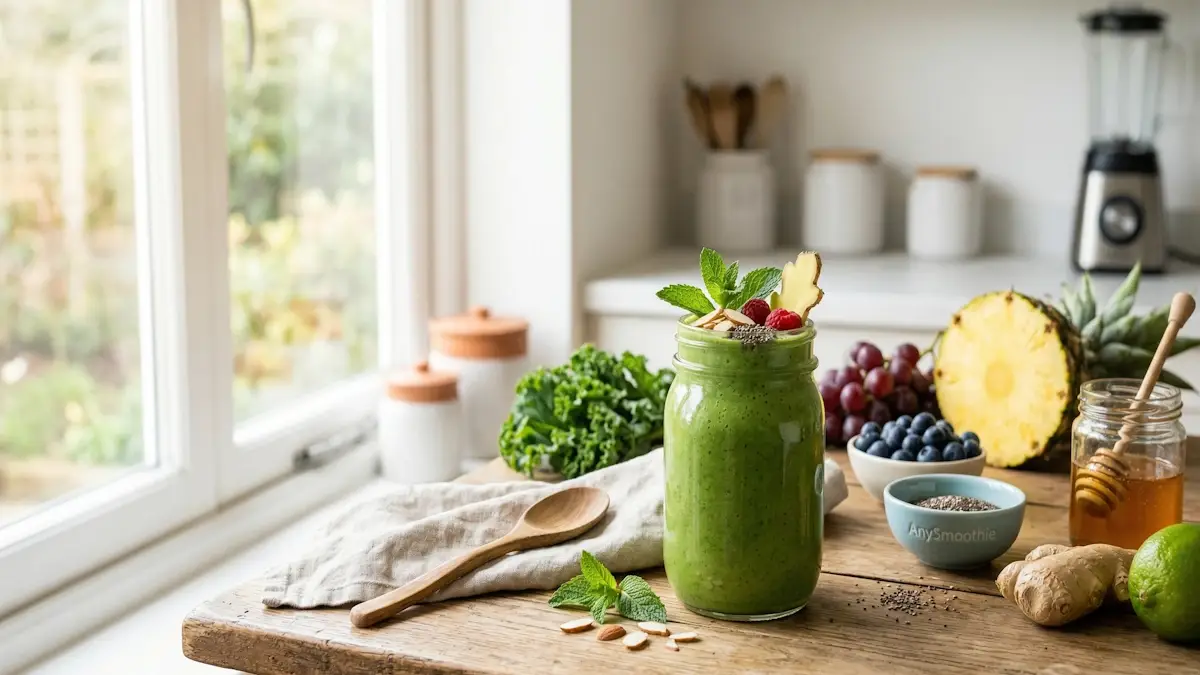
You grab that morning coffee for a fast energy hit. But soon the jitters kick in, or worse, you crash hard by mid-morning.
Morning smoothies for energy without caffeine fix that. These blends pack real foods for steady power, sharper focus, and no afternoon slump.
You’ll learn the science behind their edge over caffeine, plus powerhouse ingredients like beets, maca, and berries. Next, dive into five simple recipes for your energized start.
Why Natural Energy Beats the Caffeine Spike-and-Crash Cycle
Caffeine gives you a quick buzz by blocking adenosine, your brain’s sleep signal. It works fast. However, that leads to jitters, then a hard crash as levels drop. Morning smoothies for energy without caffeine avoid this rollercoaster. They fuel you through real nutrients that build ATP, your cells’ energy packets, for smooth, lasting power all day.
Consider the differences side by side. This table breaks down coffee versus nutrient-packed smoothies.
| Criteria | Coffee/Caffeine | Nutrient-Dense Smoothies |
|---|---|---|
| Energy Mechanism | Blocks adenosine receptors for quick alert | Boosts ATP production from food breakdown |
| Peak Duration | 30-60 minutes, sharp and short | 4-6 hours, steady release |
| Crash Risk | High; rebound fatigue common | Low; no withdrawal or drop |
| Long-term Adrenal Impact | Strains adrenals, risks burnout over time | Supports adrenals for sustained vitality |
Smoothies win with a cleaner profile. They promote longevity without taxing your system. Because they use food-based energy, you stay sharp without the edge.
Now, let’s look at key players like B-vitamins and magnesium. These turn your smoothie into a steady energy machine.
The Role of B-Vitamins and Magnesium in Cellular Energy
Your body makes ATP from food carbs, fats, and proteins. B-vitamins like B6 and B12 act as helpers. They spark reactions that pack energy into ATP molecules. Magnesium steps in next. It unlocks ATP for use in muscles and brain, all without spiking stress hormones.
Deficiencies hit hard. Low B-vitamins or magnesium often mean constant fatigue. A review from NIH researchers links them to low energy and poor focus. Most adults need 1.3-1.7 mg B6 daily and 310-420 mg magnesium. Smoothies deliver both easily.
Add these smoothie stars for a boost:
- B-vitamin sources: Spinach packs B6; bananas offer B6 and B12; avocados bring B5 and B6.
- Magnesium sources: Leafy greens like kale; nuts such as almonds; seeds like chia or pumpkin.
These choices give no-caffeine power. You get alert mornings that last. Next, we’ll explore beets, maca, and more in your recipes. They build on this foundation for peak performance.
Top Caffeine-Free Ingredients for Immediate Morning Alertness
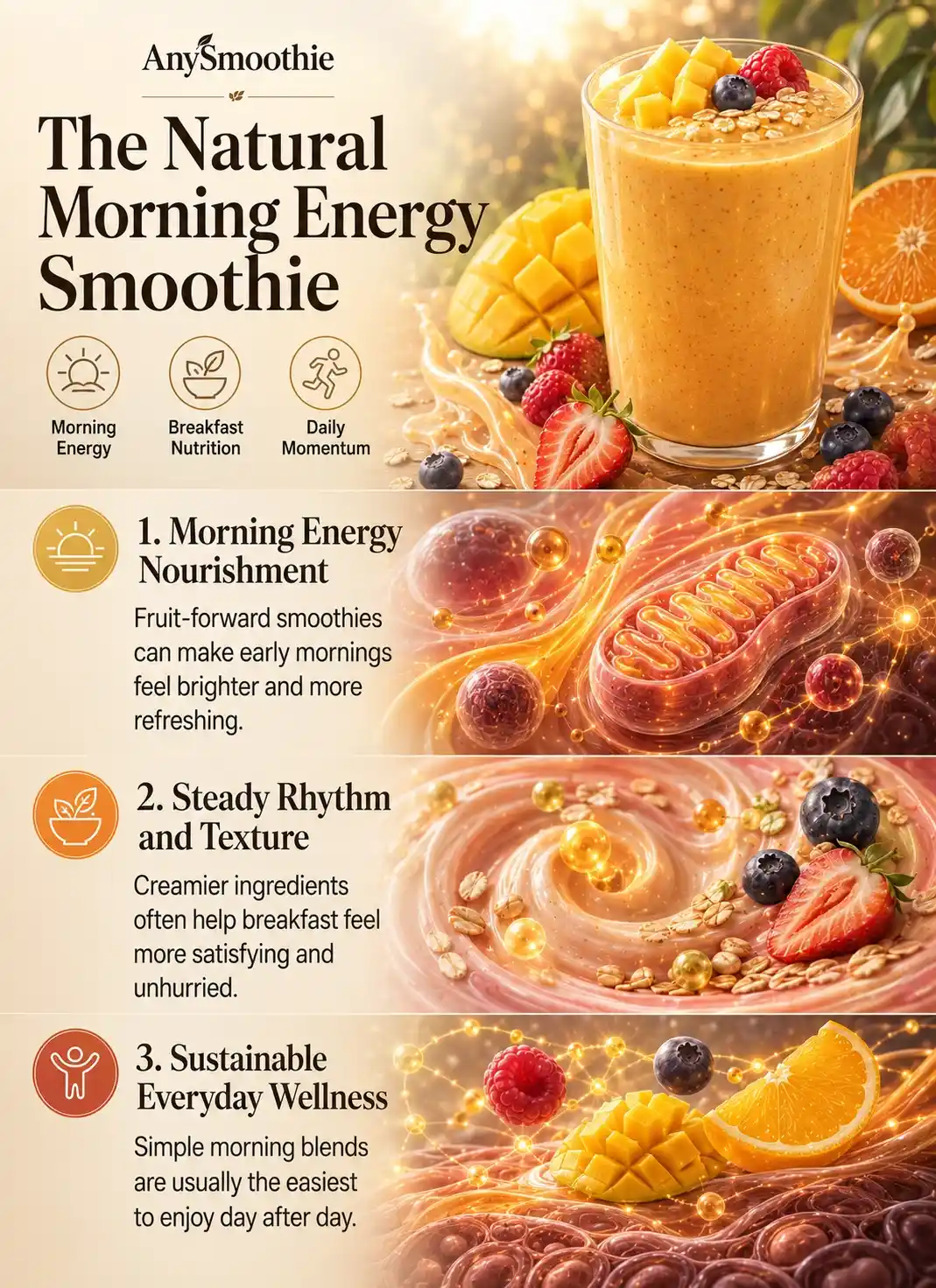
You want sharp focus right after waking, without coffee’s edge. Morning smoothies for energy without caffeine shine here. They feature ingredients like beets that kickstart alertness through smart biology. Beets lead the pack by ramping up oxygen flow. Others, such as maca and low-glycemic fruits, follow suit for steady stamina. These picks build on B-vitamins and magnesium. They deliver quick wins for your brain and body. Let’s start with beets.
Beets and Nitric Oxide: Increasing Oxygen Flow to the Brain
Beets pack nitrates that your body turns into nitric oxide. Bacteria in your mouth start the change. Then, in your gut and blood, nitrates become nitrites. Finally, they form nitric oxide. This gas relaxes and widens blood vessels. More oxygen rushes to your brain and muscles as a result.
Focus sharpens fast because brain cells get fueled better. You notice it during workouts; endurance jumps without fatigue. Or at work, tasks feel clearer from the start.
Prep beets simply for smoothies. Grate raw beets for max nitrates; they retain more this way. Cooked beets work too, though nitrates dip a bit. Fresh juice blends easiest. Aim for one small beet per serving.
Pair beets with fruits like apples or berries. The sweetness cuts earthiness. Pineapple adds enzymes for digestion. Nutrition perks include folate for mood, betalains as antioxidants, and potassium for hydration. One cup gives 6% daily folate and fights inflammation.
Add beets to your routine. You’ll power through mornings smoothly.
Managing Morning Cortisol Levels Without Coffee
High cortisol spikes your mornings. Coffee often worsens it by revving your stress response. Morning smoothies for energy without caffeine tame this hormone naturally. They use adaptogens to build resilience, so you start calm yet alert. No jitters, just steady focus. Cortisol regulates energy and mood. When balanced, you avoid fatigue and anxiety. These ingredients lower it gently while boosting stamina. Let’s explore two stars: maca and rhodiola.
Using Maca Root and Rhodiola for Stimulant-Free Stamina
Maca root acts as an adaptogen. It balances hormones and boosts endurance. You feel stronger during workouts or busy days. Rhodiola fights fatigue and curbs stress. It sharpens mental clarity too. Both lower cortisol over time. They raise your body’s resilience against daily pressures.
Studies show real results. For example, Rhodiola eases life-stress symptoms, cutting fatigue without side effects. Maca supports stress handling. You get energy minus jitters.
Add 1 teaspoon of each to smoothies. Maca brings a nutty taste; rhodiola stays mild. Blend with banana, spinach, and almond milk. This mix powers our upcoming maca-rhodiola stamina smoothie. Start small to check tolerance. Your adrenals thank you with even energy all morning.
Low-Glycemic Fruits That Provide Steady Glucose Fuel
Morning smoothies for energy without caffeine need smart carbs. High-sugar fruits spike your blood sugar fast. Then you crash. Low-glycemic fruits fix that. They release glucose slowly for even power. Berries top the list. Strawberries, blueberries, and blackberries score under 40 on the glycemic index. Cherries and grapefruit join them. Apples and pears work well too. Fiber slows sugar absorption. You stay full and focused.
These fruits pair perfect with beets or maca from earlier sections. No wild swings in energy. Instead, steady fuel powers your day. Add a handful to any blend. Your body thanks you with calm alertness.
Hydration and Electrolytes: The Real Secret to Morning Focus
Sleep dries you out overnight. You lose fluids through breath and sweat. Dehydration fogs your brain fast. Thoughts slow. Focus fades. Electrolytes restore clarity quick.
Potassium and sodium lead the charge. They fire nerve signals sharp. Plus, they shuttle energy to cells. Coconut water packs both naturally. One cup gives 600 mg potassium and some sodium. Bananas add more potassium, about 420 mg each. Spinach brings extra with magnesium for nerve health.
Mornings demand this refill most. Your body runs low after eight hours asleep. Skip it, and brain fog lingers. Use coconut water as your smoothie base. Toss in banana and spinach. You wake sharp. No coffee needed. Blend these now. Feel the difference by noon.
5 Best Morning Smoothies for Energy Without Caffeine
You’ve got the science on B-vitamins, beets, adaptogens, low-GI fruits, and electrolytes. Now put them to work. These morning smoothies for energy without caffeine take just five minutes to blend. They deliver steady power from whole foods. No jitters or crashes. Pick one each day, or rotate for variety. Start with fresh ingredients for best taste and boost. Each recipe serves one and uses a standard blender.
Beet Blast Oxygen Booster
Ingredients
- 1 small beet, peeled and chopped
- 1 medium banana
- 1 cup spinach
- 1 cup unsweetened coconut water
- 1 teaspoon maca powder
- Pinch of fresh ginger
Pour the coconut water into the blender first. Add the beet, banana, spinach, maca, and ginger. Blend on high for 45–60 seconds until smooth. Add ice if desired.
Beets provide dietary nitrates that can be converted through the nitrate–nitrite–nitric oxide pathway, supporting normal vascular function and blood flow. Coconut water contributes potassium, while banana supplies carbohydrates and additional potassium. Research has examined beetroot-derived nitrate and nitric oxide responses in healthy adults. Maca has also been studied for several aspects of physical performance, but this smoothie should not be expected to produce immediate mental clarity or guaranteed stamina.
Estimated Nutrition per Serving
- Calories: ~240 kcal
- Protein: ~6 g
- Carbohydrates: ~55 g
- Fat: ~1 g
- Fiber: ~9 g
- Sugars: ~31 g
If beet flavor is new to you, I’d start with half a small beet rather than trying to mask a full one with extra fruit. You can increase it later without unnecessarily making the smoothie sweeter.
Maca Rhodiola Stress Buster
Ingredients
- 1 cup unsweetened almond milk
- ½ avocado
- ½ cup mixed berries
- 1 teaspoon maca powder
- Rhodiola supplement according to the product’s labeled serving or clinician guidance
- 1 tablespoon chia seeds
Add the almond milk to the blender. Add the avocado, berries, maca, rhodiola, and chia. Let the chia hydrate briefly, then blend for 30–45 seconds until velvety.
Avocado contributes fiber and unsaturated fats, berries provide anthocyanins and other polyphenols, and chia supplies fiber and ALA omega-3 fatty acids. Rhodiola has been studied in relation to stress and fatigue, but supplement preparations vary and the smoothie should not be described as directly lowering cortisol or giving the adrenal glands a “break.” It can still be a substantial option for busy mornings.
Estimated Nutrition per Serving
- Calories: ~310 kcal
- Protein: ~7 g
- Carbohydrates: ~27 g
- Fat: ~22 g
- Fiber: ~14 g
- Sugars: ~10 g
Berry Steady Energy Glow
Ingredients
- 1 cup mixed berries, fresh or frozen
- 1 medium green apple, cored and chopped
- 1 cup spinach
- ½ cup plain Greek yogurt
- Juice of ½ lemon
- ¼ cup cold water, or as needed
Add the yogurt, lemon juice, and water first. Add the apple, berries, and spinach. Blend on high for about 1 minute, adding more water if needed.
Berries provide fiber and polyphenols, while Greek yogurt contributes protein. Whole apple adds additional fiber, which makes this more substantial than a fruit-juice-based smoothie. However, even a fiber- and protein-containing smoothie cannot guarantee that blood sugar will remain completely stable.
Estimated Nutrition per Serving
- Calories: ~300 kcal
- Protein: ~16 g
- Carbohydrates: ~57 g
- Fat: ~3 g
- Fiber: ~12 g
- Sugars: ~36 g
Green Magnesium Powerhouse
Ingredients
- 2 cups kale, stems removed
- 1 medium banana
- ¼ cup raw almonds
- ½ cup pineapple chunks
- 1 cup unsweetened coconut water
Soak the almonds briefly if desired. Pour the coconut water into the blender, then add the kale, banana, pineapple, and almonds. Blend for about 60 seconds until smooth.
Kale and almonds contribute magnesium, while banana provides potassium and vitamin B6. Magnesium participates in numerous enzymatic reactions, including processes involved in cellular energy metabolism. These nutrients support normal physiological function but should not be presented as immediately eliminating brain fog or directly “unlocking” ATP.
Estimated Nutrition per Serving
- Calories: ~390 kcal
- Protein: ~12 g
- Carbohydrates: ~65 g
- Fat: ~15 g
- Fiber: ~13 g
- Sugars: ~35 g
Electrolyte Hydration Rocket
Ingredients
- 1 medium cucumber, chopped
- 2 celery stalks, chopped
- 1 cup unsweetened coconut water
- Juice of 1 lime
- Pinch of sea salt
- 1 medium pear, cored
Pour the coconut water and lime juice into the blender first. Add the cucumber, celery, pear, and sea salt. Blend on high for about 45 seconds.
Coconut water contributes potassium, while the small amount of salt supplies sodium. Cucumber, celery, and pear also contribute fluid. This makes the smoothie a refreshing way to increase fluid intake, but it should not be described as inherently hydrating better than water or as instantly improving cognitive performance.
Estimated Nutrition per Serving
- Calories: ~190 kcal
- Protein: ~4 g
- Carbohydrates: ~46 g
- Fat: ~1 g
- Fiber: ~9 g
- Sugars: ~27 g
Tips to Customize and Perfect Your Daily Smoothie Routine
You love these recipes. Now make them yours. Morning smoothies for energy without caffeine work best as a routine you tweak over time. Start simple. Adjust portions or swaps based on your taste and schedule. Soon, they fit your life perfectly. You’ll notice steady energy that lasts.
Batch prep saves time on rushed days. Freeze portions ahead. Or swap fruits for what’s in season. Track what boosts you most. These steps turn one-off blends into daily wins.
Batch Prep Your Smoothies for the Week
Prep saves mornings. Chop veggies and fruits Sunday night. Portion into freezer bags. Label with recipe names and dates. Each bag holds one serving. Grab, add liquid, and blend.
Freeze beets or kale easily. They keep nitrates and magnesium intact. Thaw overnight in the fridge. Blend with coconut water fresh. This method cuts prep to two minutes. You stay consistent without effort.
For example, make five Beet Blast bags. Your week starts strong. Rotate recipes to avoid boredom.
Swap Ingredients to Match Your Needs and Tastes
Taste varies. Swap berries for cherries if you prefer tart. Use oat milk over almond for creaminess. Add protein powder on workout days. Keep low-GI focus to avoid crashes.
Allergies matter too. Skip nuts; use sunflower seeds instead. Vegan? Plant yogurt works fine. Test one change at a time. Note energy shifts in a journal.
Ginger too spicy? Use cinnamon. Banana too sweet? Try pear. These tweaks keep things fresh. Your body adapts. Energy stays even.
Track Energy and Adjust for Peak Results
Feel the difference? Log it. Note focus at 10 a.m. or slump times. Which smoothie lasts longest? Adjust based on data.
Use a phone app or notebook. Rate energy 1-10 hourly. After a week, patterns show. Beet Blast for brain work? Save it then.
Hydration plays in. Drink water alongside. Sleep affects results too. Fine-tune over two weeks. You’ll dial in your perfect mix.
Store and Transport for On-the-Go Days
Fresh tastes best. Drink within 24 hours. Or freeze extras up to three days. Thaw in fridge.
Use mason jars for portability. Fill to shoulder line. Leave space for blending. Shake well if no blender nearby. Add ice for chill.
Clean your blender right after. No stuck bits. These habits make routines stick. Your mornings power up reliably.
Conclusion
Morning smoothies for energy without caffeine deliver steady power all day. They skip the caffeine crash with beets for oxygen flow, maca to tame cortisol, and low-GI berries for even glucose. You stay sharp from real foods that build ATP and support adrenals.
These recipes take five minutes max. Health perks pile up, from better hydration to B-vitamins that fight fatigue. Ditch coffee gradually; swap one cup for a smoothie tomorrow.
Try the Beet Blast first thing. Share your energy boost in the comments. What vibrant mornings await without the jitters?
⚠️ Specific Safety Notes:
Blood Pressure: Beets significantly increase nitric oxide, which relaxes blood vessels. If you already have low blood pressure (hypotension) or take antihypertensive medications, monitor your levels to avoid dizziness or lightheadedness.
Kidney Stones: Beets and spinach are very high in oxalates. If you have a history of calcium-oxalate kidney stones, always pair these smoothies with a calcium source (like Greek yogurt or fortified milk) to help block oxalate absorption, or swap spinach for low-oxalate kale.
Hormonal Balance & Maca: Maca root can behave like estrogen in the body. If you have a hormone-sensitive condition (such as endometriosis, uterine fibroids, or breast cancer), consult your oncologist or gynecologist before regular use.
Thyroid Health: Maca is a cruciferous vegetable. If you have thyroid issues, use “gelatinized” maca powder (which is heat-treated) rather than raw maca to neutralize goitrogens that can interfere with iodine uptake.
Beeturia: Don’t be alarmed if your urine or stools turn pink or red after drinking the Beet Blast smoothie. This is a harmless condition called “beeturia” and is not blood
Caffeine-Free Morning Smoothies FAQ
Will I get a withdrawal headache if I switch from coffee to these smoothies?
If you quit coffee “cold turkey,” you might experience mild headaches for 2-3 days as your brain’s adenosine receptors reset. However, the high levels of electrolytes (potassium/magnesium) and hydration found in these morning smoothies significantly reduce the intensity and duration of withdrawal symptoms compared to drinking just water.
What is the best ingredient for a “jolt” of energy without caffeine?
Fresh ginger and lemon juice are the best for an immediate sensory “wake-up.” For a physiological boost, Red Beet powder or fresh beets are unbeatable; they increase nitric oxide levels, which dilates blood vessels and delivers a rush of oxygen to your brain and muscles, mimicking that feeling of alertness without the jitters.
Can I drink these smoothies if I’m on an Intermittent Fasting schedule?
If your goal for fasting is purely weight loss, a low-calorie green energy smoothie might work for some. However, most energy-boosting smoothies contain enough calories (from fruit or nuts) to break a fast. We recommend drinking them to break your fast at the start of your eating window to maximize the nutrient uptake when your body is most “primed.”

Medical Disclaimer: AnySmoothie content is for educational purposes only and is not a substitute for professional medical advice. Consult a healthcare provider for personalized guidance. See our full Disclaimer & Terms of Use. AI Transparency: AnySmoothie may use AI to support content development. All content undergoes human editorial review for accuracy, clarity, and editorial quality. See our full AI Transparency.