
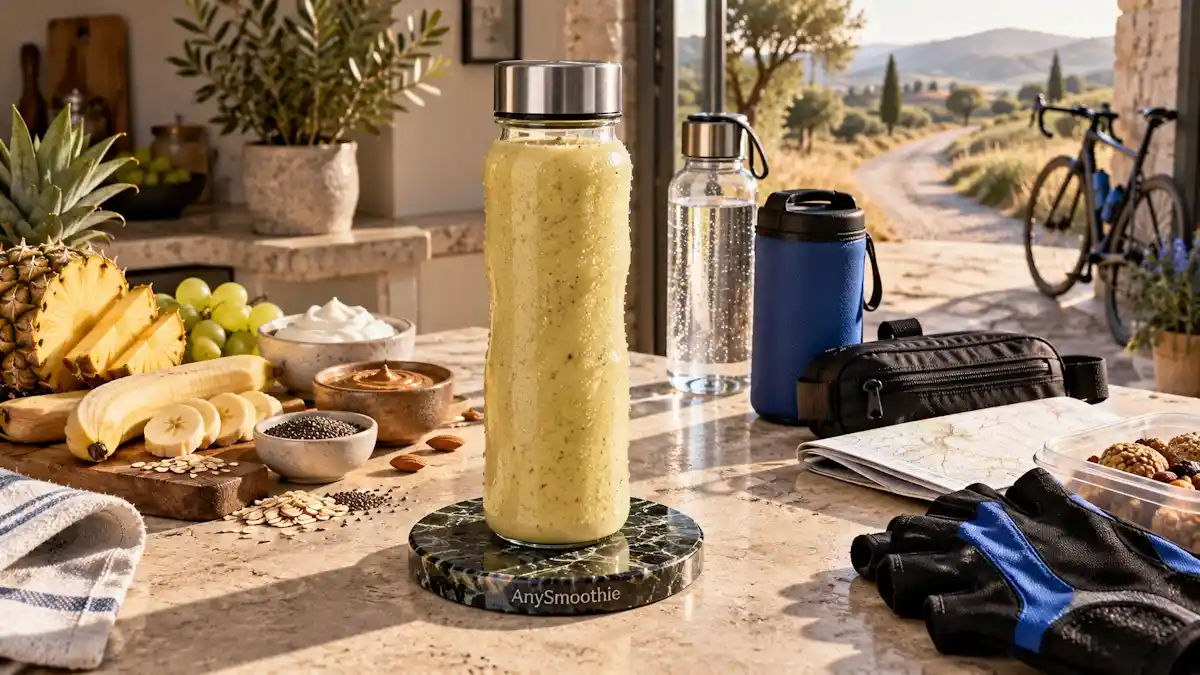
Portable smoothies for long cycling days offer a drinkable way to carry fluids, carbohydrates, and a modest amount of protein. The right blend should fit your bottle, stay pleasant as it warms, and sit comfortably while you pedal. Start with a simple recipe, then refine it on training rides.
Practical Smoothies for Long Hours on the Bike
A ride-friendly smoothie starts with enough liquid to flow through a bottle. Use milk, soy milk, oat milk, water, or coconut water as the base. Then add easy-to-digest carbohydrates such as banana, applesauce, dates, quick oats, or maple syrup.
Carbohydrate portions matter because working muscles use glucose to support normal energy metabolism. However, a two-hour easy ride and a hot all-day event call for different food and drink plans. A PubMed-indexed review on carbohydrate intake during exercise explains that carbohydrate recommendations vary with exercise duration and intensity, with higher intakes generally used during longer endurance efforts.
Keep the blend thinner than a breakfast smoothie. Extra water makes it easier to sip, reduces bottle clogs, and limits separation. Small amounts of yogurt, kefir, milk, or a plant-based protein source can add body without turning the drink into a meal.
For rides where fluid balance becomes a bigger part of the plan, smoothie for cellular hydration and electrolyte balance can offer another useful framework for thinking about liquids and electrolyte-containing ingredients.
Choose Ingredients That Support Steady Energy and Easy Digestion
Ripe bananas, dates, honey, maple syrup, applesauce, and finely blended oats add carbohydrates in forms that work well in a drink. Yogurt, kefir, milk, and soy milk also add protein and create a smoother texture.
Nuts, seeds, coconut, and leafy greens can fit some recipes, but large amounts add fat or fiber. That may make a smoothie feel heavy during hard riding. Use familiar ingredients, and change one thing at a time when testing a new blend.
Pack, Chill, and Carry Smoothies Without the Mess
Leakproof soft flasks work well for smaller portions. Insulated bottles keep a drink colder, while wide-mouth bottles make cleanup much easier. Chill the smoothie before leaving, keep it out of direct sun, and leave headspace if freezing part of it overnight.
Place the bottle where you can reach it safely, such as a frame bag or jersey pocket. Avoid awkward movements to reach food or drink while riding. Dairy-based drinks need extra care on hot days, so keep them cold and don’t let them sit warm for long.
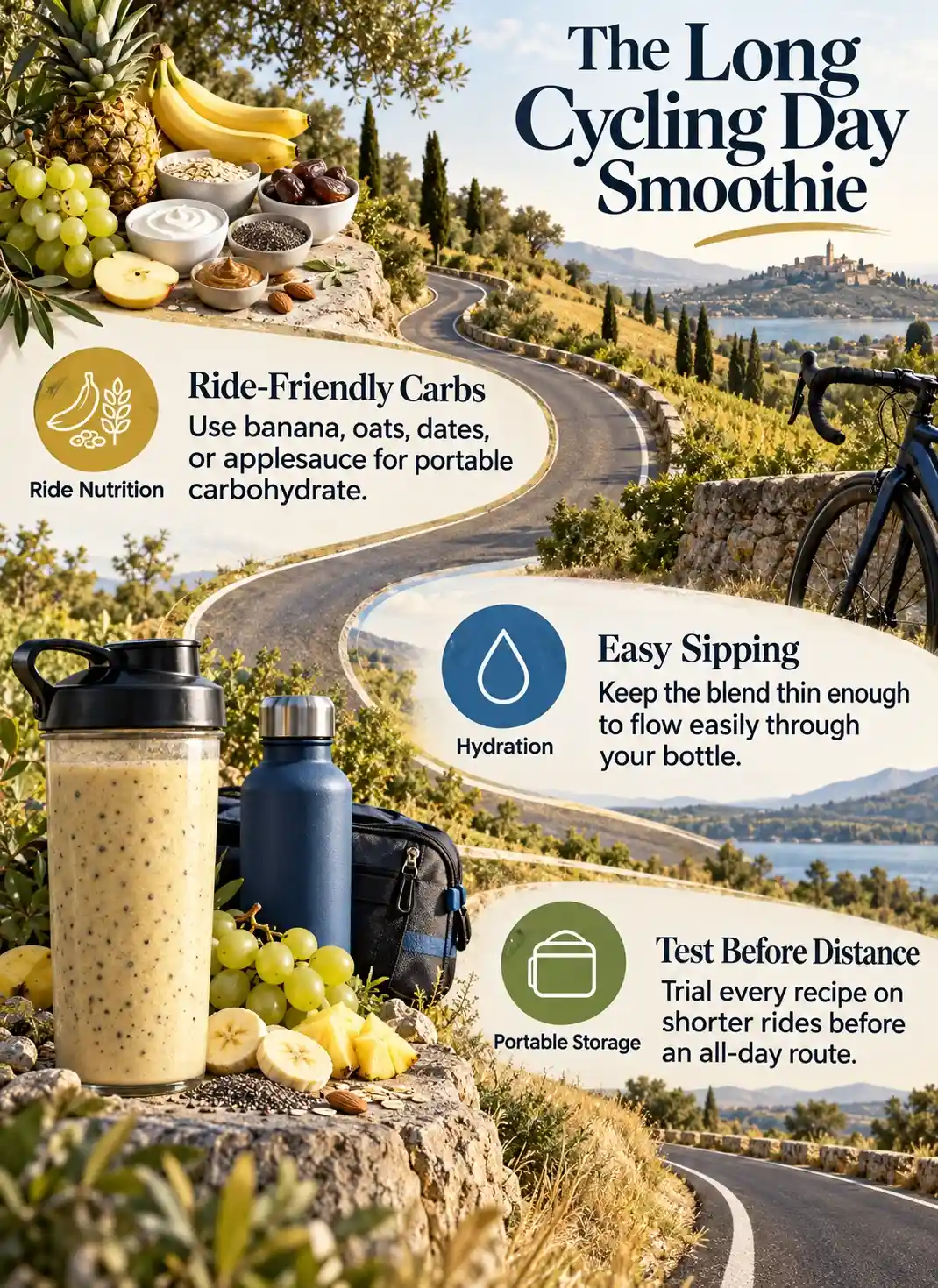
3 Portable Smoothies for Long Cycling Days
Each recipe makes about 16 to 20 ounces. Blend until smooth, then add water a tablespoon at a time if the mixture seems too thick.
Banana Oat Smoothie for a Familiar Pre-Ride or Mid-Ride Option
Ingredients
- 1 ripe medium banana
- 1/4 cup quick oats
- 3/4 cup unsweetened soy milk
- 1/2 cup water
- 1 teaspoon honey or maple syrup
- Small pinch of salt
Steps
Add the soy milk and water first, followed by the banana, quick oats, honey or maple syrup, and salt.
Blend until the oats are completely smooth. Add extra water a tablespoon at a time if the mixture is too thick for your bottle.
This option has carbohydrate from banana and oats, plus a modest amount of protein from soy milk. It suits riders who tolerate a creamier drink before starting or during a steady section of a long route.
For easier sipping, thin it with more water. During intense efforts, try a smaller portion first. A banana smoothie with milk and yogurt offers another useful starting point if you prefer a tangier texture.
Estimated Nutrition per Serving
- Calories: ~260 kcal
- Protein: ~9 g
- Carbohydrates: ~49 g
- Fat: ~5 g
- Fiber: ~7 g
- Sugars: ~21 g
Estimate uses unsweetened soy milk and 1 teaspoon honey.
If I were carrying this during the ride rather than drinking it beforehand, I’d add a little extra water so the oats remain easy to sip after the bottle has been moving for an hour.
Berry Applesauce Smoothie for a Light, Fresh-Tasting Drink
Ingredients
- 1/2 cup unsweetened applesauce
- 1/2 cup mixed berries, fresh or frozen
- 1/2 medium banana
- 3/4 cup coconut water
- 1/4 cup plain Greek yogurt
- Extra water as needed
Steps
Add the coconut water first, followed by the yogurt, applesauce, berries, and banana.
Blend until the berries break down completely. Add water if you need a thinner texture for a soft flask or narrow bottle.
Applesauce and fruit provide carbohydrates, while the liquid base keeps this lighter than an oat-heavy recipe. Yogurt adds a little protein and creaminess.
Berry skins and seeds can change the texture, so strain the smoothie if they bother you. Test the acidity and sweetness on training rides, especially if your stomach is sensitive.
For rides in warm conditions, hydration needs should be planned separately from the smoothie itself. A PubMed review on hydration during prolonged endurance exercise discusses the importance of replacing fluids and electrolytes during extended exercise, particularly when sweat losses rise.
Estimated Nutrition per Serving
- Calories: ~205 kcal
- Protein: ~9 g
- Carbohydrates: ~45 g
- Fat: ~1 g
- Fiber: ~5 g
- Sugars: ~32 g
Estimate uses coconut water, plain nonfat Greek yogurt, and half a medium banana.
Date Chocolate Smoothie for a Compact Carbohydrate Boost
Ingredients
- 3 pitted Medjool dates
- 1 small banana
- 1 teaspoon unsweetened cocoa powder
- 3/4 cup unsweetened soy milk
- 1/2 cup water
- Small pinch of salt
Steps
If the dates are firm, soak them in warm water for 10 minutes and drain.
Add the soy milk and water first, followed by the dates, banana, cocoa powder, and salt. Blend until completely smooth.
Dates bring concentrated sweetness and carbohydrates without much volume. Cocoa adds a chocolate note, while the pinch of salt rounds out the flavor.
Use less cocoa if it tastes too strong. This compact drink can complement food on a longer ride, but it doesn’t replace plain water or a broader fueling plan.
Estimated Nutrition per Serving
- Calories: ~355 kcal
- Protein: ~8 g
- Carbohydrates: ~82 g
- Fat: ~4 g
- Fiber: ~9 g
- Sugars: ~61 g
Estimate uses three Medjool dates and unsweetened soy milk.
If I wanted this specifically for a long ride, I’d test the full three-date version on training days first. It is much more carbohydrate-dense than the other two blends and may feel too sweet for some riders.
When to Drink a Cycling Smoothie and How to Choose the Right Recipe
Timing depends on ride length, pace, weather, personal tolerance, and the food already in your pockets. A small portion before the ride can work well. On longer outings, take regular sips instead of waiting until you feel drained.
Smoothies support fluid and carbohydrate intake, but they don’t replace water or an appropriate electrolyte strategy when sweat losses are high.
Before longer or more demanding sessions, pre-workout smoothies for metabolic priming can also offer ideas for building a blend around the period before exercise rather than carrying everything on the bike.
The following comparison can help you match a recipe to the day ahead.
| Smoothie | Best Timing | Main Ingredients | Texture | Packing Notes |
|---|---|---|---|---|
| Banana oat | Before riding or steady mid-ride miles | Banana, oats, soy milk | Creamy | Thin with water for a soft flask |
| Berry applesauce | Warm-weather ride or lighter sip | Applesauce, berries, coconut water | Light | Keep cold and strain if needed |
| Date chocolate | Long ride with food stops | Dates, banana, cocoa, soy milk | Smooth and rich | Soak dates before blending |
| Custom lower-fiber | Faster riding or sensitive stomach | Banana, syrup, milk, water | Thin | Skip oats, seeds, and berry skins |
The best portable smoothies for long cycling days are usually the ones you can adjust without guesswork:
- Add water when a smoothie is too thick for safe, regular sipping.
- Reduce oats, seeds, or berry skins if fiber feels uncomfortable.
- Choose lactose-free milk or yogurt if those ingredients suit you better.
- Split one large serving into two smaller bottles to keep the second colder.
Test Your Recipe Before a Long Ride
Try every new smoothie on a shorter training ride before using it on an event or all-day route. Track the serving size, drinking speed, temperature, container, and how your stomach feels afterward.
A drink that is too thick needs more liquid. One that feels too sweet may need more water or less date and syrup. If it is too cold, use chilled ingredients without ice. Wash bottles soon after use, especially when milk or yogurt is involved.
Conclusion
The right smoothie is one you’ve tested, can carry securely, and can drink without fuss. Banana oat, berry applesauce, and date chocolate blends each offer a different texture and flavor for long rides.
Use familiar ingredients, keep the texture thin enough to sip, and protect dairy-based drinks from heat. Pair portable smoothies for long cycling days with water and other ride foods when needed, then refine your bottle recipe on the next training ride.
🛡️ Safety Notes & Dietary Interactions
- Food Safety on Hot Rides: Milk, yogurt, and other perishable smoothie ingredients can warm quickly during cycling. Use an insulated bottle or cooler strategy, and avoid carrying dairy-based blends for hours in direct sun without reliable temperature control.
- Ride-Day Digestion: Oats, berry skins, dates, cocoa, and larger smoothie portions may feel uncomfortable during harder efforts. Test recipes on shorter rides first and reduce fiber, thickness, or serving size if fullness, cramping, or nausea develops.
- Hydration and Electrolytes: A smoothie contributes fluid and carbohydrate but should not replace plain water or an appropriate hydration plan. Long, hot, or high-sweat rides may require additional fluids and electrolytes based on conditions and individual sweat losses.
- Safe Drinking While Riding: Place bottles where they can be reached without awkward movements or loss of control. Take sips only when road, trail, traffic, and riding conditions allow safe handling rather than prioritizing fueling over bike control.
FAQs
Which smoothie is best for the middle of a long ride?
The berry applesauce smoothie is the lightest of the three and can be thinned easily with water or coconut water. That makes it practical when you want carbohydrate and fluid without a dense oat-based texture. If berry seeds or acidity bother your stomach during exercise, strain the blend or use a simpler banana-based version.
Should I drink a smoothie instead of water during a long cycling day?
No. A smoothie can contribute fluid, but it also contains carbohydrate and sometimes protein, fat, or fiber, so it should be treated partly as food. Keep water available separately, and use an appropriate electrolyte strategy when heat, ride duration, or heavy sweating increases fluid and sodium losses beyond what one smoothie provides.
Which recipe is best for a sensitive stomach during harder riding?
A customized lower-fiber version is usually the most practical starting point. Use banana, water or milk, and a modest amount of syrup while reducing oats, seeds, and berry skins. Even simple ingredients should be tested during training because exercise intensity, temperature, serving size, and individual tolerance can all affect gastrointestinal comfort.
Can I freeze a cycling smoothie overnight?
Yes, partially freezing a smoothie can help it stay colder for part of the ride, provided the container allows room for expansion. Let it soften enough to drink before you need it. Dairy-based blends still require careful temperature management, and a frozen bottle should not be assumed to remain safely cold throughout an all-day ride.
Can a smoothie provide all the fuel I need for an all-day cycling route?
Usually not by itself. Long rides may require considerably more carbohydrate, fluid, electrolytes, and total energy than one bottle can provide. Use the smoothie as one component of a broader fueling plan alongside familiar ride foods and drinks. Practice that complete strategy during training rather than experimenting for the first time during an event.

Medical Disclaimer: AnySmoothie content is for educational purposes only and is not a substitute for professional medical advice. Consult a healthcare provider for personalized guidance. See our full Disclaimer & Terms of Use. AI Transparency: AnySmoothie may use AI to support content development. All content undergoes human editorial review for accuracy, clarity, and editorial quality. See our full AI Transparency.