
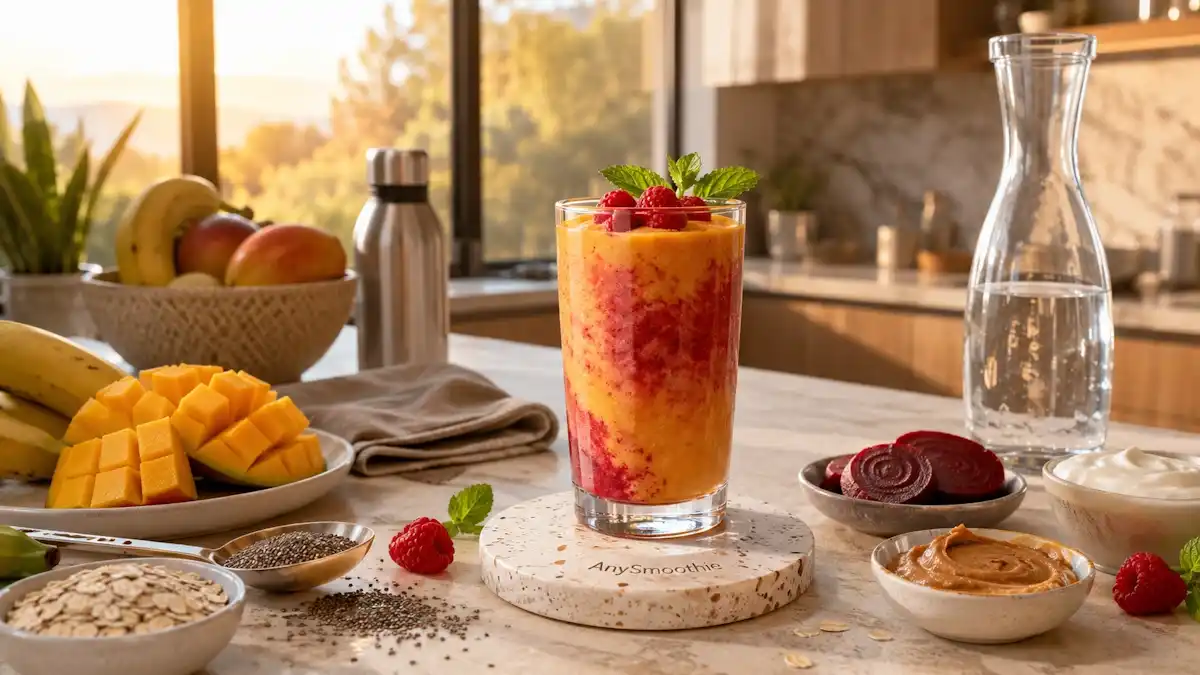
A pre-workout smoothie can do more than fill the gap before training. When it’s built well, it helps your body arrive at the session with usable fuel, steady hydration, and less digestive drag.
That balance matters. Too little fuel leaves you flat, while too much volume can make you feel heavy before the first rep or stride. Pre-workout smoothies for metabolic priming work best when they are simple, timed well, and matched to the workout ahead.
The goal here is practical. You’ll see what belongs in the blender, when to drink it, and three easy smoothie styles you can use right away.
What metabolic priming means before a workout
Metabolic priming is the process of getting your body ready to use fuel efficiently before exercise. In plain terms, you want energy available without sitting on your stomach.
A good smoothie can help with that because it delivers carbs, fluid, and a little protein in an easy-to-digest form. It can also support hydration if you train early or sweat a lot. The trick is keeping the blend light enough to move through your system fast.
The best pre-workout smoothie feels lighter than a meal and more useful than a snack.
How carbs, protein, and fluids work together
Carbs are the main fuel source for hard training. They help top off quick energy stores so your session starts with more available fuel. Protein adds balance, supports muscle tissue, and can keep the smoothie from feeling like pure sugar.
Fluids matter just as much. Water, milk, or coconut water helps the blend absorb well and keeps hydration moving before you sweat. If you want a simple timing guide, Eat Right’s pre-workout nutrition advice places carbs and protein in the 1 to 4 hour window before exercise, depending on how much you eat.
Why timing matters more than people think
A small smoothie can work well 30 to 90 minutes before training. A larger one needs more time, especially if it has yogurt, oats, or extra fiber. If you drink it too late, even a good recipe can feel heavy.
Think about the workout window first, then build the smoothie around it. That gives you energy without the stomach lag.
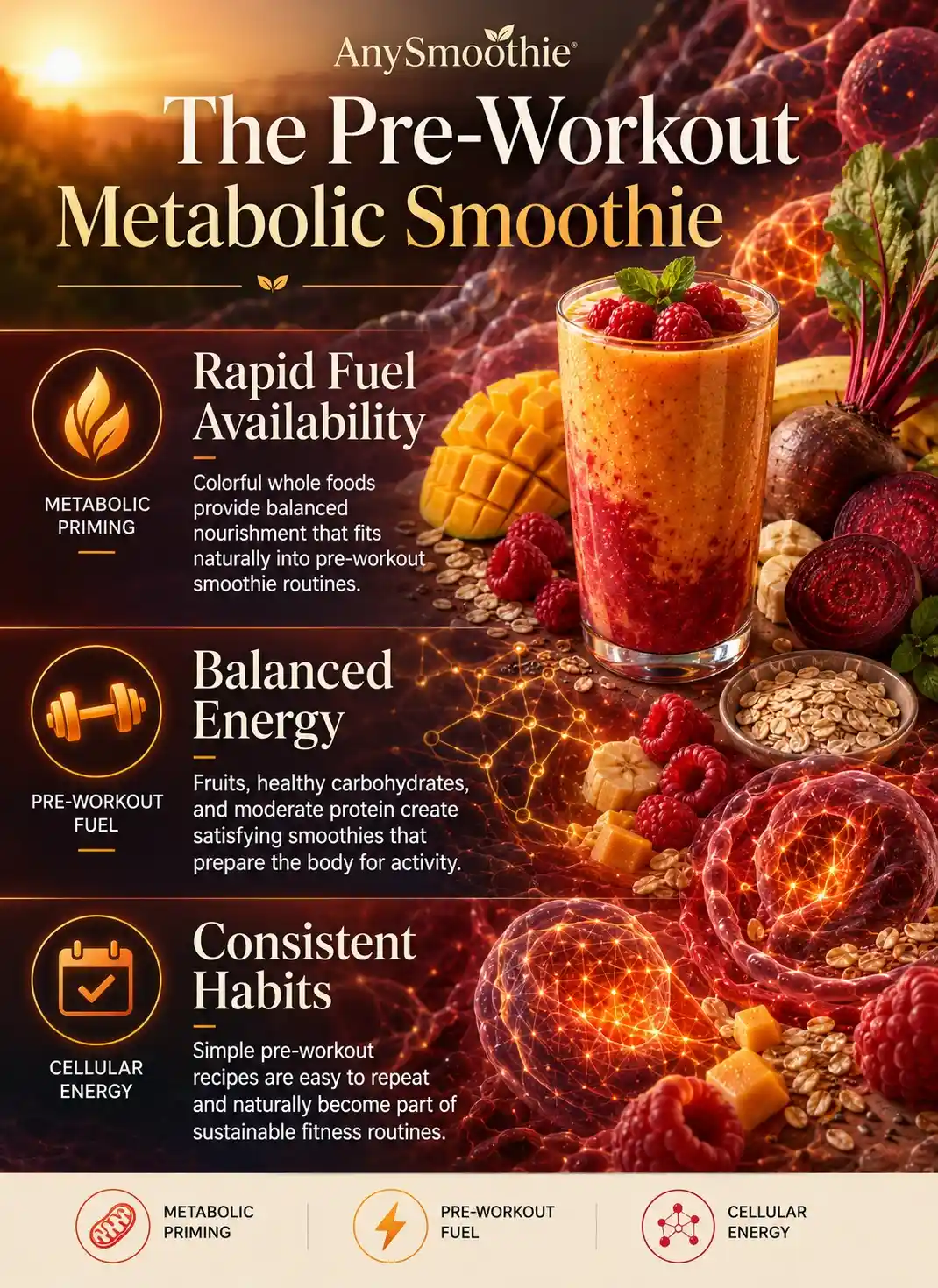
The best ingredients for pre-workout smoothies for metabolic priming
The best ingredients are the ones your stomach handles well. You want fast carbs, moderate protein, and a liquid base that keeps the texture smooth. If you want lighter ideas to start with, these smoothie recipes for energy are a useful reference point.
Here’s a simple comparison of common ingredients and how they behave before training.
| Ingredient type | Main job | Best timing | Texture | Digestion speed |
|---|---|---|---|---|
| Banana, mango, pineapple | Fast carbs | 30 to 60 minutes | Smooth and light | Fast |
| Small oats or dates | Steadier carbs | 60 to 90 minutes | Slightly thicker | Moderate |
| Whey, pea protein | Adds protein | 30 to 90 minutes | Smooth | Moderate |
| Greek yogurt, kefir | Protein plus creaminess | 60 to 90 minutes | Thick, rich | Moderate |
| Water, coconut water, salt | Hydration support | Anytime before training | Thin and easy | Fast |
Fast carbs work best when you want training fuel without a heavy feeling. Banana, mango, pineapple, dates, and small amounts of oats all fit that role. Berries can work too, but they add more fiber, so keep the serving modest if your stomach is sensitive.
Protein sources should blend cleanly. Whey is easy to mix, pea protein works well for dairy-free smoothies, and Greek yogurt or kefir adds a creamy texture. Silken tofu also blends smoothly if you want a mild, neutral base.
Add-ins should stay small. Water, coconut water, a pinch of salt, cinnamon, ginger, spinach, chia, flax, or cocoa can improve taste and mineral support. Too much fiber or fat can slow digestion, so keep those extras light before training.
Fast-digesting carbs that fuel training without feeling heavy
Use simple fruit when the session is close. Bananas and pineapple are easy choices for quick work. Mango and dates add sweetness and fast fuel, while a small scoop of oats works better when you have a little more time.
Protein sources that blend well and digest easily
Protein does not need to dominate every pre-workout smoothie. A moderate amount is enough for balance. One scoop of whey or pea protein, or a half-cup of Greek yogurt or kefir, usually gives the drink more staying power without turning it into a meal.
Add-ins that support hydration, minerals, and flavor
A pinch of salt helps the smoothie fit a sweaty session. Coconut water adds a mild mineral boost, while ginger and cinnamon give flavor without much bulk. Spinach is fine in small amounts, but skip big handfuls if you want a lighter drink.
3 Pre-Workout smoothies for metabolic priming
These three options cover the most common training needs. Each one keeps the ingredient list short and the texture easy to drink.
How to match your smoothie to your workout and schedule
Your workout type should shape the smoothie, not the other way around. Texas Health’s performance nutrition timing guide gives the same basic message, give bigger meals more time and keep lighter fuel closer to the session.
| Smoothie type | Best workout | Timing | Digestibility | Main benefit |
|---|---|---|---|---|
| Quick energy | Cardio, early morning training | 30 to 45 minutes | Very easy | Fast fuel |
| Balanced | Lifting, hybrid work | 60 to 90 minutes | Moderate | Better staying power |
| Low-fiber | HIIT, sensitive stomachs | 20 to 40 minutes | Very easy | Less stomach load |
| Higher-carb, larger volume | Longer sessions | 90 minutes or more | Moderate | More fuel reserve |
What to drink before cardio, lifting, or high-intensity intervals
Cardio and intervals usually do better with lighter blends. Lifting can handle a bit more protein and volume, especially if you have more time. Longer sessions can support a thicker smoothie, but only if you drink it early enough.
Common pre-workout smoothie mistakes
Too much fiber slows the whole drink down. Too much fat does the same. A huge smoothie can sit heavy, even when the ingredients are good.
Timing matters too. If you drink a thick blend right before training, you may feel full instead of ready. Very sweet smoothies can also bother your stomach, so keep the flavor clean and the portion realistic.
Conclusion
Pre-workout smoothies for metabolic priming work best when they stay simple, light, and well timed. The right mix gives you usable carbs, enough protein to balance the drink, and fluids that support hydration before you train.
You do not need a long ingredient list to get this right. Start with one recipe, test it in a real workout, and adjust the texture, size, and timing based on how you feel.

Medical Disclaimer: AnySmoothie content is for educational purposes only and is not a substitute for professional medical advice. Consult a healthcare provider for personalized guidance. See our full Disclaimer & Terms of Use. AI Transparency: AnySmoothie may use AI to support content development. All content undergoes human editorial review for accuracy, clarity, and editorial quality. See our full AI Transparency.