
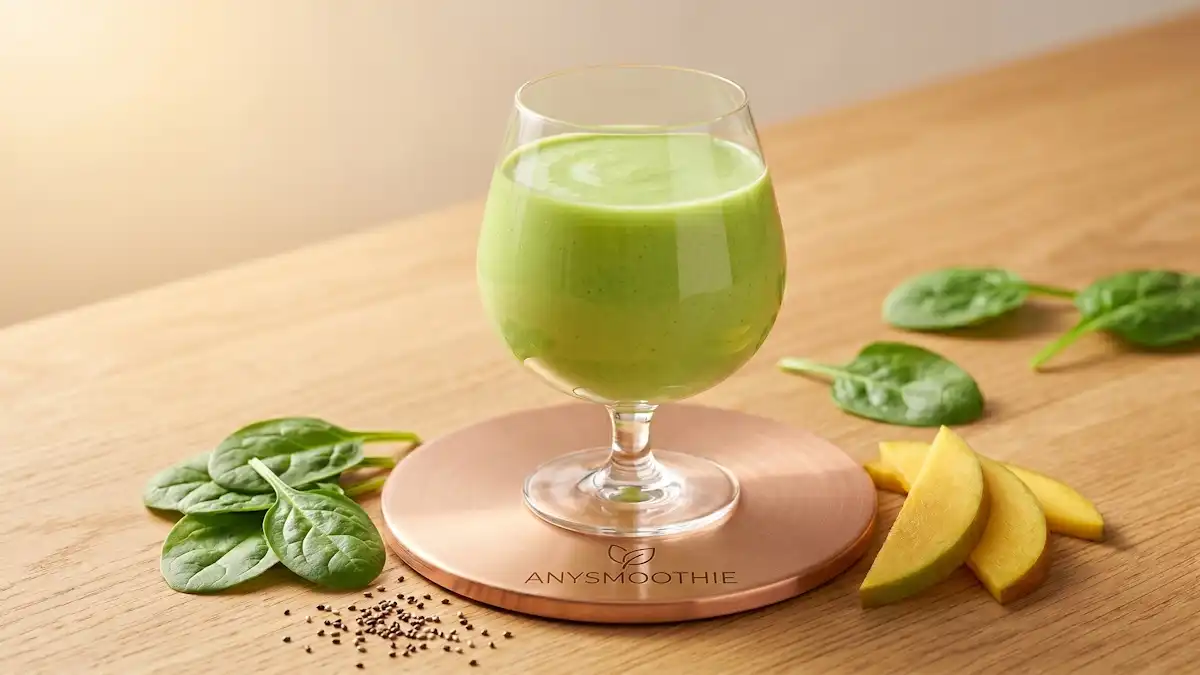
Pregnancy puts steady pressure on blood sugar, iron status, hydration, and nutrient delivery. When those systems stay more even, the day tends to feel more manageable.
A smoothie won’t solve every issue, but it can make food feel easier when appetite changes, nausea shows up, or mornings move too fast. The best versions are built with real ingredients, not sugar-heavy shortcuts.
This guide keeps smoothie support for gestational homeostasis practical, with food-first pairings that fit busy days and support natural pathways.
The Methylation Engine: Folate and DNA Synthesis
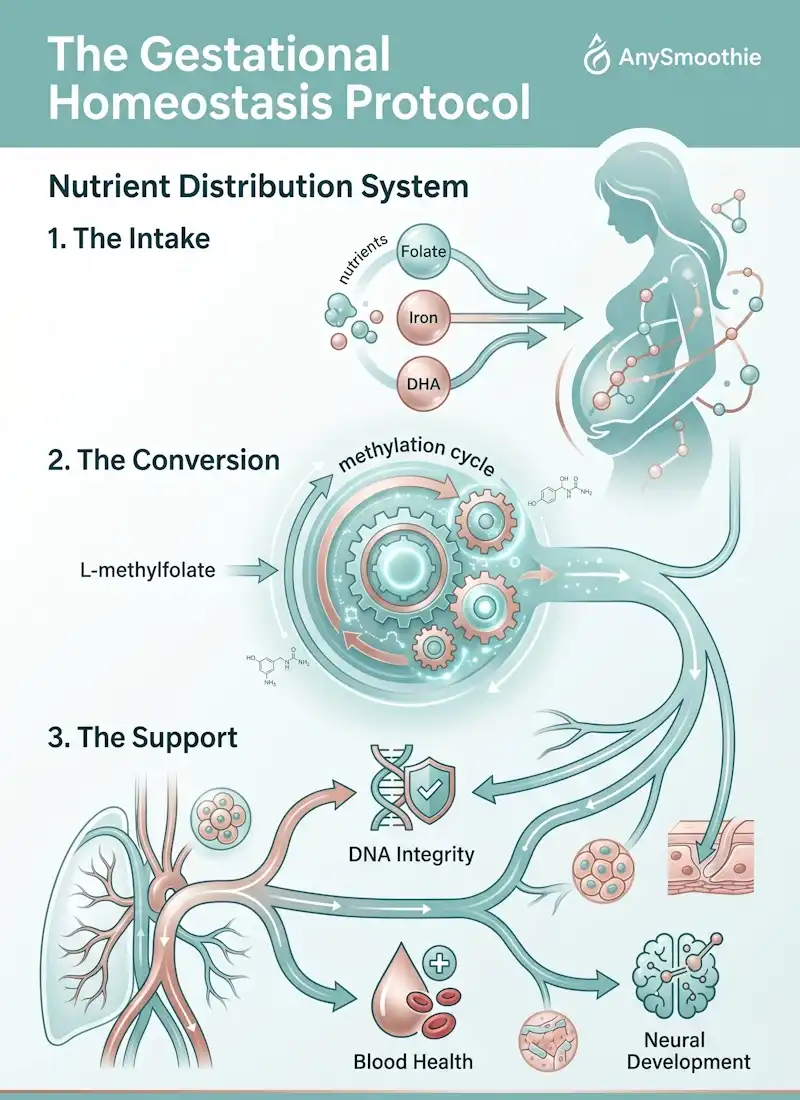
Folate matters because cells divide fast during pregnancy. That means the body needs a steady supply for DNA synthesis, tissue growth, and normal methylation work.
Leafy greens do a lot of the heavy lifting here. Spinach, kale, romaine, avocado, citrus, and even berries can all help close common food gaps. In smoothie form, they’re easy to blend, easy to repeat, and easy to pair with other prenatal-friendly nutrients.
For a broader food list, folate-rich foods for pregnancy can give you simple ideas that fit into a drink without much prep.
Natural Folates vs. Synthetic Folic Acid, What the Body Uses Best
Food folates come packaged with fiber, water, and plant compounds. That makes them a natural fit for smoothies, especially when you mix greens with fruit and a little fat.
Synthetic folic acid is common in fortified foods and prenatal supplements. The body can use it, but it has to convert it first. Whole-food folates skip some of that extra processing, so they’re a clean match for a food-based smoothie plan.
A practical blend usually looks like this: greens for folate, citrus for brightness, and avocado or yogurt for texture. Beans can work too, if you like a thicker, more filling drink. The goal is simple, steady support, not a perfect formula.
Hematological Support: Optimizing Iron Flux and Red Cell Production
Iron needs rise during pregnancy because blood volume expands and red cell production has to keep up. If intake falls short, energy can feel flat and stamina can drop.
Plant foods offer non-heme iron, which is less absorbable than iron from meat. That sounds like a downside, but smoothies can help because they let you pair iron-rich ingredients with vitamin C in the same glass. A plain-language pregnancy nutrition guide covers this well in folic acid and iron basics for pregnancy.
Vitamin C Synergy: Enhancing Non-Heme Iron Absorption
For plant iron, vitamin C is the gatekeeper. It helps the body absorb more iron from spinach, seeds, beans, and other plant foods.
That’s why mango, strawberries, kiwi, orange, and lemon are so useful in a pregnancy smoothie. A splash of citrus can change the iron profile of the whole drink. Even a small amount helps.
Good pairings are simple. Spinach with orange. Pumpkin seeds with strawberries. Chia with kiwi and lemon. The acid, fruit, and iron-rich base work together, so the smoothie does more than taste good.
Here’s a quick comparison of three useful support nutrients:
| Nutrient | Physiological Role | Biochemical Pathway | Best Smoothie Pairing | Synergistic Nutrient |
|---|---|---|---|---|
| L-methylfolate from greens | Supports DNA methylation and cell division | Folate cycle, one-carbon transfer | Spinach, avocado, citrus | Vitamin B12 or choline |
| Iron from seeds and spinach | Supports hemoglobin synthesis and oxygen transport | Non-heme iron handling and red cell production | Spinach, pumpkin seeds, berries | Vitamin C |
| DHA from algal oil | Supports brain and retinal development | Omega-3 transport into cell membranes | Banana, avocado, mild berry base | Fat from avocado or nut butter |
The pattern is clear. Build around a nutrient, then pair it with what helps the body use it well.
3 “Homeo-Gesta” Nutrient-Dense Support Smoothie Recipes
These are not strict formulas. They are templates you can adjust based on taste, nausea, and what the pantry already has.
Metabolic Stability: Managing Glycemic Load for Maternal Health
A smoothie can support stable blood sugar, or it can spike it fast. The difference comes down to fiber, protein, fat, and portion size.
Fruit alone is fast fuel. Fruit plus greens, seeds, yogurt, or nut butter is steadier. That matters because energy swings can drive cravings, irritability, and that drained feeling that shows up between meals.
A good rule is to treat the smoothie like a meal, not a juice. Use enough protein and fat to slow digestion, and keep the fruit balanced with low-sugar add-ins. The body gets a steadier stream of fuel, which is easier to use.
Mitochondrial Priming: Fueling the Energetic Demand of Tissue Growth
Mitochondria turn food into usable energy. During pregnancy, that energy demand rises, so the mix in your glass matters.
Balanced smoothies can support that process by combining carbs with fats, protein, and micronutrients. Nut butter, seeds, oats, and unsweetened yogurt help the body process fuel more evenly. They also improve satiety, so you’re less likely to crash an hour later.
That is the real value of a well-built smoothie. It gives the body a clean, measured feed of energy, without making breakfast feel like a project.
Conclusion
Smoothies can be a low-effort way to support gestational homeostasis when they’re built with intention. Folate from greens, iron paired with vitamin C, healthy fats, and steady carbs all fit together well.
The best approach is simple. Use food first, keep the texture tolerable, and match the blend to what your body needs that day.
Small, consistent choices matter more than perfection. A few smart smoothie habits can make pregnancy nutrition feel more manageable, one glass at a time.
🛡️ Safety Notes & Contraindications: Gestational Homeostasis Smoothies
Microbiological Safety (Listeria/Toxoplasmosis): All raw leafy greens and fruits must be thoroughly washed or sanitized. Using commercially frozen produce is often safer as it undergoes blanching or rapid freezing, which significantly reduces microbial risk.
Gestational Diabetes Management: If diagnosed with gestational diabetes, avoid fruit-only smoothies. Always apply the “Lipid-Protein Brake” by adding fats (avocado, nuts) or proteins (Greek yogurt) to flatten the postprandial glucose curve.
Botanical and Supplement Risks: Many “detox” herbs or adaptogens (e.g., ashwagandha, licorice root, high-dose parsley) are contraindicated during pregnancy as they may stimulate uterine contractions or affect hormonal balance. Stick to whole-food ingredients.
Vitamin A Toxicity: Avoid adding synthetic retinol or high-potency Vitamin A supplements to the blender. Beta-carotene from plant sources (mango, carrots) is safe as the body regulates its conversion to Vitamin A based on actual need.
Hyperemesis and Sensitivity: For those suffering from severe morning sickness, avoid high-viscosity textures or strong pungent flavors. Small amounts of fresh ginger can be beneficial, but start with minimal doses to test tolerance.
FAQ
How does “Vitamin C Synergy” optimize the biochemical mechanics of iron absorption?
Plant-based (non-heme) iron is less bioavailable than animal-based iron due to its chemical structure. Biochemically, Vitamin C (ascorbic acid) acts as a reducing agent that converts non-heme iron into a more soluble and absorbable form within the small intestine. Supporting this physiological system by pairing spinach or pumpkin seeds with citrus or mango in a smoothie facilitates the biochemical mechanics of “iron flux,” ensuring better support for expanded blood volume and red cell production.
Why is the “Methylation Engine” dependent on whole-food folate sources?
Folate is a critical coenzyme for one-carbon metabolism, which is essential for DNA synthesis and rapid cell division. Biochemically, natural folates from leafy greens are already in a form the body can integrate into the folate cycle with high efficiency. Supporting this physiological system through folate-dense smoothies optimizes the natural pathways of methylation, providing the necessary substrates for neural tube development and maternal tissue growth.
How do “Lipids and Proteins” modulate the glycemic load during pregnancy?
Pregnancy naturally increases insulin resistance to ensure adequate glucose delivery to the fetus. However, sharp glucose spikes can lead to maternal fatigue and metabolic stress. Biochemically, adding Greek yogurt (protein) and avocado (lipids) to a fruit base slows gastric emptying and the rate of glucose diffusion into the bloodstream. Supporting this physiological system through “nutrient partitioning” optimizes the natural pathways of glycemic stability, ensuring a steady energy supply for both mother and child.
What is the role of “DHA-Lipid Pairing” in fetal neurological development?
Docosahexaenoic acid (DHA) is a structural omega-3 fatty acid required for retinal and brain development. Biochemically, DHA is fat-soluble and requires a lipid matrix for optimal transport across the intestinal mucosa and into systemic circulation. Supporting this physiological system by adding algal oil or hemp seeds to a base containing avocado facilitates the biochemical mechanics of “fatty acid transport,” ensuring these critical building blocks reach the developing tissues.
How does “Mitochondrial Priming” support the energetic demand of tissue growth?
The metabolic cost of building new maternal and fetal tissue significantly increases ATP (adenosine triphosphate) demand. Biochemically, providing a balanced mix of complex carbohydrates, amino acids, and micronutrients ensures that mitochondria have a steady stream of substrates for oxidative phosphorylation. Supporting this physiological system through nutrient-dense smoothies optimizes the natural pathways of “metabolic efficiency,” providing clean fuel to meet the rising energetic demands of pregnancy without cellular drag.

Medical Disclaimer: AnySmoothie content is for educational purposes only and is not a substitute for professional medical advice. Consult a healthcare provider for personalized guidance. See our full Disclaimer & Terms of Use. AI Transparency: AnySmoothie may use AI to support content development. All content undergoes human editorial review for accuracy, clarity, and editorial quality. See our full AI Transparency.