
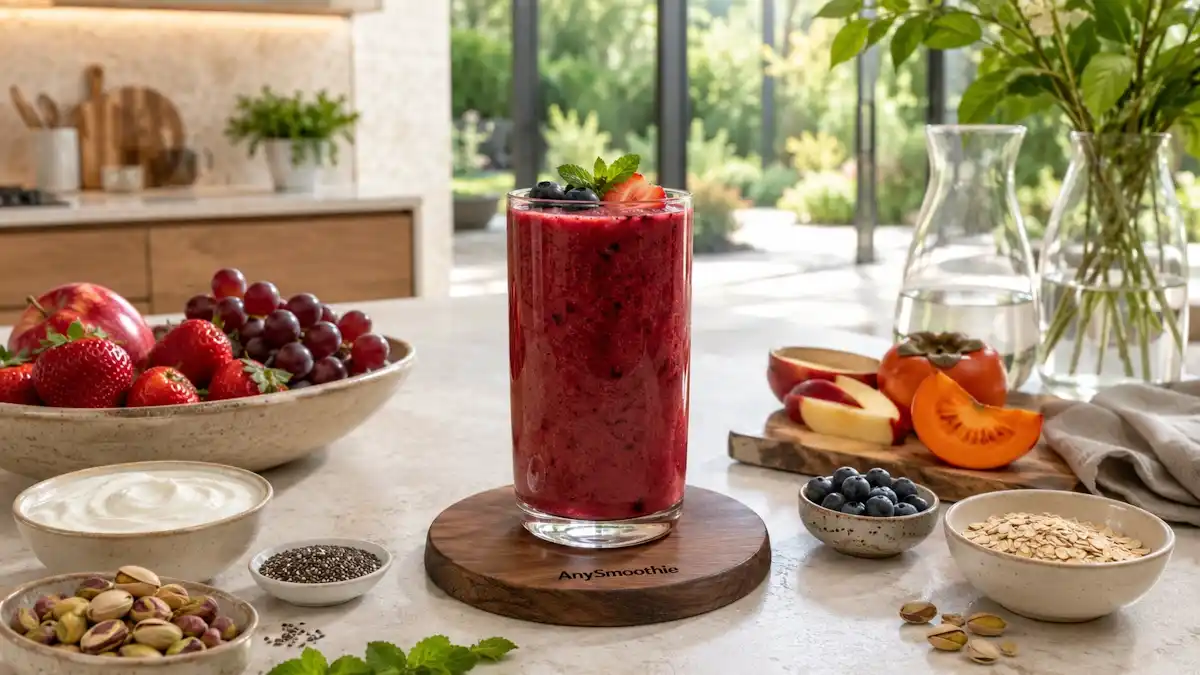
A smoothie can make healthy-aging nutrition easier to repeat, but it can’t promise new cells or reverse age-related change. Fisetin is a plant flavonoid found in foods such as strawberries, apples, grapes, and persimmons. Those foods also provide fiber, vitamins, minerals, and other plant compounds.
The recipes below combine fisetin-containing produce with protein, seeds, and cultured dairy. They keep added sugar low while setting realistic expectations about cellular research and everyday safety.
How Fisetin May Support Healthy Cellular Renewal
Fisetin is a flavonoid, a class of plant compounds that influences antioxidant activity and cell-signaling pathways. Researchers study it in connection with oxidative stress, inflammation-related signaling, and cellular senescence, which is the state of cells that stop dividing but remain metabolically active.
Cellular renewal describes the body’s ongoing maintenance work. Cells respond to wear, repair damage, and replace older cells at different rates. Eating one ingredient doesn’t control this process by itself. Sleep, movement, adequate protein, hydration, and overall dietary quality also affect the systems involved in normal tissue maintenance.
Laboratory and animal studies have produced interesting findings about fisetin, but human evidence remains limited. The amount of fisetin in a homemade smoothie can also vary based on the produce, ripeness, and serving size. A review in PubMed Central’s fisetin research discusses these research limits and the biological pathways under investigation.
Food sources offer a broader nutritional package than isolated compounds. Strawberries and apples bring fiber and polyphenols, while seeds add unsaturated fats and minerals. That combination supports a varied eating pattern, even when no specific cellular effect can be guaranteed.
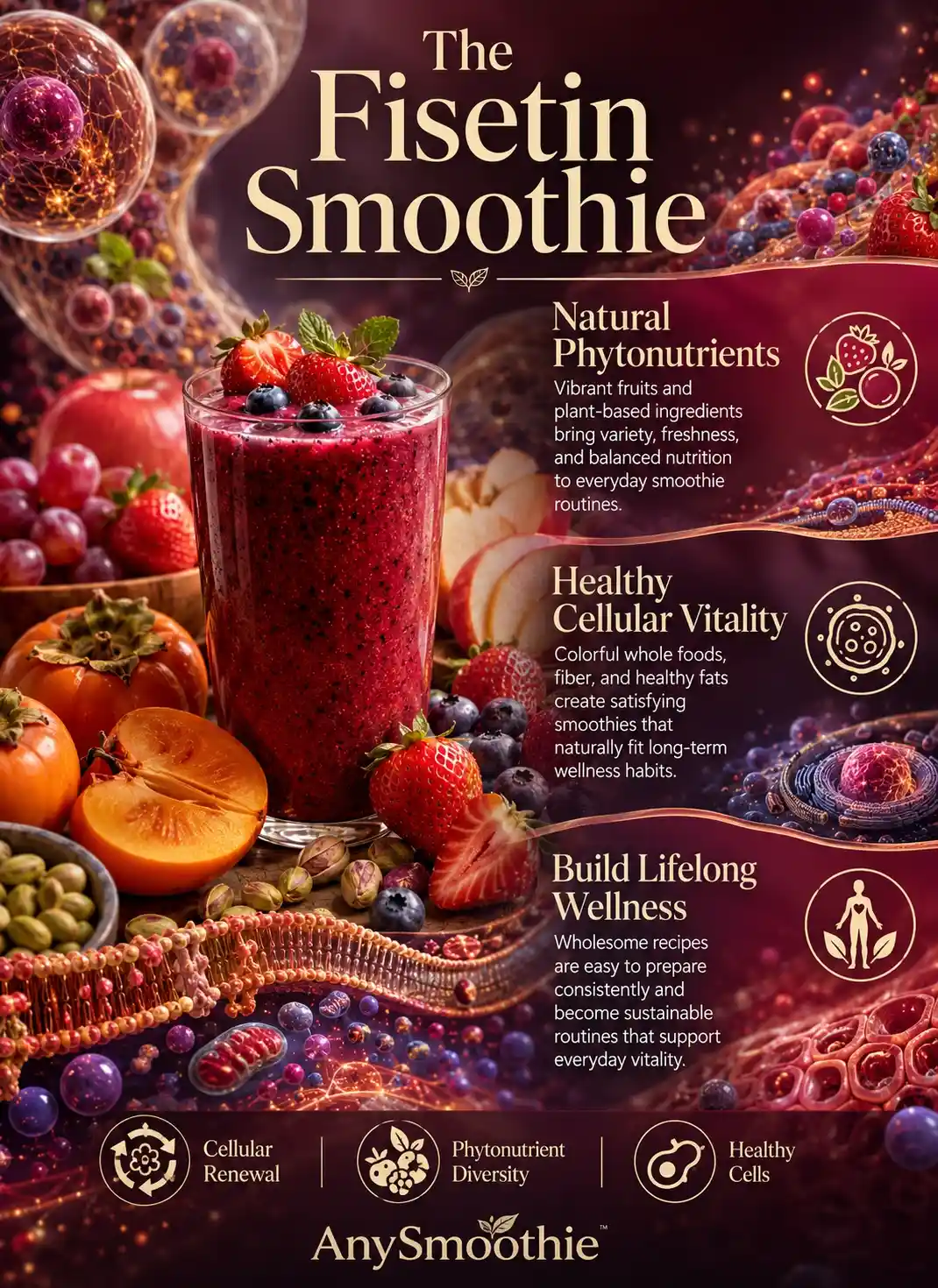
3 Fisetin Smoothies for Cellular Renewal
These recipes are nutrient-dense ways to add colorful produce to breakfast or a snack. Blending doesn’t create a therapeutic dose of fisetin, so use these drinks as part of regular meals rather than as a treatment.
How to Add Fisetin Smoothies to Your Routine Safely
Smoothies work best within a varied eating pattern that includes whole fruits, vegetables, protein-rich foods, sleep, movement, and enough fluid. There is no established food-based fisetin dose for cellular renewal, and supplement schedules from early research shouldn’t be copied into a personal routine.
Use the table as a quick guide when choosing a recipe.
| Smoothie | Main fisetin-containing foods | Protein or fiber support | Best time to enjoy | Key caution |
|---|---|---|---|---|
| Strawberry, apple, and yogurt | Strawberries, apple | Greek yogurt, apple skin | Breakfast or afternoon snack | Check plant yogurt protein and added sugar |
| Berry, grape, and spinach | Berries, grapes, spinach | Chia or ground flaxseed | With breakfast or after activity | Keep portions moderate if monitoring blood sugar |
| Persimmon, citrus, and ginger | Persimmon, citrus | Kefir or yogurt | Breakfast or a light snack | Grapefruit may interact with some medicines |
A serving of about 10 to 16 ounces is usually enough for a snack or light meal. If you monitor blood sugar, pair fruit with protein or fat and notice how your body responds. People with food allergies should replace problem ingredients carefully. Dairy-free options include fortified soy yogurt or unsweetened soy milk, which often provide more protein than oat or almond products.
Wash produce, refrigerate perishable ingredients, and drink the smoothie soon after preparation. The National Institute on Aging’s nutrition guidance supports varied food choices as part of healthy aging. Ask a registered dietitian or clinician for personal guidance if you have diabetes, kidney disease, digestive concerns, food allergies, or questions about medication interactions.
Conclusion
Fisetin-containing foods can add color, fiber, and plant variety to a balanced diet. Smoothies provide supportive nutrition, but they aren’t proven cellular renewal treatments, and human research on fisetin is still developing.
Choose one recipe, keep added sugar low, and rotate fruits and vegetables across the week. That practical habit gives your body a broader range of nutrients without turning one flavonoid into a promise it can’t make.
🛡️ Safety Notes & Dietary Interactions
- Food-Based Expectations: Fisetin-rich foods such as strawberries, apples, grapes, and persimmons contribute beneficial plant compounds as part of a balanced diet. Current human research does not show that fisetin smoothies can reverse aging, regenerate cells, or produce guaranteed cellular renewal.
- Watch Fruit Portions: Whole fruit provides fiber along with natural sugars, but larger servings can substantially increase carbohydrate intake. Pair fruit with protein and healthy fats to create a steadier, more balanced smoothie, especially if you monitor blood sugar.
- Medication Awareness: Grapefruit may interact with certain prescription medications by affecting how they are metabolized. If you take regular medications, choose the orange variation or ask your pharmacist or healthcare provider whether grapefruit is appropriate for you.
- Focus on Overall Lifestyle: Cellular health depends on much more than one flavonoid. Regular physical activity, quality sleep, adequate protein, hydration, and a varied diet provide the broader nutritional foundation that supports normal tissue maintenance and healthy aging.
FAQ
Which foods naturally contain fisetin?
Fisetin naturally occurs in several fruits and vegetables, with strawberries among the best-known dietary sources. Apples, grapes, persimmons, onions, and cucumbers also contribute smaller amounts. Because natural levels vary with growing conditions and ripeness, it is best to enjoy a variety of whole foods instead of focusing on a single ingredient.
Can a fisetin smoothie promote cellular renewal?
Current research does not demonstrate that drinking a fisetin smoothie directly promotes cellular renewal in humans. Most evidence comes from laboratory and animal studies. A balanced smoothie can support overall nutrition by providing fiber, vitamins, minerals, protein, and plant compounds, but it should not be viewed as a therapeutic intervention.
Are fisetin supplements better than food sources?
Food and supplements serve different purposes. Whole foods provide fisetin together with fiber, vitamins, minerals, and numerous other naturally occurring compounds that work as part of a balanced diet. Supplements deliver concentrated doses that are still being studied, so they should not be considered equivalent to food-based nutrition.
Can I drink a fisetin smoothie every day?
Yes, most healthy adults can enjoy a balanced fisetin-containing smoothie regularly as part of a varied eating pattern. Rotating ingredients such as strawberries, apples, grapes, berries, leafy greens, and cultured dairy or fortified plant alternatives helps broaden nutrient intake while preventing unnecessary reliance on any single food.
Who should be cautious with fisetin smoothie ingredients?
People with diabetes, kidney disease, food allergies, digestive disorders, or those taking medications that interact with grapefruit should personalize smoothie ingredients with professional guidance. Choosing whole foods, moderate fruit portions, and balanced recipes containing protein and fiber is generally a practical approach for most healthy adults.

Medical Disclaimer: AnySmoothie content is for educational purposes only and is not a substitute for professional medical advice. Consult a healthcare provider for personalized guidance. See our full Disclaimer & Terms of Use. AI Transparency: AnySmoothie may use AI to support content development. All content undergoes human editorial review for accuracy, clarity, and editorial quality. See our full AI Transparency.