
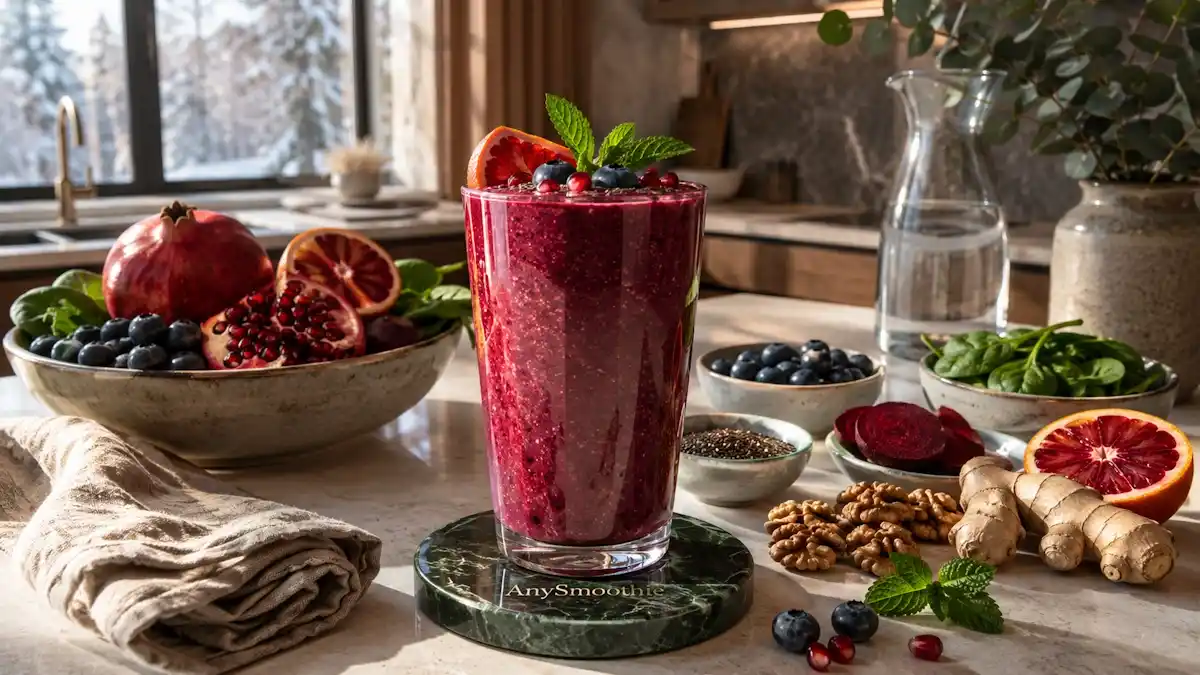
Cold weather or emotional stress can cause the small blood vessels in your fingers and toes to tighten too quickly. With Raynaud’s, that response may lead to coldness, numbness, tingling, and temporary color changes. Food cannot treat Raynaud’s or replace medical care, but nutrient-dense smoothies can support hydration, steady energy, antioxidant defenses, and normal vascular function.
The right ingredients may also make it easier to consume fruits, vegetables, protein, and healthy fats in one practical serving. However, a smoothie won’t prevent or stop an attack. These three recipes offer different options for temperature, flavor, and dietary needs.
How Nutrition May Support the Body in Raynaud’s
Food supports the systems that help blood vessels communicate, cells manage oxidative stress, and the body maintain fluid balance. Leafy greens provide dietary nitrates, which the body can process through natural pathways involved in vascular signaling. Berries and citrus contain polyphenols and vitamin C that support normal antioxidant defenses.
Healthy fats from chia seeds, ground flax, and avocado support cell membranes. Magnesium and potassium also participate in normal muscle, nerve, and energy functions. A balanced smoothie with carbohydrates, protein, and fat can provide steadier energy than a drink made mostly from fruit juice.
Cold drinks may feel uncomfortable for some people with Raynaud’s. Serve smoothies cool or at room temperature instead of adding ice or using heavily frozen ingredients.
Choose Ingredients That Support Normal Vascular Function
Spinach and arugula add leafy-green nitrates. Berries provide polyphenols, while oranges, lemons, and other citrus fruits supply vitamin C. Unsweetened cocoa contains magnesium and plant compounds, and chia or ground flax adds fiber and unsaturated fats.
Research has also explored vascular signaling pathways involved in Raynaud’s phenomenon, although nutritional approaches should be viewed as supportive and not as treatments for the condition.
Avocado contributes creamy texture and fat. Plain yogurt adds protein, and unsweetened dairy or fortified milk alternatives provide liquid without excess added sugar. Whole foods are usually easier to manage than concentrated supplements. Supplements can interact with medicines or health conditions, so discuss them with a clinician before use.
What Smoothies Cannot Do for Raynaud’s
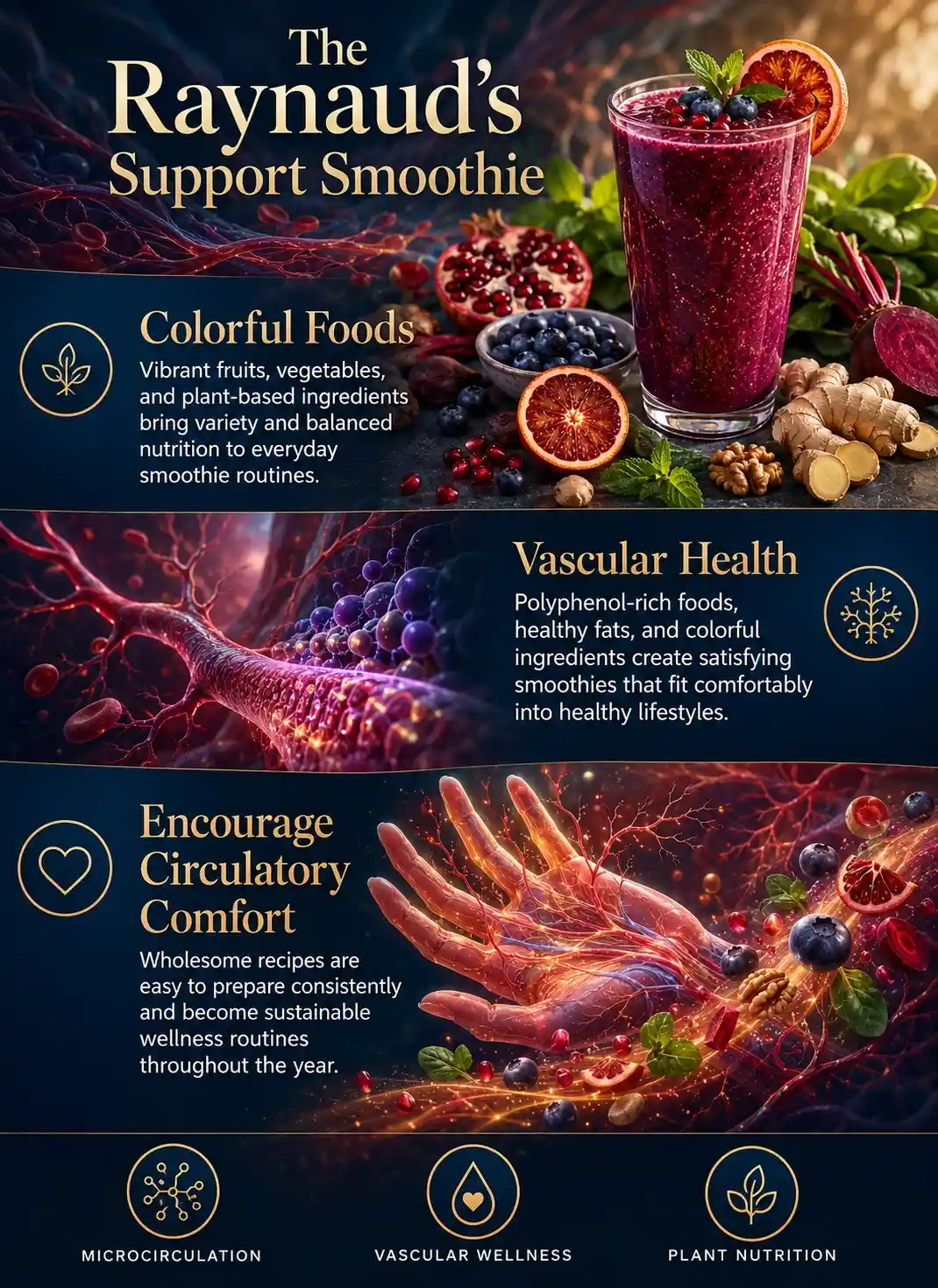
Nutrition is supportive, not a cure for Raynaud’s. Secondary Raynaud’s can occur alongside other health conditions, so new or changing symptoms deserve medical evaluation. Contact a healthcare professional if symptoms become severe or painful, affect only one side, or cause sores, tissue damage, or skin color that doesn’t return to normal.
MedlinePlus explains that Raynaud’s phenomenon is a disorder of blood vessel narrowing triggered by cold or emotional stress, and that treatment focuses on avoiding triggers, protecting the hands and feet, and managing any underlying condition when present.
Follow your clinician’s care plan, including recommendations for keeping warm, identifying triggers, and managing any underlying condition.
3 Smoothies for Raynaud’s Support
Use room-temperature or lightly chilled liquids if cold foods trigger discomfort. Blend each recipe until smooth and adjust the liquid to your preferred texture.
Berry Citrus Antioxidant Smoothie
Ingredients
- 1 cup fresh or thawed mixed berries
- 1/2 peeled orange
- 1 cup baby spinach
- 1/2 cup plain Greek yogurt
- 1/2 cup unsweetened milk
- 1 teaspoon lemon juice, optional
Blend everything for 30 to 45 seconds. Add lemon juice for more brightness, if desired.
Berries and citrus provide polyphenols and vitamin C for normal antioxidant defenses, while yogurt adds protein to support steadier energy. Use frozen fruit only when a colder drink feels comfortable.
Estimated Nutrition per Serving
Estimated with mixed berries, half a medium orange, spinach, plain nonfat Greek yogurt, unsweetened soy milk, and without optional lemon juice.
- Calories: ~280 kcal
- Protein: ~20 g
- Carbohydrates: ~42 g
- Fat: ~5 g
- Fiber: ~11 g
- Sugars: ~25 g
Thawed berries release more juice than frozen ones, so the same recipe can feel noticeably thinner depending on how you prepare the fruit. Start with slightly less milk when using fully thawed berries, then add the remainder only if needed.
Beet and Berry Vascular Support Smoothie
Ingredients
- 1/2 cup cooked, chilled beet
- 3/4 cup berries
- 1/2 banana
- 1 teaspoon grated fresh ginger
- 3/4 cup water or unsweetened milk
Blend until smooth.
Beets contain dietary nitrates that the body can process through natural pathways involved in vascular signaling. This recipe supports nutrient intake, but it doesn’t improve circulation or stop Raynaud’s episodes. Beet may turn urine or stool pink or red. If you have kidney concerns or follow a specific therapeutic diet, ask a clinician before making major dietary changes.
Estimated Nutrition per Serving
Estimated with cooked beet, mixed berries, half a medium banana, fresh ginger, and unsweetened soy milk.
- Calories: ~280 kcal
- Protein: ~9 g
- Carbohydrates: ~52 g
- Fat: ~5 g
- Fiber: ~10 g
- Sugars: ~31 g
Cocoa Chia Warm-Spice Smoothie
Ingredients
- 1 medium banana
- 1 tablespoon unsweetened cocoa powder
- 1 tablespoon chia seeds
- 1/2 teaspoon cinnamon
- 1/2 cup plain yogurt
- 1/2 cup room-temperature milk
Blend briefly, then serve at room temperature.
Cocoa and chia provide magnesium and fats that support normal energy metabolism and cell function. Keep the cocoa unsweetened, and use less or skip it if you’re sensitive to caffeine.
Estimated Nutrition per Serving
Estimated with one medium banana, unsweetened cocoa powder, chia seeds, cinnamon, plain nonfat Greek yogurt, and room-temperature 2% milk.
- Calories: ~340 kcal
- Protein: ~18 g
- Carbohydrates: ~52 g
- Fat: ~9 g
- Fiber: ~10 g
- Sugars: ~27 g
Because this one is intended to be served at room temperature, the banana has more influence on its final consistency than ice normally would. A well-ripened banana blends especially smoothly here and also rounds out the cocoa and cinnamon without needing added sweetener.
Here is a quick breakdown of each smoothie.
| Smoothie | Key ingredients | Nutrient focus | Best use | Practical caution |
|---|---|---|---|---|
| Berry Citrus | Berries, orange, spinach, yogurt | Vitamin C, polyphenols, protein | Antioxidant-focused breakfast | Check dairy tolerance |
| Beet and Berry | Beet, berries, banana, ginger | Dietary nitrates, fiber, carbohydrates | A produce-rich midday drink | Beet can change urine or stool color |
| Cocoa Chia | Cocoa, chia, banana, yogurt | Magnesium, fiber, fats | Room-temperature option | Cocoa may affect caffeine-sensitive people |
How to Build a Raynaud’s-Friendly Smoothie Routine
A balanced smoothie should include produce, protein, healthy fat, and a fiber source. This combination slows digestion and may help avoid the sharp rise and fall in energy that can follow a sugary drink. Plain yogurt, fortified soy milk, chia, flax, avocado, and leafy greens make useful additions.
Start with one recipe and a half-size serving. Track the drink’s temperature, ingredients, and your personal tolerance for a few days. If you notice discomfort after a particular food, remove that ingredient and test the recipe again later.
Avoid building smoothies around fruit juice, sweetened yogurt, syrups, or large amounts of honey. These additions can raise the drink’s sugar content without adding much protein or fiber. Water, unsweetened milk, and plain yogurt keep the base more balanced.
Food allergies, lactose intolerance, diabetes, kidney disease, and medication use all affect ingredient choices. For example, potassium-rich ingredients may require careful portions for some people with kidney disease. Ask a health professional before using supplements or making major diet changes.
Keep this safety checklist in mind:
- Don’t use smoothies instead of prescribed care.
- Ask a clinician or registered dietitian about supplements and major dietary changes.
- Seek care for persistent color changes, wounds, severe pain, tissue damage, or rapidly worsening symptoms.
Simple Swaps for Temperature, Sugar, and Dietary Needs
Use room-temperature fruit instead of ice, and thaw frozen berries before blending. Choose unsweetened yogurt over flavored yogurt to reduce added sugar. Avocado or chia can add creaminess without extra sweetener, while fortified soy milk provides more protein than many other plant milks.
Add liquid one tablespoon at a time if a smoothie is too thick. A half-size serving is useful when you’re testing temperature, ingredients, or tolerance. These adjustments can make a recipe easier to drink, but no swap guarantees relief from Raynaud’s symptoms.
Conclusion
Smoothies can make it easier to consume fluids and a range of whole-food nutrients, but they are one part of a broader Raynaud’s care plan. The berry citrus recipe emphasizes vitamin C and polyphenols, the beet blend provides dietary nitrates, and the cocoa chia option works well at room temperature.
Choose the recipe that fits your temperature preference, health needs, and dietary pattern. Keep your body warm, manage known triggers, follow medical advice, and seek professional evaluation for new, severe, one-sided, or tissue-damaging symptoms.
🛡️ Safety Notes & Dietary Interactions
- Nutrition Is Supportive: Smoothies can provide fluids, protein, healthy fats, vitamins, minerals, and plant compounds that support normal vascular function, but they do not treat Raynaud’s phenomenon, prevent attacks, or replace prescribed medical care.
- Adjust for Personal Health Needs: People with kidney disease, diabetes, food allergies, lactose intolerance, or other medical conditions should personalize ingredients with guidance from a qualified healthcare professional. Potassium-rich foods, beets, and dairy products may require individual adjustments.
- Be Mindful of Medications and Supplements: Concentrated nitrate supplements, herbal products, or high-dose antioxidant supplements may not be appropriate for everyone and can interact with certain medications. Whole-food ingredients are generally the preferred starting point unless advised otherwise by your clinician.
- Serve at a Comfortable Temperature: Many people with Raynaud’s find very cold drinks uncomfortable. Serving smoothies cool or at room temperature, using thawed fruit instead of frozen ingredients, may improve comfort while still providing balanced nutrition.
FAQs
Can smoothies help treat Raynaud’s syndrome?
No. Smoothies cannot treat Raynaud’s phenomenon or prevent blood vessel spasms. They can support overall nutrition by providing hydration, protein, healthy fats, vitamins, minerals, and antioxidant-rich foods that contribute to normal vascular and metabolic health as part of a balanced lifestyle.
Which ingredients are commonly used in Raynaud’s-friendly smoothies?
Leafy greens, berries, citrus fruits, beets, chia seeds, ground flaxseed, avocado, plain yogurt, cocoa, and ginger are popular choices. Together they provide fiber, healthy fats, vitamins, minerals, and plant compounds while helping create balanced smoothies with moderate amounts of natural sugar.
Should people with Raynaud’s avoid cold smoothies?
Some individuals find that ice-cold beverages trigger discomfort or worsen symptoms. If cold temperatures are a personal trigger, try using room-temperature liquids, thawed fruit, or lightly chilled ingredients. Personal comfort varies, so adjusting the serving temperature is often worthwhile.
Are beet smoothies good for Raynaud’s?
Beets naturally contain dietary nitrates that the body can process through normal nitric oxide pathways involved in vascular signaling. However, there is no evidence that beet smoothies treat Raynaud’s or prevent attacks. They can simply be included as one nutrient-rich option within a varied, balanced diet.
When should someone with Raynaud’s seek medical advice?
Medical evaluation is important if symptoms become more severe, affect only one side of the body, cause persistent pain, skin ulcers, tissue damage, or prolonged color changes. Secondary Raynaud’s may be associated with other medical conditions, so new or worsening symptoms should always be discussed with a qualified healthcare professional.

Medical Disclaimer: AnySmoothie content is for educational purposes only and is not a substitute for professional medical advice. Consult a healthcare provider for personalized guidance. See our full Disclaimer & Terms of Use. AI Transparency: AnySmoothie may use AI to support content development. All content undergoes human editorial review for accuracy, clarity, and editorial quality. See our full AI Transparency.