
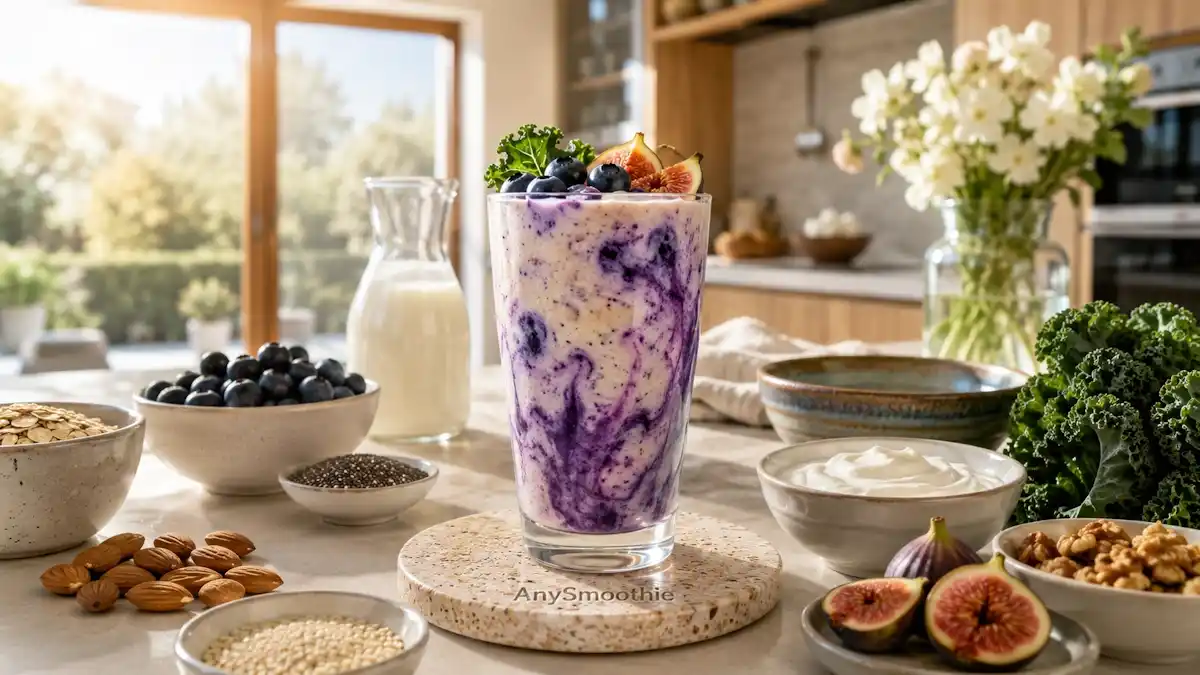
Smoothies make it easier to combine protein, calcium, vitamin D, and other bone-supporting nutrients in one convenient drink. They can turn breakfast or a snack into a more balanced option when your schedule is full.
Still, a smoothie supports overall nutrition rather than replacing a varied diet or medical care. The recipes below pair reliable protein sources with calcium-rich ingredients, while keeping added sugar low. First, it helps to understand how these nutrients support normal bone remodeling.
How Protein and Calcium Smoothies Support Strong Bones
Bone is living tissue that constantly breaks down and rebuilds. Calcium supplies much of the mineral structure, while protein provides amino acids for the collagen-rich framework that gives bone its flexible foundation. The two nutrients work through different pathways, so getting both regularly makes sense.
Vitamin D helps the intestines absorb calcium and supports the body’s regulation of calcium and phosphorus. A smoothie made with fortified milk can provide calcium and vitamin D in one ingredient. Check the label because fortification levels vary by brand.
The NIH calcium fact sheet lists dairy foods, fortified beverages, tofu made with calcium, and some fish as useful calcium sources. The NIH vitamin D fact sheet explains how vitamin D supports calcium absorption and bone-related physiology.
Magnesium, phosphorus, and vitamin K also participate in bone metabolism. Weight-bearing and resistance exercise provide another important signal for maintaining bone tissue. More of any single nutrient isn’t automatically better, especially when supplements or medical conditions are involved.
When choosing ingredients, compare serving sizes, protein, calcium, vitamin D, and added sugar on the Nutrition Facts label. Spread protein and calcium across meals instead of relying on one large smoothie. This approach gives your body repeated access to the raw materials used in normal tissue maintenance.
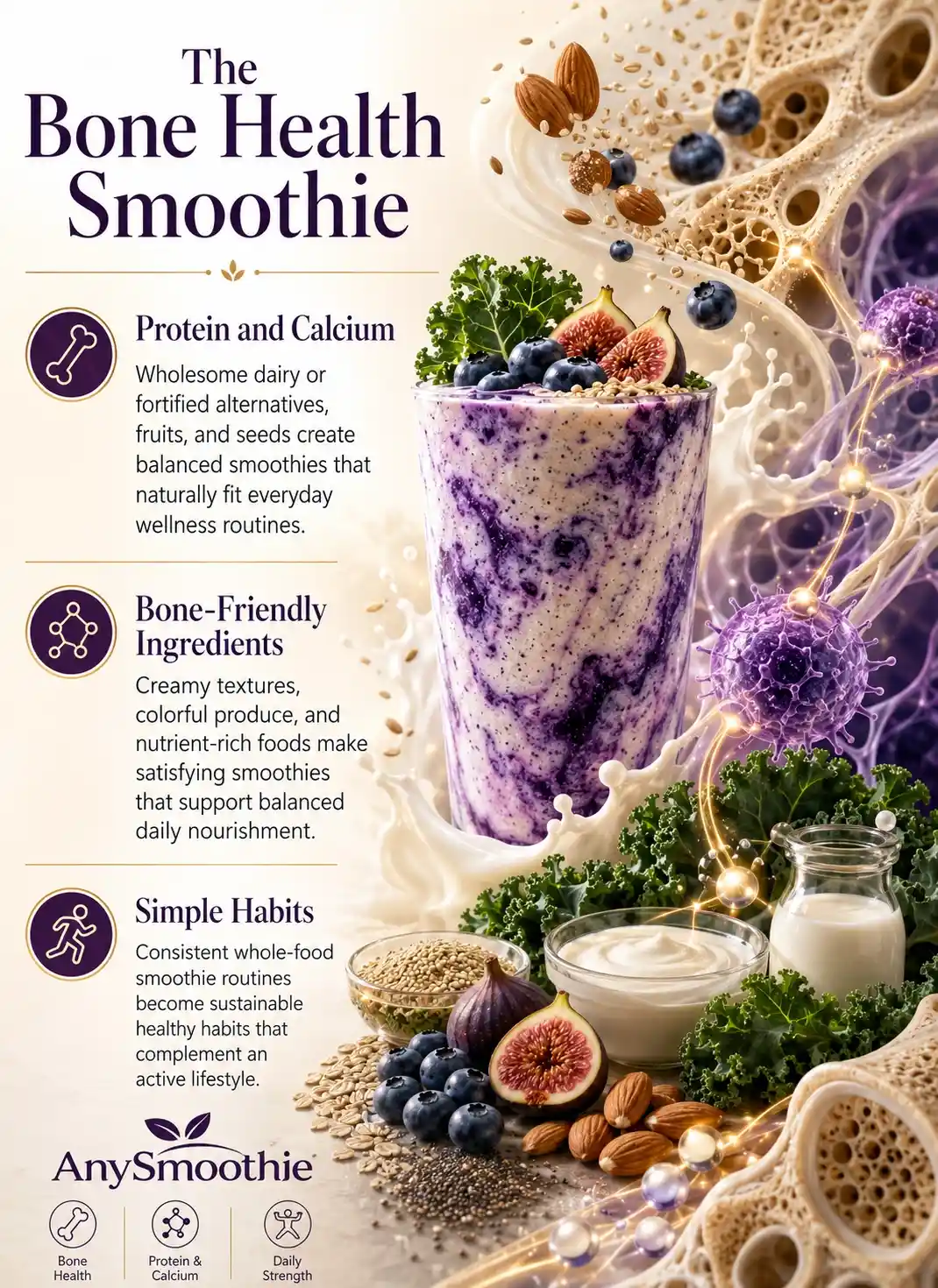
3 Protein and Calcium Smoothies for Bone Health
Exact nutrient totals vary by brand, recipe size, and fortified product. Use unsweetened ingredients when possible, then adjust flavor with fruit, spices, or cocoa.
How to Choose Ingredients and Fit Smoothies Into Your Routine
Read the label on every milk or plant beverage. Look for meaningful amounts of protein, calcium, and vitamin D, then check serving size and added sugar. Almond, oat, and rice beverages may contain little protein unless manufacturers add it. Fortified soy milk is often closer to dairy milk in protein.
A balanced smoothie can fit breakfast, a post-exercise snack, or a busy afternoon. It shouldn’t crowd out vegetables, beans, whole grains, fish, eggs, or other protein foods. Rotate ingredients so your overall eating pattern supplies nutrients that one recipe can’t provide.
Pair nutrition with weight-bearing and resistance exercise when those activities match your fitness level. Walking, stair climbing, strength training, and similar activities place useful mechanical demands on bone and muscle. Start at an appropriate level, especially if you haven’t exercised recently.
| Smoothie | Main protein source | Calcium source | Approximate protein | Best fit |
|---|---|---|---|---|
| Greek yogurt berry | Greek yogurt, milk | Yogurt, fortified milk | 25 to 35 g | Dairy or soy eaters |
| Tofu banana | Tofu, soy milk, peanut butter | Calcium-set tofu, fortified soy milk | 20 to 30 g | Plant-based diets |
| Cottage cheese peach | Cottage cheese, milk | Cottage cheese, fortified milk | 25 to 35 g | High-protein breakfasts |
People with kidney disease, a history of kidney stones, difficulty digesting dairy, or food allergies should ask a qualified health professional about suitable ingredients. The same applies if you’ve been given a prescribed calcium or vitamin D plan. These smoothies are food choices, not treatments.
Conclusion: A Practical Start for Bone-Supporting Nutrition
The strongest smoothie choices combine a dependable protein source, a verified calcium source, and fruit or other whole-food ingredients. Vitamin D-fortified products can help fill a common nutrition gap, but label checks matter.
Rotate the recipes, spread protein and calcium across the day, and include exercise that fits your abilities. Prepare fruit, seeds, and measured ingredients in advance, then start with the smoothie that best matches your dietary needs.
🛡️ Safety Notes & Dietary Interactions
- Balance Matters: Protein and calcium work together as part of normal bone health, but no single smoothie can strengthen bones on its own. A varied diet, adequate vitamin D, regular weight-bearing exercise, and overall healthy lifestyle habits remain the foundation of long-term skeletal health.
- Choose Fortified Products Carefully: Calcium and vitamin D levels vary widely between dairy and plant-based beverages. Always read Nutrition Facts labels to confirm calcium, vitamin D, protein, and added sugar rather than assuming similar products provide the same nutritional value.
- Adjust for Individual Health Needs: People with kidney disease, kidney stones, lactose intolerance, food allergies, or prescribed calcium or vitamin D plans should choose ingredients that match their healthcare provider’s recommendations. Individual nutrient needs can differ substantially.
- Food Before Supplements: Whole-food smoothies provide protein, calcium, vitamins, minerals, and other nutrients together. If you’re considering calcium or vitamin D supplements, especially alongside prescription medications, consult a qualified healthcare professional before making significant changes.
FAQ
How much protein should a bone-supporting smoothie contain?
Most balanced meal-style smoothies provide approximately 20 to 30 grams of protein, while some recipes may reach 35 grams depending on the ingredients. Greek yogurt, cottage cheese, milk, fortified soy milk, silken tofu, and protein powders can all contribute. Your ideal amount depends on your age, activity level, and overall daily protein intake.
Is dairy better than fortified plant milk for bone health?
Not necessarily. Dairy naturally provides calcium and protein, while many fortified soy milks offer comparable amounts of calcium, vitamin D, and protein. Other plant beverages, such as almond or oat milk, may contain much less protein unless fortified. Reading the Nutrition Facts label is the most reliable way to compare products.
Can I get enough calcium from smoothies alone?
Smoothies can contribute a meaningful amount of daily calcium, but they should not be your only source. A varied eating pattern that includes dairy or fortified alternatives, leafy vegetables, legumes, nuts, seeds, and other calcium-containing foods provides broader nutrition and supports overall bone health more effectively.
Are protein powders necessary in bone health smoothies?
No. Many smoothies naturally reach a high protein content using foods like Greek yogurt, cottage cheese, kefir, tofu, or fortified soy milk. Protein powder can be convenient for some people, but it is optional. Whole-food protein sources also provide additional vitamins, minerals, and other beneficial nutrients.
When is the best time to drink a protein and calcium smoothie?
These smoothies work well at breakfast, after resistance exercise, or as a balanced afternoon snack. Rather than consuming all your protein and calcium at once, spreading these nutrients across multiple meals during the day may better support normal tissue maintenance and overall nutritional balance.

Medical Disclaimer: AnySmoothie content is for educational purposes only and is not a substitute for professional medical advice. Consult a healthcare provider for personalized guidance. See our full Disclaimer & Terms of Use. AI Transparency: AnySmoothie may use AI to support content development. All content undergoes human editorial review for accuracy, clarity, and editorial quality. See our full AI Transparency.