
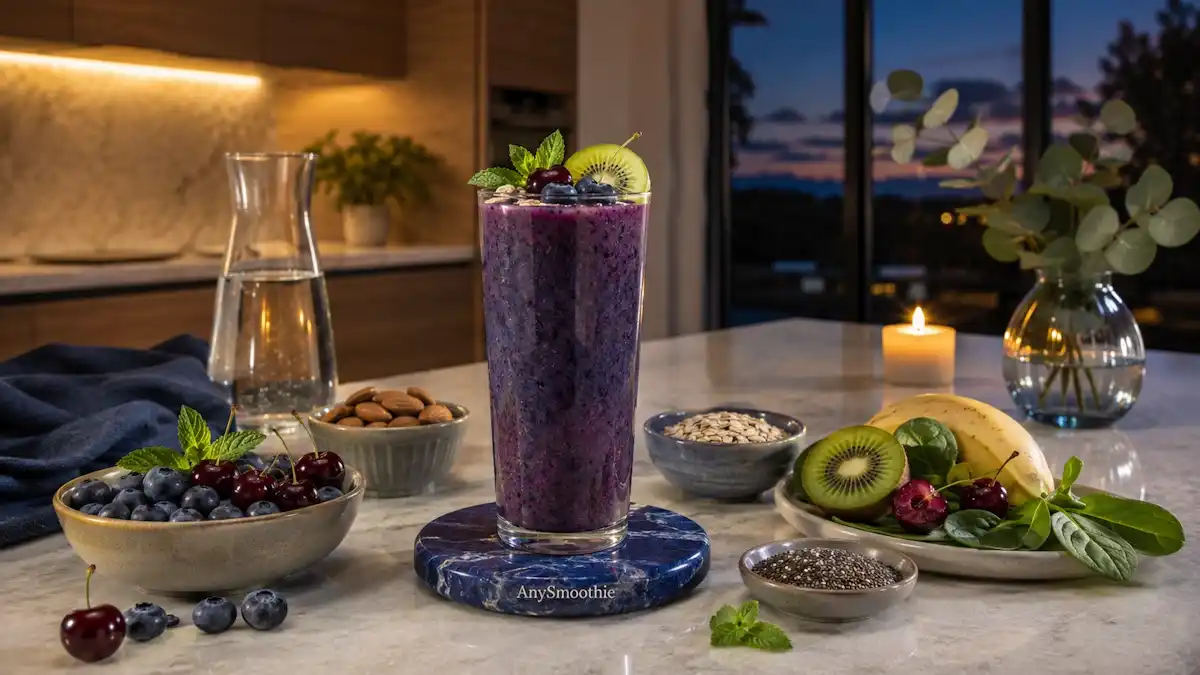
Your eyes can leave a bright screen while your brain still acts as if daytime has arrived. Late-night scrolling, overhead LEDs, and a glowing laptop may delay the natural rise in melatonin that helps your body prepare for sleep.
A smoothie can’t erase blue-light exposure or reset a shifted body clock in one serving. However, the right ingredients can support hydration, antioxidant defenses, steady evening nutrition, and the biochemical pathways involved in sleep timing. These blue light recovery smoothies are designed to fit healthy sleep rhythms and work best alongside dimmer light and a consistent bedtime routine.
Why evening light can disrupt your sleep rhythm
Light is one of the strongest signals your circadian system receives. Specialized cells in the retina detect light and send information to the suprachiasmatic nucleus, the brain’s central circadian clock. Blue-enriched light tends to create a stronger daytime signal, especially when exposure happens late at night.
Evening exposure to bright, blue-enriched light may delay the body’s normal preparation for sleep, particularly when screen use continues close to bedtime. Learn more about Blue light and sleep and practical ways to reduce nighttime light exposure.
That signal can delay melatonin release and make you feel alert beyond your intended bedtime. The effect depends on brightness, exposure length, distance from the screen, and your personal sensitivity. A smoothie cannot block that message, but it can support the body while your environment becomes more sleep-friendly.
Food compounds also interact with natural pathways rather than acting as instant sleep switches. Tryptophan is an Amino acid used in the pathway that produces serotonin and melatonin. Magnesium supports normal energy metabolism and Nervous system function. Tart cherries, berries, kiwi, and leafy greens provide polyphenols, vitamin C, and other compounds that help maintain antioxidant defenses.
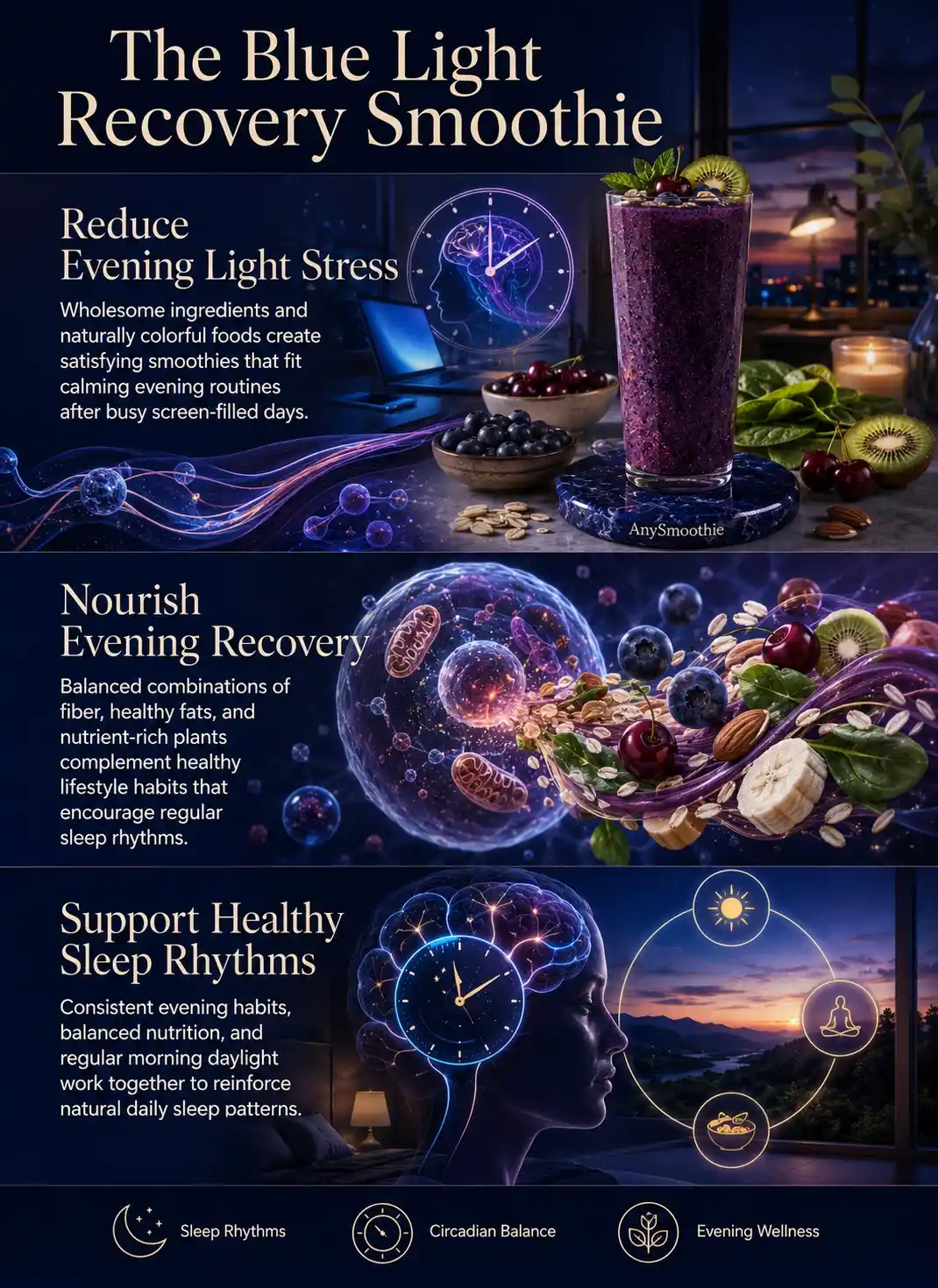
The practical goal is to reduce the late-night light signal, then give your body light, balanced nutrition while it returns to its normal nighttime pattern.
A small evening blend may also work better than a heavy dessert or a glass of fruit juice. Whole fruit brings fiber, while yogurt, kefir, seeds, or soy milk add protein and make the drink more satisfying. For broader guidance, explore this circadian smoothie for better sleep.
Build a smoothie that fits your body clock
Timing matters as much as ingredients. Drink a smaller smoothie about 60 to 90 minutes before bed, especially if you tend to feel full after liquid meals. Give your digestive system room to work, and avoid turning the smoothie into a large second dinner. For additional evening recipe ideas, see our Night smoothies for circadian recovery guide.
Choose unsweetened milk or yogurt when possible. Excessive added sugar may leave the drink less balanced, while caffeine from coffee, matcha, or cocoa can work against an early bedtime for sensitive people. Keep the recipe simple and adjust the portion to your appetite.
The three blends below use different nutrient profiles and textures.
| Smoothie | Main ingredients | Nutrient angle | Texture | Best timing |
|---|---|---|---|---|
| Cherry Pumpkin | Tart cherries, banana, yogurt, pumpkin seeds | Polyphenols, protein, magnesium | Creamy with slight seed texture | 60 to 90 minutes before bed |
| Kiwi Green | Kiwi, blueberries, spinach, kefir | Vitamin C, polyphenols, protein | Tart and refreshing | 90 minutes before bed |
| Pear Chia | Pear, oats, chia, soy milk, yogurt | Fiber, protein, magnesium | Thick and filling | Earlier evening |
The takeaway is simple: select the blend that matches your hunger, digestion, and tolerance for tart or filling foods.
3 Blue Light Recovery Smoothies for Sleep Rhythms
Make the smoothie part of a low-light routine
The most useful pairing is environmental. Lower screen brightness, switch to a warmer display setting, and reduce overhead lighting during the hour before bed. A screen filter can reduce short-wavelength output, but it doesn’t make bright late-night viewing irrelevant.
Keep the smoothie recipe consistent for several nights instead of changing ingredients every evening. That approach makes it easier to notice whether portion size, tart fruit, dairy, or fiber affects your comfort. People who want more time-based nutrition ideas can review these evening smoothie blends for a sleep-supportive routine.
A regular wake time also gives your circadian clock a stronger daily anchor. Morning outdoor light helps provide the opposite signal, reinforcing the difference between daytime alertness and nighttime recovery. Regular morning daylight exposure helps reinforce healthy daily sleep-wake patterns and complements consistent evening routines. Explore the healthy sleep recommendations for additional evidence-based sleep habits.
Conclusion
Late-night blue light can push your sleep rhythm later, and no smoothie can cancel that exposure. Still, a balanced evening blend can support hydration, antioxidant systems, protein intake, and the nutrients involved in natural sleep pathways.
Choose tart cherries, kiwi, berries, leafy greens, seeds, yogurt, or fiber-rich ingredients based on your digestion and appetite. Pair the drink with dimmer light and a steady schedule, because the routine carries more weight than any single recipe.
🛡️ Safety Notes & Dietary Interactions
- Support Sleep With Healthy Habits: These smoothies can complement an evening routine, but they cannot offset the effects of prolonged late-night screen exposure. Dim lighting, consistent bedtimes, and limiting bright screens remain the most effective ways to support healthy sleep rhythms.
- Choose Evening Ingredients Wisely: If caffeine affects your sleep, avoid adding coffee, matcha, guarana, or large amounts of cocoa to evening smoothies. Opt for naturally caffeine-free ingredients that fit comfortably into your bedtime routine.
- Adjust for Individual Needs: People with diabetes, kidney disease, digestive disorders, food allergies, lactose intolerance, or medically prescribed diets should personalize ingredients such as fruit, dairy, soy products, seeds, and fiber with guidance from a qualified healthcare professional.
- Keep Portions Comfortable: A moderate smoothie about 60 to 90 minutes before bed is often easier to tolerate than a large serving immediately before lying down. Choose a portion that supports comfort without replacing balanced evening meals.
FAQs
Can a smoothie reverse the effects of blue light exposure?
No. A smoothie cannot undo the physiological effects of late-night blue light exposure. However, balanced evening nutrition can support normal body functions while reducing screen brightness, dimming lights, and maintaining a consistent bedtime remain the primary strategies for supporting healthy sleep rhythms.
Which ingredients are commonly used in evening smoothies?
Tart cherries, kiwi, berries, pears, spinach, pumpkin seeds, chia seeds, oats, plain yogurt, kefir, and unsweetened soy milk are popular choices. Together they provide protein, fiber, vitamins, minerals, and plant compounds without relying on excessive added sugar.
Should I avoid caffeine in a bedtime smoothie?
Yes, especially if you’re sensitive to caffeine. Coffee, matcha, energy powders, and even larger amounts of cocoa may interfere with sleep for some individuals. Choosing naturally caffeine-free ingredients is generally a better option for an evening smoothie.
When should I drink an evening smoothie?
Many people find that drinking a modest-sized smoothie about 60 to 90 minutes before bedtime fits comfortably into their evening routine. This allows time for digestion while avoiding an overly full feeling when going to bed.
Are blue light recovery smoothies enough to improve sleep?
No. Sleep quality is influenced by many lifestyle factors, including light exposure, regular sleep schedules, physical activity, stress management, and overall nutrition. These smoothies are best viewed as one supportive part of a broader sleep-friendly routine rather than a standalone solution.

Medical Disclaimer: AnySmoothie content is for educational purposes only and is not a substitute for professional medical advice. Consult a healthcare provider for personalized guidance. See our full Disclaimer & Terms of Use. AI Transparency: AnySmoothie may use AI to support content development. All content undergoes human editorial review for accuracy, clarity, and editorial quality. See our full AI Transparency.