
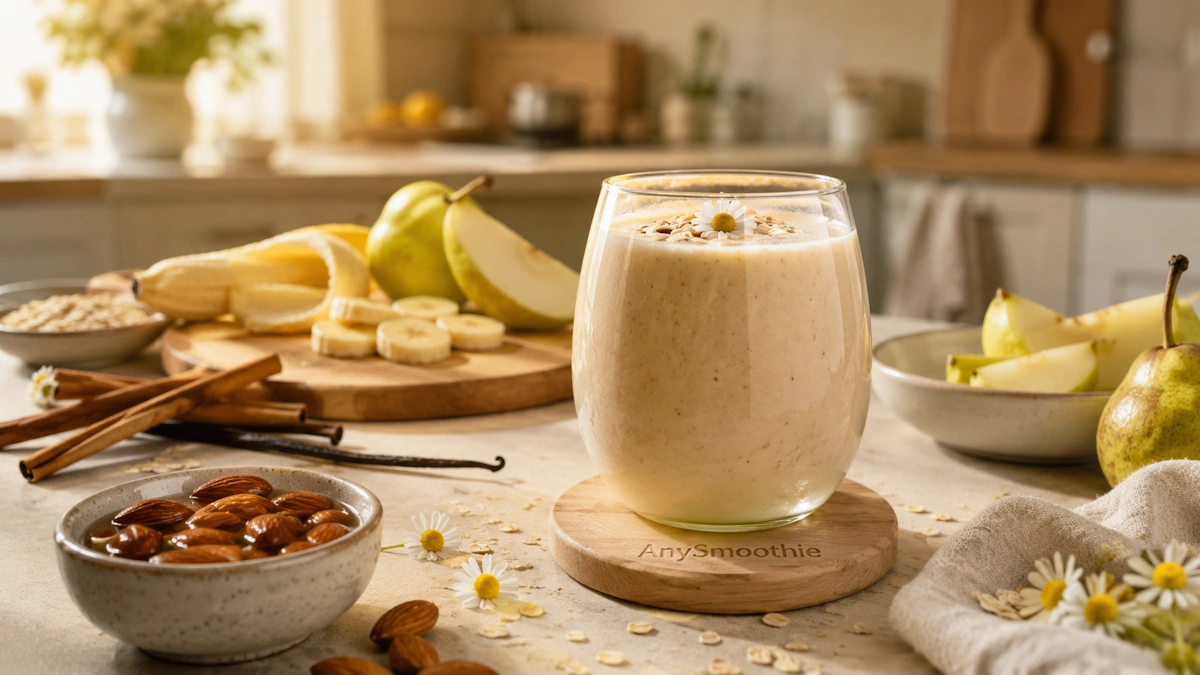
A banana smoothie for acid reflux can be a calm choice when other blends feel too sharp. Bananas are mild, low in acid, and easy to mix into a soft base that many people tolerate better.
The catch is the rest of the recipe. A smoothie can still cause trouble when it is packed with fat, citrus, chocolate, peppermint, or a huge serving size. The goal is simple, low-acid ingredients that support a smoother digestion experience, while still fitting your own triggers. Start there, then build from what your body handles well.
How banana smoothies fit into an acid reflux-friendly routine
A smoothie works best when it stays light, balanced, and easy to sip. Texture matters because thick drinks can sit heavy, while very rich blends can feel dense after a meal.
Acidity matters too. Bananas sit on the mild end of the fruit scale, so they often work better than oranges, pineapple, or large amounts of berries. Fat content also matters, because cream, full-fat yogurt, and big spoonfuls of nut butter can make a smoothie feel richer than you want.
Why bananas are often easier on the stomach
Ripe bananas have a soft texture and a gentle flavor. That makes them a practical base when you want a smoothie that does not feel sharp or acidic.
They also blend into a smooth, even body without much effort. In plain terms, they give the drink structure without adding a lot of bite. That is one reason bananas show up so often in reflux-friendly recipes.
What makes a smoothie more likely to trigger reflux
A few ingredients tend to raise the chance of discomfort. High-fat add-ins are a common one, along with chocolate, peppermint, coffee, and citrus.
Cold temperature can matter too, especially when the drink is icy and thick. Large portions are another problem, because even a gentle smoothie can feel heavy if you drink too much at once. For a broader trigger list, Harvard Health’s GERD diet guide is a useful reference.
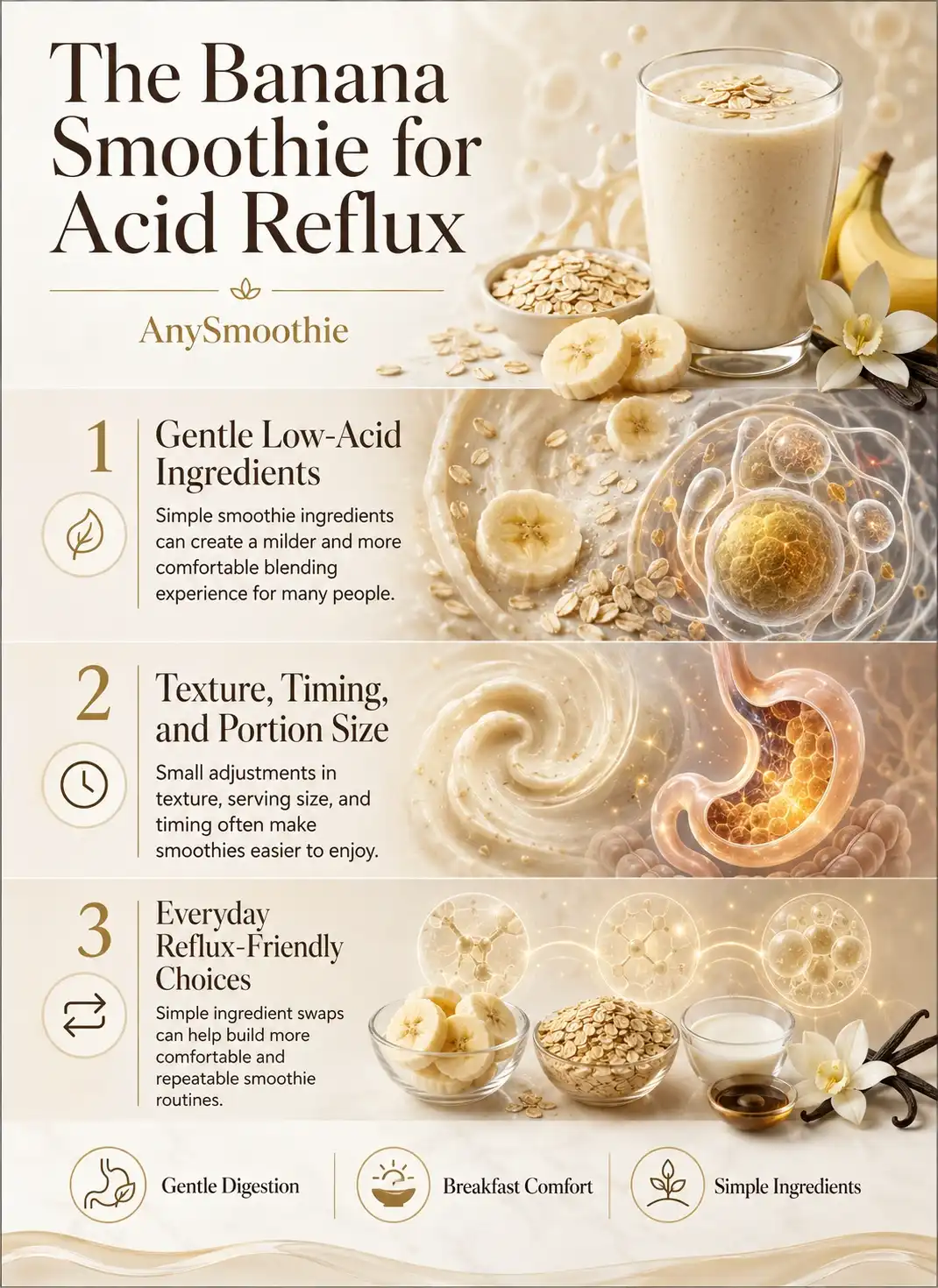
The best ingredients to use in a reflux-friendly banana smoothie
Keep the base simple. Ripe banana, unsweetened oat milk, almond milk, or water make a light start. Oats add body, while low-fat yogurt can work if dairy does not bother you.
Small amounts of chia can help with texture, but too much can turn the smoothie into a paste. A little spinach is fine for many people, and a small piece of ginger may feel good if you already know you tolerate it. The CHOP food therapy guide for reflux also gives a clear look at common trigger groups, which helps when you compare ingredients.
Ingredient swaps that lower the chance of discomfort
When a recipe feels risky, swap the trigger instead of giving up on the smoothie. Use plant milk in place of heavy cream or sweetened dairy blends. Use ripe banana instead of citrus fruit. Use a teaspoon of almond butter instead of a large scoop.
Heavy sweeteners can also backfire. A little honey or maple syrup may be fine, but a very sweet smoothie can feel like dessert instead of breakfast. Keep it light, then adjust only if your stomach stays calm.
Portion size, temperature, and timing matter too
A smaller smoothie often works better than a large one. Drink it slowly, and see how your body responds before you make it a habit.
Timing matters as well. Many people feel better when they avoid a smoothie right before lying down. Room-temperature or lightly chilled blends also tend to feel easier than a near-frozen shake.
3 Banana smoothie recipes for acid reflux
Each recipe keeps the base simple and the texture smooth. If one ingredient has ever bothered you, leave it out first.
A Simple Banana Oat Smoothie for Everyday Comfort
Ingredients
- 1 ripe banana
- 1/3 cup rolled oats
- 1 cup unsweetened oat milk or almond milk
- Pinch of cinnamon, if tolerated
Blend until smooth.
This version feels filling without much fat, so it works well as a light breakfast or snack.
Estimated Nutrition per Serving
Estimated with one medium banana, rolled oats, unsweetened oat milk, and cinnamon.
- Calories: ~345 kcal
- Protein: ~8 g
- Carbohydrates: ~65 g
- Fat: ~7 g
- Fiber: ~7 g
- Sugars: ~22 g
Oats continue absorbing liquid after blending, so this simple combination becomes thicker surprisingly quickly. If you prefer a softer, easier-to-sip breakfast, drink it soon after blending or start with a small extra splash of milk.
A Banana Almond Smoothie With a Lighter Fat Balance
Ingredients
- 1 ripe banana
- 1 teaspoon almond butter
- 1 cup unsweetened almond milk
- 1 tablespoon rolled oats
Blend until creamy.
The almond butter adds richness, but the small amount keeps the drink from becoming too heavy. If nut butter tends to sit poorly, skip it and add more oats instead.
Estimated Nutrition per Serving
Estimated with one medium banana, almond butter, unsweetened almond milk, and rolled oats.
- Calories: ~245 kcal
- Protein: ~6 g
- Carbohydrates: ~42 g
- Fat: ~8 g
- Fiber: ~6 g
- Sugars: ~17 g
A Banana Spinach Ginger Smoothie for a Milder Green Option
Ingredients
- 1 ripe banana
- 1 small handful spinach
- 1 cup oat milk or almond milk
- 1 tiny piece fresh ginger, if tolerated
Blend until the spinach disappears into the mix.
Keep the ginger subtle, because the goal is a smooth green blend, not a spicy one. This recipe works best when the greens stay in the background.
Estimated Nutrition per Serving
Estimated with one medium banana, spinach, unsweetened almond milk, and a small amount of fresh ginger.
- Calories: ~165 kcal
- Protein: ~4 g
- Carbohydrates: ~32 g
- Fat: ~3 g
- Fiber: ~5 g
- Sugars: ~16 g
Blend the spinach with the almond milk before adding the banana. That extra first pass makes the greens almost disappear into the texture, which is especially useful here because there are so few ingredients available to mask leafy pieces.
How to make your smoothie fit your own reflux triggers
Your best version depends on the details your body notices. Keep a short food note for a week or two, then look for patterns after each smoothie.
When you test a new ingredient, change only one thing at a time. That makes it easier to spot what helps and what hurts. If you want a plain cross-check on common problem foods, Harvard Health’s GERD diet guide is a solid place to compare notes.
| Ingredient | How it may affect reflux | When to use it | When to avoid it | Easy swap idea |
|---|---|---|---|---|
| Ripe banana | Usually mild and low acid | As the main base | If very large portions bother you | Use half a banana |
| Oats | Adds body and fullness | When you want a steadier blend | If thick drinks feel heavy | Reduce the amount |
| Almond milk | Light and simple | For a thinner smoothie | If additives bother you | Use oat milk or water |
| Low-fat yogurt | Adds creaminess | If dairy sits well | If dairy seems to trigger symptoms | Use plant yogurt |
| Almond butter | Raises fat quickly | In a small amount | If rich foods cause discomfort | Skip it or use chia |
Small changes make trigger patterns easier to see.
Keep the recipe calm, then build from there. If one version feels off, change the portion, the fat level, or the temperature before you change everything at once.
Conclusion
A banana smoothie for acid reflux works best when it stays simple, low acid, and easy to digest. Bananas make a strong base, while high-fat and high-acid add-ins are the biggest trouble spots.
The smartest approach is small adjustments. Test one ingredient, keep portions modest, and notice what your body tells you. With a few careful swaps, you can build a smoothie that feels better without losing flavor.
🛡️ Safety Notes & Dietary Interactions
- Low-Acid Ingredient Selection: Ripe bananas provide a mild flavor profile that many people find easier to tolerate. Building smoothies around lower-acid ingredients may support a more comfortable digestive experience.
- Fat Load Awareness: Large amounts of nut butters, cream, or full-fat dairy can make smoothies feel heavier. Keeping fat intake moderate may help maintain a lighter digestive profile.
- Portion Size Management: Even gentle ingredients can feel uncomfortable in oversized servings. Smaller portions consumed slowly often fit more comfortably into reflux-friendly meal routines.
- Temperature and Timing Considerations: Lightly chilled smoothies may feel easier to tolerate than thick frozen shakes. Many people also prefer leaving space between smoothies and bedtime.
FAQ
Why are bananas commonly used in acid reflux-friendly smoothies?
Bananas are naturally mild in flavor and relatively low in acidity compared to fruits such as oranges, pineapple, or grapefruit. Their soft texture also helps create a smooth and creamy consistency without requiring large amounts of dairy or sweeteners. The article highlights bananas because they provide a simple base that many people find easier to incorporate into reflux-conscious smoothie routines.
What ingredients are most likely to make a smoothie less reflux-friendly?
The article identifies several common triggers, including chocolate, peppermint, coffee, citrus fruits, heavy cream, large amounts of nut butter, and very high-fat dairy products. While individual tolerance varies, these ingredients may increase the likelihood of digestive discomfort for some people. Keeping recipes simple makes it easier to identify personal trigger patterns.
Why does portion size matter when drinking smoothies?
A smoothie can contain gentle ingredients and still feel uncomfortable if the serving is excessively large. The article explains that large portions may create a heavier digestive load, especially when consumed quickly. Starting with a moderate serving size and paying attention to personal response often provides more useful information than dramatically changing ingredients.
How do oats help in a banana smoothie for acid reflux?
Oats contribute texture and create a more substantial smoothie without adding excessive fat or acidity. They also help slow digestion and improve satiety, making the drink feel more balanced. According to the article, oats pair particularly well with bananas because they support a smoother consistency while maintaining a simple ingredient profile.
What is the most important lesson from the article?
The article repeatedly emphasizes personalization and gradual adjustment. Rather than searching for a perfect formula, it recommends starting with mild ingredients, moderate portions, and a simple recipe structure. Tracking individual responses to texture, temperature, timing, and specific ingredients can help identify a smoothie routine that feels both comfortable and sustainable over time

Medical Disclaimer: AnySmoothie content is for educational purposes only and is not a substitute for professional medical advice. Consult a healthcare provider for personalized guidance. See our full Disclaimer & Terms of Use. AI Transparency: AnySmoothie may use AI to support content development. All content undergoes human editorial review for accuracy, clarity, and editorial quality. See our full AI Transparency.