
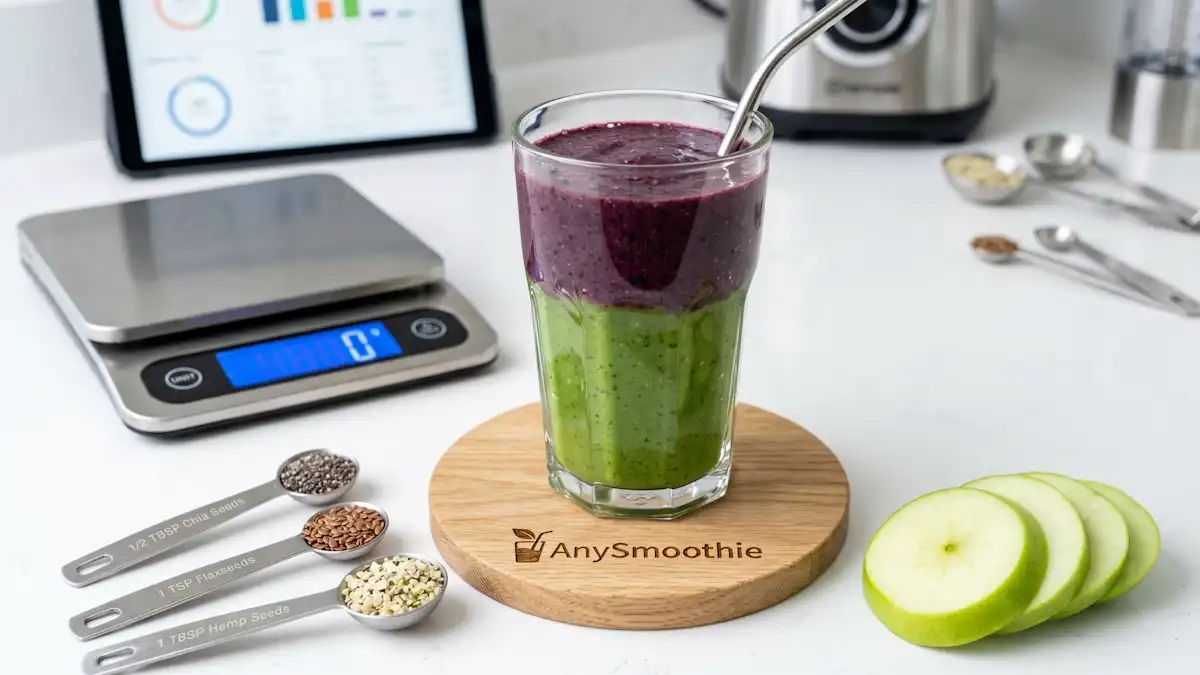
You blend a smoothie for weight loss, but crash an hour later. Why? Most people count total carbs wrong. They fear all carbs or slash them too low, leaving you tired and hungry.
A fiber-first weight loss smoothie fixes this. You prioritize fiber to enjoy carbs without blood sugar spikes. Fiber acts like a slow-release brake on sugar. It boosts satiety, extends fat-burning, and improves nutrient partitioning. Your body sends energy to muscles, not fat stores. This biohacker approach primes mitochondria for better metabolic efficiency.
We’ll cover fiber ratios, recipes, and timing next. Stick around for simple swaps that keep you full and burning fat.
The Carb Paradox: Why Total Carbs Matter Less Than Fiber Ratios
Total carbs don’t tell the full story for weight loss. Focus on fiber-to-carb ratios instead. High fiber slows digestion. This controls insulin, cuts hunger, and promotes fat burn.
Nutrient partitioning shines here. High-fiber carbs direct glucose to muscles. Low-fiber ones store as fat. Mitochondria use energy better with steady supply, not spikes.
For example, a banana smoothie spikes insulin fast. Add chia seeds, and fiber traps sugars. Release happens slow. You get hours of steady energy.
Biohackers track ratios over totals. This builds metabolic efficiency. Your body burns fat longer between meals.
Net Carbs vs. Impact Carbs: The Biohacker’s Calculation
Net carbs subtract fiber from total carbs. Impact carbs consider blood sugar effect from fiber type and glycemic index.
High-fruit blends spike hard. Fiber-first ones blunt it. Here’s a quick comparison of smoothie bases:
| Smoothie Base | Insulin Spike Potential | Satiety Duration | Fat-Burning Window (Hours) | Microbiome Support |
|---|---|---|---|---|
| High-Fruit (Low Fiber, e.g., banana-heavy) | High | 1-2 hours | 2 hours | Low |
| Moderate-Fruit (High Fiber, e.g., mixed berries) | Medium | 3 hours | 4 hours | Good |
| Fiber-First (Low-GI Fruit + Seeds like greens, chia, psyllium) | Low | 5+ hours | 6+ hours | Excellent |
Fiber-first wins on fat-burning window. It maximizes time in the zone without low energy. For details on net carbs debates, check this breakdown on subtracting fiber.

Creating the Fiber Matrix: Soluble and Insoluble Synergy
Build a fiber matrix for top metabolic efficiency. Soluble fiber from chia or psyllium gels in your gut. It slows carb release. Insoluble fiber from flax or greens adds bulk.
Together, they slow gastric emptying. Glucose stays stable. You get steady energy and better fat loss. This aids liposomal transport. Nutrients absorb faster into cells.
Aim for a 1:2 soluble-to-insoluble ratio in smoothies. Start with one tablespoon each. Blend well for even mix. Your microbiome thrives, too. This setup partitions nutrients right.
Gastric Emptying: How Fiber Slows Down the Glucose Clock
Fiber delays stomach emptying. Carbs release slow, so no glucose floods. Insulin stays low.
Fiber traps sugars like a net. They drip out over hours. This extends your fat-burning window. Aim for 10-15g fiber per smoothie.
Use psyllium for soluble power. Add spinach for insoluble bulk. This re-trains metabolism. You burn fat instead of storing it.
3 Fiber-First Weight Loss Smoothie Recipes
These recipes pack 20-30g fiber, under 40g net carbs. They deliver high satiety. Use April 2026 greens and apples for freshness. Add MCT oil for partitioning boost.
Each blends in two minutes. Nutrition based on standard apps.
Strategic Carb Backloading: When to Add Fruit to Your Blend
Time carbs right. Use fiber-first base always. Add fruit post-workout or evening.
Muscles soak up glucose then. Fiber blunts spikes. This builds insulin sensitivity.
Avoid morning fruit. It spikes early. Backload for better partitioning.
Tweak: Base with greens and seeds. Add half banana after gym.
Insulin Sensitivity: Using Smoothies to Re-Train Your Metabolism
Backload carbs after activity. Muscles pull them in fast. Fiber keeps response mild.
This improves mitochondrial function over time. Start with fiber-first daily. Add fruit post-exercise.
Four-week plan: Week 1, base only. Week 2, add berries evening. Week 3, post-workout fruit. Week 4, test sensitivity with steady energy.
You re-train metabolism for fat loss.
Conclusion
Fiber ratios beat total carb counts. Recipes give easy wins. Timing maximizes efficiency.
Try one recipe tomorrow. Track satiety and fat burn. Log net carbs vs. energy for a week.
Share your results in comments. Build better habits now. Your body will thank you.
🛡️ Safety Notes & Dietary Interactions
- Fiber-to-Carbohydrate Ratio and Glucose Stability Dynamics: Total carbohydrates alone rarely determine how a smoothie affects energy or fat metabolism. Soluble and insoluble fibers help slow gastric emptying and soften glucose absorption curves, which may support steadier insulin signaling, longer satiety, and more stable energy compared to low-fiber fruit-heavy blends.
- Soluble Fiber Gel Formation and Nutrient Pacing: Ingredients like psyllium and chia absorb water and form viscous gel structures inside the digestive tract. This fiber matrix slows carbohydrate release and may help extend the post-meal fat-oxidation window while supporting smoother nutrient partitioning and reduced reactive hunger throughout the day.
- Microbiome Support and Metabolic Efficiency Coordination: Fiber-rich smoothies containing greens, flax, kefir, chia, and low-glycemic fruits provide fermentable substrates that beneficial gut bacteria can use to produce short-chain fatty acids. These microbial byproducts participate in broader satiety, metabolic, and inflammatory signaling pathways tied to long-term energy regulation.
- Carbohydrate Timing and Insulin Sensitivity Adaptation: Pairing higher-carbohydrate fruits with activity windows may support smoother glucose handling because active muscle tissue becomes more receptive to nutrient uptake after exercise. Building smoothies around a fiber-first structure before adding sweeter ingredients often creates a steadier metabolic response than leading with rapid-digesting carbohydrates alone.
FAQ
Why does a smoothie sometimes cause an energy crash even when it seems “healthy”?
Many smoothies contain large amounts of rapidly absorbed fruit sugars without enough fiber, fats, or protein to slow digestion. This can create a quick glucose rise followed by a noticeable drop in energy and satiety. Fiber-first smoothies help soften that curve by slowing carbohydrate absorption and supporting steadier nutrient delivery over several hours.
What is the difference between total carbs, net carbs, and impact carbs?
Total carbohydrates measure everything, including sugars and fiber. Net carbs subtract fiber because fiber is digested differently and has less direct glucose impact. “Impact carbs” goes further by considering how the entire food matrix influences blood sugar response, digestion speed, and satiety rather than looking only at numbers on a label.
Why are psyllium and chia considered so effective in weight-loss smoothies?
Both ingredients contain soluble fibers that absorb water and create a thicker digestive environment. This slows gastric emptying and helps reduce rapid glucose release into circulation. Chia also contributes omega-3 fats and texture, while psyllium provides particularly strong gelling properties that may support fullness and steadier appetite control.
How does fiber improve fat-burning potential and metabolic flexibility?
Fiber slows nutrient absorption and reduces sharp insulin spikes, which may help the body rely less heavily on rapid glucose turnover for energy. This steadier metabolic environment can support longer periods of fat oxidation between meals while also improving satiety and reducing reactive cravings that often interfere with sustainable fat-loss routines.
Why does timing fruit intake around workouts sometimes work better?
After exercise, muscle tissue generally becomes more receptive to glucose uptake and glycogen replenishment. Adding fruit to a fiber-rich smoothie during this window may support recovery while minimizing the larger glucose swings that sometimes occur when sweet fruit is consumed in isolation during sedentary periods. Timing and overall smoothie structure both influence the metabolic response.

Medical Disclaimer: AnySmoothie content is for educational purposes only and is not a substitute for professional medical advice. Consult a healthcare provider for personalized guidance. See our full Disclaimer & Terms of Use. AI Transparency: AnySmoothie may use AI to support content development. All content undergoes human editorial review for accuracy, clarity, and editorial quality. See our full AI Transparency.