
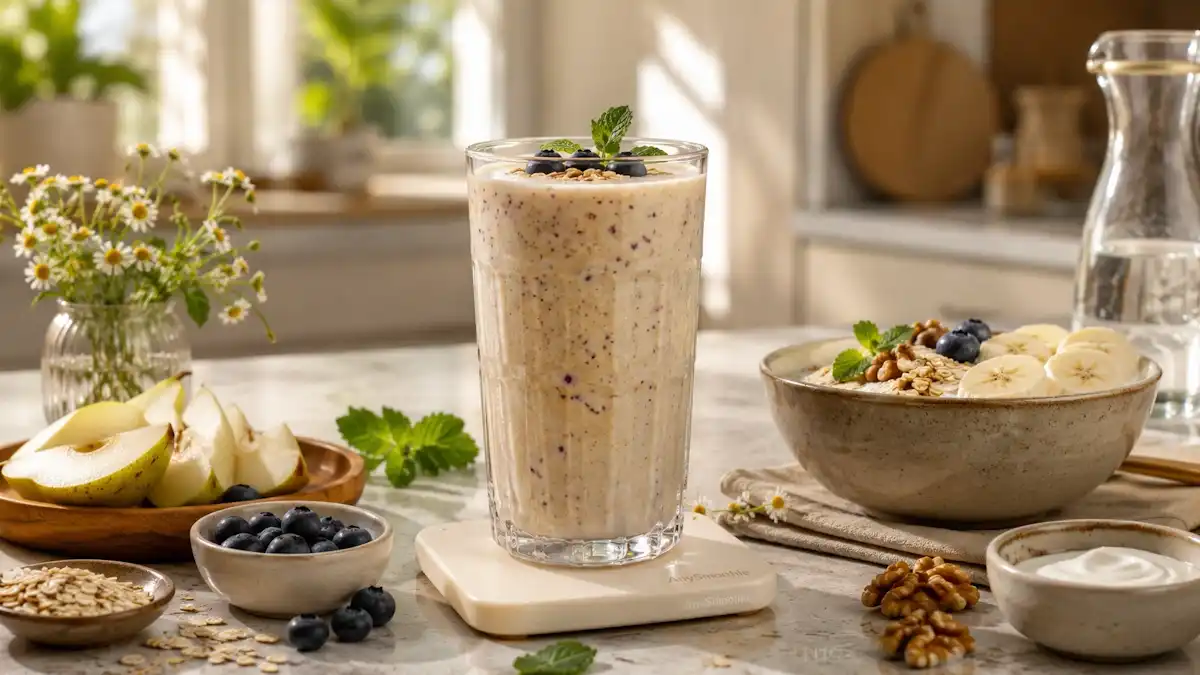
Your gut lining works hard every day, and small habits can help keep it steady. That is one reason L-alanyl-L-glutamine shows up in smoothie recipes aimed at gut barrier support.
These blends are not medicine, and they should not be treated that way. They are a food-first way to pair a stable amino acid blend with hydration, protein, and simple ingredients that many people tolerate well.
What L-Alanyl-L-Glutamine Does in the Body and Why Smoothies Work Well
L-alanyl-L-glutamine is a dipeptide made from glutamine and alanine. In plain terms, it is a stable way to deliver glutamine in powder form, which is one reason it mixes so well into drinks. A review in The Roles of Glutamine in the Intestine covers its role in intestinal cells, tight junction proteins, and normal gut function.
At a high level, glutamine helps support the cells that line the intestine. Those cells sit behind the gut barrier, which acts like a gatekeeper. When that barrier is well supported, it can help maintain fluid balance, nutrient transport, and the normal separation between the gut contents and the rest of the body.
How it fits into gut barrier support
The gut barrier is made up of the intestinal lining, mucus, and tight junctions between cells. Those tight junctions help control what passes through and what stays out. That matters for everyday wellness because the lining has a big job, and it needs regular support.
L-alanyl-L-glutamine fits here because it is easy to add to a drink that already supports hydration and digestion. It does not need heat, cooking, or a complicated recipe.
Why a smoothie is an easy delivery method
Smoothies make this ingredient simple to use. The powder blends in without much taste, so you can focus on the ingredients you already like. That helps with consistency, which matters more than a perfect recipe.
A smoothie also gives you room to add protein, fruit, and fluids in one glass. If you want more ideas for building gentle blends, smoothies for better digestion is a useful companion read.
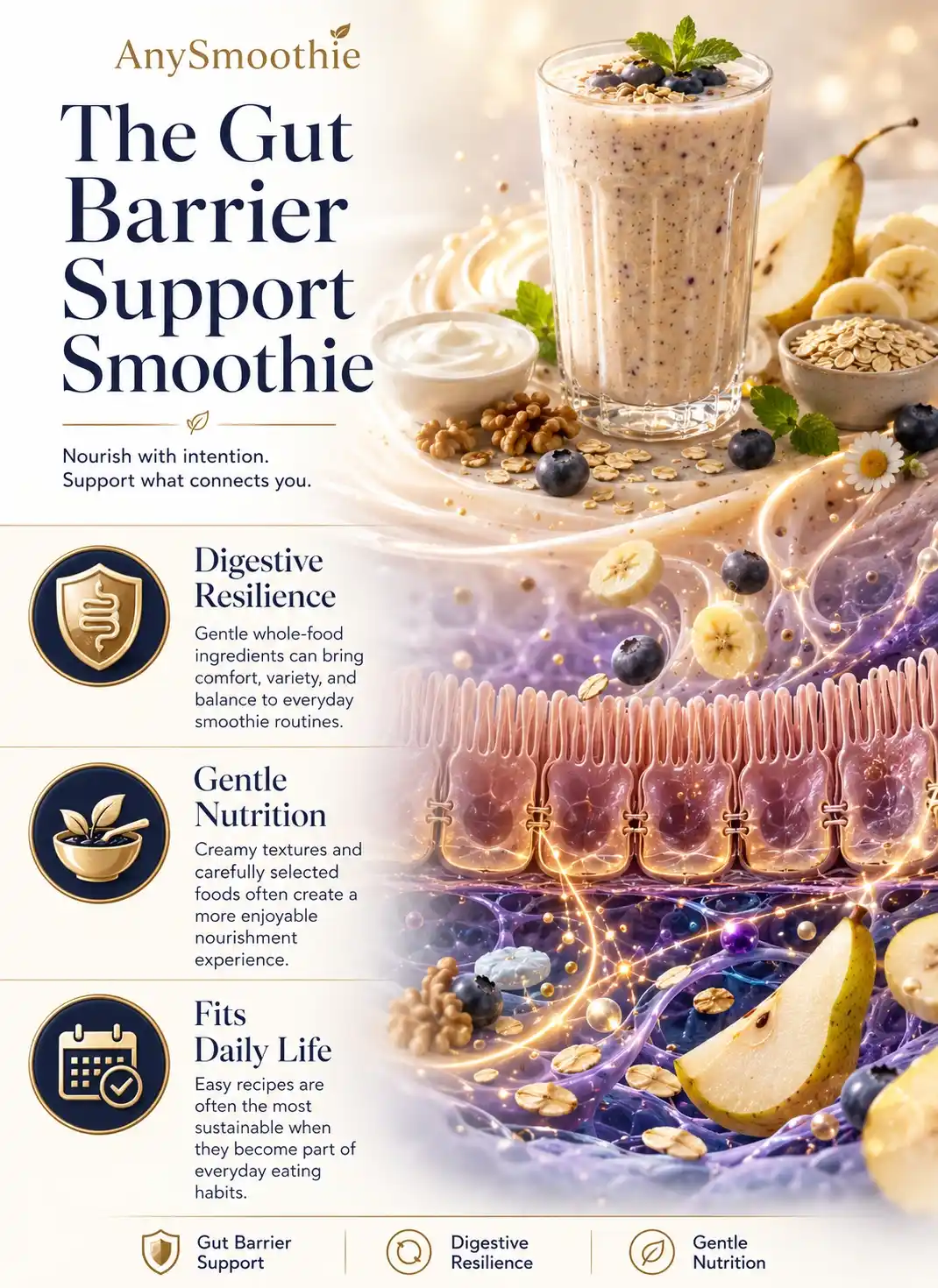
How to Build a Gut-Friendly L-Alanyl-L-Glutamine Smoothie
The best smoothie for gut barrier support is easy to digest. It should not be overly sweet, and it should not pile on too many competing ingredients. Start with a gentle base, then add a modest amount of fruit, a protein source, and one or two extras.
If you like cultured ingredients, probiotic-rich smoothie recipes can give you more ideas for kefir or yogurt based blends.
Choose a gentle base, fruit, and protein source
Good bases include water, coconut water, kefir, and unsweetened milk alternatives. If you want a creamier feel, kefir or plain yogurt works well. If you want a lighter drink, water or coconut water is better.
For fruit, banana, blueberries, and pineapple in moderate amounts are easy starting points. They bring flavor without making the drink too heavy. Protein can come from collagen, yogurt, or a clean protein powder if that fits your routine.
Use add-ins that support the gut without overcomplicating the blend
Small amounts of ginger, chia, flax, or greens can add texture and nutrients. Still, too much fiber at once can feel heavy for some people. One fiber source is often enough.
For more fiber-forward ideas, smoothies for microbiome support is a good follow-up once you know what your stomach handles well.
3 L-Alanyl-L-Glutamine Smoothies for Gut Barrier Support
Each of these blends keeps the ingredient list short. That makes them easier to repeat and easier to adjust.
How to Use It Safely, Compare It Smartly, and Make It Part of a Routine
For a plain-language refresher on glutamine, Cleveland Clinic’s glutamine guide is a straightforward place to start. Check labels, use the serving size on the package, and pay attention to how your body responds.
Start with fewer ingredients than you think you need. A short ingredient list is easier to assess and often easier to tolerate.
When to start small and keep the recipe simple
If you are new to this ingredient, begin with a smaller serving and a plain recipe. Give it a short trial period before adding more fruit, more fiber, or more flavor extras. That makes it easier to notice what feels good and what does not.
How it compares with other gut-friendly drinks
| Drink Type | Main Purpose | Texture or Taste | Best Time to Use | Who It May Suit |
|---|---|---|---|---|
| L-alanyl-L-glutamine smoothie | Gut barrier support plus nutrition | Smooth, mild, can be creamy | Morning, post-workout, or between meals | People who want a nutrient-dense drink |
| Plain protein smoothie | Protein intake and satiety | Creamy, neutral | Breakfast or a snack | People who want a simpler blend |
| Electrolyte drink | Fluid and mineral replacement | Light, salty, thin | Hot days, travel, or after sweating | People who need quick hydration |
| Bone broth style drink | Warm fluid with some protein | Brothy and savory | Between meals or in the evening | People who prefer savory drinks |
| Fiber-heavy green smoothie | Fiber and plant nutrients | Thick, earthy, filling | When appetite is low or as a meal-style drink | People who handle fiber well |
The main takeaway is simple. The right drink depends on what your body wants that day. If your stomach feels sensitive, a lighter smoothie usually works better than a crowded one.
Conclusion
L-alanyl-L-glutamine smoothies can fit neatly into a gut-support routine. They give you a simple way to combine a stable glutamine source with hydration, protein, and easy-to-tolerate ingredients.
Keep the recipe short, test your tolerance, and adjust the texture to match your needs. A calm, repeatable smoothie often beats a complicated one, especially when your goal is steady gut barrier support.
🛡️ Safety Notes & Dietary Interactions
- Supplement Guidance: Follow the serving size provided by your L-alanyl-L-glutamine product rather than increasing the amount on your own. More is not always better, and using the manufacturer’s recommended serving helps support a consistent daily routine.
- Digestive Tolerance: If you are new to L-alanyl-L-glutamine or higher-fiber smoothies, begin with a simple recipe and fewer ingredients. Gradually adding fruits, seeds, or greens can make it easier to identify which combinations feel most comfortable for your digestion.
- Medical Considerations: If you are pregnant, breastfeeding, managing kidney or liver conditions, or taking prescription medications, consult a qualified healthcare professional before introducing new amino acid supplements into your daily nutrition routine.
- Ingredient Quality: Choose products from reputable manufacturers that clearly list ingredients and avoid unnecessary sweeteners or fillers. Pair the supplement with balanced meals, adequate hydration, and consistent dietary habits for a practical food-first approach.
FAQ
What is L-alanyl-L-glutamine and how is it different from regular glutamine?
L-alanyl-L-glutamine is a stable dipeptide made by combining the amino acids L-alanine and L-glutamine. This structure improves stability in powdered products and beverages, making it convenient for smoothies. Once consumed, the body breaks it down into its individual amino acids as part of normal digestion and metabolism.
Can I take L-alanyl-L-glutamine in a smoothie every day?
Many people include L-alanyl-L-glutamine in a daily smoothie routine by following the serving directions provided on the product label. Consistency is generally more practical than using large amounts occasionally. Pairing it with balanced nutrition, hydration, and varied whole foods supports a sustainable long-term wellness routine.
Which smoothie ingredients pair best with L-alanyl-L-glutamine?
Bananas, blueberries, kiwi, pineapple, spinach, kefir, yogurt, coconut water, and unsweetened plant-based milks all blend well with L-alanyl-L-glutamine. Adding moderate amounts of chia, flaxseed, or collagen can improve texture and nutritional balance while keeping the ingredient list simple and easy to tolerate.
Should I drink an L-alanyl-L-glutamine smoothie before or after exercise?
Both options can fit a healthy routine depending on your schedule and nutritional goals. Some people enjoy one after exercise alongside protein and fluids, while others prefer it between meals or at breakfast. The most useful timing is the one you can maintain consistently.
Can I combine L-alanyl-L-glutamine with probiotics or fiber in the same smoothie?
Yes, many smoothie recipes combine L-alanyl-L-glutamine with probiotic foods such as kefir or yogurt and fiber-rich ingredients like chia, flaxseed, berries, or oats. Introducing new ingredients gradually can help you evaluate your individual tolerance while keeping the smoothie balanced and comfortable to enjoy regularly.

Medical Disclaimer: AnySmoothie content is for educational purposes only and is not a substitute for professional medical advice. Consult a healthcare provider for personalized guidance. See our full Disclaimer & Terms of Use. AI Transparency: AnySmoothie may use AI to support content development. All content undergoes human editorial review for accuracy, clarity, and editorial quality. See our full AI Transparency.