
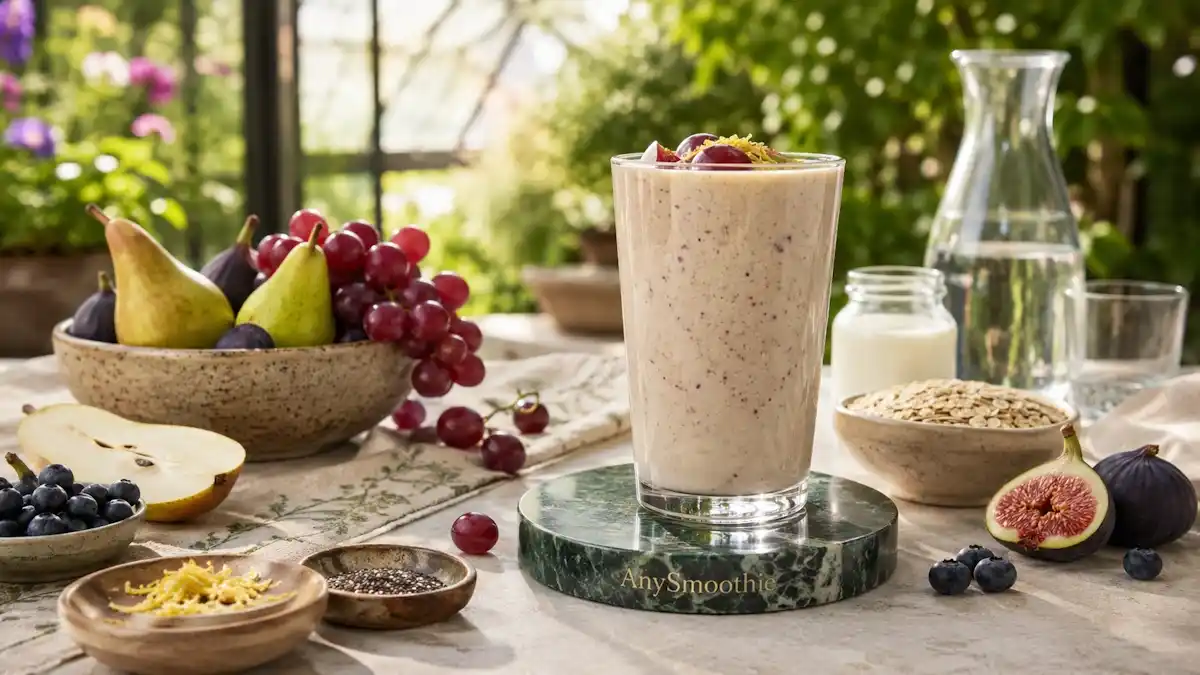
L-fucose matters because it sits inside a bigger gut-support story: mucins, mucus, and the thin layer that helps protect the gut lining. Mucins are the slippery proteins that keep that layer moving and organized. When that layer stays well supplied, the gut has a better buffer for food, microbes, and daily stress.
That is where l-fucose smoothies for mucins and gut barrier health fit in. They offer a food-first way to bring in marine ingredients, fermented bases, fiber, and fruit that work well together. The goal is simple, build a smoothie you can repeat and enjoy.
How l-fucose connects to mucins and the gut barrier
Mucins are glycoproteins, which means they are proteins with sugar chains attached. Those chains help form the mucus layer that coats the gut lining. The layer is not a thick wall. It is a living filter that keeps the surface cushioned and organized.
L-fucose is one of the sugars found on some of those chains. Research on intestinal fucose and host microbes shows that fucose is tied to how the gut environment responds to microbial activity and stress. For a closer look, see intestinal fucose and host microbes. In food terms, that does not mean one smoothie changes everything. It means certain ingredients can fit a pattern that supports mucus layer maintenance and a steadier daily routine.
A healthy mucus layer gives the gut lining more cushion, not less contact.
What mucins do in the digestive tract
Mucins help keep the gut surface slippery and organized. They shape the interface between what you eat, the microbes around it, and the lining below.
Why l-fucose matters in mucus layer support
L-fucose is part of the larger picture of gut ecology. Marine foods get attention here because some of them carry fucose-rich compounds. A marine-derived fucose carbohydrates review gives a useful look at that food side of the topic.
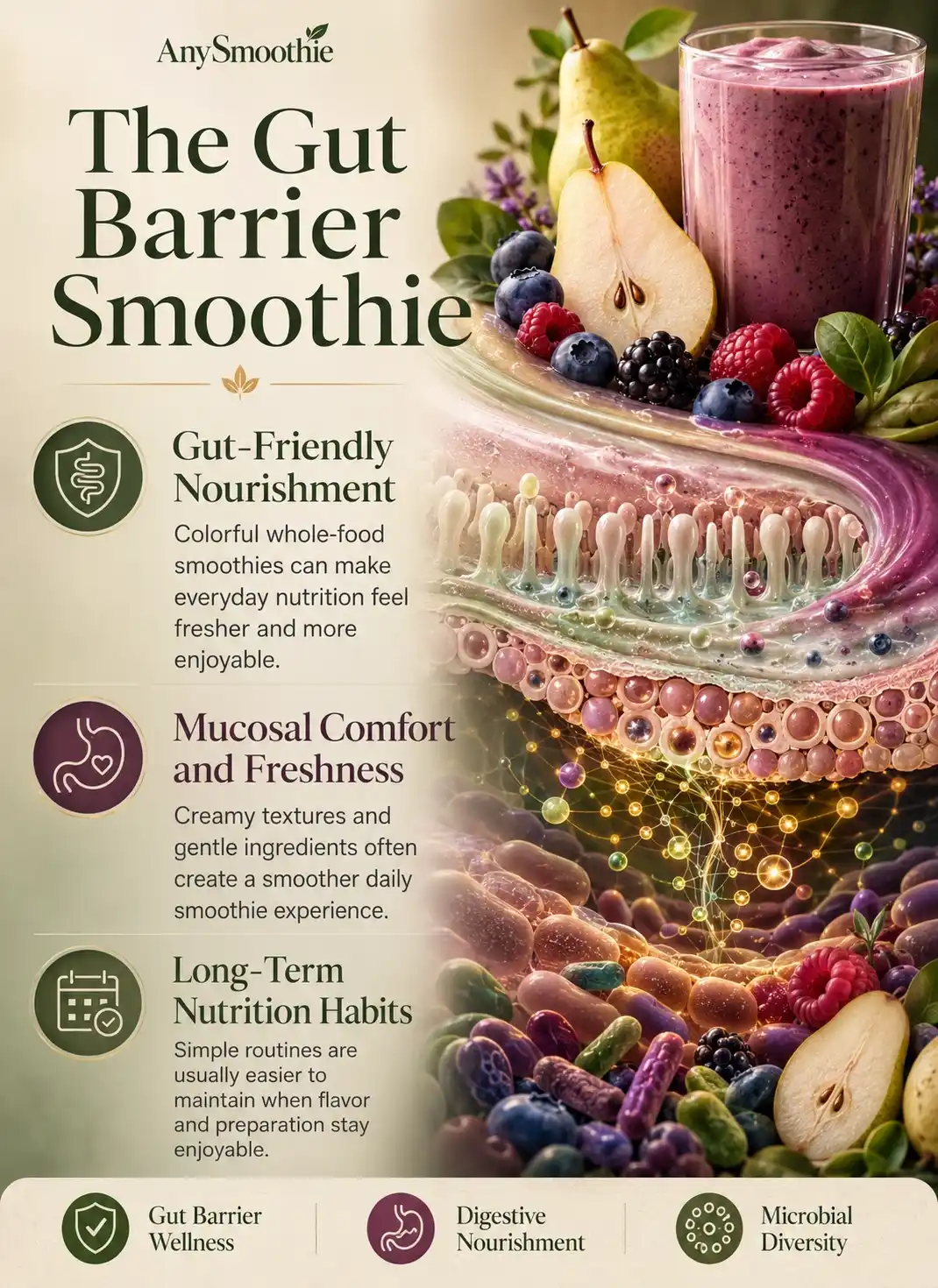
Best foods to build l-fucose friendly smoothies
A good blend starts with ingredients that do more than sweeten the glass. Marine ingredients can add fucose-containing compounds, while fermented dairy, berries, citrus, seeds, and oats bring texture and support for the mucus layer.
| Ingredient | Why it helps | Taste profile | Best use in a smoothie | Easy swap option |
|---|---|---|---|---|
| Seaweed powder | Adds a small marine fucose source | Mild, savory | Use a pinch with fruit | Dulse flakes |
| Plain kefir | Fermented base with protein and tang | Creamy, tart | Use as the liquid base | Plain yogurt |
| Blueberries | Polyphenols pair well with gut-supportive blends | Sweet-tart | Best frozen for color | Blackberries |
| Citrus | Bright flavor and a lighter finish | Fresh, sharp | Use juice or peeled segments | Pineapple |
| Chia or oats | Fiber thickens the blend and adds body | Neutral | Great for a fuller smoothie | Ground flax |
| Banana | Soft sweetness and smooth texture | Sweet, mellow | Helps tie flavors together | Mango |
The mix you choose matters more than any single ingredient. A few well-matched foods are easier to repeat than a long ingredient list.
Ingredients that may help the mucus layer feel supported
Fiber, polyphenols, and fermented foods all help make a smoother base. Thick smoothies feel more like a meal and less like a sugar hit. Chia, oats, banana, and avocado slow the drink down and give it weight.
A spoon of food-grade aloe gel can also fit into some blends if you tolerate it. Keep the amount small and treat it as a texture helper, not the main ingredient.
What to limit if you want a gut friendly blend
Too much added sugar can drown out the benefit of the other ingredients. Heavy ice cream style bases can feel rough, and stacks of processed powders can crowd out real food. Keep the blend simple, and let the fruit do the sweet work.
3 L-fucose smoothies for mucins and gut barrier health
Each of these blends is built for a real kitchen. They use everyday ingredients, a gentle texture, and a clear job.
Sea berry citrus smoothie for a bright, mineral rich start
Best for mornings when you want a tart, clean flavor.
Ingredients
- 3/4 cup plain kefir or unsweetened coconut yogurt
- 1/2 cup frozen blueberries
- 1/2 peeled orange
- 1 teaspoon chia seeds
- A pinch of seaweed powder or dulse flakes
- 1/2 cup cold water
- Ice, optional
Blend until smooth. Add ice if you want it colder. The fermented base adds tang, while the sea vegetable brings a small marine note that fits the fucose theme.
Estimated Nutrition per Serving
Estimated with plain low-fat kefir and dulse flakes.
- Calories: ~230 kcal
- Protein: ~11 g
- Carbohydrates: ~39 g
- Fat: ~5 g
- Fiber: ~8 g
- Sugars: ~26 g
The marine flavor can go from barely noticeable to dominant with a surprisingly small extra pinch. I’d blend the smoothie first, then add the dulse gradually and taste between additions.
Creamy green smoothie with kiwi, avocado, and oats
Best for a thicker smoothie that can hold you longer.
Ingredients
- 1 cup unsweetened yogurt or kefir
- 1 kiwi
- 1/4 avocado
- 1/4 cup rolled oats
- 1 handful spinach
- 1/2 banana
- 1/2 cup water or milk of choice
Blend well. This one feels soft and steady because the oats, avocado, and banana create body without a heavy taste.
Estimated Nutrition per Serving
Estimated with plain low-fat kefir and water.
- Calories: ~400 kcal
- Protein: ~15 g
- Carbohydrates: ~63 g
- Fat: ~12 g
- Fiber: ~12 g
- Sugars: ~32 g
Tropical turmeric smoothie with ginger and coconut
Best for a lighter blend with a warm spice finish.
Ingredients
- 1 cup unsweetened coconut milk beverage
- 1/2 cup pineapple
- 1/2 cup mango
- 1 teaspoon grated fresh ginger
- 1/4 teaspoon turmeric
- 1 teaspoon chia seeds
- 1/2 teaspoon food-grade aloe gel, if tolerated
Blend until silky. Keep the fruit moderate so the drink stays balanced, not sugary.
Estimated Nutrition per Serving
Estimated with unsweetened coconut milk beverage and chia seeds. Aloe contributes negligible calories at this amount.
- Calories: ~205 kcal
- Protein: ~4 g
- Carbohydrates: ~37 g
- Fat: ~6 g
- Fiber: ~6 g
- Sugars: ~27 g
How to make your smoothie more effective without making it complicated
The best blends balance sweet fruit with fiber and fat. That keeps texture smooth and helps the drink feel more complete. Use a fermented base if you tolerate dairy or cultured coconut well. Then start with small amounts of seaweed or aloe and see how your body responds.
Prep helps, too. Freeze fruit in bags, portion oats or chia ahead, and keep one go-to liquid on hand. For a broader view of how fucose fits intestinal health, see fucose in intestinal health.
Simple building blocks for better texture and balance
Liquid base, fiber, fat, and flavor all matter. Get those right, and the smoothie feels calm instead of crowded.
When to use a smoothie and how to track your response
Try one with breakfast or as a mid-morning meal. Write down the ingredients, the time, and how your digestion feels later. Patterns show up fast when the recipe stays simple.
Conclusion
L-fucose smoothies for mucins and gut barrier health work best when the ingredients stay simple and the routine stays steady. Sea vegetables, fermented bases, berries, citrus, seeds, oats, and avocado can all play a part. The real win is not a perfect recipe, it is a blend you can repeat without discomfort.
Start with one smoothie, keep the portions modest, and adjust the texture and sweetness until it fits your day.
🛡️ Safety Notes & Dietary Interactions
- Mucin Layer Nutritional Support: L-fucose participates in structures naturally associated with mucin glycoproteins. Consistent intake of fiber-rich and plant-diverse foods may help support the nutritional environment linked to normal mucus layer maintenance.
- Marine Ingredient Tolerance: Seaweed powders and dulse flakes contribute unique compounds but can vary in flavor intensity. Starting with small amounts may help maintain smoothie palatability and improve long-term consistency.
- Fiber and Texture Balance: Chia, oats, avocado, and fruit fibers help create a slower digestive profile. Excessive amounts, however, may make smoothies unnecessarily heavy for sensitive digestive systems.
- Fermented Base Integration: Kefir, yogurt, and cultured alternatives complement gut-focused smoothies by improving texture, protein content, and overall nutritional balance without requiring complex ingredient stacks.
FAQ
What is L-fucose and why is it connected to mucins?
L-fucose is a naturally occurring sugar that appears within certain glycoprotein structures, including components associated with mucins. Mucins help form the mucus layer lining the digestive tract. The article discusses L-fucose because it is part of the broader nutritional conversation surrounding gut ecology, mucus-layer maintenance, and the relationship between dietary patterns and digestive wellness.
Why are sea vegetables included in L-fucose smoothie recipes?
Sea vegetables receive attention because some marine foods contain fucose-rich compounds that fit the theme of this nutritional approach. Ingredients such as seaweed powder and dulse are used in very small amounts to complement other smoothie ingredients. The article emphasizes that these foods work best as part of a balanced recipe rather than as isolated nutritional solutions.
How do fiber-rich ingredients fit into a gut barrier support smoothie?
Fiber contributes texture, satiety, and a steadier digestive profile. Ingredients such as oats, chia seeds, avocado, berries, and banana help create a smoothie that feels more substantial and less like a sugary drink. The article repeatedly highlights the importance of combining fiber with whole-food ingredients to create a more balanced and repeatable routine.
Why are fermented ingredients like kefir and yogurt used so often?
Fermented bases add protein, creaminess, and flavor while helping create a more satisfying smoothie structure. They also pair naturally with berries, citrus, oats, and seeds. According to the article, these ingredients help transform a smoothie into a practical meal or snack without relying heavily on sweeteners or processed additions.
What is the most important takeaway from the article?
The article consistently emphasizes simplicity, consistency, and ingredient quality. A smoothie built from fermented foods, fiber-rich ingredients, fruits, and modest amounts of marine foods may fit well within a gut-focused nutrition pattern. Rather than chasing complex formulas, the goal is to create a recipe that feels enjoyable, digestible, and realistic to repeat regularly.

Medical Disclaimer: AnySmoothie content is for educational purposes only and is not a substitute for professional medical advice. Consult a healthcare provider for personalized guidance. See our full Disclaimer & Terms of Use. AI Transparency: AnySmoothie may use AI to support content development. All content undergoes human editorial review for accuracy, clarity, and editorial quality. See our full AI Transparency.