
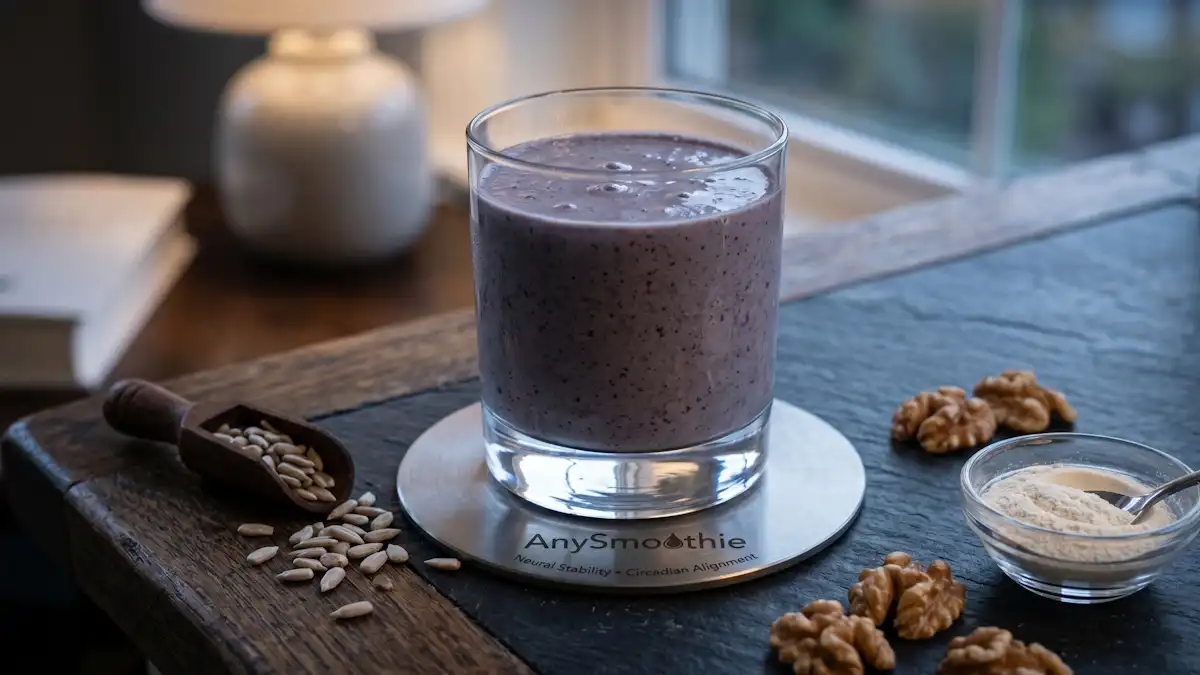
Your cortisol rhythm shapes how you wake up, handle stress, and wind down at night. When that pattern feels off, energy can feel scattered and sleep timing can drift.
A smoothie is one of the easiest ways to support your daily routine without a heavy meal. Phosphatidylserine is a phospholipid found in cell membranes, and it gets attention for its role in stress signaling support. This is about supporting normal stress and recovery systems, not treating disease.
What phosphatidylserine does in the body, and why smoothie timing matters
Phosphatidylserine, often called PS, is part of the structure that helps cells stay flexible and communicate well. It shows up in brain tissue and other cell membranes, where it supports normal signaling. That is one reason people connect it with mental clarity and stress balance.
For a wider look at food sources, see foods high in phosphatidylserine.
Cortisol follows a daily pattern. It usually rises in the morning, helps you feel awake, then eases later in the day. When that rhythm feels out of sync, you may notice a rough start, a mid-day crash, or a wired feeling at night.
A steady rhythm matters more than a perfect routine.
Some people notice they feel sluggish after breakfast, edgy after lunch, or restless after an intense workout. Those patterns do not point to one single cause. Still, they often show that food timing, stress load, and recovery need more support.
PS fits this routine because it is easy to blend into a drink. Smoothies also let you pair it with protein, fiber, and fat in one glass. That helps the supplement fit into a larger pattern instead of sitting on its own.
Powdered forms mix well, and some capsules can be opened if the label allows it. Consistency matters more than taking it once in a while. If a smoothie helps you repeat the habit, that is a practical win.
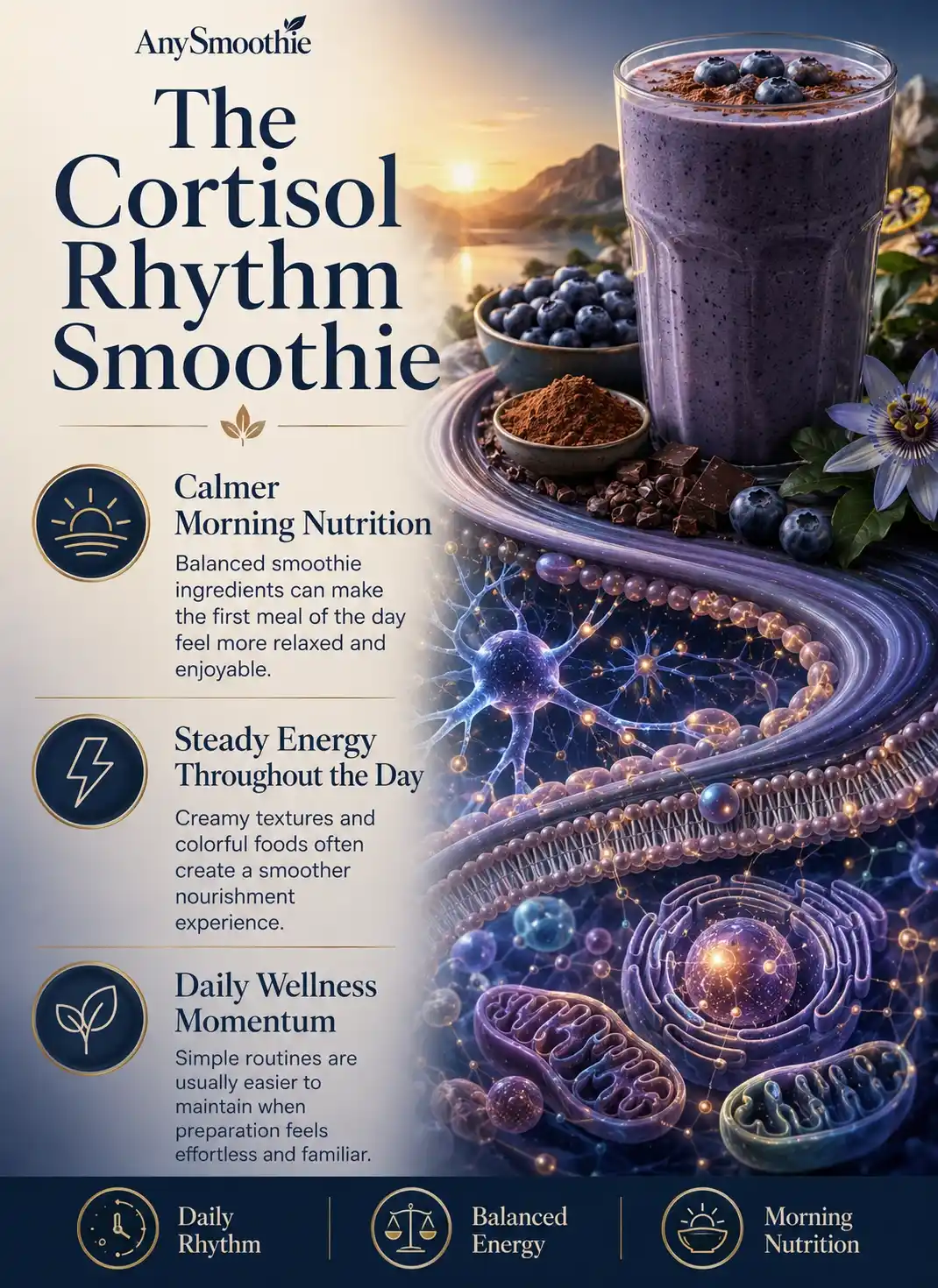
How to build a cortisol-friendly smoothie without overcomplicating it
A good smoothie for stress support should feel balanced, not sugary. The goal is steady energy, so the drink should avoid a big blood sugar spike.
Start with a simple base:
- Protein for fullness and a slower rise in blood sugar.
- Fiber from seeds, greens, or berries.
- Healthy fat for a smoother texture and longer staying power.
- Low to moderate sugar so the drink stays steady, not spiky.
Greek yogurt, protein powder, chia, flax, avocado, berries, spinach, cocoa, and unsweetened milk alternatives all fit that pattern. Banana, citrus, or dates can still work, but keep them in balance with protein and fat.
If you are comparing PS forms, this guide on phosphatidylserine vs phosphatidylcholine can help you sort out what belongs in a smoothie and what does not.
The best ingredients to pair with phosphatidylserine
Protein-rich ingredients help the smoothie feel more like a meal. Greek yogurt gives body and tang. Protein powder keeps prep fast.
Seeds and fats round out the blend. Chia and flax add fiber, while avocado or nut butter adds creaminess. Cocoa can bring a richer taste without much sugar.
Leafy greens and berries are easy add-ins. Spinach blends in with little flavor, and berries keep the drink bright. Unsweetened almond, oat, or dairy milk works as the liquid base.
When to drink it for the best support
Mid-afternoon is a common choice. That is when many people feel mental drag and reach for something sweet.
After a stressful work block is another useful time. A smoothie can make the shift from stress to recovery feel more deliberate.
An evening smoothie can also fit, if it stays light and easy to digest. The right timing depends on your routine, your workout schedule, and how you handle food later in the day.
The best timing is the one you can repeat.
3 Phosphatidylserine smoothies for cortisol rhythm
These three options keep the structure simple. Each one uses a PS serving as directed on the label.
What to compare before you buy a phosphatidylserine supplement
Before you choose a product, compare the form, source, and label details. That makes it easier to find one that blends well and fits your routine.
| Supplement form | Source | Dosage per serving | Mixability in smoothies | What to check on the label |
|---|---|---|---|---|
| Powder | Sunflower or soy | Commonly 100 mg to 300 mg | Best | Third-party testing, sweeteners, fillers |
| Openable capsule | Sunflower or soy | Commonly 100 mg to 300 mg | Good | Whether the capsule can be opened, flavor, allergens |
| Softgel | Usually soy or sunflower | Commonly 100 mg to 300 mg | Poor | Best if taken separately, not mixed |
| Blend with extras | Mixed sources | Varies | Good if the base is powder | Added herbs, sugar, and exact PS amount |
For smoothie use, a clean powder or an openable capsule is usually the easiest fit. The shorter the ingredient list, the easier it is to keep the drink steady.
How to read the label without getting overwhelmed
Start with the amount per serving. Make sure the serving size matches how you plan to use it in a smoothie.
Then check the form. Powder, capsule, and softgel all behave differently in a blender. Powder is the simplest choice.
Next, scan for added sweeteners, flavors, and fillers. If you want a clean routine, fewer extras usually helps. Also check allergen info and third-party testing if that matters to you.
Common mistakes that make the smoothie less effective
Too much sugar can make the drink feel more like dessert than support. That can work against a steady energy plan.
Skipping protein is another miss. Without it, the smoothie may not keep you full for long.
Expecting one serving to fix a bad week is the biggest mistake of all. Routine, food quality, and sleep habits all matter.
Conclusion
Phosphatidylserine smoothies for cortisol rhythm work best when the recipe is balanced and the timing fits your day. The main goal is a steadier rise and fall of energy, not a quick fix.
Start with one recipe, pay attention to how you feel, and adjust the timing or ingredients as needed. A simple smoothie you can repeat is more useful than a perfect one you never make.
🛡️ Safety Notes & Dietary Interactions
- Energy Curve Stability: Phosphatidylserine smoothies work best alongside protein, fiber, and healthy fats. This combination may help support steadier energy availability compared to highly sweetened smoothie formulas.
- Stress Signaling Support: Phosphatidylserine is a membrane phospholipid involved in cellular communication pathways. Consistent use within a balanced routine may better support physiological stress-response systems than occasional supplementation.
- Supplement Form Selection: Powders and openable capsules generally blend more easily into smoothies than softgels. Checking ingredient quality and unnecessary fillers may help simplify long-term routine adherence.
- Timing and Routine Consistency: Mid-afternoon or post-stress periods are common smoothie windows. Consistent timing often provides more practical value than constantly changing schedules or ingredients.
FAQ
What is phosphatidylserine and why is it associated with cortisol rhythm?
Phosphatidylserine, often abbreviated as PS, is a phospholipid naturally present within cell membranes. It contributes to membrane structure and cellular communication processes throughout the body. The article discusses PS in relation to cortisol rhythm because it is commonly included in nutrition and lifestyle conversations focused on stress-response support, recovery patterns, and maintaining more consistent daily energy rhythms.
Why are protein, fiber, and healthy fats emphasized in these smoothies?
The article repeatedly highlights balanced macronutrients because they help create a slower and steadier digestive profile. Protein supports satiety, fiber contributes digestive pacing, and healthy fats improve texture and meal satisfaction. Together, these elements may help support more consistent energy patterns compared with smoothies built primarily around fruit sugars or sweetened ingredients.
When is the best time to drink a phosphatidylserine smoothie?
The article suggests that timing should match personal routines rather than follow a rigid schedule. Many people prefer mid-afternoon, when mental fatigue and cravings often appear, while others use these smoothies after stressful work periods or as part of an evening recovery routine. Consistency and personal preference are emphasized more than any universal timing rule.
Which ingredients pair best with phosphatidylserine in a smoothie?
Greek yogurt, protein powders, chia seeds, flax seeds, avocado, nut butters, berries, spinach, cocoa, and unsweetened milk alternatives are highlighted because they provide protein, fiber, healthy fats, or texture. These ingredients help transform the smoothie into a more balanced meal or snack while supporting a steadier nutritional structure throughout the day.
What is the biggest mistake people make with cortisol-support smoothie routines?
According to the article, the most common mistake is expecting one smoothie to compensate for poor sleep, irregular meal timing, or ongoing lifestyle stress. The article repeatedly emphasizes that smoothies work best as part of a broader pattern that includes consistent nutrition, recovery habits, sleep quality, and realistic daily routines rather than as standalone solutions.

Medical Disclaimer: AnySmoothie content is for educational purposes only and is not a substitute for professional medical advice. Consult a healthcare provider for personalized guidance. See our full Disclaimer & Terms of Use. AI Transparency: AnySmoothie may use AI to support content development. All content undergoes human editorial review for accuracy, clarity, and editorial quality. See our full AI Transparency.