
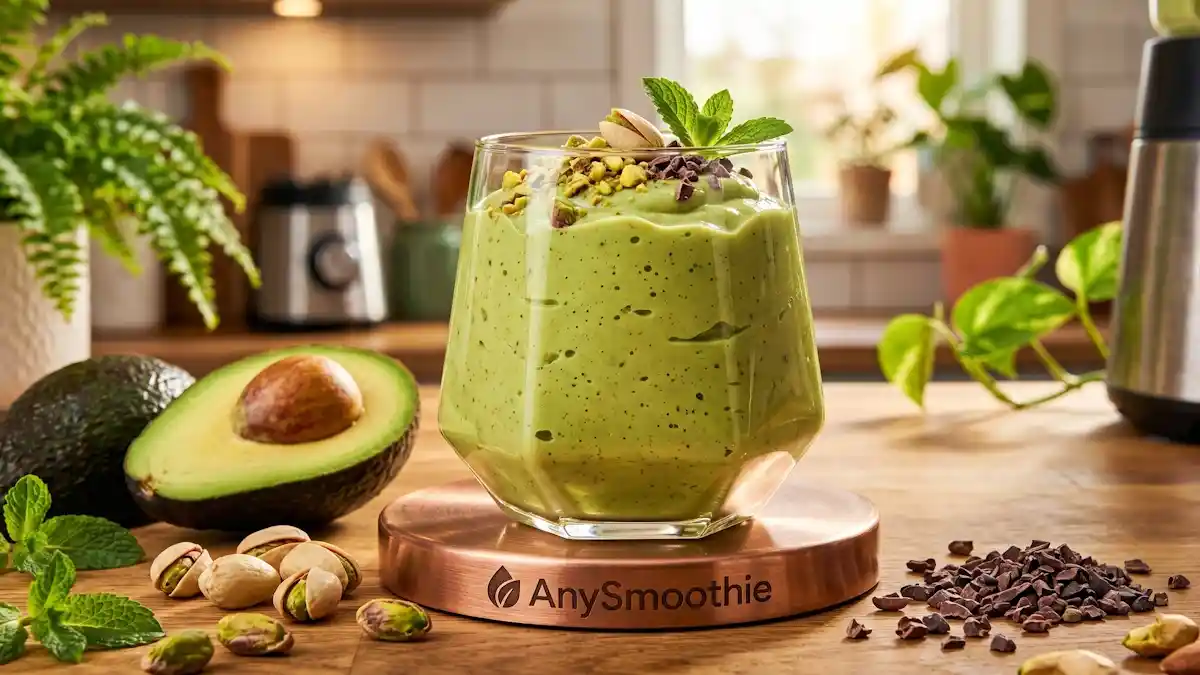
Your cells do not run on hype. They run on electron flow, and CoQ10 sits right in the middle of that process. A CoQ10 smoothie for electron transport chain support makes practical sense because a smoothie can pair CoQ10 with fats, minerals, and antioxidant-rich foods in one easy step.
That matters if you want a food-first routine that fits real life. Instead of forcing a dry supplement into a random moment, you build a drink that works with digestion and nutrient partitioning.
The bioenergetic hub: CoQ10 and the electron transport chain
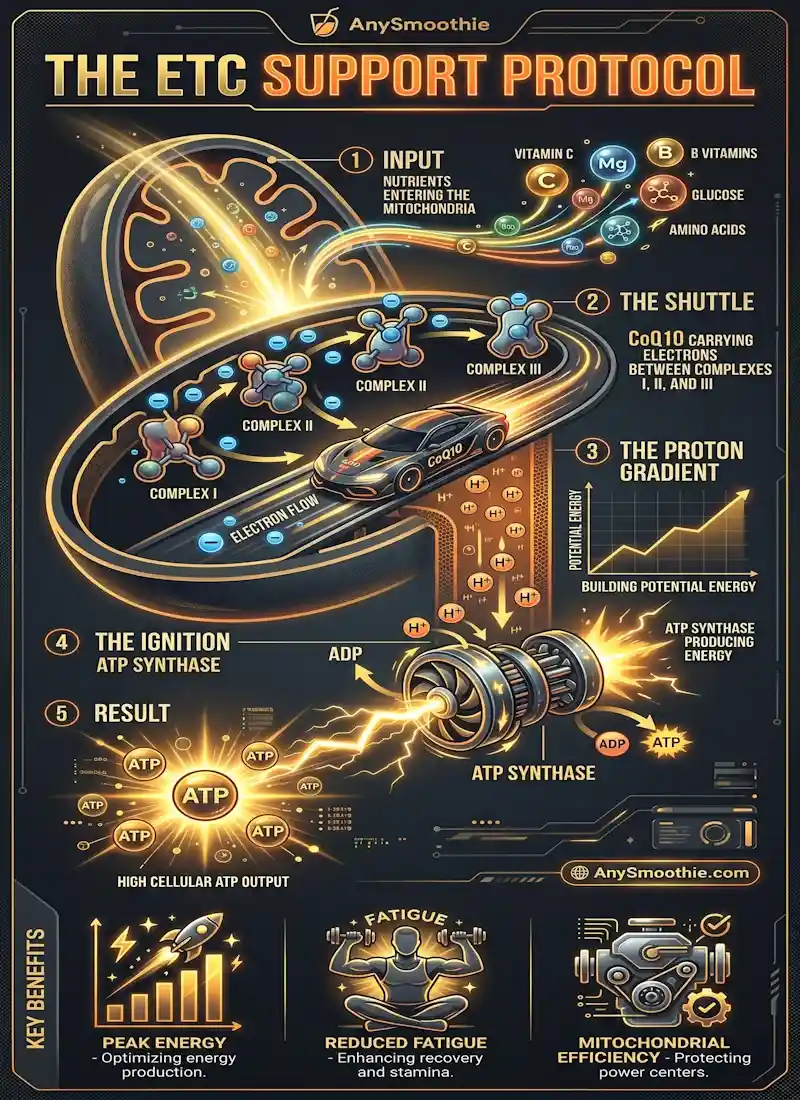
The electron transport chain is the last stretch of ATP production inside the mitochondria. Electrons move through a series of protein complexes, and that movement helps create the gradient cells use to make energy. CoQ10 sits in the inner mitochondrial membrane and helps keep that flow moving.
A useful way to picture it is as a mobile carrier in a busy line. It accepts electrons, carries them across the membrane, then passes them along so the chain can keep moving. That is why CoQ10 gets so much attention in mitochondrial nutrition.
For a deeper look at the chemistry, the review on Coenzyme Q in mitochondrial electron transport lays out the basic role of this molecule in the respiratory chain.
How CoQ10 helps shuttle electrons between Complex I and Complex III
CoQ10 works in two redox forms, ubiquinone and ubiquinol. Ubiquinone is the oxidized form, while ubiquinol is the reduced form. Together, they act like a back-and-forth shuttle that moves electrons between Complex I and Complex III.
That shuttle role matters because it keeps electron transfer efficient. When the handoff is smooth, mitochondrial energy flow can stay organized. When the process slows, the whole chain loses rhythm.
Why ubiquinol is often the more bioavailable form for smoothies
Ubiquinol is often described as the more bioavailable form of CoQ10. In simple terms, it tends to fit digestion and uptake more easily than ubiquinone in many food-based settings. A study on ubiquinol absorption in yogurt found stronger uptake after digestion compared with ubiquinone in that model.
A smoothie with fat can help here because CoQ10 is fat-soluble. That makes the drink format useful, since it supports the same kind of absorption logic you want from a well-built meal.
How to build a CoQ10 smoothie that supports absorption and energy flow
The best formula is simple. CoQ10 does not need a crowded blender, it needs the right context. Start with fat, add a few antioxidant foods, then keep the texture easy enough that you will actually drink it.
Choose a fat source that helps transport CoQ10
Use avocado, nut butter, full-fat yogurt, chia, flax, or coconut. These ingredients help create a fat-containing mix, which is useful because CoQ10 rides better with dietary fat.
That food-first setup also mirrors the logic behind liposomal-style delivery, without trying to force a supplement trick into a whole-food smoothie. Fat helps compounds mix into micelles during digestion, which supports nutrient uptake.
Use antioxidant-rich ingredients that support redox balance
Berries, spinach, cacao, and pomegranate fit this theme well. They add polyphenols and other plant compounds that support a healthier oxidative environment around the mitochondria.
That matters because electron transfer works best when the surrounding redox system stays balanced. In plain terms, you want a clean lane for electron flow, not a cluttered one.
Keep the formula simple so the body can use it well
A short ingredient list often works better than a stacked smoothie. Too much fiber, too much fat, or too many add-ins can make the drink heavy.
Balance matters more than volume. Aim for flavor, a little sweetness, enough fat for absorption, and a texture your stomach handles well.
A CoQ10 smoothie works best when it feels like food, not a project.
3 ETC-prime smoothie ideas you can make at home
If you want examples, keep them practical. These blends are built around the same idea, support electron flow with food that fits the job.
Smart nutrient pairings that work well with CoQ10
CoQ10 rarely works alone in a good routine. Other mitochondrial nutrients can fit beside it, especially when you want support for normal energy metabolism and redox balance.
The American Physiological Society review on coenzyme Q is a solid background source if you want a wider view of how CoQ sits inside cellular redox systems.
| Carrier | Physiological role | Cellular location | Best smoothie pairing | Synergistic nutrient |
|---|---|---|---|---|
| CoQ10 (ubiquinol) | Electron shuttle, redox buffer | Inner mitochondrial membrane | Avocado, cacao, nut butter | Magnesium, PQQ |
| Alpha-lipoic acid | Antioxidant recycler, redox helper | Mitochondria and cytosol | Berry-spinach smoothie | Magnesium |
| Cytochrome c | Electron carrier to Complex IV | Intermembrane space | Light berry or pomegranate blend | Antioxidants |
Ubiquinol is the reduced, more bioavailable form of CoQ10, so it often fits a smoothie routine well. Alpha-lipoic acid brings a different kind of redox support, while cytochrome c belongs in the electron chain itself, not the blender.
Why magnesium and PQQ are common mitochondrial teammates
Magnesium supports ATP-related reactions, so it fits naturally with CoQ10. PQQ is also discussed in mitochondrial support conversations because it lines up with the same energy theme.
Both can fit into a morning routine without making the smoothie complicated. The goal is to support normal cellular work, not to overload the glass.
How alpha-lipoic acid and antioxidants fit the same strategy
Alpha-lipoic acid is often used in redox-focused formulas because it helps support antioxidant recycling. That makes it a logical partner for CoQ10, especially when the smoothie already includes berries, greens, or cacao.
When these nutrients show up together, the idea is simple. Support electron flow, support the antioxidant network, and keep the formula easy to digest.
Conclusion
A CoQ10 smoothie can be a simple way to support the electron transport chain when it includes the right fats, antioxidant foods, and optional mitochondrial cofactors. The best blends are balanced, easy to digest, and built for repeat use.
Start with one of the three smoothie ideas, then adjust the texture and flavor to fit your routine. Small, consistent choices tend to work better than complicated ones.
🛡️ Safety Notes & Dietary Interactions
Lipid Matrix Integration: CoQ10 is a highly lipophilic (fat-soluble) compound trapped within a dense molecular structure. To ensure your system can properly package this molecule into transport micelles without causing localized upper GI fullness, always anchor your formulations to quality whole-food fats like the monounsaturated lipids in avocado or raw nut butters.
Mitochondrial Redox Equilibrium: Introducing high-potency ubiquinol alongside active dietary antioxidants coordinates the natural electron flow within the inner mitochondrial membrane. To maintain a perfectly adaptive and balanced homeostatic signal, avoid overloading your daily blender with excessive synthetic antioxidant isolates, allowing the whole-food matrix to manage the pathways naturally.
Hepatic first-pass clearance: The systemic transport and processing of lipophilic coenzymes engage standard clearing networks within the liver. To keep your body’s daily metabolic parameters completely flat, predictable, and free of processing bottlenecks, individuals managing structured daily medication plans should space their functional smoothies a few hours apart from their routine.
Enterocyte Nutrient Velocity: Stacking raw plant fibers from spinach or cacao alongside dense fats slows down gastric emptying to create a metered nutrient delivery. If your digestive tract operates on a highly sensitive baseline, ensure a thorough high-powered blend to pre-digest the structural plant walls, facilitating comfortable intestinal transit.
FAQ
What exactly is the electron transport chain, and why does CoQ10 sit at the center of it?
Think of your mitochondria as tiny internal cellular power plants, and the electron transport chain as a high-speed assembly line that generates your body’s universal energy currency (ATP). For this assembly line to work, electrons must flow continuously through a series of specialized protein complexes. CoQ10 acts as the ultimate mobile shuttle bus floating within the inner mitochondrial membrane. Its primary job is to accept electrons from the front end of the line, carry them across the lipid membrane, and pass them along to the next phase, ensuring your cellular energy production doesn’t hit a structural bottleneck.
What is the mechanical difference between ubiquinone and ubiquinol in a daily smoothie?
The difference comes down to whether the molecule is wearing an empty backpack or a full one. Ubiquinone is the oxidized form of CoQ10, meaning it is ready to accept electrons, while ubiquinol is the reduced form, meaning it is already loaded with electrons and ready to deliver them. In terms of digestion and structural uptake, ubiquinol possesses a much higher level of oral bioavailability. Because it is pre-activated and matches the natural lipid-friendly environment of your intestinal walls, your enterocytes can absorb it with significantly less friction, making it the ideal form for a whole-food blend.
Why are high-quality whole fats absolutely mandatory to unlock CoQ10 bioavailability?
Because CoQ10 is completely fat-soluble, it behaves like an oil and cannot dissolve in water. If you drink a berry or green smoothie mixed with just water or a splash of skim milk, the CoQ10 molecules will simply clump together, passing through your digestive tract completely unabsorbed. Including a premium whole fat source like avocado or almond butter triggers your body to release bile acids during digestion. These bile acids wrap around the fat-soluble nutrients, packaging them into microscopic droplets called mixed micelles that slide through your intestinal lining easily.
How do companion nutrients like magnesium and alpha-lipoic acid support the CoQ10 pathway?
Your cellular energy production is a multi-step team sport, not a single-track road. While CoQ10 focuses on shuttling the electrons across the membrane, magnesium acts as the mandatory structural co-factor that allows your cells to actually bind and lock that energy into usable ATP molecules. Simultaneously, alpha-lipoic acid functions as a premier redox helper in the surrounding fluid, recycling spent antioxidants and keeping the cellular lanes completely clear of oxidative debris. Stacking them ensures the assembly line has the fuel, the workers, and the cleanup crew working in perfect harmony.
When is the most efficient window to time a CoQ10 smoothie for stable daytime energy?
To capture the highest return on nutrient partitioning and mirror your body’s natural bioenergetic curves, the ideal window is during your early morning active phase or right after breaking a fasting window. Your core circadian clock genes naturally prime your mitochondria to ramp up electron transport and ATP synthesis early in the day to prepare your tissues for physical and cognitive workloads. Flooding your system with a low-sugar, fat-supported CoQ10 blend at this exact moment amplifies your natural daytime transcriptional signaling, keeping your energy curve perfectly flat and sustained without mid-day crashes.

Medical Disclaimer: AnySmoothie content is for educational purposes only and is not a substitute for professional medical advice. Consult a healthcare provider for personalized guidance. See our full Disclaimer & Terms of Use. AI Transparency: AnySmoothie may use AI to support content development. All content undergoes human editorial review for accuracy, clarity, and editorial quality. See our full AI Transparency.